

Last updated: May 2026 by Prakash Lamsal, Founder & CEO, Nepal Himalayas Trekking. TAAN-registered. TripAdvisor Travellers' Choice 2025 winner. 13+ years guiding the Khumbu region.
Quick answer: The Everest Base Camp Trek in 2026 takes 12–14 days, costs USD $1,690–$3,090 for most trekkers, reaches 5,545m at Kala Patthar, and is rated moderate to challenging. The best months are March–May (spring) and late September–November (autumn). A licensed guide is now mandatory (no solo trekking permitted since April 2023).
Last spring, a 58-year-old retired teacher from Melbourne walked into our office on Amrit Marg, Thamel. She'd been planning EBC for three years. She sat down, looked at me, and said, "Be honest — am I too old for this?"
Two months later, she stood on Kala Patthar at sunrise. Cried for ten minutes. Came back to Kathmandu and booked Manaslu for 2027.
Conversations like that happen in our office every week. People who've watched the YouTube videos, read fifteen Reddit threads, scrolled through Lonely Planet, and still can't get a straight answer to the only question that matters: "Can I actually do this?"
At Nepal Himalayas Trekking, we've been helping first-timers, seasoned hikers, solo travelers, and families navigate the Everest region for over a decade. We're not here to sell you a fantasy. We're here to give you the same honest, practical guidance we'd give a close friend who called us up and said, "I'm thinking about doing the Everest Base Camp trek this year — what do I need to know?"
2026 Everest Base Camp Trek Cost at a Glance
Before we dive into the details, here's the quick honest answer on what the EBC trek actually costs in 2026 when you book through a Nepal-based agency:
| Package Type | USD Cost (Per Person) | Duration |
|---|---|---|
| Budget EBC Trek | $1,290 – $1,490 | 12–14 days |
| Standard EBC Trek (most popular) | $1,690 – $2,200 | 14 days |
| EBC with Helicopter Return | $3,090 – $4,890 | 10 days |
| Luxury / Premium EBC Trek | $4,890 – $6,090 | 11–14 days |
If you're considering booking through a Western tour operator, you'll typically pay 2 to 3 times these rates for the exact same Nepal-based service. The local trek is the same. The price isn't.
→ See our 2026 EBC Trek itinerary and pricing
What Is the Everest Base Camp Trek, Really?
There's a common misconception that the Everest Base Camp (EBC) trek is some kind of extreme mountaineering adventure meant only for serious climbers. It's not. It's a trekking route — a walking trail that takes you deep into the Khumbu region of northeastern Nepal and deposits you, after roughly 12 to 16 days on foot, at the base of the highest mountain on Earth.
You're not climbing Everest. You're walking to where climbers begin their ascent. That distinction matters. It's what makes this trek one of the most achievable high-altitude experiences in the world for regular people with decent fitness and the right preparation.
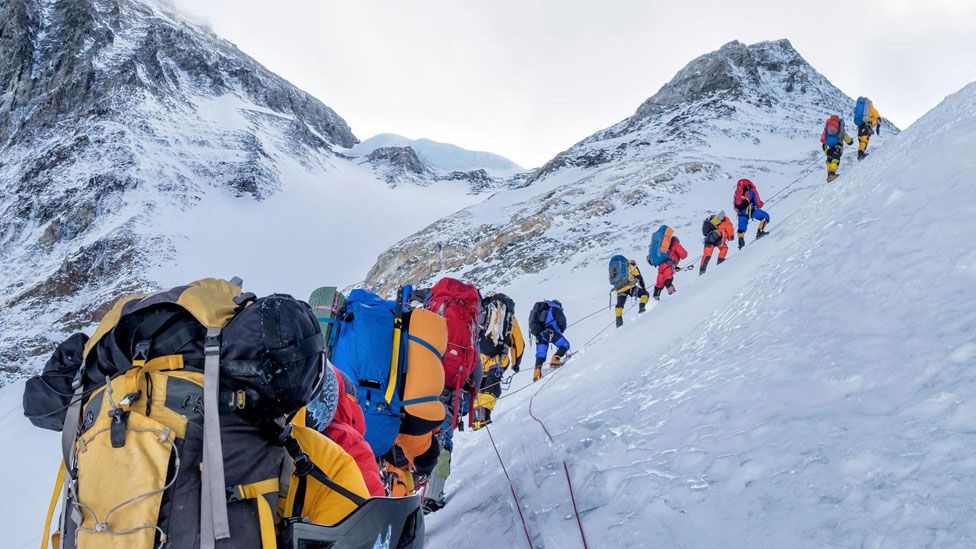
The route is approximately 130 kilometers round-trip. It starts and ends in Lukla, a small mountain town accessible by a short (and famously dramatic) flight from Kathmandu. From Lukla, you trek through Sherpa villages, past ancient Buddhist monasteries, over suspension bridges strung with prayer flags, and through some of the most otherworldly mountain scenery on the planet. The air gradually thins as you climb. The views grow more staggering. Around day nine or ten, you find yourself standing at 5,364 meters above sea level with Mount Everest filling your entire field of vision.
Most people who've done it say the experience is hard to explain. Not because it's mystical — but because nothing prepares you for the scale of it.
The classic itinerary is 14 days, which includes two crucial acclimatization days built into the schedule. Trying to shave this down to 10 or 11 days is one of the most common mistakes we see first-timers make. We'll talk more about why that matters when we get to altitude.
There's also a side trip most guides will recommend, and honestly, we'd go as far as saying it's non-negotiable: Kala Patthar, a rocky peak at 5,545 meters, sits just above the Base Camp area and offers the clearest, most breathtaking close-range view of Everest's summit pyramid you can get without actually climbing the mountain. Many trekkers say this is the emotional peak of the whole journey, not Base Camp itself.
Understanding the Terrain: What the Trail Is Actually Like
People often imagine the EBC trail as a continuous steep climb through icy conditions. The reality is more varied — and, in many ways, more interesting than that.
The lower sections of the trail — from Lukla up through Phakding and into Namche Bazaar — pass through dense rhododendron and pine forests, river gorges carved by glacial meltwater, and suspension bridges that hang hundreds of meters above rushing rivers. These sections are genuinely beautiful in a way that feels almost gentle, which can make it easy to forget you're steadily gaining altitude.
As you move higher through Tengboche, Dingboche, and Lobuche, the landscape shifts. The trees thin out and eventually disappear. The terrain becomes more open, more rocky, more exposed. Views that were occasional glimpses of high peaks between forested ridges become constant, panoramic, overwhelming. The Khumbu valley opens up and you start to truly understand the scale of what surrounds you.
The trail surface varies enormously. You'll walk on well-worn stone paths, natural rocky ground, steep stone staircases built into hillsides, and occasionally snow-covered sections at higher elevations depending on the time of year. None of it requires technical skill. All of it requires patience, solid footwear, and a reasonable level of physical fitness.
The highest-traffic sections — particularly between Lukla and Namche Bazaar — also involve sharing the trail with yak trains carrying supplies to teahouses higher up. This is part of the experience. Always step to the uphill side when a yak train passes (they don't steer particularly well), watch your footing, and enjoy the fact that you're moving through a living, working mountain economy.
The Difficulty Question: Let's Be Honest About What You're Taking On
This is the part of the conversation where we like to slow down, because the internet does a poor job of giving a straight answer here.
Some blogs will tell you the EBC trek is "easy" and "anyone can do it." Others describe it like a survival mission. Neither is accurate.
Here's our honest assessment, after years of guiding people of all ages and fitness levels through this route:
The physical difficulty is moderate to high, but manageable for most people with preparation. The trails are not technical. There's no rock climbing, no ropes, no specialist gear required. What you're doing, fundamentally, is walking — sometimes for seven or eight hours in a day, on uneven ground, at elevation. The cumulative effort over 12 to 16 days is significant. It's not a casual stroll. But it's also not beyond reach for someone who takes the preparation seriously.
The real difficulty is altitude. And this is where we have to be very direct with you.
Altitude Sickness: The One Thing You Cannot Prepare Your Way Out Of
Acute Mountain Sickness (AMS) is not a fitness problem. It's a physiology problem. And it does not care how fast you can run a 10K or how many gym sessions you've logged in the past six months.
At 5,000 meters and above, the air contains roughly half the oxygen available at sea level. Your body has to work significantly harder to deliver oxygen to your muscles, organs, and brain. The adjustment process (acclimatization) takes time. Give your body that time, and it adapts remarkably well. Rush it, and you'll feel it — sometimes severely.
Symptoms of mild AMS feel like a persistent headache, fatigue that sleep doesn't fix, loss of appetite, and general fogginess. Most trekkers experience some degree of this above 3,500 meters, and it's manageable. The problem is when people push through mild symptoms instead of resting — because mild AMS can progress to High Altitude Cerebral Edema (HACE) or High Altitude Pulmonary Edema (HAPE), both of which are genuine medical emergencies requiring immediate descent.
The rule every experienced guide will tell you is simple: if your symptoms are getting worse at rest, you descend. No argument. No negotiation.
October 2024. We had a 31-year-old British IT consultant on a 14-day departure. Fit guy. Marathon runner. Did everything right with training. At Lobuche he started getting confused about what day it was. Couldn't remember our porter's name. Our guide Pemba called it immediately — helicopter evacuation, no debate. Twelve hours later he was eating breakfast in Kathmandu, perfectly fine.
He emailed us six months later. Wanted to come back and try again in spring 2026. He's booked.
That's how the mountain works. It doesn't care about your fitness. It cares about whether you're listening.
The reason we build two acclimatization rest days into our standard itinerary — one at Namche Bazaar (3,440m) and one at Dingboche (4,410m) — is precisely because we've seen what happens when people skip them. It's not about being overly cautious. It's about understanding how altitude works and respecting it.
Who Can Realistically Do This Trek?
We get asked this constantly, and the honest answer is: more people than you'd think, and fewer people than some blogs suggest.
You don't need to be a marathon runner. You don't need to have trekked at altitude before. What you do need is a baseline of cardiovascular fitness, the ability to walk 5 to 8 hours a day on consecutive days, and the mental durability to keep moving when you're tired, cold, or both.
We've guided trekkers in their sixties and seventies who completed the route without serious issues. We've also seen very fit people in their thirties struggle because they didn't take acclimatization seriously. Age is less relevant than preparation and mindset.
If you're currently relatively sedentary — sitting at a desk most of the day, not doing any regular aerobic exercise — give yourself a minimum of four to five months to build your fitness before attempting this trek. Not to get "fit" in a general sense, but specifically to build the kind of endurance that multi-day hiking demands.
A practical training approach we recommend to our clients:
In the first month, focus on building a daily walking habit. Walk 45 minutes to an hour every day, and on weekends, go for longer hikes of two to three hours. The goal is consistency.
In the second month, introduce elevation. Find hills, staircases, anything with incline. Start adding weight to a daypack — even just four or five kilograms — so your body begins adjusting to carrying a load. Push your weekend hikes to three to four hours.
By months three and four, aim for full-day hikes on weekends, ideally back-to-back days, with a loaded pack. Six to seven hours of walking on uneven terrain on a Saturday, followed by four to five hours on a Sunday, is excellent preparation. Your knees, ankles, and hips need this kind of conditioning, not just your lungs.
The mental side matters too. There will be days on the trek where you're tired, where the altitude is pressing on your head, where it's cold and you haven't had a proper hot shower in five days. Having the psychological resilience to keep putting one foot in front of the other — while also being self-aware enough to recognize when something feels wrong and say so — is genuinely important. The trekkers who have the best experience are almost always the ones who approach it with patience rather than ego.
Best Time to Do the Everest Base Camp Trek in 2026
| Season | Months | Visibility | Crowd Level | Our Verdict |
|---|---|---|---|---|
| Autumn (Peak) | Late Sep – Nov | Excellent | High | ★★★★★ Best overall |
| Spring | Mar – May | Very Good | High | ★★★★★ Best for climbers' season at EBC |
| Winter | Dec – Feb | Excellent (cold) | Low | ★★☆☆☆ Experienced only |
| Monsoon | Jun – Aug | Poor | Very Low | ★☆☆☆☆ Not recommended |
Timing this trek correctly makes an enormous difference to your experience. We've seen trekkers do the route in less-than-ideal conditions and still love it. But we've also seen people arrive during the wrong window and feel genuinely short-changed by what they experienced.

Autumn: Late September Through November, Our Top Recommendation
If you ask any experienced guide or seasoned trekker in Nepal when to go, the overwhelming majority will say October without hesitation. And they're right.
The monsoon season ends in mid-September, and it clears the air in a way that's genuinely extraordinary. The dust, haze, and moisture that obscure views for months get swept away, and what you're left with is some of the clearest mountain visibility you'll ever experience. On a good October day, you can see Everest and the surrounding peaks — Lhotse, Nuptse, Ama Dablam, Pumori — with a sharpness that makes them look almost unreal.
The temperatures in autumn are cold but very manageable with proper clothing. Days are crisp and bright. Nights get cold above 4,000 meters, but teahouse sleeping bags and warm layers handle it well. The trail conditions are stable — no monsoon mud, no heavy snow yet.
October is also when you'll have company on the trail. This is peak season. Popular spots like Namche Bazaar and Tengboche will be lively with trekkers from all over the world. Some people love this energy. Others prefer a quieter experience, in which case November is worth considering — slightly colder, fewer trekkers, and the views remain excellent through most of the month.
For 2026, our autumn recommendation: Plan to arrive in Nepal between late September and mid-October for the optimal experience. Book your accommodations and trekking package well in advance — popular spots fill up, particularly in the first two weeks of October.
Spring: March Through May
Spring is the other prime season, and in some ways it offers something autumn doesn't: color. The rhododendron forests at lower elevations burst into bloom from March through April, painting the hillsides in shades of red, pink, and white. It's stunning along the lower sections of the route.
Weather in spring is generally stable and warming. Visibility is very good (though occasionally not quite as sharp as October before the pre-monsoon haze starts to build in May), and the days are longer and warmer than autumn. For trekkers who feel the cold more acutely, spring can be noticeably more comfortable.
Spring is also when the Everest climbing season is in full swing. By the time you reach Base Camp in April or May, you'll find it populated with Everest expedition teams, tents, equipment, the quiet hum of a serious mountaineering operation underway. For many trekkers, witnessing this is one of the highlights of the trip.
For 2026, our spring recommendation: Mid-March to late April is the sweet spot. If you're interested in seeing the Everest expedition teams at Base Camp, target an April arrival.
Monsoon (June to August) and Winter (December to February) — Know What You're Getting Into
The monsoon season doesn't make the trail impossible, but it significantly changes the experience. Heavy rainfall makes lower-elevation trails muddy and slippery. Leeches are present in the forest sections. Visibility is often poor. There's a genuine chance of being stuck in a village for extra days waiting for weather to clear. Some trekkers love the moody, dramatic atmosphere of the Himalayas in monsoon. Most first-timers find it frustrating.
Winter trekking is for people who really know what they're doing. Temperatures at Gorak Shep and higher can drop to minus 20°C at night. Several teahouses close for the season, reducing your accommodation options significantly. Snow can block higher passes, adding logistical complications. The trails are far quieter, and the views on a clear winter day are absolutely stunning — but this is not the window we'd recommend to someone doing this for the first time.
Permits and Documentation: What You Actually Need
This is one of those areas that causes unnecessary stress for first-timers, so let's be clear: the permit process for the EBC trek is straightforward. You need two things.
The Sagarmatha National Park Entry Permit is issued at the Monjo checkpoint and required to enter the national park encompassing the Everest region. The Khumbu Pasang Lhamu Rural Municipality Permit is a local trekking permit obtained at the Lukla area. When you trek with Nepal Himalayas Trekking, we handle both permits as part of your package — you just bring your passport and a couple of passport-sized photos, and we take care of the rest.
One important administrative note: Nepal now requires all foreign trekkers to be accompanied by a registered Nepali guide. This regulation was introduced in April 2023 to improve safety on the trails and ensure trekking fees support local employment. Solo trekking without a guide is no longer permitted in these areas. We support this regulation fully — beyond the legal requirement, a good guide transforms this trek from a navigation exercise into an immersive, culturally connected experience.
What to Pack: The Gear That Actually Matters
Here's something we tell everyone who comes to us with a ten-page Amazon wishlist: you don't need to buy everything new, and you don't need to bring everything on every packing list you've ever read.
Kathmandu's Thamel district is full of reputable gear rental shops. Sleeping bags, trekking poles, down jackets, and various other items can be rented for very reasonable prices if you don't want to purchase them. That said, there are some things you absolutely should own — and critically, should have used before you arrive.
Your trekking boots are the single most important investment you'll make. Buy them at least six to eight weeks before you travel. Wear them everywhere. Break them in until they feel like part of your feet. Arriving at the Lukla airstrip in brand-new, stiff boots is a guaranteed recipe for painful blisters by day three.
For clothing, the key concept is layering. The temperature range across 14 days is enormous — from warm and comfortable in Kathmandu, to genuinely cold and windy at Gorak Shep. A moisture-wicking base layer, a warm mid-layer (fleece or light down), and a windproof and waterproof outer shell handles this range effectively.
For sleeping, teahouses provide blankets, but at higher elevations you'll want your own sleeping bag rated to at least -10°C. These can be rented in Kathmandu.
Trekking poles are something we'd strongly recommend. Trekkers who say they don't need them tend to change their minds somewhere on the descent from Kala Patthar. Your knees will thank you.
For hydration, staying well hydrated at altitude is genuinely important for acclimatization — aim for three to four liters of water per day, even when you don't feel thirsty. Bring a reusable bottle and water purification tablets or a filter. Teahouse water at higher elevations should always be treated.
Sunscreen and sunglasses are non-negotiable. UV radiation at altitude is significantly more intense than at sea level. SPF 50+ applied generously every morning matters. At elevations above 5,000 meters, glacier glasses with side protection are recommended because snow and ice reflecting sunlight can cause genuine snow blindness.
For your daypack, the porter carries your main duffel (up to 20kg). You carry a 30 to 35 liter daypack with your water, snacks, rain layer, camera, first aid essentials, and anything you'll need during the day.
One practical note that surprises many people: charge everything you can before each high-altitude day. Wi-Fi and device charging at higher teahouses is available but costs extra, and power banks become your best friend above Dingboche.
The Teahouse Experience: What to Expect Along the Way
One of the most genuinely underrated aspects of the EBC trek is the teahouse culture, and it deserves more than a footnote.
Teahouses are family-run guesthouses found at regular intervals along the entire route. They range from quite simple at lower elevations to surprisingly warm and welcoming at higher ones. You'll sleep in twin-share rooms — a bed, a pillow, enough blankets to get comfortable. The rooms get simpler as you gain altitude, but the communal dining rooms, heated by cast-iron stoves, become the social heart of each evening. You'll meet other trekkers from all over the world, swap stories about the day's walk, and usually eat dinner together at long shared tables.
The food is simple, calorie-rich, and genuinely good. Dal bhat — rice, lentil soup, vegetable curry, and pickles — is the staple dish of the Nepali mountains, and most teahouses offer unlimited refills. It's the meal that fuels the trek, and most trekkers who initially approach it with mild skepticism end up craving it by day five. Noodle soup, fried rice, pasta, and various breakfast options round out the menu.
One thing to prepare for: as you gain altitude, your appetite will likely decrease. This is a normal physiological response. Eat anyway, even if you're not hungry. Your body needs the fuel to acclimatize and keep moving.
At lower elevations, some teahouses have attached bathrooms with hot showers. Higher up, hot showers are either unavailable or cost extra. Embracing the basic conditions rather than resisting them is part of what makes the experience genuine. You are, after all, in one of the most remote high-altitude environments on the planet, and the fact that there are warm beds and hot soup up here at all is remarkable.
Common Mistakes First-Timers Make (And How to Avoid Them)
We've guided a lot of treks over the years. These are the patterns we see most often in trekkers who struggle.
Going too fast is the single most common mistake. Altitude sickness is directly linked to how quickly you ascend, and the standard itinerary is designed with specific daily elevation gains for a reason. If you feel fine at 3,500 meters and want to push to 4,200 meters the same day, our guides will tell you no — and you should trust that.
Underestimating the cold is another one. People see photos of sunny mountain trails and forget that nights above 4,000 meters can drop to minus 10°C or colder. Proper cold-weather gear is not optional above Dingboche.
Not breaking in boots before the trip causes more grief than almost anything else. We see it every season without fail.
Skipping acclimatization hikes is a mistake we actively prevent on our guided treks. The half-day hikes on your "rest days" in Namche and Dingboche are physiologically important. Some trekkers want to genuinely rest — sleep in, take it completely easy. We understand the impulse, but the climb-high, sleep-low hike is not optional.
Not drinking enough water is surprisingly common at altitude, where thirst signals can be muted. Three to four liters a day is the target. It feels like a lot. Drink it anyway.
Ignoring symptoms is the most dangerous mistake. We understand the psychological pull of wanting to reach Base Camp after ten days of effort. But if your headache is worsening, if you're nauseous, if you can't sleep, if your coordination feels off — you say something to your guide immediately. This is not the place for stoicism.
Why We Believe in How This Trek Should Be Done
At Nepal Himalayas Trekking, we've built our approach to the EBC trek around a few principles that separate a meaningful experience from a rushed one.
The first is pacing. We don't cut itineraries short to save a day. The acclimatization hike, the slow morning at Tengboche, the afternoon spent sitting outside a teahouse watching clouds move around Ama Dablam — that's not wasted time. It's the point. People who hurry through this trek to "complete" it often tell us they feel they missed something. People who slow down and settle into the rhythm of the mountains almost universally say it was one of the most important experiences of their lives.
The second is our guides. Every guide at Nepal Himalayas Trekking is government-licensed, trained in wilderness first aid, and has deep personal experience in the Khumbu region. Many are from Sherpa families with multi-generational connections to this trail. They don't just navigate the route — they translate it. The meaning behind prayers carved into mani stones, the significance of a particular monastery, the history behind a mountain's name. That context transforms a physically demanding walk into something much richer.
The third is our commitment to responsible tourism. Your trek fee should benefit the communities you pass through. We pay our guides and porters fairly, above the industry minimum. We encourage trekkers to buy tea and snacks from local teahouses rather than importing everything from home. We follow Leave No Trace principles on the trail. The Khumbu is not just a backdrop — it's a living place, and we treat it that way.
Ready to Plan Your 2026 Everest Base Camp Trek?
If you've read this far, you're seriously considering this trek. Here's what to do next:
- Pick your departure season — autumn (Sep–Nov) or spring (Mar–May)
- Pick your package tier — standard, helicopter return, or luxury
- Talk to a real human — WhatsApp us for honest advice with no booking pressure
We respond to every inquiry within 1 hour during Nepal business hours. The team personally reads every message.
→ View our standard 14-day EBC Trek package
→ View our 10-day EBC Trek with Helicopter Return
→ View our 14-day EBC Luxury Trek
→ WhatsApp us for a free 2026 trek consultation
No spam. No high-pressure sales. Just honest answers from a team that's been guiding this trek for 13 years.
Final Thoughts: What This Trek Actually Is
The Everest Base Camp trek in 2026 is one of the most well-supported, well-documented, and genuinely life-changing trekking routes in the world. The trails are established. The teahouses are good. The guides are experienced. The communities you'll move through are some of the warmest and most culturally rich you'll find anywhere on Earth.
But it still demands something real from you. Physical preparation. Mental patience. Respect for altitude and for the mountains themselves. The willingness to slow down when your body tells you to, even if your ego has other plans.
We've been guiding Khumbu treks since 2013. Around 400-450 trekkers per year through this route alone. Some come back changed in ways they can't quite explain. Some send Christmas cards every December for the next decade. A few have come back three or four times.
If you want to talk through whether 2026 is your year — fitness questions, timeline questions, group dynamics, anything — message me directly on WhatsApp. I read every message myself. Usually reply within an hour during Nepal hours (UTC+5:45).
— Prakash Lamsal, Founder, Nepal Himalayas Trekking
+977 9841044334
Questions We Hear Every Week
Can I do the EBC trek if I've never trekked at altitude before?
Yes, absolutely. The majority of our clients are doing this for the first time. What matters is preparation, realistic expectations, and trusting your guide's judgment when it comes to acclimatization decisions.
What is the minimum age for the EBC trek?
There's no official minimum, but we recommend 12 years old as a practical floor — and only for children who are physically active and genuinely enthusiastic about the challenge. It's not just about whether a child can physically do it, but whether they can communicate clearly if they feel unwell. Altitude sickness in children can escalate faster than in adults. We assess this case by case.
Is this trek suitable for people over 60?
Yes. We've guided trekkers in their 60s and 70s to Base Camp successfully. The keys are realistic fitness preparation and listening to your body on the trail. Older trekkers often do better than younger ones in terms of patience and pacing — both of which matter enormously at altitude.
Do I need prior trekking experience?
Prior trekking experience is helpful but not required. If you've done multi-day hikes or walking holidays before, you have a useful foundation. If you haven't, the preparation training we outlined earlier becomes even more important.
What happens if I need to be evacuated?
Helicopter evacuation from the Khumbu is available and regularly used for genuine medical emergencies. Travel insurance with helicopter evacuation coverage is something we require of all our trekkers — it's non-negotiable. In the event of a serious altitude-related illness, our guides are trained to make the call and coordinate evacuation immediately.
Can I charge my devices and use Wi-Fi on the trail?
Yes, with some caveats. Most teahouses offer Wi-Fi and device charging for a small fee. Coverage and reliability vary significantly, and at higher elevations they decrease. Bring a power bank as backup. Don't depend on connectivity for anything critical, but staying in touch with people at home is genuinely possible throughout most of the route.
What language is spoken on the trail?
English is widely understood in the teahouses and towns along the Everest route. Most teahouse menus are in English. Your guide will handle any communication that requires Nepali or Sherpa. That said, learning a handful of phrases — Namaste (hello/goodbye), Dhanyabad (thank you) — goes a long way in terms of genuine warmth and connection with the people you meet.
Do I need a guide, or can I do this solo?
Nepal now requires all foreign trekkers to be accompanied by a registered Nepali guide in this area. Beyond the legal requirement, we'd recommend a guide regardless — not because the trail is confusing, but because altitude sickness management, local knowledge, and emergency response are real, serious considerations at this elevation. A good guide is not a luxury on the EBC trek. They're essential.








Add Your Comment