
Any Question? Email Us
info@nepalhimalayastrekking.comTalk To An Expert ( Prakash Lamsal )
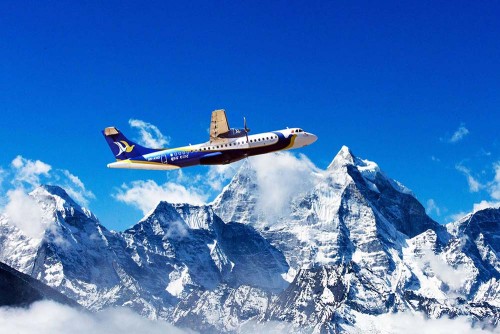
Everest Flight Nepal is one of Kathmandu's most trusted aerial adventure and trekking service providers, specializing in Everest mountain flights, helicopter tours across the Himalayas, Kathmandu-to-Lukla flights, and guided Nepal Himalayan trekking packages. Whether you are an adventure-seeker with limited time, a luxury traveler craving once-in-a-lifetime panoramas, or a seasoned trekker planning a multi-week Himalayan expedition, Everest Flight Nepal offers tailor-made solutions for every style of traveler.
Operating from Thamel, Kathmandu — the heartbeat of Nepal's tourism industry — Everest Flight Nepal combines decades of aviation experience with deep knowledge of Nepal's terrain, culture, and weather patterns to deliver safe, reliable, and spectacular aerial and trekking experiences.
There is a moment — somewhere between Kathmandu's morning haze and the first flash of white against a cobalt sky — when the Himalayas simply announce themselves. No buildup, no gradual reveal. Just Everest, hanging in the air like something the earth invented on a particularly ambitious day.
You don't need to spend fourteen days on a trail to have that moment. Nepal's aerial options for seeing Everest have quietly become some of the most remarkable travel experiences on earth. Here is everything you need to know about your options, what truly sets them apart, and how to choose the one that fits your journey.
Trekking to Everest Base Camp is a profound experience — but it demands weeks of time, strong physical fitness, and careful acclimatisation. For millions of travellers — families, seniors, business visitors, those recovering from health challenges, or simply people with limited holiday days — the aerial alternative isn't a compromise. It is a completely different, deeply valid way of experiencing the greatest mountain on earth.
From the air, you see Everest the way eagles do. You understand its scale not by standing beneath it, but by flying alongside its neighbours and watching it still tower above everything else. It is humbling in an entirely different way.
This is Nepal's most popular aerial experience, and for good reason. Every morning, small commercial aircraft depart Kathmandu's Tribhuvan International Airport and fly east along the Himalayan range, giving passengers a front-row view of more than twenty of the world's highest peaks — with Everest as the undisputed centrepiece.
What the experience actually feels like:
The flight begins before sunrise. Hotel pickup typically happens around 5:30 AM, and the aircraft takes off around 6:15–6:30 AM — precisely the window when mountain light is at its most dramatic and atmospheric clarity is at its peak. As the urban landscape of Kathmandu falls away, forested ridgelines give way to vast snow-laden ranges, and the cabin goes quiet. People stop talking. They just watch.
The route follows the Himalayan arc rather than flying directly toward Everest. This is intentional and beautiful — you build toward the summit through a procession of giants: Langtang, Gauri Shankar, Cho Oyu, Lhotse, Makalu, and Kangchenjunga all appear before Everest herself dominates the horizon. Flight attendants move through the cabin guiding passengers to the cockpit in small groups so every single person gets a clear, unobstructed view from the front windows.
The flight lasts approximately one hour and lands back in Kathmandu by 7:30–8:00 AM, meaning you will have witnessed one of the world's greatest natural spectacles and still be back at your hotel before breakfast service ends.
What is typically included:
Best for: Travellers with limited time, families with children, senior travellers, budget-conscious visitors, and anyone wanting a quick and spectacular Himalayan immersion.
Approximate cost: USD 260–280 per person, depending on the operator and season.
If the mountain flight is Everest from the gallery, the helicopter tour is Everest from the front row. This option takes a dramatically different approach — rather than flying above the Himalayan range from a distance, the helicopter descends into the Khumbu Valley itself, weaving through the same valleys and ridgelines that trekkers spend nearly two weeks traversing on foot.
What makes it extraordinary:
The helicopter can land. That changes everything. Most tours include a stop at Kala Patthar (5,545 metres), the legendary viewpoint from which Everest appears in its most complete and overwhelming form — filling the entire sky above you, its plume of wind-driven snow curling from the summit. You step out of the aircraft, breathe the thin Himalayan air, feel the cold, hear the silence, and stand in the presence of something far larger than yourself.
Many tours also include a stop at the Hotel Everest View in Syangboche — the world's highest hotel — where a breakfast with panoramic views of Everest, Ama Dablam, and Thamserku turns a mountain adventure into something genuinely luxurious.
The helicopter accommodates just five or six passengers, making the experience intimate and personal. There are no strangers pressing against your window. No waiting in line for a cockpit glimpse. The entire craft moves according to the group's experience.
Duration: 3.5 to 5 hours, depending on the route and number of landings.
Approximate cost: USD 1,290–1,790 per person on a group-sharing basis. Private charters are also available for those wanting a fully exclusive experience.
Best for: Honeymooners, special celebrations, photography enthusiasts, seasoned travellers seeking a premium experience, those who want to actually land near Everest without a multi-day trek.
| Mountain Flight | Helicopter Tour | |
|---|---|---|
| Duration | ~1 hour | 3.5–5 hours |
| Passengers | 15–20 people | 5–6 people |
| Landing near Everest | No | Yes (Kala Patthar & more) |
| Starting price | $260to $280/person | $1,290 to $1,790/person |
| Privacy level | Group experience | Intimate & exclusive |
| Best for | Quick, accessible, affordable | Luxury, close-up, unforgettable |
| Returns to the hotel by | ~8:30 AM | Late morning |
Not all mornings over the Himalayas are equal. The mountain weather that shapes trekking routes equally governs aerial experiences, and choosing the right time to fly dramatically affects what you will see.
Spring (March–May): Widely regarded as the finest season for Everest flights. Skies are deeply clear, temperatures are mild, and the post-winter atmosphere offers extraordinary visibility. This is also peak climbing season on Everest, meaning the mountain carries a particular energy.
Autumn (September–November): The second great window. After the monsoon rains wash the atmosphere clean, the Himalayas emerge in extraordinary sharpness. October in particular produces some of the clearest aerial views of the year.
Monsoon (June–August): Flights operate but visibility is frequently compromised by cloud cover and rain. Weather-related rescheduling is common during these months. Budget additional flexibility into your itinerary if flying in this season.
Winter (December–February): Flights operate regularly and views can be surprisingly crisp on clear days. Temperatures at altitude are extreme, which matters more for helicopter landings than for fixed-wing flights.
The golden rule: Fly early. The Himalayas are clearest in the first hours after dawn. By mid-morning, valley clouds begin building, and visibility diminishes. Every experienced pilot and local guide will tell you the same thing — the mountain belongs to the early riser.
Book through a trusted local operator. The best Everest flight experiences are arranged through knowledgeable ground operators who handle hotel coordination, airport transfers, weather monitoring, and rescheduling — not just ticket sales. A guide who knows the mountain and the logistics makes the difference between a smooth, memorable morning and a stressful scramble.
Always confirm your window seat. For fixed-wing flights, your position in the cabin determines your experience. Reputable operators guarantee window seats — confirm this before booking.
Sit on the left side heading east. The Himalayan range runs to the south of the flight path. Passengers seated on the left side of the aircraft heading out from Kathmandu generally get the best unobstructed views of the peaks, including Everest.
Bring layers. The aircraft cabin can be cool at altitude, and if you're on a helicopter tour with a high-altitude landing, the cold at Kala Patthar is genuine and immediate. Dress in warm, packable layers regardless of the season.
Be weather-flexible. Reputable operators will reschedule flights at no extra charge if visibility is poor. This is not an inconvenience — it is them protecting your experience. A rescheduled flight on a clear morning is infinitely better than a cloudy one on your original date.
Charge your camera the night before. The Himalayas from 7,000 metres at sunrise are not a moment to discover your battery is dead.
There is no wrong way to see Everest. Whether you are pressed for time and slipping in a one-hour mountain flight between Kathmandu sightseeing days, or arriving for a private helicopter landing on Kala Patthar as the sun crests the summit ridge, the mountain does what it always does. It silences you. It reminds you of scale and permanence and beauty in a way that very few things in life can.
Nepal has made this experience remarkably accessible. You simply have to show up, look up, and let it do the rest.
Everest Flight Nepal provides mountain flights over Everest, Helicopter Tours to Everest Base Camp, Annapurna, Langtang, Manaslu, Gosaikunda, and Muktinath, Kathmandu-to-Lukla fixed-wing and helicopter flights, helicopter rescue services, and guided Nepal Himalayas trekking packages.
A fixed-wing airline ticket from Kathmandu to Lukla costs approximately USD 260–280 one-way for foreign nationals. During peak trekking season (April–May and October–November), flights operate via Ramechhap Airport at USD 190–220 plus a shared transfer. A Kathmandu to Lukla helicopter shared flight costs USD 550–750 per person; a private helicopter charter costs USD 3000–3,500 for up to 5 passengers.
The fixed-wing flight takes approximately 30–40 minutes from Kathmandu (or 15–20 minutes from Ramechhap). A helicopter flight takes approximately 45–60 minutes from Kathmandu.
An Everest Mountain Flight is a scenic fixed-wing aircraft excursion departing from Tribhuvan International Airport in Kathmandu. The flight follows a carefully planned route that brings passengers close enough to the Himalayas to see Mount Everest (8,849 m), Lhotse, Cho Oyu, Makalu, Nuptse, Pumori, Ama Dablam, and dozens of other iconic Himalayan peaks — all from the comfort of a pressurized aircraft, without requiring any physical fitness level, trekking permit, or acclimatization.
The entire experience typically lasts around one hour, departing early in the morning when Himalayan visibility is at its clearest. Each passenger is seated next to a window, ensuring unobstructed panoramic views. Pilots and onboard crew provide commentary identifying each mountain range as it comes into view.
| Detail | Information |
|---|---|
| Departure | Tribhuvan International Airport, Kathmandu |
| Duration | Approx. 1 hour |
| Best Departure Time | 6:30 AM – 7:30 AM |
| Peaks Visible | Everest, Lhotse, Makalu, Cho Oyu, Pumori, Ama Dablam, and 20+ others |
| Season | Year-round (clearest Oct–Nov and Feb–Apr) |
| What's Included | Window seat, crew commentary, certificate |
Lukla's Tenzing-Hillary Airport (IATA: LUA) sits at an elevation of 2,860 meters in the Solukhumbu district of eastern Nepal. It is universally recognized as one of the world's most challenging airports — a short, steeply inclined 527-meter runway carved into a mountainside, with a sheer cliff at one end and a mountain wall at the other. Yet it is also the most important gateway for trekkers and climbers heading to the Khumbu region, Everest Base Camp, and the high passes of the Himalaya.
The Kathmandu to Lukla flight by airline is the fastest and most popular way to begin an Everest region trek, replacing what would otherwise be a grueling 8–10 day walk from the roadhead.
Three CAAN-certified airlines currently serve the Kathmandu–Lukla route:
All three operators fly specially certified mountain aircraft piloted by experienced Nepali aviators who train extensively for high-altitude mountain approaches.
Lukla flights operate under Visual Flight Rules (VFR), meaning clear visibility is required. Flights are typically concentrated between 6:00 AM and 10:00 AM to take advantage of stable morning weather in the mountains. Afternoon conditions frequently deteriorate, making morning bookings essential.
During peak trekking seasons — April 1 to May 15 and October 1 to November 15 — the Civil Aviation Authority of Nepal (CAAN) diverts all Lukla airline flights from Kathmandu's congested Tribhuvan International Airport to Ramechhap (Manthali) Airport, approximately 130 km east of Kathmandu. This reduces airspace congestion and allows more daily rotations within the narrow morning weather window.
The Ramechhap–Lukla flight takes only 15–20 minutes (versus 30–35 from Kathmandu), but travelers must account for the 4–5 hour early-morning road transfer from Kathmandu to Ramechhap, typically departing at 2:00–3:00 AM.
| Route | Passenger Type | One-Way Cost (USD) |
|---|---|---|
| Kathmandu → Lukla (direct) | Foreign national | USD 260–280 |
| Kathmandu → Lukla (direct) | Nepali national | USD 60–70 |
| Ramechhap → Lukla (peak season) | Foreign national | USD 190–220 |
| Ramechhap transfer (shared taxi) | All | USD 20–30 |
Prices fluctuate with demand, season, and availability. Booking 4–6 weeks in advance is strongly recommended during peak season.
Lukla flight cancellations are common and should be anticipated, especially during the monsoon season (June–August) and transitional shoulder months. When your flight is cancelled, your options include:
This is precisely why many experienced trekkers and guides, including myself, recommend either booking a helicopter from the outset or at a minimum, having helicopter arrangements as a backup plan.
The Kathmandu to Lukla helicopter flight has surged in popularity over recent years and is increasingly the preferred choice for trekkers who value reliability, comfort, and time efficiency. As someone who has guided trekkers on the Everest Base Camp route since 2012, I have seen firsthand how a delayed or cancelled fixed-wing flight can cost trekkers an entire day or more — especially in peak season when subsequent flights are fully booked.
Helicopters fly in weather conditions that would ground fixed-wing aircraft. They don't require the same runway infrastructure, can land on shorter pads, and are not subject to the same CAAN morning weather window restrictions that apply to commercial Lukla flights. For trekkers on tight itineraries or those who missed a fixed-wing connection, a helicopter is often the only reliable option.
| Factor | Airline (Fixed-Wing) | Helicopter |
|---|---|---|
| Cost per person | USD 260–280 | USD 550–750 (shared) |
| Private charter (group) | N/A | USD 3,000–3,500 (up to 5 pax) |
| Flight time | 30–35 min | 45–60 min |
| Cancellation risk | Moderate–High | Low |
| Weather dependency | High | Moderate |
| Scenic views | Good (from the window) | Outstanding (panoramic) |
| Luggage flexibility | Limited | More flexible |
| Best for | Budget travelers, flexible schedules | Time-sensitive, reliability-focused |
A typical Kathmandu to Lukla helicopter flight begins with an early morning hotel pickup (approximately 5:30 AM) and transfer to the domestic terminal at Tribhuvan International Airport or directly to the helipad. After check-in and a pre-flight briefing, passengers board a 5-seat helicopter (pilot + 5 passengers maximum, weight-dependent) and take off heading northeast toward the Khumbu region.
The flight follows river valleys and progressively higher terrain, offering stunning aerial views of terraced hillsides, rhododendron forests, cascading rivers, and eventually the snow-capped peaks of the Himalaya. The landing at Tenzing-Hillary Airport is one of the most thrilling in aviation — a precise, steep approach that seasoned pilots make look effortless.
| Type | Cost |
|---|---|
| Shared helicopter (4–5 passengers) | USD 550–750 per person |
| Private charter (up to 5 passengers) | USD 3,000–3,500 total |
| All-inclusive package (transfers + fuel surcharge + taxes) | Included in the above prices |
Book at least 2–4 weeks in advance during peak season. All-inclusive packages with Everest Flight Nepal cover airport transfers, fuel surcharges, government taxes, and service charges with no hidden fees.
Nepal's topography — enormous elevation changes across short horizontal distances — makes it uniquely suited to helicopter tourism. Within a single flight, passengers can travel from subtropical lowlands to glaciated high-altitude terrain, observing landscapes that would otherwise take weeks of trekking to access. Everest Flight Nepal offers Nepal's most comprehensive helicopter tour portfolio.
The Everest Base Camp Helicopter Tour is Nepal's single most popular aerial adventure. The tour departs Kathmandu at dawn and flies to Syangboche (3,750 m) or Kalapatthar (5,545 m) — with options to land at Everest Base Camp itself (5,364 m) — before returning via Namche Bazaar or directly back to Kathmandu.
From the landing point, passengers stand on the same ground where legendary Everest expeditions have set off, with the Khumbu Icefall, Western Cwm, and the summit pyramid of the world's highest mountain filling the entire horizon. This is one of those rare travel experiences that defies adequate description.
Duration: Approximately 4–5 hours (including transfers). Best months: March, April, May, October, November. Includes: Hotel pickup, pilot briefing, landing at high altitude, tea/coffee at Syangboche lodge (with some packages), return transfer
The Annapurna massif — home to Annapurna I (8,091 m), Machapuchare (Fishtail), and Hiunchuli — forms one of Nepal's most dramatic mountain panoramas. The Annapurna Base Camp Helicopter Tour departs from either Kathmandu or Pokhara and lands at the base camp cirque (4,130 m), encircled on three sides by 7,000–8,000 meter peaks.
Duration: 3–4 hours. Departure point options: Kathmandu or Pokhara Best months: October–December, February–April
Langtang Valley — devastated by the 2015 earthquake but stunningly restored through community-led rebuilding — sits just 60 km north of Kathmandu and offers some of the most accessible high-Himalayan scenery in Nepal. The Langtang Valley Helicopter Tour is a superb option for travelers with limited time, landing at Kyanjin Gompa (3,870 m) with views of Langtang Lirung (7,227 m) and the Tibetan plateau beyond.
Sacred to Hindus and Buddhists alike, Gosaikunda Lake (4,380 m) is a high-altitude glacial lake in the Langtang National Park. The helicopter tour offers aerial views of the lake's impossibly blue waters set against glaciated peaks — a deeply spiritual and visually stunning experience that would otherwise require a 5–6 day trek to reach.
Muktinath Temple (3,800 m) in the Mustang district is one of Nepal's most sacred pilgrimage sites — revered by both Hindus and Buddhists. The Muktinath Helicopter Tour departs from Pokhara, traversing the dramatic Kali Gandaki gorge (the world's deepest valley) and the arid trans-Himalayan landscape of Upper Mustang. This tour is particularly popular with pilgrims, senior travelers, and those seeking to combine spirituality with spectacular scenery.
The Manaslu circuit — ranked among Nepal's most pristine trekking regions — is encircled by the Manaslu Helicopter Tour route that showcases the 8,163-meter peak from angles inaccessible on foot. This lesser-known tour rewards travelers with untouched landscapes, traditional Tibetan-influenced villages, and breathtaking glacier close-ups.
Nepal is, without question, the world's premier trekking destination. Home to eight of the ten highest mountains on Earth — including Mount Everest (8,849 m), K2 (8,611 m is in Pakistan, but Kanchenjunga at 8,586 m, Lhotse at 8,516 m, Makalu at 8,485 m, Cho Oyu at 8,188 m, Dhaulagiri at 8,167 m, Manaslu at 8,163 m, and Annapurna at 8,091 m are all in Nepal) — the Nepal Himalayas offer an unparalleled diversity of trekking terrain, cultural immersion, and high-altitude adventure.
Having guided trekkers through Nepal's most iconic and remote routes since 2012, I understand that the right trek depends not just on fitness and budget, but on what kind of experience you're seeking. Below is a comprehensive guide to Nepal's most rewarding trekking routes.
The world's most legendary trek.
The Everest Base Camp Trek is the pilgrimage of the mountain world — a journey through Sherpa culture, Buddhist monasteries, yak pastures, and increasingly thin air to the foot of the highest mountain on Earth. Starting and ending with the thrilling Kathmandu–Lukla flight, every day on this trail reveals something unforgettable.
Highlights:
Trek Profile:
| Detail | Information |
|---|---|
| Duration | 14–16 days |
| Difficulty | Moderate–Strenuous |
| Maximum Elevation | 5,545 m (Kalapatthar) |
| Best Season | March–May, October–November |
| Start/End | Lukla (fly from Kathmandu) |
| Accommodation | Teahouses/lodges throughout |
| Permit Required | Sagarmatha National Park Entry, Khumbu Pasang Lhamu Rural Municipality |
Day-by-Day Overview:
Pro Guide Tip (Prakash Lamsal): "Many trekkers underestimate acclimatization. The 'climb high, sleep low' principle is non-negotiable above 3,500 m. The rest day in Namche is not optional — it is the single most important day of the entire trek."
The Annapurna Base Camp Trek descends into the heart of the Annapurna massif through terraced rice fields, rhododendron forests, Gurung villages, and the dramatic Modi Khola gorge. The base camp sits in a natural amphitheater at 4,130 m, encircled by Annapurna I, South, Hiunchuli, Machapuchare, and Gangapurna — a mountain sanctuary of almost indescribable beauty.
Trek Profile:
| Detail | Information |
|---|---|
| Duration | 10–12 days |
| Difficulty | Moderate |
| Maximum Elevation | 4,130 m (Annapurna Base Camp) |
| Best Season | March–May, October–December |
| Start/End | Pokhara (fly or drive from Kathmandu) |
| Accommodation | Teahouses throughout |
The Annapurna Circuit Trek circumnavigates the entire Annapurna massif, crossing the legendary Thorong La Pass (5,416 m) — the world's most popular high-altitude mountain pass crossing. The route transitions from the subtropical forests of the Marsyangdi valley on the eastern flank to the arid Tibetan-plateau landscapes of the Kali Gandaki gorge on the western side, passing through a dozen ethnically distinct communities in between.
This is arguably Nepal's most diverse and culturally rich long-distance trek, combining altitude, cultural immersion, and extraordinary scenic variety in a single expedition.
Trek Profile:
| Detail | Information |
|---|---|
| Duration | 14–18 days |
| Difficulty | Moderate–Strenuous |
| Maximum Elevation | 5,416 m (Thorong La Pass) |
| Best Season | March–May, October–November |
| Start | Besisahar (drive from Kathmandu/Pokhara) |
| End | Nayapul or Pokhara |
The Manaslu Circuit Trek is Nepal's finest alternative to the Everest and Annapurna regions for travelers seeking genuine wilderness, fewer crowds, and a more authentic Himalayan experience. Circumnavigating Nepal's eighth-highest mountain (8,163 m), the route crosses the Larkya La Pass (5,160 m) and passes through Nubri and Tsum Valley communities whose Tibetan Buddhist culture remains remarkably intact.
A restricted area permit (RAP) adds an extra layer of exclusivity — and ensures the trail remains far less commercialized than its famous counterparts.
Trek Profile:
| Detail | Information |
|---|---|
| Duration | 14–16 days |
| Difficulty | Strenuous |
| Maximum Elevation | 5,160 m (Larkya La Pass) |
| Best Season | March–May, October–November |
| Permits Required | Restricted Area Permit + Manaslu Conservation Area Permit |
| Minimum Group | 2 (required for restricted area) |
The Langtang Valley Trek is Nepal's best short Himalayan trek — a compact but spectacular journey to the Langtang Valley (4,000 m+) from a trailhead just 70 km north of Kathmandu. The route passes through Tamang villages, ancient gompas, dense rhododendron and oak forests, and eventually opens into a wide glacial valley dominated by Langtang Lirung (7,227 m) and Gangchenpo (6,388 m).
For visitors with only one week to spare, Langtang delivers an authentic, high-altitude Himalayan experience without the logistics of flying to Lukla or driving to the Annapurna trailhead.
Trek Profile:
| Detail | Information |
|---|---|
| Duration | 7–9 days |
| Difficulty | Moderate |
| Maximum Elevation | 4,984 m (Tserko Ri optional) |
| Best Season | March–May, October–December |
| Start | Syabrubesi (bus/jeep from Kathmandu) |
For serious trekkers seeking an off-the-beaten-path expedition, the Kanchenjunga Base Camp Trek to Nepal's far-eastern corner delivers the most remote, pristine Himalayan landscapes in the country. Kanchenjunga (8,586 m) — the world's third-highest mountain — straddles the Nepal–Sikkim border and sees fewer trekkers in an entire year than Everest Base Camp sees in a single week.
The double-base-camp circuit (North BC at 5,140 m and South BC at 4,780 m) requires a restricted area permit, is one of Nepal's true expedition-standard treks, and rewards those who commit with wilderness experiences found nowhere else on Earth.
Trek Profile:
| Detail | Information |
|---|---|
| Duration | 18–22 days |
| Difficulty | Very Strenuous |
| Maximum Elevation | 5,140 m (North Base Camp) |
| Best Season | April–May, October |
| Permits | Restricted Area Permit required |
The Mardi Himal Trek is one of Nepal's newest official trekking routes, only formally opened in recent years, offering an uncrowded alternative approach to the Annapurna region. The trail ascends through pristine forests to the high camp at 4,500 m with extraordinary close-range views of Machapuchare (Fishtail, 6,993 m) and the Annapurna South (7,219 m). For travelers who want genuine altitude, real wilderness, and the classic Himalayan atmosphere without two weeks of commitment, Mardi Himal is an ideal choice.
The Ghorepani Poon Hill Trek is Nepal's most popular short trek — and for good reason. The pre-dawn hike to Poon Hill (3,210 m) delivers what many photographers and travelers consider the finest sunrise panorama in Asia: a 180-degree arc of Himalayan peaks from Dhaulagiri (8,167 m) in the west to Manaslu (8,163 m) in the northeast, with Annapurna I and the perfect triangular cone of Machapuchare filling the center frame.
This trek is accessible to fit beginners, can be completed in 4–5 days from Pokhara, and passes through the charming Gurung villages of Ghorepani and Tadapani.
The Lower Dolpo Trek enters one of the most culturally isolated and scenically dramatic regions of Nepal — the Dolpo plateau, a trans-Himalayan landscape that sits in the rain shadow of the Dhaulagiri range. Heavily influenced by Tibetan Buddhism, Dolpo's ancient monasteries, remote villages, and lunar landscape feel entirely removed from the modern world. The region's centerpiece, Phoksundo Lake (3,611 m), is Nepal's deepest lake and one of the most hauntingly beautiful bodies of water in Asia.
For visitors with very limited time, the Chisapani Nagarkot Hike offers a rewarding introduction to Nepal's foothill trekking culture. Starting from the Kathmandu Valley rim at Chisapani (2,175 m), the trail traverses the Shivapuri Nagarjun National Park to the popular hilltop resort town of Nagarkot, with sunrise views across the central Himalayan range from Dhaulagiri to Everest.
A classic short trek in the Pokhara region, the Dhampus Sarangkot Hike offers magnificent views of the Annapurna and Fishtail peaks from the hilltop vantage point of Sarangkot (1,600 m) — one of the best places in Nepal to watch the alpenglow illuminate Himalayan summits at sunrise. This is the perfect introduction to Nepal trekking for first-time visitors or those arriving via Pokhara.
The Everest Three Pass Trek is the most comprehensive Everest region trekking circuit — crossing all three high passes of the Khumbu: Kongma La (5,535 m), Cho La (5,420 m), and Renjo La (5,360 m). In addition to Everest Base Camp and Kalapatthar, the route visits the turquoise Gokyo Lakes and the summit of Gokyo Ri (5,360 m) — arguably a finer viewpoint of Everest than Kalapatthar itself. This trek demands strong fitness, excellent acclimatization, and experience with high-altitude mountain terrain.
The Gokyo Lake Trek offers an alternative to the standard EBC route, following the Dudh Koshi valley past a chain of glacial lakes (Gokyo Lakes 1–6) to the summit of Gokyo Ri (5,360 m) for panoramic views of Everest, Lhotse, Makalu, and Cho Oyu — four of the world's six highest mountains visible from a single point. Less crowded than the main EBC trail, the Gokyo route passes alongside the Ngozumpa Glacier, Nepal's largest glacier.
No trekker wants to think about emergencies in the mountains — but preparation can save lives. Everest Flight Nepal provides professional helicopter rescue and charter services across all major trekking regions:
Travel insurance covering helicopter evacuation is mandatory for all Nepal Himalayas trekking. Standard policy coverage typically includes altitudes up to 5,500–6,000 m; verify before booking that your policy covers the maximum altitude of your specific trek. Everest Flight Nepal works with all major international travel insurers and can coordinate rescues and billings directly with your insurer.
Private helicopter charters are also available for film production, expedition logistics, high-altitude supply drops, VIP sightseeing, and honeymoon packages.
| Season | Months | Trekking | Mountain Flights | Notes |
|---|---|---|---|---|
| Spring (Peak) | March–May | Excellent | Excellent | Rhododendrons in bloom, warm, best overall season |
| Pre-monsoon | Late May–June | Moderate | Moderate | Getting hazy, some rain |
| Monsoon | July–September | Challenging | Challenging | Heavy rain, leeches, poor visibility, trails can be rewarding in upper-rain-shadow areas (Dolpo, Mustang) |
| Autumn (Peak) | October–November | Excellent | Excellent | Crystal clear skies, best visibility, busiest season |
| Early Winter | December | Good | Good | Cold at altitude, quiet trails, clear skies |
| Winter | January–February | Moderate | Moderate | Cold but clear; lower elevations fine; high passes may be closed |
Peak Season Warning: During March–May and October–November, Lukla airline flights operate from Ramechhap Airport (not Kathmandu). All trekkers flying to Lukla during these periods must plan a 3:00 AM departure from Kathmandu for the 4–5 hour road transfer. Booking helicopter flights avoids this complication entirely.
Q: What is the best way to get from Kathmandu to Lukla? A: For most trekkers, a fixed-wing airline flight (Tara Air, Summit Air, or Sita Air) is the most cost-effective option, costing USD 215–240 one-way. During peak season, flights depart from Ramechhap Airport rather than Kathmandu. For guaranteed departures, reliability, or time-sensitive itineraries, a Kathmandu to Lukla helicopter flight (USD 450–750 per person shared; USD 2,700–3,500 private charter) is the recommended upgrade.
Q: Is an Everest mountain flight worth it? A: Absolutely. For travelers who cannot commit to a multi-week trek, the Everest Mountain Flight is the only way to witness the Himalayan giants at close range within a single morning. The experience takes approximately one hour from Kathmandu airport, requires no physical preparation or permits, and is genuinely jaw-dropping. Window seat placement ensures every passenger has unobstructed views.
Q: Do I need a guide for the Nepal Himalayas trekking? A: A licensed, experienced guide is strongly recommended for all major Himalayan treks. Nepal's trail network is extensive and not always well-marked; weather can change rapidly; and altitude-related illness requires someone trained to recognize early symptoms. A knowledgeable guide also provides invaluable cultural insight, language assistance with local communities, and logistical support throughout the trek. For restricted area permits (Manaslu, Kanchenjunga, Dolpo), hiring a licensed guide is a legal requirement.
Q: How fit do I need to be for the Everest Base Camp Trek? A: You don't need to be an athlete, but you should be able to walk 5–8 hours per day on uneven mountain terrain, often at altitudes above 4,000 m. Spending 2–3 months before the trek building cardiovascular fitness through hiking, running, or cycling makes a significant difference. The primary challenge of EBC is altitude, not technical difficulty — the trail involves no climbing, rope work, or special equipment.
Q: When should I book a Kathmandu to Lukla flight? A: Book at least 4–6 weeks in advance during peak trekking season (March–May and October–November), as flights fill extremely quickly. For helicopter flights, 2–4 weeks in advance is generally sufficient, with more flexibility available even in peak season.
Q: What happens if my Lukla flight is cancelled? A: Flight cancellations are common and often weather-related. Most operators will rebook you on the next available slot, which is typically the following day. If your itinerary cannot absorb a one-day delay, arrange a helicopter backup in advance. Everest Flight Nepal can assist with last-minute helicopter arrangements even during high-demand periods.
Q: What permits do I need for Nepal trekking? A: For the Everest region: Sagarmatha National Park Entry Permit and Khumbu Pasang Lhamu Rural Municipality Card. For Annapurna: Annapurna Conservation Area Permit (ACAP) and TIMS (Trekkers' Information Management System) card. For restricted areas (Manaslu, Kanchenjunga, Dolpo, Upper Mustang): Restricted Area Permit + designated conservation area permit. Your trekking company or guide will typically arrange all permits on your behalf.
Q: What is the Everest Base Camp Helicopter Tour cost in 2026? A: The Everest Base Camp Helicopter Tour typically costs USD 1,000–1,200 per person on a group-sharing basis. Private charter rates vary by landing point and group size. All-inclusive packages from Everest Flight Nepal include hotel pickup, fuel surcharges, government taxes, and a landing certificate.
Prakash Lamsal has been an integral part of Nepal's trekking industry since 2012, offering exceptional guidance and creating unforgettable Himalayan experiences for trekkers from across the globe. With more than a decade of hands-on experience, Prakash has established himself as one of Nepal's most trusted and skilled trekking guides.
His portfolio of guided treks spans Nepal's full spectrum of iconic routes: Everest Base Camp, Annapurna Base Camp, Manaslu Circuit, Langtang Valley, Kanchenjunga Base Camp, Annapurna Circuit, Mardi Himal, Ghorepani Poon Hill, Chisapani Nagarkot, Dhampus Sarangkot, and Lower Dolpo. His ability to navigate challenging high-altitude terrain is matched only by his capacity to make every trekking day meaningful, safe, and deeply enjoyable for his clients.
For bookings, custom trek planning, flight coordination, or any Nepal Himalayas travel inquiry, contact Nepal Himalayas Trekking at info@nepalhimalayastrekking.com or call +977 9841044334 (WhatsApp/Viber available, 24/7).
Everest Flight Nepal Amrit Marg Thamel, Kathmandu, Nepal 📱 Mobile/WhatsApp/Viber: +977 9841044334 (24/7)
📞 Landline: +977-1-5451673 (Sunday–Friday, 10 AM–5 PM)
📱 Mobile/WhatsApp/Viber: +977 9841044334 (24/7)
📧 Email: info@nepalhimalayastrekking.com 🌐 Website: www.nepalhimalayastrekking.com
Keywords Covered: Everest Flight Nepal | Everest Mountain Flight | Kathmandu to Lukla flight | Kathmandu to Lukla flight cost 2026 | Kathmandu to Lukla by helicopter | Kathmandu to Lukla helicopter price | Lukla flight cancellation | Ramechhap to Lukla flight | Tenzing-Hillary Airport | Nepal Himalayas trekking | Everest Base Camp Trek | Annapurna Base Camp Trek | Manaslu Circuit Trek | Langtang Valley Trek | Kanchenjunga Base Camp Trek | Annapurna Circuit Trek | Mardi Himal Trek | Ghorepani Poon Hill Trek | Nepal helicopter tour | Everest Base Camp helicopter tour | Annapurna helicopter tour | helicopter rescue Nepal | Nepal trekking guide | best trekking in Nepal | Everest helicopter tour cost | Nepal mountain flight Kathmandu
There are things in this world that cannot be described — they can only be witnessed. Floating at 25,000 feet alongside the greatest mountain range on earth is one of them. Before your boots ever touch a trail, before a single stone of Kathmandu's ancient city passes beneath your feet, Nepal offers you a gift of extraordinary proportion: a front-row seat to eight of the world's fourteen 8,000-metre peaks, seen from a window no wider than your shoulder.
This is not simply a flight. This is your first conversation with the Himalayas.
Your day begins in the quiet hours that belong only to early risers and serious travellers. A private vehicle arrives at your hotel while Kathmandu still sleeps — the narrow lanes silent, the temples dark, the air crisp with altitude. This stillness is intentional. Mountain flights depart early in the morning when the Himalayan skies are at their clearest, and your guide knows there is no substitute for the golden window before the valley haze settles in.
Prakash's Tip: Wear light layers. The aircraft cabin is well-heated, but the pre-dawn drive carries a cool bite that will sharpen your senses perfectly for what lies ahead.
You check in at the domestic terminal of Tribhuvan International Airport (TIA) — the same runway from which Himalayan legends have departed for decades. Arrive at least one hour before the scheduled departure to complete boarding and security with ease. Your Nepal Himalayas Trekking representative handles all formalities, leaving you free to absorb the atmosphere: pilots in white uniforms reviewing weather maps, flight attendants carrying laminated peak charts, and fellow travellers with cameras already in hand.
Nepal's licensed domestic carriers operate modern, pressurised aircraft with wide windows engineered specifically for mountain viewing — safe, reliable, and purpose-built for this experience.
Insider note: On the outbound eastward flight toward Everest, request the left side (A-side) for the most commanding views.
Upon boarding, your flight attendant presents you with a laminated Himalayan Peaks Map — a navigational chart of the giants you are about to meet. This map contains detailed information about every peak visible during the flight, transforming your window into a living geography lesson. Every passenger is guaranteed a window seat — no middle seats, no obstructed views, no compromises.
A brief safety and route orientation follows. The mood is calm, expectant — the way a theatre feels in the moments before the curtain rises.
The aircraft climbs steeply from Kathmandu's bowl-shaped valley, banking eastward over a patchwork of terraced fields, winding rivers, and forested ridgelines. Within minutes, the green hills give way to something else entirely — white. Permanent. Immense.
The flight traces the eastern Himalayan range, starting from Langtang Lirung — the closest great peak to Kathmandu — then progressing eastward past Mount Everest and finally reaching Chamlang Peak before the aircraft gracefully turns for the return journey, giving every passenger a second, differently lit pass of the entire panorama.
This is the hour. Your window becomes a portal to a world most humans will never stand in — the domain of glaciers, icefalls, and summits that pierce the stratosphere.
The peaks you will witness, in sequence:
| Peak | Elevation | What Makes It Remarkable |
|---|---|---|
| Langtang Lirung | 7,234 m | The sentinel of Kathmandu's northern horizon |
| Gosainthan / Shishapangma | 8,013 m | The only 8,000-metre peak located entirely in Tibet |
| Dorje Lhakpa | 6,966 m | Its snow-draped profile uniquely resembles the number 8 lying on its side |
| Gaurishankar | 7,134 m | Sacred to both Hindus and Buddhists; named for Shiva and Parvati |
| Lhotse | 8,516 m | The world's fourth-highest — shares Everest's formidable southern face |
| Makalu | 8,481 m | A near-perfect pyramid; the world's fifth highest peak |
| Mount Everest / Sagarmatha | 8,848.86 m | The summit of the earth — close enough to trace the Hillary Step with the naked eye |
| Ama Dablam | 6,812 m | Called the "Matterhorn of the Himalayas" — arguably the most beautiful mountain on earth |
| Chamlang | 7,319 m | The easternmost anchor of your aerial journey |
Throughout the flight, trained flight attendants move through the cabin, pointing out each visible summit and offering fascinating commentary on the geology, history, and culture surrounding these peaks. On select flights, the pilot personally invites passengers to the cockpit for an unobstructed front-window view of Everest — a rare and unforgettable privilege.
Prakash's Tip: Keep your camera ready — but steal a moment to set it down. Seeing Everest through your own eyes, without a screen between you, is a memory no photograph can fully capture.
After reaching Chamlang, the aircraft makes a gradual westward turn, offering a second, slightly different angle of the entire Himalayan range in full morning light — peaks blazing gold, glaciers shimmering, the Tibetan plateau stretching endlessly to the north.
Weather permitting, your pilot may also point out the legendary Khumbu Icefall, sprawling high-altitude glaciers, and the deep Gokyo Valley far below — places that trekkers spend weeks reaching on foot, seen here in a single sweeping glance from above.
The aircraft descends back into Kathmandu's valley, trading the white world of ice for the terracotta rooftops of one of Asia's most ancient cities. Upon landing, you receive an official Mountain Flight Completion Certificate — a keepsake souvenir and a permanent reminder of the morning you flew alongside the top of the world.
Your Nepal Himalayas Trekking representative will be waiting at arrivals to escort you back to your hotel.
Back at your hotel, over a warm cup of masala tea or Nepali butter coffee, you will find yourself doing what every mountain flight passenger does: reaching for your camera, scrolling through the images, and realising the photographs are beautiful — but incomplete. The Himalayas carry a presence, a gravity, that no lens can fully hold.
It is the perfect way to begin a Nepal journey.
| Detail | Information |
|---|---|
| Flight Duration | Approximately 60 minutes in the air |
| Peaks Visible | Up to 20 Himalayan summits, including 8 of the world's 14 eight-thousanders |
| Seat Policy | A window seat is guaranteed for every passenger |
| Best Months | October–November (Autumn) & March–April (Spring) |
| Seat Recommendation | Left (A-side) on outbound; Right on return |
| Cost Range | USD $200–$250 per person (foreign nationals) |
| Souvenir | Official flight completion certificate issued upon landing |
| Departure Airport | Tribhuvan International Airport (TIA), Domestic Terminal |
⚠️ Weather Advisory: The Himalayas set their own schedule. Departure times may shift by 30 minutes to 1.5 hours depending on weather and air traffic conditions. Delays are always a safety measure — flights operate only when visibility guarantees the full experience. Prakash recommends building flexibility into your morning and trusting that the mountains are always worth the wait.
✈️ Flight & Airport Services
🧭 Guide & Representation
📜 Documentation & Souvenirs
🚗 Ground Transportation
🛡️ Insurance
🏨 Accommodation & Meals
💳 Personal Expenses
🌦️ Weather-Related
💉 Health & Medical
Enjoy the popular trekking and tour packages in Nepal Himalayas. 2026.
Everest Flight Nepal is one of Kathmandu's most trusted aerial adventure and trekking service providers, specializing in Everest mountain flights, helicopter tours across the Himalayas, Kathmandu-to-Lukla flights, and guided Nepal Himalayan trekking packages. Whether you are an adventure-seeker with limited time, a luxury traveler craving once-in-a-lifetime panoramas, or a seasoned trekker planning a multi-week Himalayan expedition, Everest Flight Nepal offers tailor-made solutions for every style of traveler.
Operating from Thamel, Kathmandu — the heartbeat of Nepal's tourism industry — Everest Flight Nepal combines decades of aviation experience with deep knowledge of Nepal's terrain, culture, and weather patterns to deliver safe, reliable, and spectacular aerial and trekking experiences.
There is a moment — somewhere between Kathmandu's morning haze and the first flash of white against a cobalt sky — when the Himalayas simply announce themselves. No buildup, no gradual reveal. Just Everest, hanging in the air like something the earth invented on a particularly ambitious day.
You don't need to spend fourteen days on a trail to have that moment. Nepal's aerial options for seeing Everest have quietly become some of the most remarkable travel experiences on earth. Here is everything you need to know about your options, what truly sets them apart, and how to choose the one that fits your journey.
Trekking to Everest Base Camp is a profound experience — but it demands weeks of time, strong physical fitness, and careful acclimatisation. For millions of travellers — families, seniors, business visitors, those recovering from health challenges, or simply people with limited holiday days — the aerial alternative isn't a compromise. It is a completely different, deeply valid way of experiencing the greatest mountain on earth.
From the air, you see Everest the way eagles do. You understand its scale not by standing beneath it, but by flying alongside its neighbours and watching it still tower above everything else. It is humbling in an entirely different way.
This is Nepal's most popular aerial experience, and for good reason. Every morning, small commercial aircraft depart Kathmandu's Tribhuvan International Airport and fly east along the Himalayan range, giving passengers a front-row view of more than twenty of the world's highest peaks — with Everest as the undisputed centrepiece.
What the experience actually feels like:
The flight begins before sunrise. Hotel pickup typically happens around 5:30 AM, and the aircraft takes off around 6:15–6:30 AM — precisely the window when mountain light is at its most dramatic and atmospheric clarity is at its peak. As the urban landscape of Kathmandu falls away, forested ridgelines give way to vast snow-laden ranges, and the cabin goes quiet. People stop talking. They just watch.
The route follows the Himalayan arc rather than flying directly toward Everest. This is intentional and beautiful — you build toward the summit through a procession of giants: Langtang, Gauri Shankar, Cho Oyu, Lhotse, Makalu, and Kangchenjunga all appear before Everest herself dominates the horizon. Flight attendants move through the cabin guiding passengers to the cockpit in small groups so every single person gets a clear, unobstructed view from the front windows.
The flight lasts approximately one hour and lands back in Kathmandu by 7:30–8:00 AM, meaning you will have witnessed one of the world's greatest natural spectacles and still be back at your hotel before breakfast service ends.
What is typically included:
Best for: Travellers with limited time, families with children, senior travellers, budget-conscious visitors, and anyone wanting a quick and spectacular Himalayan immersion.
Approximate cost: USD 260–280 per person, depending on the operator and season.
If the mountain flight is Everest from the gallery, the helicopter tour is Everest from the front row. This option takes a dramatically different approach — rather than flying above the Himalayan range from a distance, the helicopter descends into the Khumbu Valley itself, weaving through the same valleys and ridgelines that trekkers spend nearly two weeks traversing on foot.
What makes it extraordinary:
The helicopter can land. That changes everything. Most tours include a stop at Kala Patthar (5,545 metres), the legendary viewpoint from which Everest appears in its most complete and overwhelming form — filling the entire sky above you, its plume of wind-driven snow curling from the summit. You step out of the aircraft, breathe the thin Himalayan air, feel the cold, hear the silence, and stand in the presence of something far larger than yourself.
Many tours also include a stop at the Hotel Everest View in Syangboche — the world's highest hotel — where a breakfast with panoramic views of Everest, Ama Dablam, and Thamserku turns a mountain adventure into something genuinely luxurious.
The helicopter accommodates just five or six passengers, making the experience intimate and personal. There are no strangers pressing against your window. No waiting in line for a cockpit glimpse. The entire craft moves according to the group's experience.
Duration: 3.5 to 5 hours, depending on the route and number of landings.
Approximate cost: USD 1,290–1,790 per person on a group-sharing basis. Private charters are also available for those wanting a fully exclusive experience.
Best for: Honeymooners, special celebrations, photography enthusiasts, seasoned travellers seeking a premium experience, those who want to actually land near Everest without a multi-day trek.
| Mountain Flight | Helicopter Tour | |
|---|---|---|
| Duration | ~1 hour | 3.5–5 hours |
| Passengers | 15–20 people | 5–6 people |
| Landing near Everest | No | Yes (Kala Patthar & more) |
| Starting price | $260to $280/person | $1,290 to $1,790/person |
| Privacy level | Group experience | Intimate & exclusive |
| Best for | Quick, accessible, affordable | Luxury, close-up, unforgettable |
| Returns to the hotel by | ~8:30 AM | Late morning |
Not all mornings over the Himalayas are equal. The mountain weather that shapes trekking routes equally governs aerial experiences, and choosing the right time to fly dramatically affects what you will see.
Spring (March–May): Widely regarded as the finest season for Everest flights. Skies are deeply clear, temperatures are mild, and the post-winter atmosphere offers extraordinary visibility. This is also peak climbing season on Everest, meaning the mountain carries a particular energy.
Autumn (September–November): The second great window. After the monsoon rains wash the atmosphere clean, the Himalayas emerge in extraordinary sharpness. October in particular produces some of the clearest aerial views of the year.
Monsoon (June–August): Flights operate but visibility is frequently compromised by cloud cover and rain. Weather-related rescheduling is common during these months. Budget additional flexibility into your itinerary if flying in this season.
Winter (December–February): Flights operate regularly and views can be surprisingly crisp on clear days. Temperatures at altitude are extreme, which matters more for helicopter landings than for fixed-wing flights.
The golden rule: Fly early. The Himalayas are clearest in the first hours after dawn. By mid-morning, valley clouds begin building, and visibility diminishes. Every experienced pilot and local guide will tell you the same thing — the mountain belongs to the early riser.
Book through a trusted local operator. The best Everest flight experiences are arranged through knowledgeable ground operators who handle hotel coordination, airport transfers, weather monitoring, and rescheduling — not just ticket sales. A guide who knows the mountain and the logistics makes the difference between a smooth, memorable morning and a stressful scramble.
Always confirm your window seat. For fixed-wing flights, your position in the cabin determines your experience. Reputable operators guarantee window seats — confirm this before booking.
Sit on the left side heading east. The Himalayan range runs to the south of the flight path. Passengers seated on the left side of the aircraft heading out from Kathmandu generally get the best unobstructed views of the peaks, including Everest.
Bring layers. The aircraft cabin can be cool at altitude, and if you're on a helicopter tour with a high-altitude landing, the cold at Kala Patthar is genuine and immediate. Dress in warm, packable layers regardless of the season.
Be weather-flexible. Reputable operators will reschedule flights at no extra charge if visibility is poor. This is not an inconvenience — it is them protecting your experience. A rescheduled flight on a clear morning is infinitely better than a cloudy one on your original date.
Charge your camera the night before. The Himalayas from 7,000 metres at sunrise are not a moment to discover your battery is dead.
There is no wrong way to see Everest. Whether you are pressed for time and slipping in a one-hour mountain flight between Kathmandu sightseeing days, or arriving for a private helicopter landing on Kala Patthar as the sun crests the summit ridge, the mountain does what it always does. It silences you. It reminds you of scale and permanence and beauty in a way that very few things in life can.
Nepal has made this experience remarkably accessible. You simply have to show up, look up, and let it do the rest.
Everest Flight Nepal provides mountain flights over Everest, Helicopter Tours to Everest Base Camp, Annapurna, Langtang, Manaslu, Gosaikunda, and Muktinath, Kathmandu-to-Lukla fixed-wing and helicopter flights, helicopter rescue services, and guided Nepal Himalayas trekking packages.
A fixed-wing airline ticket from Kathmandu to Lukla costs approximately USD 260–280 one-way for foreign nationals. During peak trekking season (April–May and October–November), flights operate via Ramechhap Airport at USD 190–220 plus a shared transfer. A Kathmandu to Lukla helicopter shared flight costs USD 550–750 per person; a private helicopter charter costs USD 3000–3,500 for up to 5 passengers.
The fixed-wing flight takes approximately 30–40 minutes from Kathmandu (or 15–20 minutes from Ramechhap). A helicopter flight takes approximately 45–60 minutes from Kathmandu.
An Everest Mountain Flight is a scenic fixed-wing aircraft excursion departing from Tribhuvan International Airport in Kathmandu. The flight follows a carefully planned route that brings passengers close enough to the Himalayas to see Mount Everest (8,849 m), Lhotse, Cho Oyu, Makalu, Nuptse, Pumori, Ama Dablam, and dozens of other iconic Himalayan peaks — all from the comfort of a pressurized aircraft, without requiring any physical fitness level, trekking permit, or acclimatization.
The entire experience typically lasts around one hour, departing early in the morning when Himalayan visibility is at its clearest. Each passenger is seated next to a window, ensuring unobstructed panoramic views. Pilots and onboard crew provide commentary identifying each mountain range as it comes into view.
| Detail | Information |
|---|---|
| Departure | Tribhuvan International Airport, Kathmandu |
| Duration | Approx. 1 hour |
| Best Departure Time | 6:30 AM – 7:30 AM |
| Peaks Visible | Everest, Lhotse, Makalu, Cho Oyu, Pumori, Ama Dablam, and 20+ others |
| Season | Year-round (clearest Oct–Nov and Feb–Apr) |
| What's Included | Window seat, crew commentary, certificate |
Lukla's Tenzing-Hillary Airport (IATA: LUA) sits at an elevation of 2,860 meters in the Solukhumbu district of eastern Nepal. It is universally recognized as one of the world's most challenging airports — a short, steeply inclined 527-meter runway carved into a mountainside, with a sheer cliff at one end and a mountain wall at the other. Yet it is also the most important gateway for trekkers and climbers heading to the Khumbu region, Everest Base Camp, and the high passes of the Himalaya.
The Kathmandu to Lukla flight by airline is the fastest and most popular way to begin an Everest region trek, replacing what would otherwise be a grueling 8–10 day walk from the roadhead.
Three CAAN-certified airlines currently serve the Kathmandu–Lukla route:
All three operators fly specially certified mountain aircraft piloted by experienced Nepali aviators who train extensively for high-altitude mountain approaches.
Lukla flights operate under Visual Flight Rules (VFR), meaning clear visibility is required. Flights are typically concentrated between 6:00 AM and 10:00 AM to take advantage of stable morning weather in the mountains. Afternoon conditions frequently deteriorate, making morning bookings essential.
During peak trekking seasons — April 1 to May 15 and October 1 to November 15 — the Civil Aviation Authority of Nepal (CAAN) diverts all Lukla airline flights from Kathmandu's congested Tribhuvan International Airport to Ramechhap (Manthali) Airport, approximately 130 km east of Kathmandu. This reduces airspace congestion and allows more daily rotations within the narrow morning weather window.
The Ramechhap–Lukla flight takes only 15–20 minutes (versus 30–35 from Kathmandu), but travelers must account for the 4–5 hour early-morning road transfer from Kathmandu to Ramechhap, typically departing at 2:00–3:00 AM.
| Route | Passenger Type | One-Way Cost (USD) |
|---|---|---|
| Kathmandu → Lukla (direct) | Foreign national | USD 260–280 |
| Kathmandu → Lukla (direct) | Nepali national | USD 60–70 |
| Ramechhap → Lukla (peak season) | Foreign national | USD 190–220 |
| Ramechhap transfer (shared taxi) | All | USD 20–30 |
Prices fluctuate with demand, season, and availability. Booking 4–6 weeks in advance is strongly recommended during peak season.
Lukla flight cancellations are common and should be anticipated, especially during the monsoon season (June–August) and transitional shoulder months. When your flight is cancelled, your options include:
This is precisely why many experienced trekkers and guides, including myself, recommend either booking a helicopter from the outset or at a minimum, having helicopter arrangements as a backup plan.
The Kathmandu to Lukla helicopter flight has surged in popularity over recent years and is increasingly the preferred choice for trekkers who value reliability, comfort, and time efficiency. As someone who has guided trekkers on the Everest Base Camp route since 2012, I have seen firsthand how a delayed or cancelled fixed-wing flight can cost trekkers an entire day or more — especially in peak season when subsequent flights are fully booked.
Helicopters fly in weather conditions that would ground fixed-wing aircraft. They don't require the same runway infrastructure, can land on shorter pads, and are not subject to the same CAAN morning weather window restrictions that apply to commercial Lukla flights. For trekkers on tight itineraries or those who missed a fixed-wing connection, a helicopter is often the only reliable option.
| Factor | Airline (Fixed-Wing) | Helicopter |
|---|---|---|
| Cost per person | USD 260–280 | USD 550–750 (shared) |
| Private charter (group) | N/A | USD 3,000–3,500 (up to 5 pax) |
| Flight time | 30–35 min | 45–60 min |
| Cancellation risk | Moderate–High | Low |
| Weather dependency | High | Moderate |
| Scenic views | Good (from the window) | Outstanding (panoramic) |
| Luggage flexibility | Limited | More flexible |
| Best for | Budget travelers, flexible schedules | Time-sensitive, reliability-focused |
A typical Kathmandu to Lukla helicopter flight begins with an early morning hotel pickup (approximately 5:30 AM) and transfer to the domestic terminal at Tribhuvan International Airport or directly to the helipad. After check-in and a pre-flight briefing, passengers board a 5-seat helicopter (pilot + 5 passengers maximum, weight-dependent) and take off heading northeast toward the Khumbu region.
The flight follows river valleys and progressively higher terrain, offering stunning aerial views of terraced hillsides, rhododendron forests, cascading rivers, and eventually the snow-capped peaks of the Himalaya. The landing at Tenzing-Hillary Airport is one of the most thrilling in aviation — a precise, steep approach that seasoned pilots make look effortless.
| Type | Cost |
|---|---|
| Shared helicopter (4–5 passengers) | USD 550–750 per person |
| Private charter (up to 5 passengers) | USD 3,000–3,500 total |
| All-inclusive package (transfers + fuel surcharge + taxes) | Included in the above prices |
Book at least 2–4 weeks in advance during peak season. All-inclusive packages with Everest Flight Nepal cover airport transfers, fuel surcharges, government taxes, and service charges with no hidden fees.
Nepal's topography — enormous elevation changes across short horizontal distances — makes it uniquely suited to helicopter tourism. Within a single flight, passengers can travel from subtropical lowlands to glaciated high-altitude terrain, observing landscapes that would otherwise take weeks of trekking to access. Everest Flight Nepal offers Nepal's most comprehensive helicopter tour portfolio.
The Everest Base Camp Helicopter Tour is Nepal's single most popular aerial adventure. The tour departs Kathmandu at dawn and flies to Syangboche (3,750 m) or Kalapatthar (5,545 m) — with options to land at Everest Base Camp itself (5,364 m) — before returning via Namche Bazaar or directly back to Kathmandu.
From the landing point, passengers stand on the same ground where legendary Everest expeditions have set off, with the Khumbu Icefall, Western Cwm, and the summit pyramid of the world's highest mountain filling the entire horizon. This is one of those rare travel experiences that defies adequate description.
Duration: Approximately 4–5 hours (including transfers). Best months: March, April, May, October, November. Includes: Hotel pickup, pilot briefing, landing at high altitude, tea/coffee at Syangboche lodge (with some packages), return transfer
The Annapurna massif — home to Annapurna I (8,091 m), Machapuchare (Fishtail), and Hiunchuli — forms one of Nepal's most dramatic mountain panoramas. The Annapurna Base Camp Helicopter Tour departs from either Kathmandu or Pokhara and lands at the base camp cirque (4,130 m), encircled on three sides by 7,000–8,000 meter peaks.
Duration: 3–4 hours. Departure point options: Kathmandu or Pokhara Best months: October–December, February–April
Langtang Valley — devastated by the 2015 earthquake but stunningly restored through community-led rebuilding — sits just 60 km north of Kathmandu and offers some of the most accessible high-Himalayan scenery in Nepal. The Langtang Valley Helicopter Tour is a superb option for travelers with limited time, landing at Kyanjin Gompa (3,870 m) with views of Langtang Lirung (7,227 m) and the Tibetan plateau beyond.
Sacred to Hindus and Buddhists alike, Gosaikunda Lake (4,380 m) is a high-altitude glacial lake in the Langtang National Park. The helicopter tour offers aerial views of the lake's impossibly blue waters set against glaciated peaks — a deeply spiritual and visually stunning experience that would otherwise require a 5–6 day trek to reach.
Muktinath Temple (3,800 m) in the Mustang district is one of Nepal's most sacred pilgrimage sites — revered by both Hindus and Buddhists. The Muktinath Helicopter Tour departs from Pokhara, traversing the dramatic Kali Gandaki gorge (the world's deepest valley) and the arid trans-Himalayan landscape of Upper Mustang. This tour is particularly popular with pilgrims, senior travelers, and those seeking to combine spirituality with spectacular scenery.
The Manaslu circuit — ranked among Nepal's most pristine trekking regions — is encircled by the Manaslu Helicopter Tour route that showcases the 8,163-meter peak from angles inaccessible on foot. This lesser-known tour rewards travelers with untouched landscapes, traditional Tibetan-influenced villages, and breathtaking glacier close-ups.
Nepal is, without question, the world's premier trekking destination. Home to eight of the ten highest mountains on Earth — including Mount Everest (8,849 m), K2 (8,611 m is in Pakistan, but Kanchenjunga at 8,586 m, Lhotse at 8,516 m, Makalu at 8,485 m, Cho Oyu at 8,188 m, Dhaulagiri at 8,167 m, Manaslu at 8,163 m, and Annapurna at 8,091 m are all in Nepal) — the Nepal Himalayas offer an unparalleled diversity of trekking terrain, cultural immersion, and high-altitude adventure.
Having guided trekkers through Nepal's most iconic and remote routes since 2012, I understand that the right trek depends not just on fitness and budget, but on what kind of experience you're seeking. Below is a comprehensive guide to Nepal's most rewarding trekking routes.
The world's most legendary trek.
The Everest Base Camp Trek is the pilgrimage of the mountain world — a journey through Sherpa culture, Buddhist monasteries, yak pastures, and increasingly thin air to the foot of the highest mountain on Earth. Starting and ending with the thrilling Kathmandu–Lukla flight, every day on this trail reveals something unforgettable.
Highlights:
Trek Profile:
| Detail | Information |
|---|---|
| Duration | 14–16 days |
| Difficulty | Moderate–Strenuous |
| Maximum Elevation | 5,545 m (Kalapatthar) |
| Best Season | March–May, October–November |
| Start/End | Lukla (fly from Kathmandu) |
| Accommodation | Teahouses/lodges throughout |
| Permit Required | Sagarmatha National Park Entry, Khumbu Pasang Lhamu Rural Municipality |
Day-by-Day Overview:
Pro Guide Tip (Prakash Lamsal): "Many trekkers underestimate acclimatization. The 'climb high, sleep low' principle is non-negotiable above 3,500 m. The rest day in Namche is not optional — it is the single most important day of the entire trek."
The Annapurna Base Camp Trek descends into the heart of the Annapurna massif through terraced rice fields, rhododendron forests, Gurung villages, and the dramatic Modi Khola gorge. The base camp sits in a natural amphitheater at 4,130 m, encircled by Annapurna I, South, Hiunchuli, Machapuchare, and Gangapurna — a mountain sanctuary of almost indescribable beauty.
Trek Profile:
| Detail | Information |
|---|---|
| Duration | 10–12 days |
| Difficulty | Moderate |
| Maximum Elevation | 4,130 m (Annapurna Base Camp) |
| Best Season | March–May, October–December |
| Start/End | Pokhara (fly or drive from Kathmandu) |
| Accommodation | Teahouses throughout |
The Annapurna Circuit Trek circumnavigates the entire Annapurna massif, crossing the legendary Thorong La Pass (5,416 m) — the world's most popular high-altitude mountain pass crossing. The route transitions from the subtropical forests of the Marsyangdi valley on the eastern flank to the arid Tibetan-plateau landscapes of the Kali Gandaki gorge on the western side, passing through a dozen ethnically distinct communities in between.
This is arguably Nepal's most diverse and culturally rich long-distance trek, combining altitude, cultural immersion, and extraordinary scenic variety in a single expedition.
Trek Profile:
| Detail | Information |
|---|---|
| Duration | 14–18 days |
| Difficulty | Moderate–Strenuous |
| Maximum Elevation | 5,416 m (Thorong La Pass) |
| Best Season | March–May, October–November |
| Start | Besisahar (drive from Kathmandu/Pokhara) |
| End | Nayapul or Pokhara |
The Manaslu Circuit Trek is Nepal's finest alternative to the Everest and Annapurna regions for travelers seeking genuine wilderness, fewer crowds, and a more authentic Himalayan experience. Circumnavigating Nepal's eighth-highest mountain (8,163 m), the route crosses the Larkya La Pass (5,160 m) and passes through Nubri and Tsum Valley communities whose Tibetan Buddhist culture remains remarkably intact.
A restricted area permit (RAP) adds an extra layer of exclusivity — and ensures the trail remains far less commercialized than its famous counterparts.
Trek Profile:
| Detail | Information |
|---|---|
| Duration | 14–16 days |
| Difficulty | Strenuous |
| Maximum Elevation | 5,160 m (Larkya La Pass) |
| Best Season | March–May, October–November |
| Permits Required | Restricted Area Permit + Manaslu Conservation Area Permit |
| Minimum Group | 2 (required for restricted area) |
The Langtang Valley Trek is Nepal's best short Himalayan trek — a compact but spectacular journey to the Langtang Valley (4,000 m+) from a trailhead just 70 km north of Kathmandu. The route passes through Tamang villages, ancient gompas, dense rhododendron and oak forests, and eventually opens into a wide glacial valley dominated by Langtang Lirung (7,227 m) and Gangchenpo (6,388 m).
For visitors with only one week to spare, Langtang delivers an authentic, high-altitude Himalayan experience without the logistics of flying to Lukla or driving to the Annapurna trailhead.
Trek Profile:
| Detail | Information |
|---|---|
| Duration | 7–9 days |
| Difficulty | Moderate |
| Maximum Elevation | 4,984 m (Tserko Ri optional) |
| Best Season | March–May, October–December |
| Start | Syabrubesi (bus/jeep from Kathmandu) |
For serious trekkers seeking an off-the-beaten-path expedition, the Kanchenjunga Base Camp Trek to Nepal's far-eastern corner delivers the most remote, pristine Himalayan landscapes in the country. Kanchenjunga (8,586 m) — the world's third-highest mountain — straddles the Nepal–Sikkim border and sees fewer trekkers in an entire year than Everest Base Camp sees in a single week.
The double-base-camp circuit (North BC at 5,140 m and South BC at 4,780 m) requires a restricted area permit, is one of Nepal's true expedition-standard treks, and rewards those who commit with wilderness experiences found nowhere else on Earth.
Trek Profile:
| Detail | Information |
|---|---|
| Duration | 18–22 days |
| Difficulty | Very Strenuous |
| Maximum Elevation | 5,140 m (North Base Camp) |
| Best Season | April–May, October |
| Permits | Restricted Area Permit required |
The Mardi Himal Trek is one of Nepal's newest official trekking routes, only formally opened in recent years, offering an uncrowded alternative approach to the Annapurna region. The trail ascends through pristine forests to the high camp at 4,500 m with extraordinary close-range views of Machapuchare (Fishtail, 6,993 m) and the Annapurna South (7,219 m). For travelers who want genuine altitude, real wilderness, and the classic Himalayan atmosphere without two weeks of commitment, Mardi Himal is an ideal choice.
The Ghorepani Poon Hill Trek is Nepal's most popular short trek — and for good reason. The pre-dawn hike to Poon Hill (3,210 m) delivers what many photographers and travelers consider the finest sunrise panorama in Asia: a 180-degree arc of Himalayan peaks from Dhaulagiri (8,167 m) in the west to Manaslu (8,163 m) in the northeast, with Annapurna I and the perfect triangular cone of Machapuchare filling the center frame.
This trek is accessible to fit beginners, can be completed in 4–5 days from Pokhara, and passes through the charming Gurung villages of Ghorepani and Tadapani.
The Lower Dolpo Trek enters one of the most culturally isolated and scenically dramatic regions of Nepal — the Dolpo plateau, a trans-Himalayan landscape that sits in the rain shadow of the Dhaulagiri range. Heavily influenced by Tibetan Buddhism, Dolpo's ancient monasteries, remote villages, and lunar landscape feel entirely removed from the modern world. The region's centerpiece, Phoksundo Lake (3,611 m), is Nepal's deepest lake and one of the most hauntingly beautiful bodies of water in Asia.
For visitors with very limited time, the Chisapani Nagarkot Hike offers a rewarding introduction to Nepal's foothill trekking culture. Starting from the Kathmandu Valley rim at Chisapani (2,175 m), the trail traverses the Shivapuri Nagarjun National Park to the popular hilltop resort town of Nagarkot, with sunrise views across the central Himalayan range from Dhaulagiri to Everest.
A classic short trek in the Pokhara region, the Dhampus Sarangkot Hike offers magnificent views of the Annapurna and Fishtail peaks from the hilltop vantage point of Sarangkot (1,600 m) — one of the best places in Nepal to watch the alpenglow illuminate Himalayan summits at sunrise. This is the perfect introduction to Nepal trekking for first-time visitors or those arriving via Pokhara.
The Everest Three Pass Trek is the most comprehensive Everest region trekking circuit — crossing all three high passes of the Khumbu: Kongma La (5,535 m), Cho La (5,420 m), and Renjo La (5,360 m). In addition to Everest Base Camp and Kalapatthar, the route visits the turquoise Gokyo Lakes and the summit of Gokyo Ri (5,360 m) — arguably a finer viewpoint of Everest than Kalapatthar itself. This trek demands strong fitness, excellent acclimatization, and experience with high-altitude mountain terrain.
The Gokyo Lake Trek offers an alternative to the standard EBC route, following the Dudh Koshi valley past a chain of glacial lakes (Gokyo Lakes 1–6) to the summit of Gokyo Ri (5,360 m) for panoramic views of Everest, Lhotse, Makalu, and Cho Oyu — four of the world's six highest mountains visible from a single point. Less crowded than the main EBC trail, the Gokyo route passes alongside the Ngozumpa Glacier, Nepal's largest glacier.
No trekker wants to think about emergencies in the mountains — but preparation can save lives. Everest Flight Nepal provides professional helicopter rescue and charter services across all major trekking regions:
Travel insurance covering helicopter evacuation is mandatory for all Nepal Himalayas trekking. Standard policy coverage typically includes altitudes up to 5,500–6,000 m; verify before booking that your policy covers the maximum altitude of your specific trek. Everest Flight Nepal works with all major international travel insurers and can coordinate rescues and billings directly with your insurer.
Private helicopter charters are also available for film production, expedition logistics, high-altitude supply drops, VIP sightseeing, and honeymoon packages.
| Season | Months | Trekking | Mountain Flights | Notes |
|---|---|---|---|---|
| Spring (Peak) | March–May | Excellent | Excellent | Rhododendrons in bloom, warm, best overall season |
| Pre-monsoon | Late May–June | Moderate | Moderate | Getting hazy, some rain |
| Monsoon | July–September | Challenging | Challenging | Heavy rain, leeches, poor visibility, trails can be rewarding in upper-rain-shadow areas (Dolpo, Mustang) |
| Autumn (Peak) | October–November | Excellent | Excellent | Crystal clear skies, best visibility, busiest season |
| Early Winter | December | Good | Good | Cold at altitude, quiet trails, clear skies |
| Winter | January–February | Moderate | Moderate | Cold but clear; lower elevations fine; high passes may be closed |
Peak Season Warning: During March–May and October–November, Lukla airline flights operate from Ramechhap Airport (not Kathmandu). All trekkers flying to Lukla during these periods must plan a 3:00 AM departure from Kathmandu for the 4–5 hour road transfer. Booking helicopter flights avoids this complication entirely.
Q: What is the best way to get from Kathmandu to Lukla? A: For most trekkers, a fixed-wing airline flight (Tara Air, Summit Air, or Sita Air) is the most cost-effective option, costing USD 215–240 one-way. During peak season, flights depart from Ramechhap Airport rather than Kathmandu. For guaranteed departures, reliability, or time-sensitive itineraries, a Kathmandu to Lukla helicopter flight (USD 450–750 per person shared; USD 2,700–3,500 private charter) is the recommended upgrade.
Q: Is an Everest mountain flight worth it? A: Absolutely. For travelers who cannot commit to a multi-week trek, the Everest Mountain Flight is the only way to witness the Himalayan giants at close range within a single morning. The experience takes approximately one hour from Kathmandu airport, requires no physical preparation or permits, and is genuinely jaw-dropping. Window seat placement ensures every passenger has unobstructed views.
Q: Do I need a guide for the Nepal Himalayas trekking? A: A licensed, experienced guide is strongly recommended for all major Himalayan treks. Nepal's trail network is extensive and not always well-marked; weather can change rapidly; and altitude-related illness requires someone trained to recognize early symptoms. A knowledgeable guide also provides invaluable cultural insight, language assistance with local communities, and logistical support throughout the trek. For restricted area permits (Manaslu, Kanchenjunga, Dolpo), hiring a licensed guide is a legal requirement.
Q: How fit do I need to be for the Everest Base Camp Trek? A: You don't need to be an athlete, but you should be able to walk 5–8 hours per day on uneven mountain terrain, often at altitudes above 4,000 m. Spending 2–3 months before the trek building cardiovascular fitness through hiking, running, or cycling makes a significant difference. The primary challenge of EBC is altitude, not technical difficulty — the trail involves no climbing, rope work, or special equipment.
Q: When should I book a Kathmandu to Lukla flight? A: Book at least 4–6 weeks in advance during peak trekking season (March–May and October–November), as flights fill extremely quickly. For helicopter flights, 2–4 weeks in advance is generally sufficient, with more flexibility available even in peak season.
Q: What happens if my Lukla flight is cancelled? A: Flight cancellations are common and often weather-related. Most operators will rebook you on the next available slot, which is typically the following day. If your itinerary cannot absorb a one-day delay, arrange a helicopter backup in advance. Everest Flight Nepal can assist with last-minute helicopter arrangements even during high-demand periods.
Q: What permits do I need for Nepal trekking? A: For the Everest region: Sagarmatha National Park Entry Permit and Khumbu Pasang Lhamu Rural Municipality Card. For Annapurna: Annapurna Conservation Area Permit (ACAP) and TIMS (Trekkers' Information Management System) card. For restricted areas (Manaslu, Kanchenjunga, Dolpo, Upper Mustang): Restricted Area Permit + designated conservation area permit. Your trekking company or guide will typically arrange all permits on your behalf.
Q: What is the Everest Base Camp Helicopter Tour cost in 2026? A: The Everest Base Camp Helicopter Tour typically costs USD 1,000–1,200 per person on a group-sharing basis. Private charter rates vary by landing point and group size. All-inclusive packages from Everest Flight Nepal include hotel pickup, fuel surcharges, government taxes, and a landing certificate.
Prakash Lamsal has been an integral part of Nepal's trekking industry since 2012, offering exceptional guidance and creating unforgettable Himalayan experiences for trekkers from across the globe. With more than a decade of hands-on experience, Prakash has established himself as one of Nepal's most trusted and skilled trekking guides.
His portfolio of guided treks spans Nepal's full spectrum of iconic routes: Everest Base Camp, Annapurna Base Camp, Manaslu Circuit, Langtang Valley, Kanchenjunga Base Camp, Annapurna Circuit, Mardi Himal, Ghorepani Poon Hill, Chisapani Nagarkot, Dhampus Sarangkot, and Lower Dolpo. His ability to navigate challenging high-altitude terrain is matched only by his capacity to make every trekking day meaningful, safe, and deeply enjoyable for his clients.
For bookings, custom trek planning, flight coordination, or any Nepal Himalayas travel inquiry, contact Nepal Himalayas Trekking at info@nepalhimalayastrekking.com or call +977 9841044334 (WhatsApp/Viber available, 24/7).
Everest Flight Nepal Amrit Marg Thamel, Kathmandu, Nepal 📱 Mobile/WhatsApp/Viber: +977 9841044334 (24/7)
📞 Landline: +977-1-5451673 (Sunday–Friday, 10 AM–5 PM)
📱 Mobile/WhatsApp/Viber: +977 9841044334 (24/7)
📧 Email: info@nepalhimalayastrekking.com 🌐 Website: www.nepalhimalayastrekking.com
Keywords Covered: Everest Flight Nepal | Everest Mountain Flight | Kathmandu to Lukla flight | Kathmandu to Lukla flight cost 2026 | Kathmandu to Lukla by helicopter | Kathmandu to Lukla helicopter price | Lukla flight cancellation | Ramechhap to Lukla flight | Tenzing-Hillary Airport | Nepal Himalayas trekking | Everest Base Camp Trek | Annapurna Base Camp Trek | Manaslu Circuit Trek | Langtang Valley Trek | Kanchenjunga Base Camp Trek | Annapurna Circuit Trek | Mardi Himal Trek | Ghorepani Poon Hill Trek | Nepal helicopter tour | Everest Base Camp helicopter tour | Annapurna helicopter tour | helicopter rescue Nepal | Nepal trekking guide | best trekking in Nepal | Everest helicopter tour cost | Nepal mountain flight Kathmandu
There are things in this world that cannot be described — they can only be witnessed. Floating at 25,000 feet alongside the greatest mountain range on earth is one of them. Before your boots ever touch a trail, before a single stone of Kathmandu's ancient city passes beneath your feet, Nepal offers you a gift of extraordinary proportion: a front-row seat to eight of the world's fourteen 8,000-metre peaks, seen from a window no wider than your shoulder.
This is not simply a flight. This is your first conversation with the Himalayas.
Your day begins in the quiet hours that belong only to early risers and serious travellers. A private vehicle arrives at your hotel while Kathmandu still sleeps — the narrow lanes silent, the temples dark, the air crisp with altitude. This stillness is intentional. Mountain flights depart early in the morning when the Himalayan skies are at their clearest, and your guide knows there is no substitute for the golden window before the valley haze settles in.
Prakash's Tip: Wear light layers. The aircraft cabin is well-heated, but the pre-dawn drive carries a cool bite that will sharpen your senses perfectly for what lies ahead.
You check in at the domestic terminal of Tribhuvan International Airport (TIA) — the same runway from which Himalayan legends have departed for decades. Arrive at least one hour before the scheduled departure to complete boarding and security with ease. Your Nepal Himalayas Trekking representative handles all formalities, leaving you free to absorb the atmosphere: pilots in white uniforms reviewing weather maps, flight attendants carrying laminated peak charts, and fellow travellers with cameras already in hand.
Nepal's licensed domestic carriers operate modern, pressurised aircraft with wide windows engineered specifically for mountain viewing — safe, reliable, and purpose-built for this experience.
Insider note: On the outbound eastward flight toward Everest, request the left side (A-side) for the most commanding views.
Upon boarding, your flight attendant presents you with a laminated Himalayan Peaks Map — a navigational chart of the giants you are about to meet. This map contains detailed information about every peak visible during the flight, transforming your window into a living geography lesson. Every passenger is guaranteed a window seat — no middle seats, no obstructed views, no compromises.
A brief safety and route orientation follows. The mood is calm, expectant — the way a theatre feels in the moments before the curtain rises.
The aircraft climbs steeply from Kathmandu's bowl-shaped valley, banking eastward over a patchwork of terraced fields, winding rivers, and forested ridgelines. Within minutes, the green hills give way to something else entirely — white. Permanent. Immense.
The flight traces the eastern Himalayan range, starting from Langtang Lirung — the closest great peak to Kathmandu — then progressing eastward past Mount Everest and finally reaching Chamlang Peak before the aircraft gracefully turns for the return journey, giving every passenger a second, differently lit pass of the entire panorama.
This is the hour. Your window becomes a portal to a world most humans will never stand in — the domain of glaciers, icefalls, and summits that pierce the stratosphere.
The peaks you will witness, in sequence:
| Peak | Elevation | What Makes It Remarkable |
|---|---|---|
| Langtang Lirung | 7,234 m | The sentinel of Kathmandu's northern horizon |
| Gosainthan / Shishapangma | 8,013 m | The only 8,000-metre peak located entirely in Tibet |
| Dorje Lhakpa | 6,966 m | Its snow-draped profile uniquely resembles the number 8 lying on its side |
| Gaurishankar | 7,134 m | Sacred to both Hindus and Buddhists; named for Shiva and Parvati |
| Lhotse | 8,516 m | The world's fourth-highest — shares Everest's formidable southern face |
| Makalu | 8,481 m | A near-perfect pyramid; the world's fifth highest peak |
| Mount Everest / Sagarmatha | 8,848.86 m | The summit of the earth — close enough to trace the Hillary Step with the naked eye |
| Ama Dablam | 6,812 m | Called the "Matterhorn of the Himalayas" — arguably the most beautiful mountain on earth |
| Chamlang | 7,319 m | The easternmost anchor of your aerial journey |
Throughout the flight, trained flight attendants move through the cabin, pointing out each visible summit and offering fascinating commentary on the geology, history, and culture surrounding these peaks. On select flights, the pilot personally invites passengers to the cockpit for an unobstructed front-window view of Everest — a rare and unforgettable privilege.
Prakash's Tip: Keep your camera ready — but steal a moment to set it down. Seeing Everest through your own eyes, without a screen between you, is a memory no photograph can fully capture.
After reaching Chamlang, the aircraft makes a gradual westward turn, offering a second, slightly different angle of the entire Himalayan range in full morning light — peaks blazing gold, glaciers shimmering, the Tibetan plateau stretching endlessly to the north.
Weather permitting, your pilot may also point out the legendary Khumbu Icefall, sprawling high-altitude glaciers, and the deep Gokyo Valley far below — places that trekkers spend weeks reaching on foot, seen here in a single sweeping glance from above.
The aircraft descends back into Kathmandu's valley, trading the white world of ice for the terracotta rooftops of one of Asia's most ancient cities. Upon landing, you receive an official Mountain Flight Completion Certificate — a keepsake souvenir and a permanent reminder of the morning you flew alongside the top of the world.
Your Nepal Himalayas Trekking representative will be waiting at arrivals to escort you back to your hotel.
Back at your hotel, over a warm cup of masala tea or Nepali butter coffee, you will find yourself doing what every mountain flight passenger does: reaching for your camera, scrolling through the images, and realising the photographs are beautiful — but incomplete. The Himalayas carry a presence, a gravity, that no lens can fully hold.
It is the perfect way to begin a Nepal journey.
| Detail | Information |
|---|---|
| Flight Duration | Approximately 60 minutes in the air |
| Peaks Visible | Up to 20 Himalayan summits, including 8 of the world's 14 eight-thousanders |
| Seat Policy | A window seat is guaranteed for every passenger |
| Best Months | October–November (Autumn) & March–April (Spring) |
| Seat Recommendation | Left (A-side) on outbound; Right on return |
| Cost Range | USD $200–$250 per person (foreign nationals) |
| Souvenir | Official flight completion certificate issued upon landing |
| Departure Airport | Tribhuvan International Airport (TIA), Domestic Terminal |
⚠️ Weather Advisory: The Himalayas set their own schedule. Departure times may shift by 30 minutes to 1.5 hours depending on weather and air traffic conditions. Delays are always a safety measure — flights operate only when visibility guarantees the full experience. Prakash recommends building flexibility into your morning and trusting that the mountains are always worth the wait.
✈️ Flight & Airport Services
🧭 Guide & Representation
📜 Documentation & Souvenirs
🚗 Ground Transportation
🛡️ Insurance
🏨 Accommodation & Meals
💳 Personal Expenses
🌦️ Weather-Related
💉 Health & Medical