Any Question? Email Us
info@nepalhimalayastrekking.comTalk To An Expert ( Prakash Lamsal )
Any Question? Email Us
info@nepalhimalayastrekking.comTalk To An Expert ( Prakash Lamsal )
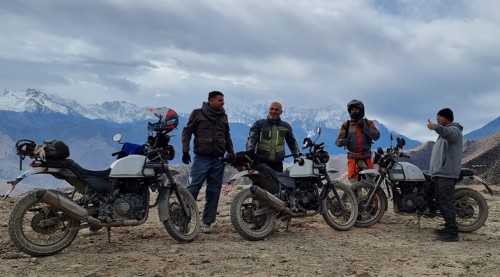
A Motorbike Tour in Nepal gives you a different way to experience the country. Instead of seeing the Himalayas from a fixed itinerary or following a walking trail, you ride through changing landscapes at your own pace, from busy Kathmandu streets and the green hills around Pokhara to the dry valleys and high mountain roads of Mustang. The journey itself becomes part of the experience.
At Nepal Himalayas Trekking, we arrange motorcycle journeys for riders who want more than simply renting a bike and following a route. We have organized and supported these tours many times, both as formal motorcycle trips and as customized journeys for individual riders and groups. That experience helps us plan around the realities of riding in Nepal, where road conditions, weather, wind, traffic, altitude and riding pace can change the way a day develops.
You can choose a shorter motorcycle journey around Kathmandu and Pokhara, ride towards Muktinath and Lower Mustang, take on the more demanding roads of Upper Mustang, or develop a private route around the places you most want to see. The 15-day Upper Mustang Motorbike Tour below is our featured journey, but your motorcycle tour does not have to follow a fixed itinerary.
| Detail | Information |
|---|---|
| Featured Tour | 15-Day Upper Mustang Motorbike Tour |
| Duration | 15 Days |
| Starting Point | Kathmandu |
| Ending Point | Kathmandu |
| Main Destination | Upper Mustang |
| Featured Destination | Lo Manthang |
| Highest Area | Approximately 3,800 m+ depending on route |
| Main Riding Areas | Pokhara, Jomsom, Kagbeni and Upper Mustang |
| Difficulty | Moderate to Challenging |
| Road Style | Paved, gravel, dirt and rough mountain roads |
| Motorcycle | Royal Enfield, Honda CRF or equivalent |
| Tour Type | Private or group departure |
| Accommodation | Hotels, lodges and mountain guesthouses |
| Best Seasons | Spring and autumn |
| Customization | Available |
A motorcycle allows you to experience Nepal at road level. You notice the change from crowded urban streets to green middle hills, river corridors, alpine terrain and the dry landscapes of the trans-Himalayan region. You can stop at viewpoints, villages and roadside locations that might otherwise be passed quickly on a conventional tour.
For riders who enjoy being on the road, the changing surface is part of the adventure. A day can begin on paved roads and gradually move onto gravel, dirt and uneven mountain tracks. The journey requires attention, but it also gives you a stronger connection with the landscape.
Motorcycle touring is particularly rewarding in regions such as Mustang and the Annapurna area, where the road itself becomes an important part of the Himalayan experience.
Kathmandu Valley is a practical starting point for riders who want a shorter motorcycle journey. You can explore historic towns, viewpoints and surrounding hills without immediately committing to a long Himalayan ride.
The valley is also useful for riders who are new to Nepal because it gives you time to become familiar with local traffic, road behaviour and the motorcycle before moving onto longer mountain routes.
The ride from Kathmandu towards Pokhara provides a gradual introduction to Nepal's middle hills. The route passes through busy settlements, river corridors and green hills, with road conditions influenced by traffic, construction and weather.
It is a relatively accessible option for riders who want to experience a longer Nepal motorcycle journey without immediately taking on the rougher roads of Mustang.
The journey towards Muktinath takes you progressively deeper into the Himalayan landscape. As you move beyond the lower hills, the environment becomes cooler, drier and more mountainous.
Lower Mustang provides an opportunity to experience the Kali Gandaki corridor, Jomsom, Kagbeni and Muktinath without necessarily continuing into the more demanding restricted area of Upper Mustang.
For riders interested in combining Himalayan motorcycle travel with other Annapurna experiences, the Annapurna Circuit Trek also covers the wider landscape around Manang, Muktinath, Jomsom and the Kali Gandaki region.
Upper Mustang is the most demanding motorcycle route in this guide. Beyond Kagbeni, the landscape becomes increasingly dry and exposed, with rough gravel, loose stones, uneven mountain tracks, dramatic cliffs and traditional settlements.
Lo Manthang is the main destination, but the road experience is just as important as the destination itself. If you want to explore the same region without travelling by motorcycle, our Upper Mustang Jeep Tour provides another way to experience the landscape and settlements of Mustang.
The Annapurna Circuit takes riders through river valleys, traditional villages, high Himalayan terrain and the changing landscapes around Manang and Mustang. The road experience varies considerably, with easier sections and more demanding mountain surfaces.
If you are considering a longer journey through this region, our Annapurna Circuit Trek provides more information about the route and the Himalayan terrain around Thorong La, Manang and Muktinath.
Manang takes you deeper into the Annapurna landscape, with narrower Himalayan terrain, dramatic valleys and higher mountain surroundings. It can be included as part of a customized motorcycle journey for riders who want to spend more time in the Annapurna region.
| Route | Typical Duration | Road Experience | Difficulty | Best For |
|---|---|---|---|---|
| Kathmandu Valley | 2–4 days | Paved and local roads | Easy | Short motorcycle trips |
| Kathmandu–Pokhara | 2–3 days | Highway and hill roads | Easy to Moderate | First-time touring |
| Muktinath / Lower Mustang | 5–8 days | Mixed mountain roads | Moderate | Himalayan scenery |
| Upper Mustang | 12–15+ days | Gravel, dirt and rough mountain roads | Moderate to Challenging | Adventure riders |
| Annapurna Circuit | 10–15+ days | Mixed mountain terrain | Challenging | Experienced riders |
| Manang | Custom | Mountain roads | Moderate to Challenging | Riders wanting a deeper Himalayan journey |
The durations above are indicative rather than fixed. A private motorcycle tour can be adjusted according to your available time, riding experience, preferred stops and the type of motorcycle you want to use.
If you are comparing motorcycle travel with walking routes in the same regions, our Annapurna Base Camp Trek and Manaslu Circuit Trek pages can help you understand the different Himalayan environments and travel styles.
The 15-day Upper Mustang Motorbike Tour is our featured motorcycle journey for riders who want to experience one of Nepal's most distinctive Himalayan regions by road. The total cost is USD 2,490 per person, covering the planned services and support for the complete 15-day journey.
The route travels from Kathmandu to Pokhara, follows the Kali Gandaki corridor towards Jomsom and Kagbeni, enters Upper Mustang and continues towards Lo Manthang. The return journey comes back through the Mustang region towards Jomsom and Pokhara before finishing in Kathmandu.
The journey includes long road days on the lower sections and shorter but slower mountain sections in Upper Mustang. The distance may look small on some days, but rough surfaces, loose stones, climbs, descents, wind and changing road conditions can make those sections take several hours.
This is a guided motorcycle journey rather than simple motorcycle rental. Route planning, accommodation, support and the practical requirements of travelling through remote mountain areas are considered as part of the journey. The USD 2,490 per-person price reflects the organized nature of the tour and the support required for riding through the Upper Mustang region.
The road experience changes significantly during a motorcycle tour in Nepal.
Around Kathmandu and Pokhara, you will encounter paved roads, traffic and busy settlements. As you move towards the mountains, the road becomes more variable, with gravel, dirt and rougher surfaces appearing along the journey.
The Kali Gandaki corridor towards Jomsom includes rough and uneven sections, while the road beyond Kagbeni becomes more exposed and demanding. Upper Mustang includes loose stones, uneven surfaces, narrow mountain sections and rough tracks.
This is why road difficulty cannot be judged by distance alone. A short mountain section can require considerably more concentration and riding time than a long paved road.
If you want to explore the wider Mustang region from a trekking perspective, our Upper Mustang Trek provides another look at the landscape, settlements and cultural environment.
The difficulty depends heavily on the route you choose.
Short motorcycle journeys around Kathmandu and Pokhara are easier and can suit riders with less mountain touring experience. Upper Mustang is more demanding because of rough roads, altitude, wind, exposure and accumulated riding fatigue.
Riders travelling through Upper Mustang should be comfortable controlling a motorcycle on gravel and uneven surfaces. Previous off-road or adventure-riding experience is helpful, although the right motorcycle, sensible pace and good preparation also make a significant difference.
Most riding days involve approximately 4–7 hours on the motorcycle, although the actual duration depends on road conditions, weather, traffic, stops, maintenance and the pace of the group.
A 150–200 km road day may take around 6–7 hours, while a 20–30 km section in Upper Mustang can take 4–6 hours because the road is rough and progress is slower.
These times are estimates rather than guarantees. Himalayan travel requires flexibility.
The motorcycle should match both the route and the rider. Nepal's motorcycle routes include paved highways, gravel tracks, loose stones, uneven mountain roads and slow technical sections. Choosing the right bike can make the journey more comfortable, safer and easier to control, especially in areas such as Upper Mustang and the Annapurna region.
For routes involving a mixture of paved roads and rough Himalayan surfaces, Royal Enfield motorcycles are a popular choice because they provide a comfortable touring platform and enough power for long road sections. They are particularly suitable for riders who prefer a stable and traditional touring motorcycle.
For riders who prefer a lighter motorcycle and more control on rough surfaces, a Honda CRF or equivalent can be a better option. Lighter bikes are often easier to handle on loose gravel, narrow tracks and uneven climbs, especially when riding at a slower speed.
The most important consideration is not simply engine size. A motorcycle that you can control confidently on gravel, uneven roads and slow technical sections is generally more useful than choosing a larger machine simply because it has a bigger engine.
| Motorcycle | Best For | Main Advantage | Consideration |
|---|---|---|---|
| Royal Enfield | Mixed paved and mountain roads | Comfortable touring, road performance and power | Heavier on loose gravel and technical sections |
| Honda CRF | Rough roads, gravel and off-road sections | Lightweight, easier control and agile handling | Less suited to riders who prefer a heavier touring bike |
| Equivalent Adventure Bike | Customized routes and varied terrain | Balance of comfort, power and off-road ability | Depends on the model and rider |
Your experience, body size, luggage, route and comfort preference should all be considered when choosing a motorcycle. For Upper Mustang, controllability is generally more useful than simply choosing the motorcycle with the largest engine.
Mechanical problems are possible during any long and remote Himalayan motorcycle journey. Remote roads do not always have workshops nearby, and weather or road conditions can affect how quickly assistance or replacement parts can reach you.
Regular checks help reduce unnecessary problems. Tyres, brakes, chain, controls and other basic components should be checked regularly. If you notice unusual sounds, steering problems, braking changes or anything that affects handling, report it early rather than continuing until the problem becomes serious.
If a mechanical issue occurs, the first step is to stop and assess the situation. You should not continue riding if the problem affects safety or motorcycle control. Remote routes require planning around available repair services and logistical support. Local knowledge matters because the nearest practical solution may not be obvious from a map.
This is one reason a guided motorcycle tour is different from simply renting a motorcycle and travelling alone. Guide assistance, route knowledge and timely decisions can be important when conditions change. Regular motorcycle checks, careful riding and reporting problems early also improve the overall safety of the journey.
Safety depends on choosing a route that matches the rider, motorcycle and conditions. Nepal's roads include busy urban traffic, highways, narrow mountain roads, gravel surfaces and exposed sections. Other vehicles, pedestrians, animals, weather, wind, altitude and rider fatigue can all influence the journey.
A conservative riding speed is important, especially when the road surface changes or visibility is limited. Group organization also matters because riders should not feel pressured to maintain a pace that is uncomfortable for them.
In Upper Mustang, fatigue can become as important as road difficulty after several consecutive days. Riding within your ability and stopping when necessary is a more sensible approach than trying to maintain a fixed speed.
A motorcycle tour in Nepal requires more than the documents needed for an ordinary sightseeing trip. Because you will be riding a motorcycle and travelling through a restricted Himalayan area, both your personal travel documents and riding documents need to be in order.
Keep your passport, licence, permits, insurance details and other important documents securely protected from rain and dust during the ride. Your guide can help with the practical permit arrangements, but you should make sure your personal travel and riding documents are valid before arriving in Nepal.
Spring and autumn are generally the preferred seasons for motorcycle touring in Nepal.
The best season can still depend on the specific route. Upper Mustang lies in a rain-shadow region, so its conditions can differ from the wetter southern side of the Himalayas.
Accommodation changes as the route becomes more remote. In Kathmandu and Pokhara, you can stay in established hotels with more facilities. In mountain areas such as Jomsom and along the Upper Mustang route, accommodation is generally provided through simpler lodges, guesthouses and mountain hotels.
In remote parts of Upper Mustang, facilities are more basic. Rooms, bathrooms, heating, electricity and other services should not be expected to have the same standard as in Kathmandu or Pokhara. The accommodation is part of the mountain experience, and comfort naturally decreases as the route becomes more remote.
Food is generally easy to find in Kathmandu and Pokhara, where you can choose from Nepali, Indian, Tibetan and international dishes. Mountain lodges usually provide practical meals such as dal bhat, noodles, rice, vegetables, soup and eggs. Tibetan-style dishes are also common in the higher Himalayan areas.
As you move deeper into Upper Mustang, the choice becomes more limited because of the remote location and transportation requirements. Meals are generally simple, filling and suited to the conditions.
The cost depends on the route, duration, motorcycle, accommodation standard, group size, guide arrangements and level of logistical support.
A short Kathmandu or Pokhara motorcycle journey naturally costs less than a longer Upper Mustang adventure involving restricted-area permits, remote accommodation, additional riding days and greater logistical requirements.
The 15-day Upper Mustang Motorbike Tour costs USD 2,490 per person based on the standard package arrangement. The final price may vary depending on your group size, preferred motorcycle, support requirements and any customization you request. A private customized journey can also have a different price from the standard group departure.
For your exact dates, motorcycle preference and group size, make an enquiry with Nepal Himalayas Trekking and we can provide the appropriate quotation.
A guided motorcycle tour is useful for riders who want local route knowledge and logistical support without having to organize every detail themselves.
Private departures provide more flexibility. The riding pace, stops, accommodation and itinerary can be adjusted around your group.
Group departures can be a good choice for riders who enjoy travelling with other motorcycle enthusiasts and sharing the experience.
The right option depends on your riding experience, preferred level of independence, budget and travel dates.
For a motorcycle tour in Nepal, your riding gear is particularly important. Bring a suitable helmet, riding boots, protective clothing and gloves appropriate for the route.
You should also carry warm layers, waterproof clothing, sunglasses, sunscreen, personal medication, a water bottle, a small daypack, toiletries, a phone or camera, a power bank and a headlamp.
Keep luggage light enough to make the motorcycle comfortable to handle. Mountain roads become more tiring when the bike is overloaded.
Yes. The motorcycle tours can be customized according to your available time, riding experience, preferred route and interests.
You can adjust the number of riding days, choose different stops, change accommodation standards, select a preferred motorcycle and include additional sightseeing.
For example, you may want a shorter journey around Pokhara, a longer Mustang route or a combination of motorcycle travel and trekking. Riders interested in combining different Himalayan experiences can also consider our Annapurna Base Camp Trek or Manaslu Circuit Trek when discussing a customized itinerary.
The final route should always be planned around realistic riding times rather than simply adding as many destinations as possible.
A motorcycle journey in Nepal involves more than arranging a motorcycle and pointing it towards the mountains.
At Nepal Himalayas Trekking, we have organized and supported motorcycle journeys many times, both formally and through customized arrangements. This experience helps us plan around the practical realities of riding in Nepal, including changing road conditions, weather, riding pace, accommodation, altitude, motorcycle requirements and the logistics of travelling through remote mountain areas.
The right gear matters when you are riding from the warm lower valleys into the colder and more exposed mountain regions. We can advise you on what to bring for different sections of the journey, including riding jackets, gloves, waterproof layers, warm clothing, riding boots, helmets and other protective equipment. Rather than treating the packing list as a standard trekking checklist, we consider the actual riding conditions you are likely to encounter.
Mountain roads can be hard on motorcycles. Loose gravel, stones, dust, water crossings, steep climbs and repeated braking can affect tyres, chains, brakes and other components.
Before and during the journey, the motorcycle is checked so that small problems can be identified before they become major ones. Our team also carries the basic tools and spare parts needed for common roadside repairs. If a motorcycle develops a problem that cannot be fixed immediately, the guide and support team can arrange the most practical solution based on where the group is and the condition of the road.
Fuel availability becomes an important consideration once you travel deeper into Mustang. There are stretches where you cannot expect a fuel station to appear when you need one.
For this reason, fuel planning is part of the route preparation. We identify practical refuelling points before entering longer remote sections and advise riders not to wait until the tank is nearly empty. Where the route and support arrangement allow, additional fuel can also be carried for remote sections.
If a rider unexpectedly runs out of fuel, the response depends on where the motorcycle has stopped and what support is available. The guide can coordinate with the support team or arrange fuel from the nearest practical source rather than leaving the rider to solve the problem alone.
For longer or more remote motorcycle journeys, a support jeep can be arranged when required by the group and itinerary. This provides additional logistical support for luggage, spare parts, tools and other equipment and gives the team another option when a motorcycle problem occurs in a difficult location.
A support vehicle is particularly useful on remote mountain routes where mechanical assistance or replacement parts may not be immediately available. The exact support arrangement depends on the route, group size and package selected.
A route that looks straightforward on a map can feel very different on the motorcycle. Road surfaces can change after rain, landslides, construction or heavy traffic. A section that normally takes an hour may take considerably longer when the surface becomes rough or a crossing is difficult.
Our guides consider these conditions when deciding the day's riding pace and stopping points. The aim is not simply to cover kilometres as quickly as possible, but to complete the journey safely and comfortably while allowing enough time for unexpected delays.
Upper Mustang reaches elevations where cold, wind and altitude can affect both riders and motorcycles. Afternoon winds are also common in parts of the Kali Gandaki Valley, and weather can change quickly in the mountains.
We take these factors into account when planning riding hours, rest stops and overnight stays. If conditions make continuing unsafe or impractical, the itinerary can be adjusted rather than forcing riders to follow a timetable at the expense of safety.
Experienced motorcycle touring in Nepal is not about maintaining the same speed everywhere. A rider may be comfortable on a paved highway but need a completely different approach on loose gravel, steep mountain tracks or narrow cliffside roads.
Our guides help riders understand when to slow down, where to stop, how to approach difficult sections and when it is better to let the motorcycle pass through a section carefully rather than trying to maintain momentum.
We can also adjust the journey according to the rider rather than expecting every guest to follow exactly the same route. The motorcycle, riding experience, available time, preferred destinations, group size and desired level of support can all influence how the trip is planned.
The objective is to create a motorcycle journey that is realistic for your experience, time and interests, while preparing properly for the conditions that make riding in Nepal different from an ordinary road trip.
Motorcycle touring and trekking offer very different ways of experiencing Nepal.
A motorcycle allows you to cover long distances and reach remote settlements that would take much longer on foot, while trekking gives you more time to experience the trail, villages and mountain environment at walking pace.
If you are deciding between the two, you can compare this experience with our Annapurna Base Camp Trek, Annapurna Circuit Trek, Manaslu Circuit Trek or Upper Mustang Trek.
The best option depends on whether you prefer road travel, walking, physical challenge, cultural exploration or a combination of different experiences.
Nepal offers motorcycle routes beyond the featured Upper Mustang journey. Riders can explore Mustang and Muktinath, the Annapurna region, Manang, Pokhara and other Himalayan areas depending on available time and riding experience.
Nepal can also be a starting point for longer Himalayan motorcycle adventures. Riders looking beyond Nepal can consider our Tibet Motorbike Tour or the Mount Kailash, Everest Base Camp and Lhasa Motorbike Tour, depending on their available time, riding experience and preferred route.
Some routes are suitable for less-experienced riders, particularly shorter journeys around Kathmandu and Pokhara. Upper Mustang is more demanding because of rough roads, altitude, wind and exposure, so riders should have appropriate motorcycle control and confidence.
It is moderate to challenging. The difficulty comes from rough gravel and dirt roads, loose stones, narrow sections, altitude, wind and several consecutive days of riding.
The featured journey is a guided motorcycle tour rather than simple motorcycle rental. Route planning, accommodation and logistical support are arranged around the journey.
A motorcycle that you can control confidently on loose gravel and uneven surfaces is generally the better choice. Royal Enfield, Honda CRF or an equivalent adventure motorcycle can be considered depending on your experience and preference.
It depends on the route. Shorter journeys can take 2–4 days, while Lower Mustang may require 5–8 days and Upper Mustang normally requires around 12–15 or more days for a comfortable journey.
Yes. A customized itinerary can combine motorcycle travel with trekking or sightseeing. Depending on your interests, you can add experiences such as the Annapurna Base Camp Trek, Annapurna Circuit Trek or another Himalayan route.
No. You can also ride towards Muktinath, Manang and the Annapurna region, while shorter routes around Pokhara and Kathmandu are suitable for travelers with less time. For a walking alternative in the Mustang region, see our Upper Mustang Trek.
A motorcycle tour in Nepal can be as short or as ambitious as you want it to be. You can spend a f