

Tengboche Monastery: The Complete Guide to the Spiritual Heart of the Everest Region
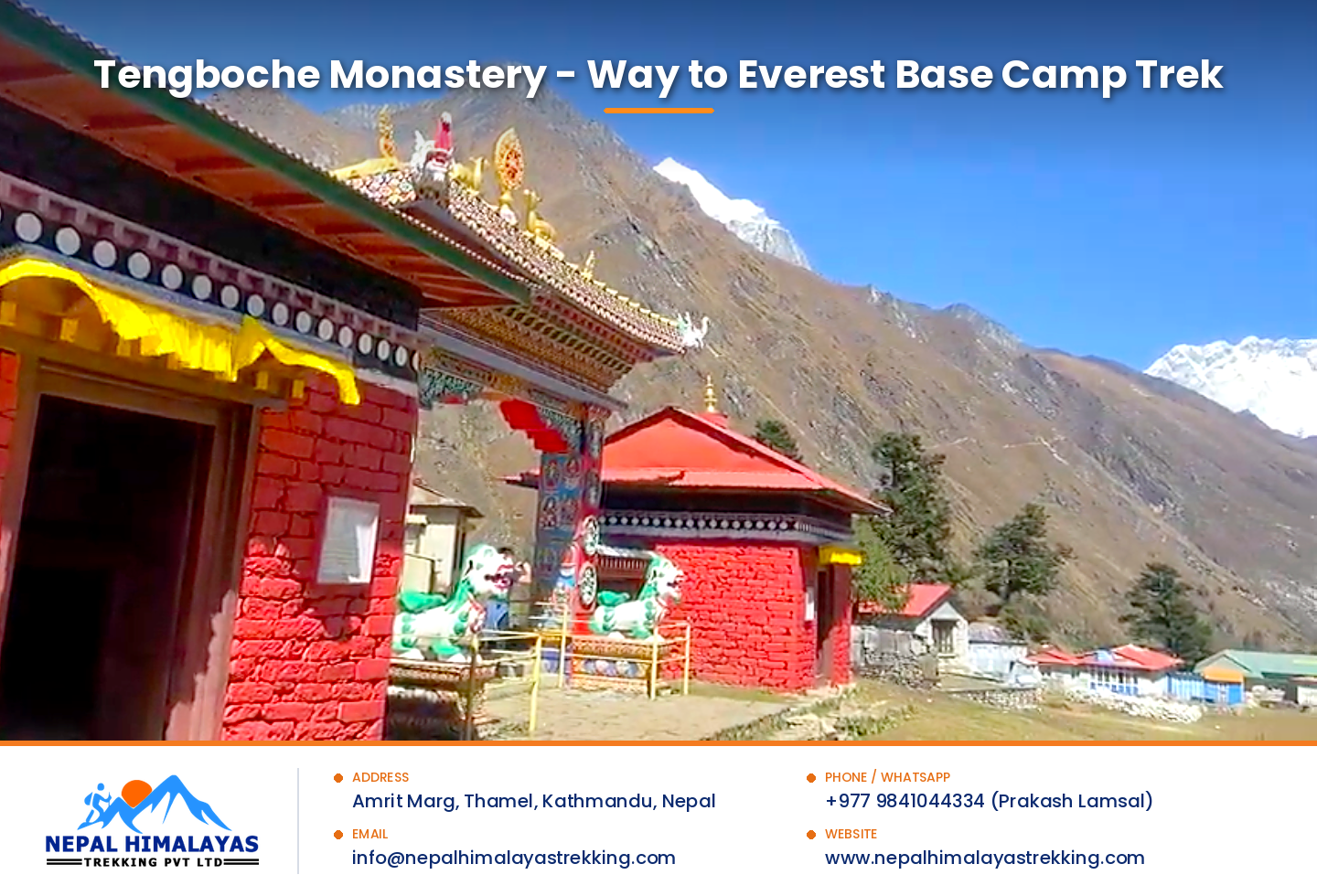
Tengboche Monastery (also spelled Thyangboche or Tyangboche, and formally known as Dawa Choling Gompa) is the largest and most important Buddhist monastery in Nepal's Khumbu region. It sits at 3,867 metres (12,687 ft) on a forested ridge inside Sagarmatha National Park, a UNESCO World Heritage Site. It belongs to the Nyingma school of Tibetan Buddhism. Trekkers on the Everest Base Camp Trek pass through it, and it is known for its view of Ama Dablam, Everest, Lhotse and Nuptse, and for the Mani Rimdu festival.
Tengboche Monastery at a Glance
| Detail | Information |
|---|---|
| Location | Khumbu, Solukhumbu District, Koshi Province, Nepal |
| Altitude | About 3,867 m (12,687 ft); some sources round to 3,860 m |
| Tradition | Nyingma school of Tibetan Buddhism |
| Founded | 1916 by Lama Gulu (some accounts give the early 1920s) |
| Rebuilt | After the 1934 earthquake and again after the 1989 fire |
| Protected area | Sagarmatha National Park (UNESCO World Heritage Site) |
| Main festival | Mani Rimdu (October–November, per the Tibetan lunar calendar) |
| Famous views | Ama Dablam, Everest, Lhotse, Nuptse, Thamserku, Kangtega |
| Trek route | Everest Base Camp trek, Three Passes Trek |
| Best seasons | March–May and October–November |
Where Is Tengboche Monastery Located?
Tengboche stands on a ridge above the meeting point of the Dudh Koshi and Imja Khola rivers, roughly halfway between Namche Bazaar (3,440 m) and Dingboche (4,410 m). The setting is a broad, open ridge ringed by alpine forest and enormous peaks. Ama Dablam rises almost directly ahead, and the Everest–Lhotse–Nuptse wall lies beyond it.
Tengboche is on the classic Everest Base Camp (EBC) route. It is not on the Gokyo Lakes branch, which leaves the main trail at Namche.
The History of Tengboche Monastery
Founding in the early 20th century
Tengboche was founded around 1916 by Lama Gulu, a respected Sherpa lama, as the first celibate monastic community in the Khumbu. Before then, religious life in the valley was centred on village temples and lay practitioners. The monastery gave the Sherpa community a permanent centre for monastic training, teaching and ritual.
Earthquake and rebuilding
The great earthquake of 1934 badly damaged the monastery, and it was rebuilt by the local community.
The 1989 fire and international support
In January 1989, an electrical fire destroyed the main hall and much of its contents, including manuscripts, murals and ritual objects. Sir Edmund Hillary's Himalayan Trust, Sherpa communities and international supporters helped fund and rebuild the monastery in the following years. The Sherpas rebuilt it in traditional style and restored the prayer hall.
A place linked to Everest history
The monastery has been a stop for Everest expeditions since the early mountaineering era, when teams sought the blessings of the resident lamas before heading up the mountain. Sherpa climbers still stop here for blessings before major expeditions.
What You'll See Inside and Around Tengboche
The main prayer hall (Du-khang)
The prayer hall is the heart of the monastery. Inside are a large statue of Shakyamuni Buddha, murals of Buddhist deities and protectors, shelves of sacred texts, and ritual instruments such as horns, drums and cymbals. The interior is dimly lit and richly painted. Visitors usually sit quietly along the sides.
Daily prayer ceremonies
Monks gather for puja (prayer ceremonies) with chanting, drums, long horns and cymbals. Visitors are generally welcome to watch quietly. Timing varies with the season and the monastery's schedule, so ask your guide or lodge owner for the current times. Afternoon and early-morning sessions are the most common.
Mani walls, chortens and prayer wheels
The approach and grounds have mani stones carved with Om Mani Padme Hum, white chortens and rows of prayer wheels. Always keep them on your right-hand side, walking clockwise.
Views from the ridge
- Ama Dablam (6,812 m): dominates the view, especially at sunrise.
- Everest (8,849 m), Lhotse and Nuptse: visible in the distance on clear mornings.
- Thamserku and Kangtega: sharp peaks on the opposite side of the valley.
Wildlife and forest
The surrounding forest of fir, birch and rhododendron (blooming in spring) is home to Himalayan birds such as the Himalayan monal (danphe). Musk deer and Himalayan tahr live in the wider park.
Bakery, lodges and small museum
Tengboche has a few tea houses, a well-known bakery and small shops. Some visitors also look for the monastery's small cultural displays of Sherpa and Buddhist artefacts.
The Mani Rimdu Festival at Tengboche
Mani Rimdu is the most important festival of the Sherpa Buddhist calendar. It is a roughly 19-day cycle of rituals, and the final three days are open to the public.
What happens:
- Sand mandala construction: monks build an intricate mandala from coloured sand, then dismantle it at the end.
- Wong (empowerment): the head lama blesses the community and distributes sacred mani rilwu pills and other blessings.
- Chham (masked dances): monks in elaborate costumes perform dances that represent the triumph of Buddhism over obstacles and evil.
- Jinsak (fire offering): a fire ritual that closes the festival, believed to purify and protect.
The festival commemorates Guru Rinpoche (Padmasambhava) and the spread of Buddhism in the Himalayas. It is also held at Thame and Chiwong monasteries, but Tengboche's is the largest and best known.
Planning tip: The dates follow the Tibetan lunar calendar and change every year. Tour operators currently publish differing dates for the 2026 public days, so confirm with the monastery or a local guide before booking flights or lodges. Lodges fill quickly during the festival, so book early.
How to Reach Tengboche Monastery
Most trekkers reach Tengboche from Kathmandu as follows:
- Fly Kathmandu → Lukla (about 35–40 minutes; some flights operate via Ramechhap in peak seasons).
- Trek Lukla → Phakding → Namche Bazaar (2 days).
- Acclimatise in Namche (1 rest day).
- Trek Namche → Tengboche (about 5–6 hours).
Namche to Tengboche: what to expect
The trail contours along the hillside with views of Ama Dablam, then drops to Phunki Tenga (about 3,250 m) beside the river. The final section is a steep climb of roughly 600 m through forest to the monastery. It's a demanding day, so start early, walk slowly and drink plenty of water.
What comes next
From Tengboche, the trail continues via Deboche and Pangboche to Dingboche (4,410 m) or Pheriche, about 5–6 hours.
Best Time to Visit Tengboche
| Season | Conditions | Why go |
|---|---|---|
| Spring (March–May) | Warmer, rhododendrons in bloom | Colour, long days, mountaineering season |
| Autumn (Oct–Nov) | Clear skies, stable weather | Best views, Mani Rimdu festival |
| Winter (Dec–Feb) | Cold, quiet trails | Solitude; some lodges close |
| Monsoon (June–Sept) | Rain, cloud, leeches at lower altitude | Few trekkers; views often hidden |
Altitude and Acclimatisation at Tengboche
At 3,867 m, Tengboche is in the range where altitude sickness (AMS) can begin for some trekkers. To stay safe:
- Keep a gradual ascent profile with an acclimatisation day at Namche.
- Drink 3–4 litres of water a day.
- Avoid alcohol on arrival, and don't ascend with worsening symptoms such as persistent headache, nausea or dizziness.
- Follow the rule "climb high, sleep low" where possible.
- Choose a licensed guide who monitors your condition daily.
Etiquette: How to Visit Respectfully
- Remove your shoes before entering the prayer hall.
- Ask before taking photos, and never photograph inside the main hall unless clearly permitted.
- Dress modestly and keep your voice low.
- Walk clockwise around mani walls, chortens and the monastery.
- Don't touch statues, murals, texts or ritual objects.
- Don't point your feet at altars or monks.
- Leave a small donation, which supports monastic education and upkeep.
- During prayers, sit quietly and stay until you're comfortable leaving.
Practical Tips for Trekkers
- Permits: Sagarmatha National Park and the local Khumbu municipality permit are required. Fees change, so check the current amounts before you go.
- Cash: Bring Nepali rupees, since ATMs are unreliable above Namche.
- Layers: Nights at Tengboche are cold year-round.
- Sunrise: Wake early for Ama Dablam and Everest at first light.
- Charging and Wi-Fi: Available for a fee and unreliable.
- Insurance: Make sure it covers trekking to 5,000+ m and helicopter evacuation.
Frequently Asked Questions
How high is Tengboche Monastery?
Tengboche Monastery is at about 3,867 metres (12,687 feet) above sea level. Some sources list it as 3,860 m.
Who founded Tengboche Monastery?
It was founded around 1916 by Lama Gulu. It was later rebuilt after the 1934 earthquake and the 1989 fire.
What is Tengboche Monastery famous for?
It is known as the largest monastery in the Khumbu, for its views of Ama Dablam and Everest, and for the Mani Rimdu festival.
Can tourists enter Tengboche Monastery?
Yes. Visitors can enter the prayer hall and watch ceremonies if they remove their shoes, stay quiet and follow local etiquette. Ask before taking photos.
How long does it take to walk from Namche Bazaar to Tengboche?
Usually 5–6 hours, including the descent to Phunki Tenga and a steep climb of about 600 m.
Is Tengboche on the Everest Base Camp trek?
Yes, it's a standard overnight stop on the classic EBC route and on the Three Passes trek.
When is the Mani Rimdu festival?
It is held in October or November based on the Tibetan lunar calendar, with the public ceremonies over the final three days. Dates change each year, so confirm before you go.
Can you stay overnight at Tengboche?
Yes. There are several tea houses in and near the village, plus lodges in nearby Deboche. Book ahead during festival time and peak seasons.
Is altitude sickness a risk at Tengboche?
It can be, especially if you ascend too quickly. Acclimatise at Namche, hydrate, and descend if symptoms worsen.







Add Your Comment