
Any Question? Email Us
info@nepalhimalayastrekking.comTalk To An Expert ( Prakash Lamsal )
Any Question? Email Us
info@nepalhimalayastrekking.comTalk To An Expert ( Prakash Lamsal )
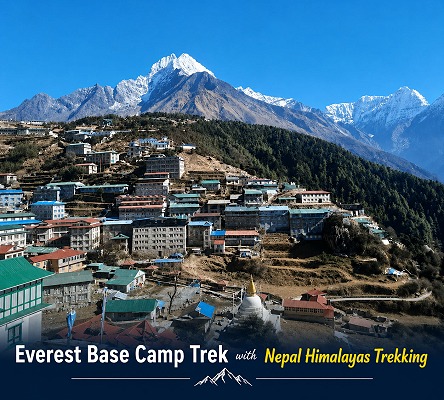
The Everest Base Camp Luxury Trek 10 Days is a shortened trek through the Khumbu Valley for travelers who want to reach Everest Base Camp at 5,364 meters without spending two weeks on the trail. The journey starts in Kathmandu and continues by flight to Lukla before following the classic route through Phakding, Namche Bazaar, Tengboche, Debuche, Dingboche, Lobuche, and Gorak Shep. You spend acclimatization days in Namche Bazaar and Dingboche, reach Everest Base Camp on Day 9, and climb Kala Patthar at 5,550 meters early the following morning before returning toward Kathmandu by helicopter.
The package combines mountain lodges, an experienced guide and porter support, full-board meals, complimentary trekking equipment, and a helicopter return from the Everest region. Because the itinerary reaches high altitude in only 10 days, it suits travelers who are physically fit, have limited time, and prefer a faster EBC experience with less time spent walking back down the valley.
Nepal Himalayas Trekking Note: This is a customized itinerary and can be changed on the basis of clients' desires and available duration. If you want to explore Kathmandu after completing your Everest Base Camp Luxury Trek, Kathmandu Heritage Sightseeing can be arranged after the trek according to your available time and interests.
| Everest Base Camp Luxury Trek with Luxury Hotel & LodgePrice / Person | |
|---|---|
| 🚁 Private Helicopter (KTM to Lukla, Gorak Shep to Lukla to KTM) – 1 Pax | USD 9,690 |
| 🚁 Private Helicopter (KTM to Lukla, Gorak Shep to Lukla to KTM) – 2–3 Pax | USD 6,890 |
| 🚁 Private Helicopter (KTM to Lukla, Gorak Shep to Lukla to KTM) – 4–8 Pax | USD 6,490 |
| 🚁 Private Helicopter (KTM to Lukla, Gorak Shep to Lukla to KTM) – 9–15 Pax | USD 5,690 |
| 🚁 Shared Helicopter – Both Ways (KTM to Lukla, Gorak Shep to Lukla to KTM) | USD 4,290 |
| ✈️ KTM to Lukla by Airline + 🚁 Shared Helicopter Return (Gorak Shep to Lukla/KTM) | USD 3,890 |
The price includes the trekking services listed in the package, accommodation during the trek, meals, guide and porter support, required trekking arrangements, and the scheduled helicopter return. Personal expenses, travel insurance, Nepal visa fees, and other items listed under exclusions are not included.
| Trip Information | Details |
|---|---|
| Trek | Everest Base Camp Luxury Trek |
| Duration | 10 Days |
| Trekking Days | 7 Days + 2 Acclimatization Days |
| Region | Everest / Khumbu |
| Starting Point | Lukla |
| Ending Point | Kathmandu |
| Highest Point | 5,550 m, Kala Patthar |
| Everest Base Camp | 5,364 m |
| Difficulty | Moderate to challenging |
| Accommodation | Kathmandu hotel and mountain lodges/tea houses |
| Meals | Breakfast, lunch and dinner during the trek |
| Best Seasons | Spring and autumn |
| Main Highlights | Everest Base Camp, Kala Patthar, Namche Bazaar, Tengboche |
| Return | Helicopter from the Everest region toward Kathmandu |
The main advantage of this itinerary is time. A conventional Everest Base Camp trek normally requires more days for walking, acclimatization and the return journey. This version keeps the route compact while adding a dedicated acclimatization day in Dingboche and using a helicopter on the final day.
You still walk through the important villages and landscapes along the classic EBC route. The trail passes through the pine and rhododendron forests below Namche, the Buddhist settlements around Tengboche and Debuche, the increasingly barren landscape of Dingboche and Lobuche, and finally the glacial terrain surrounding Gorak Shep and Everest Base Camp.
The additional acclimatization day in Dingboche gives your body more time to adjust before the trek continues toward Lobuche and Gorak Shep. The shorter schedule still means several demanding walking days at altitude, so the trek requires good physical preparation.
Luxury in the Everest region does not mean five-star facilities at every village. The high Himalayas have limited infrastructure, particularly above Namche. Here, luxury comes from having the important arrangements handled for you while you concentrate on the trail.
Depending on availability, accommodation is arranged in quality mountain lodges and established tea houses. Kathmandu accommodation is provided in a comfortable hotel, while mountain stays offer the best available facilities along the route.
Your package also includes:
Facilities such as hot showers, Wi-Fi and charging can be available at selected lodges for an additional fee and may become more limited as you gain altitude.
Altitude deserves serious attention on this trek. The route begins around 2,860 meters at Lukla and climbs to 5,364 meters at Everest Base Camp and 5,550 meters at Kala Patthar. The higher you go, the thinner the air becomes, and even fit trekkers can develop altitude-related symptoms.
The itinerary includes two acclimatization days, one in Namche Bazaar and another in Dingboche. Day 4 allows you to walk to the Everest View Hotel at 3,880 meters and return to Namche to sleep at a lower elevation. The Dingboche acclimatization day provides another opportunity to gain some elevation during the day while returning to Dingboche to sleep.
There is still a significant increase in elevation after Dingboche, so the acclimatization days do not remove the need for careful pacing and attention to altitude symptoms.
Our trekking team carries basic first-aid equipment and can assist with emergency arrangements if necessary. If a trekker develops serious altitude symptoms, continuing higher is not appropriate. The guide will assess the situation and coordinate descent or evacuation according to the circumstances.
The two major high points of this itinerary serve different purposes.
Everest Base Camp at 5,364 meters allows you to stand at the starting point used by mountaineering expeditions attempting Everest from the Nepal side. The surrounding Khumbu Glacier and expedition landscape are the main attractions.
Kala Patthar at 5,550 meters provides the more expansive mountain viewpoint. From the summit area, you can look toward Everest, Nuptse, Pumori and the surrounding Khumbu peaks. Including both makes the final section of the trek worthwhile even though the itinerary uses a helicopter for the return.
The helicopter return takes place on Day 10, after the final high-altitude section of the trek. You start early from Gorak Shep at 5,164 m and hike up to Kala Patthar at 5,550 m, the highest point of this itinerary. After spending time at the viewpoint and taking in the views of Everest, Lhotse, Nuptse, Pumori and the surrounding Khumbu peaks, you descend back to Gorak Shep for the helicopter departure.
The helicopter pickup is arranged from Gorak Shep rather than Everest Base Camp itself. This means you still complete the full walk to Everest Base Camp on Day 9, return to Gorak Shep for the night, and then complete the Kala Patthar hike before flying out of the Everest region. Gorak Shep is a commonly used helicopter pickup point for EBC return itineraries.
From Gorak Shep, the helicopter takes you toward Kathmandu, replacing the several-day descent through Lobuche, Dingboche, Tengboche, Namche Bazaar and Lukla that would be required on a standard return trek. The exact flight time and routing can vary according to weather, air traffic, aircraft operations and the day's flying conditions.
Depending on the selected helicopter arrangement, the planned route may be Gorak Shep → Lukla → Kathmandu. In some cases, travelers may stay in Lukla by choice, while an overnight in Lukla may also become necessary if weather, busy-season operations, Kathmandu air traffic or other flight conditions prevent onward travel to Kathmandu on the same day.
Mountain helicopter flights cannot be guaranteed in advance. Poor visibility, cloud, strong winds and other operating conditions can delay or change the flight plan, and the pilot and operator make the final decision about whether it is safe to fly. If conditions are unsuitable, the flight may need to wait for a safe operating window.
For this reason, the helicopter return should be viewed as the planned Day 10 transportation arrangement, rather than a guaranteed departure at a fixed time. Your guide and local support team will coordinate the pickup and keep you informed about the operating conditions on the day.
Our current featured package on this page is the 10-day Everest Base Camp Luxury Trek with helicopter return. The following itineraries are alternative arrangements available on request.
| PackageDurationPriceHelicopter | |||
|---|---|---|---|
| Everest Base Camp Luxury Trek | 14 days | US$4,890–5,590 per person | No |
| Luxury EBC Trek with Helicopter Return | 11 days | US$4,890–5,590 | Return service |
| Everest Base Camp Premium Trek | 11 days | US$5,690 | Helicopter-based itinerary |
The exact price and itinerary for these alternative versions depend on the final group size, accommodation, helicopter arrangement and travel dates.
For travelers choosing the current 10-day package described above, the applicable price should be confirmed according to the selected helicopter arrangement and group size.
The flight to Lukla can be affected by weather, visibility and seasonal air traffic.
During busy trekking periods, flights may operate from Manthali Airport in Ramechhap rather than Kathmandu. This can require an early-morning road transfer from Kathmandu before the flight.
Your flight schedule can therefore change according to the operating airport and airline arrangements. We recommend keeping some flexibility around your international departure rather than booking a tight same-day connection immediately after the trek.
The trekking team monitors the flight situation and helps coordinate transfers when operational arrangements change.
If the final helicopter flight from Gorak Shep cannot continue to Kathmandu on the same day, you may need to stay overnight in Lukla and continue to Kathmandu the following day. An overnight stay in Lukla can also be arranged by choice when the flight routing and schedule allow it.
Spring brings generally favorable trekking conditions and good visibility, particularly during stable weather periods. The trail becomes busier as the Everest climbing season develops. April and May are among the busiest months around Everest Base Camp.
Autumn normally provides some of the clearest mountain views after the monsoon. October and November are especially popular for trekking in the Khumbu. The trails and lodges can become busy during peak periods, so advance booking is recommended.
Winter brings colder temperatures and shorter daylight hours. Snow and ice can affect higher sections of the route, and helicopter operations can also be affected by weather. Experienced trekkers may still travel during this period, but the conditions require more preparation.
June through August brings heavier rainfall at lower elevations, cloud cover and potential flight disruption. Trekking can still be arranged, but it is generally less predictable. Learn more about Everest region best season and many more with our Everest guide 2026/2027.
Your exact packing list depends on the season, but the following equipment is useful:
We provide a high-quality down jacket, sleeping bag and trekking poles as part of the package, so you do not necessarily need to purchase these items specifically for the trek. Check our packing list guide for more info.
Start early on the high-altitude days. The weather around Gorak Shep and Kala Patthar can change quickly, and early starts also give you more time to complete the day's walking before clouds, wind or poor visibility develop.
Use the Dingboche acclimatization day properly. The purpose of the day is to gain some elevation during the daytime and return to Dingboche to sleep. Do not turn it into an unnecessarily exhausting hike.
Do not judge the altitude by distance. A few kilometers above 5,000 meters can take considerably longer than the same distance at lower elevation. Walk slowly, keep your breathing steady and avoid trying to match the pace you would use at home.
Keep your daypack light. Your porter handles the main luggage, so carry only the water, clothing, personal items and other essentials you need during the day. A lighter pack makes the long climbs and descents noticeably easier.
Eat even when your appetite drops. Appetite often decreases at altitude, but your body still needs energy. Choose simple foods such as dal bhat, potatoes, noodles, soup, eggs, bread and rice, and eat small portions regularly if a large meal feels difficult.
Layer your clothing. Temperatures can change quickly between shaded trails, windy ridges, sunny viewpoints and cold mornings. Wear several adjustable layers instead of one very heavy item so you can add or remove clothing as conditions change.
Keep warm during rest stops. It is easy to become chilled after sweating on a climb. Put on a fleece or jacket as soon as you stop for a longer break, particularly around Lobuche, Gorak Shep and Kala Patthar.
Use trekking poles on steep and uneven sections. Poles can reduce pressure on your knees during descents and provide extra balance on rocky, icy or uneven trail sections. They are especially useful when returning from Everest Base Camp to Gorak Shep.
Do not ignore early altitude symptoms. Headache, unusual tiredness, dizziness, nausea, poor coordination or difficulty sleeping should be reported to your guide. Do not continue higher if symptoms are getting worse.
Limit unnecessary exertion in the evening. Once you reach a lodge, rest, eat and prepare for the next day. The 10-day itinerary is still compact, so conserving energy is more useful than spending the evening on additional walks.
Charge devices whenever facilities are available. Charging can become more limited and expensive at higher elevations. Carry a power bank and charge cameras, phones and headlamps whenever you have access to electricity.
Keep important items in your daypack. Carry your passport, insurance details, medication, money, phone, camera, sunglasses and one warm layer with you. Do not place essential items in porter luggage.
Carry personal medication in its original packaging. Bring enough medication for the entire trip and keep it accessible. If you use medication for headaches, allergies or other conditions, tell your guide before the trek.
Use water purification when appropriate. Bottled water is available along the route but creates additional plastic waste and can become expensive at higher elevations. Refillable bottles with purification tablets, filters or a suitable treatment system are more practical.
Do not rely on the helicopter as an automatic backup. Helicopter flights depend on weather, visibility, aircraft availability and aviation safety. Keep flexibility in your schedule and follow the guide's instructions if the flight plan changes.
Keep extra flexibility around Lukla flights. Flights between Kathmandu or Manthali and Lukla can be delayed or rescheduled because of mountain weather. Avoid booking a tight international connection immediately after the trek.
Prepare for the Manthali transfer. During busy trekking seasons, flights may operate from Manthali Airport instead of Kathmandu. This can require an early road transfer, so keep your luggage organized and be prepared for a long travel day.
Tell your guide what you need early. If you feel cold, unwell, unusually tired or concerned about the pace, speak up before the problem becomes serious. Small adjustments are easier to make when the guide knows about them early.
Keep the final day realistic. The Kala Patthar sunrise hike is cold and physically demanding, followed by the helicopter arrangement. Prepare your clothing, headlamp, water and camera the night before so you can leave promptly and avoid unnecessary delays.
For travelers who want to compare Everest with other Himalayan regions, Nepal offers a wide range of trekking experiences. Each route has a different landscape, altitude profile, cultural character and level of remoteness.
Annapurna Base Camp Trek takes you into the heart of the Annapurna Sanctuary. The route combines terraced hillsides, Gurung villages, rhododendron forests, river valleys and dramatic mountain scenery. It is a good option for travelers who want a shorter Himalayan trek with a strong cultural and natural focus.
Annapurna Circuit Trek crosses the dramatic Thorong La Pass at 5,416 meters and travels through several distinct landscapes. The route passes through the green foothills, the high valleys of Manang, the arid landscapes of Mustang and traditional villages influenced by Tibetan culture. It is one of Nepal's most varied long-distance treks.
Manaslu Circuit Trek offers a quieter and more remote experience around Mount Manaslu. The route follows the Budhi Gandaki Valley through suspension bridges, narrow gorges, Buddhist villages and high mountain terrain before crossing Larkya La Pass. This trek is well suited to travelers who want a less crowded alternative to Everest and Annapurna.
Langtang Valley Trek provides a shorter Himalayan experience close to Kathmandu. The trail passes through forests, Tamang villages, river valleys and alpine landscapes before reaching the upper Langtang region. It is a practical choice for travelers with limited time who still want a genuine mountain trekking experience.
Mardi Himal Trek is a shorter route with excellent views of Machhapuchhre, Annapurna South and the surrounding peaks. The trail passes through forests and high ridges and can be a good option for travelers seeking a compact trek with impressive mountain viewpoints.
Gokyo Valley Trek offers an alternative Everest region experience through the turquoise Gokyo Lakes and the Ngozumpa Glacier. The route includes views of Everest, Cho Oyu, Makalu and other major peaks and can be combined with the Everest Base Camp route for travelers with additional time.
Tsum Valley Trek explores a culturally distinctive valley in the Manaslu region. The route includes Buddhist monasteries, traditional villages and a quieter mountain environment, making it suitable for travelers who want a more remote cultural journey.
Our team can compare the routes with you and recommend an itinerary based on your travel dates, fitness level, preferred comfort and budget. You can explore these options through our trekking packages at Nepal Himalayas Trekking.
The Everest Base Camp Luxury Trek brings together the classic Khumbu trail, comfortable available mountain accommodation, professional trekking support, two acclimatization days and a helicopter return from the Everest region.
For the 10-day itinerary, the helicopter arrangement and group size determine the applicable price. The package options listed above range from US$3,890 to US$9,690 per person, depending on the helicopter service and group size.
If you want a longer itinerary, a slower acclimatization schedule, or a different helicopter arrangement, we can customize the trip around your travel plans. Kathmandu Heritage Sightseeing can also be arranged after the trek if you want to explore the cultural sites of Kathmandu after completing your Everest Base Camp journey.
For booking, availability and a personalized itinerary, contact Nepal Himalayas Trekking through our official website.
Altitude: 1,400 m
Transfer: 20–30 minutes
Your Everest Base Camp Luxury Trek begins with your arrival at Tribhuvan International Airport in Kathmandu. A representative from Nepal Himalayas Trekking will welcome you at the airport and transfer you to your hotel. After check-in, you can rest and recover from your journey while your guide confirms the trekking arrangements, reviews the itinerary and answers any questions about altitude, weather, equipment and the Lukla flight.
If your arrival time allows, you may explore the nearby streets, restaurants and historic neighborhoods of Kathmandu. The evening is also a suitable time to check your trekking equipment, organize your luggage and prepare for the early start ahead.
Overnight: Kathmandu
Lukla: 2,860 m
Phakding: 2,610 m
Flight: Approximately 35 minutes
Trekking: 3–4 hours
Distance: Approximately 8 km
You begin the mountain section of the journey with an early flight from Kathmandu, or from Manthali Airport during periods when Lukla flights operate from Ramechhap. The short flight offers impressive views of the Himalayan foothills before landing at Tenzing-Hillary Airport in Lukla, one of the most well-known mountain airstrips in the world.
After meeting the local trekking crew and completing the final arrangements in Lukla, you start walking through the Dudh Koshi Valley toward Phakding. The trail passes through small Sherpa settlements, cultivated fields, pine forests and suspension bridges decorated with prayer flags. Although the walking distance is relatively short, the day allows your body to adjust gradually to the mountain environment and introduces you to the pace of trekking in the Khumbu.
Overnight: Phakding
Altitude: 3,440 m
Trekking: 5–6 hours
Distance: Approximately 12.3 km
After breakfast, you continue north along the Dudh Koshi River toward Namche Bazaar. The trail crosses several suspension bridges and passes through villages such as Monjo and Jorsale before entering Sagarmatha National Park. At the park entrance, your permits are checked before the route continues through pine and rhododendron forests.
The final approach to Namche involves a sustained uphill climb, including the famous Namche hill. This section can feel demanding because you gain considerable elevation in a single day, so your guide will maintain a steady pace with regular rest breaks. As you climb higher, the first views of Everest, Lhotse, Nuptse and Ama Dablam may appear through the trees.
Namche Bazaar is built in a natural amphitheater and serves as the main commercial, cultural and administrative center of the Khumbu region. Once you arrive, rest and hydrate rather than attempting too much activity, as the following day is reserved for acclimatization.
Overnight: Namche Bazaar
Highest walking point: 3,880 m
This acclimatization day helps your body adjust to the increasing altitude before you continue toward Tengboche and the higher settlements of the Khumbu. Rather than remaining inactive, you take a gradual hike to a higher elevation and return to Namche to sleep at approximately 3,440 meters. This approach supports safer acclimatization while allowing you to explore the surrounding landscape.
The hike commonly leads toward the Everest View Hotel at around 3,880 meters. From the viewpoint, clear weather may reveal Everest, Lhotse, Nuptse, Ama Dablam, Thamserku and Kongde. The route also passes through the Syangboche area and provides a broad introduction to the high mountain scenery that defines the Everest region.
After returning to Namche, you can visit local shops, bakeries, cafés or the Sherpa Culture Museum, depending on your energy level. Your guide will also check how you are responding to the altitude and provide practical advice about hydration, sleep, nutrition and the symptoms of altitude sickness.
Overnight: Namche Bazaar
Tengboche: 3,867 m
Debuche: Approximately 3,820 m
Trekking: 5–6 hours
Distance: Approximately 10.7 km
The trail leaves Namche along a scenic hillside above the Dudh Koshi Valley. This section is one of the most rewarding parts of the trek because it combines relatively open mountain views with traditional villages, mani walls and forested slopes. On clear days, Everest, Lhotse, Nuptse, Ama Dablam and Thamserku remain visible across the valley.
After descending toward the river, you cross the Dudh Koshi and begin the climb toward Tengboche. The uphill section is steady, but the surrounding forest and views of Ama Dablam provide welcome distractions. Tengboche is home to the region's most important monastery and is a significant spiritual center for the Sherpa community.
After visiting Tengboche Monastery and taking time to appreciate the mountain setting, you descend for approximately 15 minutes through a forested trail to Debuche. Debuche is quieter than Tengboche and provides a peaceful place to spend the night before continuing toward the higher, more exposed terrain.
Overnight: Debuche
Altitude: 4,410 m
Trekking: 5–6 hours
Distance: Approximately 9.8 km
The route continues toward Dingboche, one of the main settlements in the upper Khumbu. You cross the Imja Khola and pass through Pangboche, a traditional village with stone houses, cultivated fields and impressive views of Ama Dablam. The trail gradually leaves the dense forests behind as the elevation increases and the landscape becomes drier and more open.
Ama Dablam dominates much of the day's scenery, while Island Peak and other high summits begin to appear more prominently. The walking is not technically difficult, but the increasing altitude makes the pace slower and requires regular hydration and rest.
Dingboche is situated at approximately 4,410 meters and is an important overnight stop before the final approach to Everest Base Camp. Because this itinerary includes a dedicated acclimatization day here, you have additional time to adjust before continuing toward Lobuche and the higher elevations ahead.
Overnight: Dingboche
Altitude: 4,410 m
Highest walking point: Approximately 4,700–5,000 m
Trekking: 3–5 hours
Today is your second dedicated acclimatization day of the trek. Rather than moving higher to another settlement, you spend another night in Dingboche and take a gradual hike toward the surrounding hills.
The exact hiking destination can vary according to weather, trail conditions and your physical condition. The purpose is to gain some elevation during the day before returning to Dingboche to sleep at approximately 4,410 meters.
From the higher slopes, you can enjoy views of Ama Dablam, Island Peak, Lhotse, Nuptse and the surrounding Himalayan peaks. The hike also provides an opportunity to become more comfortable walking in the thinner air before the trail climbs toward Lobuche and Gorak Shep.
After returning to Dingboche, rest for the remainder of the afternoon, eat well and drink regularly. Your guide will also monitor how you are responding to the altitude and provide advice before the next day's higher-altitude walk.
Overnight: Dingboche
Altitude: 4,910 m
Trekking: 5–6 hours
Distance: Approximately 8.8 km
You leave Dingboche and follow the trail toward the terminal moraine of the Khumbu Glacier. The route climbs gradually across a broad, open valley with views of Cholatse, Taboche, Pumori and the surrounding Himalayan peaks. As the trail gains elevation, the air becomes noticeably thinner and vegetation becomes increasingly sparse.
A significant part of the day is spent walking toward the memorial area above the Khumbu Glacier. The stone memorials honor climbers and Sherpa guides who lost their lives in the Everest region. This is a quiet and reflective section of the trek, and it also marks the transition into more serious high-altitude terrain.
From the memorial area, the trail continues toward Lobuche, a small settlement surrounded by rugged mountains and glacial landscapes. The evening can be cold, so keep your warm layers accessible and follow your guide's advice about hydration, nutrition and rest.
Overnight: Lobuche