
Any Question? Email Us
info@nepalhimalayastrekking.comTalk To An Expert ( Prakash Lamsal )
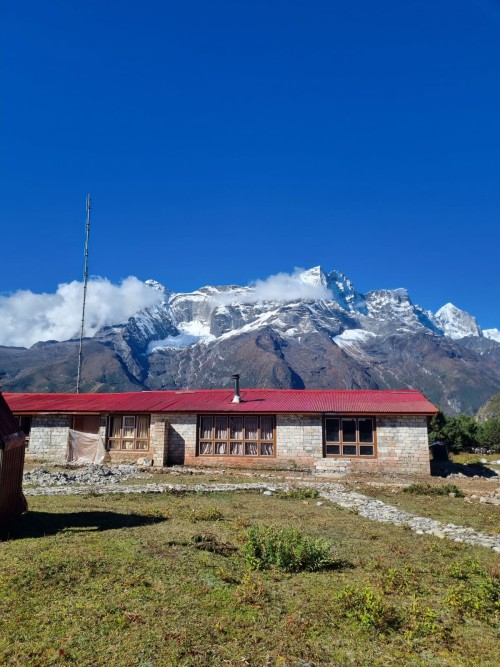
The Everest View Trek 2026/2027 is a 10-day short Everest trek from Kathmandu that takes you into the Khumbu without requiring the longer journey to Everest Base Camp. The route begins with a flight towards Lukla and continues through Phakding, Monjo and Namche Bazaar before reaching the higher settlements around Namche bazar and Khumjung. The highest point of this itinerary is approximately 3,880 metres at the Everest View Hotel, where clear weather can reveal Mount Everest, Lhotse, Nuptse, Ama Dablam, Thamserku and other peaks of the Mahalangur Himalayan range. The trail passes through Sagarmatha National Park, follows the Dudh Koshi River, crosses several suspension bridges and enters Sherpa villages where Buddhist traditions remain closely connected with everyday life.
This is a good choice for travelers searching for a short Everest trek from Kathmandu who want to experience the actual walking trail rather than seeing Everest only from an aircraft. The route includes an acclimatization day in Namche Bazaar, a hike towards the Everest View Hotel, and time exploring the Sherpa villages of Khumjung and Khunde. The required Sagarmatha National Park entry permit and TIMS card are arranged through the trekking agency, and the current Nepal Tourism Board provisions also require trekkers on this route to travel with a licensed guide.
Nepal Himalayas Trekking has been operating guided journeys in the Everest region for many years, with local knowledge covering the practical side of the trail as well as the formal arrangements. Our guides know where the long climb towards Namche begins, where the trail becomes exposed, how weather affects the walking day and why the acclimatization stop should not be treated as an optional rest day. For 2026/2027, we offer this trek as a private or group journey, with the itinerary adaptable to your walking pace, flight arrangements and available time.
| Trip Information | Details |
|---|---|
| Trek Name | Everest View Trek |
| Available | 2026/2027 |
| Duration | 10 Days |
| Trekking Days | 6 walking days + 1 acclimatization hike |
| Region | Everest / Khumbu |
| Starting Point | Lukla |
| Ending Point | Lukla |
| Highest Point | Approximately 3,880 m |
| Main Viewpoint | Everest View Hotel |
| Trek Difficulty | Moderate |
| Accommodation | Kathmandu hotel and mountain tea houses/lodges |
| Meals | Breakfast in Kathmandu; breakfast, lunch and dinner during trek |
| Best Seasons | March to May and September to November |
| National Park | Sagarmatha National Park |
| Required Documentation | TIMS and Sagarmatha National Park entry permit, plus applicable local entry fees |
| Trek Type | Guided trekking |
| Package Price | From USD 1,012 per person for larger groups |
| Standard Price | USD 1,190 per person for 2–5 people |
Kathmandu → Lukla → Phakding → Namche Bazaar → Everest View Hotel → Khumjung → Phakding → Lukla → Kathmandu
The route gradually moves from the warmer, greener lower Dudh Koshi valley into the cooler mountain environment around Namche Bazaar and Khumjung. The change is not merely a matter of temperature. Forest composition, agricultural land, settlement patterns, river valleys and the appearance of the mountains all alter as the trail gains elevation.
The experience changes almost every day as the trail gains and loses elevation. Around Lukla and Phakding, you walk through cultivated fields, pine forests and the relatively warm Dudh Koshi valley. Near Monjo and Jorsalle, the forest becomes denser before the long climb towards Namche. Above Namche, the landscape opens as the trail climbs towards Syangboche and the Everest View Hotel area, where the surrounding peaks become much more prominent. From there, the route continues towards Khumjung, where stone houses, cultivated fields, monasteries and traditional Sherpa life give the trek a quieter village character. Along the way, you will see mani stones, chortens, prayer flags, monasteries, tea houses, porters and pack animals moving between settlements. These are ordinary parts of life in the Khumbu, and walking through the villages gives you an understanding of the region that a short flight cannot provide.
The Everest View Trek offers views far beyond Mount Everest alone. From Namche, Syangboche and the Everest View Hotel, clear weather can reveal Everest, Lhotse, Nuptse, Ama Dablam, Thamserku, Kangtega and Kongde Ri across the surrounding horizon. The landscape changes noticeably as you walk through it. The trail follows the Dudh Koshi through deep valleys before climbing towards Namche and continuing across forested slopes and mountain ridges towards Syangboche and Khumjung. The villages have developed around this difficult terrain, with stone houses, small cultivated fields and trails connecting settlements where roads remain limited. This combination of steep valleys, forests, rivers and high mountain ridges gives the Everest region its distinctive character.
The Khumbu also carries an important history of mountaineering. Sir Edmund Hillary and Tenzing Norgay's successful ascent of Everest in 1953 brought worldwide attention to the region, while Hillary later devoted much of his work to supporting the Sherpa communities through the Himalayan Trust, particularly in education, healthcare and local infrastructure. You can still see some of that legacy around Khumjung, including the school established through his support.
The Everest View Trek difficulty is generally moderate and suitable for travelers with reasonable fitness and some preparation for consecutive days of walking. The route does not involve technical climbing, but you will encounter uphill sections, stone steps, uneven trails and several descents. The climb from Jorsalle towards Namche is the most demanding section of the outward journey. The return towards Phakding involves a long descent, with several smaller climbs and uneven sections along the trail. Trekking poles can be helpful, particularly on longer descents.
The trek reaches approximately 3,880 metres at the Everest View Hotel, with Namche Bazaar at around 3,440 metres and Khumjung at approximately 3,780 metres. Although this is below 4,000 metres, some trekkers can still experience mild altitude symptoms such as headache, tiredness, dizziness or reduced appetite. Our itinerary includes an acclimatization day in Namche, and our guides monitor trekkers throughout the route. If symptoms become worse, we do not recommend continuing higher and can adjust the itinerary or arrange descent when necessary.
Weather changes with both season and elevation. Spring (March to May) brings warmer days, flowering rhododendrons and generally good visibility, while autumn (September to November) usually offers the clearest mountain views, particularly in October and November. Winter is colder, particularly around Namche, Syangboche and Khumjung, and snow can occasionally affect the higher sections of the route. Monsoon (June to August) brings rain to the lower valley, making the trail greener but also wetter and more slippery. Clouds can also obscure Everest during this period.
During the monsoon, the lower sections around Lukla, Phakding and Monjo can become wet and muddy. Leeches may appear in damp vegetation, so leech socks or long trekking socks are useful. A small amount of mosquito repellent cream is also practical around the warmer lower sections. A waterproof jacket and backpack cover are essential during this season.
Although the Everest View Trek follows a busy and well-established route, it remains a mountain journey where medical facilities become more limited away from Kathmandu. Our guides carry basic first-aid supplies and coordinate with our team if a medical problem occurs. We strongly recommend travel insurance that covers high-altitude trekking, medical treatment and emergency helicopter evacuation.
Serious illness or injury may require evacuation from the trail. If a genuine emergency occurs, our team coordinates with the appropriate rescue and insurance providers. Trekkers should carry their insurance details and emergency contact information throughout the journey. Helicopter evacuation depends on weather, visibility and aircraft availability, so maintaining a flexible itinerary remains important.
Weather conditions can affect flights between Kathmandu and Lukla, so we recommend keeping at least two extra days in your Nepal itinerary before your international departure.
During the peak trekking months of March, April, May, October and November, Lukla flights commonly operate from Ramechhap Airport at Manthali because of increased air traffic at Kathmandu. Ramechhap currently serves as an important hub for Lukla flights during peak trekking seasons.
When flights operate from Ramechhap, you normally leave Kathmandu during the night for the road journey to Manthali. The exact transfer time depends on road and traffic conditions. Outside the busiest periods, Lukla flights generally operate directly from Kathmandu when weather and airport operations permit.
Because mountain weather can change quickly, delays and cancellations remain possible. Our team checks the flight arrangements and adjusts the trekking schedule when necessary.
The best time for Everest View Trek depends on what you value most.
For clear mountain views and comfortable walking conditions, October and November are usually excellent. The air is dry and the mountains often appear sharply defined.
March, April and May are also excellent, particularly for travelers who want to see rhododendrons flowering in the lower forests. April is one of the most attractive months for combining pleasant temperatures with good mountain visibility.
September can be good once the monsoon has withdrawn, although the beginning of the month can still be wet. December to February suits trekkers who prefer quieter trails and can tolerate cold nights. June to August is possible but less suitable if your primary reason for choosing this trek is uninterrupted Everest views.
The Everest View Trek requires three main trekking documents: the Sagarmatha National Park entry permit, Khumbu Pasang Lhamu Rural Municipality entry permit, and TIMS card under the current applicable regulations. We arrange these permits before you start the trek.
The current fees are NPR 3,000 per person for the Sagarmatha National Park entry permit and NPR 3,000 per person for the Khumbu Pasang Lhamu Rural Municipality entry permit for foreign trekkers. The TIMS card costs NPR 2,000 per person for non-SAARC nationals and NPR 1,000 for SAARC nationals, subject to the current regulations at the time of travel.
| Permit / Document | Current Fee |
|---|---|
| Sagarmatha National Park Entry Permit | NPR 3,000 foreign / NPR 1,500 SAARC |
| Khumbu Pasang Lhamu Rural Municipality Trek-Card | NPR 3,000 foreign / NPR 2,000 SAARC & China |
| TIMS Card | NPR 2,000 non-SAARC / NPR 1,000 SAARC |
Permit fees can be revised by the relevant authorities, so we confirm the applicable charges before departure. You do not need to visit the permit offices yourself because our team handles the required documentation for the trek.
Our standard Everest View Trek 2026/2027 package starts at USD 1,190 per person for groups of 2–5 travelers.
| Group Size | Price Per Person |
|---|---|
| 1 person | USD 1,290 |
| 2–5 people | USD 1,190 |
| 6–10 people | USD 1,131 |
| 11–15 people | USD 1,071 |
| 16–25 people | USD 1,012 |
The Everest View Trek cost depends mainly on the size of your group and the services included in your package. Larger groups generally have a lower per-person price because the cost of the guide, transportation and other services is shared among more travelers. The Lukla flight also forms an important part of the total price, while accommodation and meals in the Khumbu become more expensive as supplies have to be transported along the mountain trail. Private departures usually cost more than group departures because the guide and other arrangements are provided exclusively for your group. The trekking season, Kathmandu hotel category, sightseeing services and any additional transportation can also affect the final price. If you need extra nights in Kathmandu because of a delayed Lukla flight or want to add services such as a porter, private vehicle or helicopter transfer, those costs are calculated separately.
You do not need mountaineering equipment for this trek, but appropriate clothing becomes increasingly important as the altitude rises.
During monsoon, add leech socks, waterproof backpack protection and a mosquito-repellent cream.
During winter, prioritize a good insulated jacket, warm gloves, thermal layers and a suitable sleeping bag. Learn more about the packing list for Everest region with our Everest packing list guide.
Travel insurance should cover trekking at the maximum altitude of the itinerary and include emergency medical treatment and helicopter evacuation.
It is also sensible to have travel-delay coverage because Lukla flights can be disrupted by weather.
Keep a digital and printed copy of your insurance details with you and provide the emergency contact information to your trekking agency.
The Everest region rewards careful planning. A guide who knows only the names of the villages can take you along the trail, but local experience becomes more valuable when weather changes, flights are delayed, a trekker struggles with altitude or the day's walking needs to be adjusted.
At Nepal Himalayas Trekking, our work in the Everest region includes arranging flights, permits, accommodation, guides, porters and emergency support before you begin walking. Our team has been operating Himalayan journeys since 2012, with the company's current information describing long-standing experience in the Everest region and other major trekking areas of Nepal.
We also understand the difference between the map and the trail itself. The climb towards Namche, the quieter paths above Namche and the approach to Khumjung each have their own rhythm. Our guides use that experience to keep the trek comfortable and safe rather than treating every departure as an identical schedule.
The Langtang Trek is one of the most accessible Himalayan trekking routes from Kathmandu. The trailhead lies considerably closer to the capital than Everest or Annapurna, making Langtang particularly attractive to travelers who want a genuine mountain trek without spending several days reaching the starting point. The route passes through Langtang National Park and combines Tamang culture, forest, high meadows and views of Langtang Lirung. Our Langtang itinerary reaches Kyanjin Gompa and can be extended with higher day hikes.
The Annapurna Base Camp Trek is famous for the extraordinary change in landscape packed into a relatively compact trekking corridor. The trail moves through subtropical forests, terraced hillsides, rhododendron forests and high mountain country before reaching Annapurna Base Camp at approximately 4,130 metres. The Annapurna region is also one of Nepal's most diverse trekking areas, offering routes ranging from short village walks to longer circuits.
The Everest Base Camp Trek is the natural choice for travelers who want to continue beyond the Everest View route. Instead of turning back around Tengboche and Khumjung, the trail continues through Dingboche, Lobuche and Gorak Shep before reaching Everest Base Camp at approximately 5,364 metres. A further climb to Kala Patthar provides one of the finest close views of Everest. Our current 2026/2027 package is designed around a 14-day itinerary.
Upper Mustang offers a completely different Himalayan landscape. Located in the rain shadow of the Annapurna and Dhaulagiri ranges, the region is known for dry cliffs, barren valleys, Tibetan Buddhist culture, ancient monasteries, caves and the walled settlement of Lo Manthang. Unlike the green forests of the Everest and Annapurna foothills, Mustang has a distinctly trans-Himalayan appearance. It is also one of the better Himalayan destinations during the monsoon because of its rain-shadow geography.
The Manaslu Circuit Trek takes you around Mount Manaslu, the world's eighth-highest mountain, through the Budhi Gandaki valley and into increasingly high Himalayan terrain. The route is known for its quieter trails, Gurung and Tibetan-influenced villages, dramatic river gorges and the crossing of Larke La at around 5,106 metres. It is a more demanding undertaking than the Everest View Trek and requires restricted-area permits and a licensed guide.
The Everest View Trek is suited to travelers who want the Khumbu experience within a shorter itinerary. You reach the Everest View Hotel area at approximately 3,880 metres, spend time in Namche Bazaar and Khumjung, and return to Lukla.
The Everest Base Camp Trek continues much deeper into the high Khumbu. It reaches Everest Base Camp at approximately 5,364 metres and usually requires around 12–14 days with proper acclimatization.
If you have limited time but want to walk through the Everest region, the shorter trek is the more practical choice. If standing at Everest Base Camp and reaching Kala Patthar are important personal goals, the longer itinerary is worth the additional days.
A helicopter journey offers a completely different experience.
The Everest Base Camp Helicopter Tour can take travelers into the Everest region within a single morning, with an optional landing around Kala Patthar depending on the package and weather. Our current group-sharing helicopter tour starts from USD 1,290 per person, while the Kala Patthar landing option is listed separately.
The helicopter option suits travelers with very limited time or those unable to commit to several days of walking. The Everest View Trek, by contrast, allows you to experience the trail, villages, forests, suspension bridges and gradual change in altitude on foot.
Travelers who want to explore beyond the Everest View Trek can also consider the wider range of routes in our Everest Region, including Everest Base Camp, Gokyo, Everest Three Passes and other Khumbu itineraries. The region offers everything from relatively short panoramic journeys to demanding high-pass routes.
The walk from Jorsalle towards Namche is where many first-time trekkers start walking too quickly. The trail climbs steadily through the forest, and the excitement of reaching Namche can make you push harder than necessary. Keep a comfortable pace, take short breaks when needed and let your guide set a steady rhythm. You will enjoy the rest of the trek much more if you arrive in Namche with some energy left.
Do not bury your water bottle, rain jacket or warm layer at the bottom of your backpack. Weather around the Khumbu can change quickly, particularly around the forested sections and higher ridges. A light rain shower can arrive while the sky above the trail still looks reasonably clear. Keeping these items within easy reach saves you from unpacking your entire bag beside the trail.
The distances on the Everest View Trek can look short when viewed on a map, but the terrain changes the effort required. A few kilometres involving stone steps and sustained climbing can take considerably longer than the same distance on a level road. The section from Jorsalle to Namche is a good example. The continuous climb and stone steps can make a relatively short distance feel considerably harder than it appears on a map. Allow your walking time to be determined by the terrain rather than the kilometre count alone.
The acclimatization day in Namche should not become a complete rest day. A gradual walk towards Syangboche and the Everest View Hotel gives your body some exposure to higher elevation before you return to Namche to sleep. You do not need to walk quickly or spend the entire day sightseeing. The purpose is to move comfortably, observe how you feel and give your body time to adjust.
Many trekkers spend the entire walk looking towards their destination and miss some of the best views behind them. The landscape around Namche changes constantly as the trail bends around the mountainside. On clear days, stopping for a moment and turning around can reveal a much wider panorama of the surrounding peaks, valleys and forested slopes.
Although Namche has better facilities than the smaller villages, it is sensible to carry enough Nepalese rupees for personal expenses. Charging phones, Wi-Fi, hot showers, snacks and drinks can cost extra at mountain lodges. Card facilities are not equally dependable throughout the trail, particularly once you leave the larger settlements.
Wi-Fi and mobile connectivity are available in parts of the Everest region, but the quality varies with location and weather. Download important documents, flight information, maps and emergency contacts before leaving Kathmandu. Keep your insurance details and passport information accessible offline as well.
Mules and other pack animals regularly use the Everest trail to transport supplies. When a train of animals approaches, move towards the mountain side of the trail and allow them to pass. Never stand on the outside edge simply to make room, particularly on narrow sections above the river. This small habit makes the trail safer for both trekkers and local transporters.
Some trekkers eat very little once they reach Namche or Khumjung because altitude can reduce appetite. Try to maintain regular meals even when you do not feel particularly hungry. Dal bhat, potatoes, eggs, soup, noodles and other simple meals available in the tea houses provide useful energy for the following day's walk. Heavy alcohol consumption is best avoided while your body is adjusting to elevation.
Do not plan your international departure immediately after your scheduled Lukla to Kathmandu flight. Mountain weather can delay flights, and during busy seasons flights may operate through Ramechhap instead of Kathmandu. Keeping at least two spare days before your international flight gives you much more protection against an unexpected delay.
A mild headache or unusual tiredness should not automatically cause alarm, but it should not be ignored either. Tell your guide if you feel unwell, particularly after reaching Namche or Tengboche. Do not hide symptoms because you are worried about slowing down the group. On a mountain trek, reporting a problem early gives the guide more options to manage it safely.
The trail does not begin in a frozen high-altitude landscape. Lukla, Phakding and the lower Dudh Koshi valley can feel relatively warm during the day, particularly in spring and early autumn. Carry layers rather than wearing all your warm clothing from the first morning. During monsoon, add a waterproof jacket, backpack cover, leech socks and mosquito-repellent cream for the wetter lower sections.
The Everest View Hotel is one of the famous viewpoints on the route, but you do not need to spend the entire acclimatization day there. The paths around Namche and Syangboche provide several quieter places where you can sit, observe the mountains and watch local life. Sometimes a few minutes away from the busiest viewpoint gives you a more memorable experience than trying to photograph every peak at once.
Experienced guides watch more than the weather directly above you. Cloud movement around the ridges, wind, visibility and changing conditions along the trail can all influence the day's walking. If your guide recommends leaving earlier, shortening a stop or returning to the lodge, it is usually based on conditions along the route rather than a desire to rush the group.
Even with a carefully planned itinerary, the Everest region does not operate like a city tour. Flights, weather, trail conditions and individual walking speed can all affect the schedule. A flexible attitude makes the journey considerably easier. The purpose of the trek is to experience the Khumbu safely, not to complete every stage at exactly the minute printed on the itinerary.
Our standard package takes 10 days, including Kathmandu sightseeing, the trekking section and return arrangements.
The highest point is approximately 3,880 metres around the Everest View Hotel.
Yes. The best opportunities are around Namche, Syangboche and the Everest View Hotel area, as well as sections of the trail around Tengboche.
It is a moderate trek. There is no technical climbing, but altitude, uphill sections, uneven terrain and several consecutive walking days require reasonable fitness.
Yes. Nepal Tourism Board currently lists Everest View Trek among the routes requiring a licensed guide and agency-issued TIMS card.
The Everest View Trek requires a TIMS card, Sagarmatha National Park entry permit and Khumbu Pasang Lhamu Rural Municipality entry permit, along with any other applicable local fees. Our team arranges the required permits before the trek.
October and November generally provide excellent mountain visibility and dry walking conditions. April and May are also very good, particularly for rhododendron blooms.
Yes, but expect cold mornings and nights, with the possibility of snow around higher sections. Proper winter clothing and some flexibility are important.
It is possible, but rain, cloud, muddy trails, leeches and flight disruptions make the monsoon less predictable.
Our team works with the airline and adjusts the itinerary according to the next available flight and prevailing weather conditions. This is why we recommend keeping at least two extra days before your international departure.
Yes. Your insurance should cover high-altitude trekking, medical treatment and helicopter evacuation.
Yes. The trek reaches nearly 3,900 metres, so altitude illness remains a genuine consideration. The acclimatization day in Namche is an important part of the itinerary.
Tell your guide immediately. Mild symptoms should be monitored and should not be followed by further ascent until they improve. Serious or worsening symptoms require descent and urgent medical attention.
Helicopter evacuation can be arranged in genuine emergencies, subject to weather, aircraft availability and the circumstances of the rescue. Appropriate insurance is essential.
Yes. The itinerary can be extended into the longer Everest Base Camp Trek, but additional acclimatization days and a higher level of physical preparation are required.
Yes, provided you are reasonably fit and prepared for several hours of walking at altitude. The route does not require previous mountaineering experience.
Age itself is not the deciding factor. Fitness, previous experience, medical circumstances and the ability to adapt to altitude matter more. Older travelers should discuss high-altitude travel with their doctor before departure.
Families can undertake the trek with suitable preparation, but children require particularly careful attention to hydration, pace, cold and altitude symptoms.
The Everest View Trek is a practical choice for travelers who want to walk in the Everest region without committing two weeks or more to the full Everest Base Camp journey. Within ten days, you can experience Lukla, the Dudh Koshi valley, Sagarmatha National Park, Namche Bazaar, the Everest View Hotel and the Sherpa villages of Khumjung and Khunde.
The mountains are the obvious attraction, but the character of the journey is found in the details between those viewpoints: the long climb after the suspension bridge, the changing forest as the elevation rises, the warmth of a tea house dining room after sunset, the sound of the river below the trail, prayer flags moving above a village and the everyday movement of people and animals along paths that have connected these settlements for generations.
For Everest View Trek 2026/2027, private departures, group arrangements, current flight information or a customized itinerary, you can contact Nepal Himalayas Trekking. Our local team can also help you compare this trek with the Everest Base Camp Trek, Annapurna, Langtang, Manaslu and Upper Mustang according to your available time and trekking experience.
Kathmandu: 1,400 m / 4,593 ft
Your Everest View Trek begins with your arrival at Tribhuvan International Airport in Kathmandu. Our representative will meet you at the airport and transfer you to your hotel. After checking in, you can rest after your journey or take a short walk around Thamel if you have the energy.
There is no scheduled trekking activity today. You can use the evening to recover from your flight, organize your trekking equipment and prepare for the journey into the Everest region.
Overnight: Hotel in Kathmandu
Meals: Not included
Kathmandu: 1,400 m / 4,593 ft
Today is reserved for sightseeing in Kathmandu before you leave for the mountains. Depending on the day's arrangements, the tour can include Pashupatinath Temple, Boudhanath Stupa, Swayambhunath and either Kathmandu Durbar Square or Patan Durbar Square.
The sites provide an introduction to Nepal's Hindu and Buddhist traditions, architecture and history before the trek takes you into the predominantly Buddhist Sherpa communities of the Khumbu.
The remaining time can be used for final trekking preparation and checking your equipment.
Overnight: Hotel in Kathmandu
Meals: Breakfast
Lukla: approximately 2,860 m
Phakding: approximately 2,610 m / 8,563 ft
The day begins with the flight towards Lukla(2,840 m). On a clear morning, the flight provides an early view of the hills and Himalayan terrain before landing at Tenzing-Hillary Airport.
After meeting the trekking crew, you begin walking towards Phakding.
The first section of the trail descends from Lukla before joining the Dudh Koshi valley. The environment feels markedly different from Kathmandu. Terraced fields, stone walls, small settlements and pine trees appear around the trail, while the sound of the river becomes increasingly noticeable.
The first day is intentionally short. After the flight and the sudden change in elevation, there is little advantage in walking far into the evening. Phakding provides a comfortable first night and allows you to begin adjusting to the mountain environment.
You will already encounter mani stones, prayer flags and small chortens along the trail. Porters and pack animals are also part of the ordinary movement of the valley, carrying food, construction materials and other supplies towards villages farther north.
Walking: Approximately 3–4 hours
Overnight: Tea house in Phakding
Meals: Breakfast, lunch and dinner
Phakding: 2,610 m / 8,563 ft
Namche Bazaar: 3,440 m / 11,286 ft
This is the first substantial walking day of the trek.
The trail follows the Dudh Koshi towards Monjo and Jorsalle before entering Sagarmatha National Park. The lower valley is heavily forested, with pine, fir, rhododendron and other mountain vegetation covering the slopes.
After Jorsalle, the trail reaches the suspension bridge over the Dudh Koshi. The climb that follows is the section where many first-time trekkers begin to appreciate the difference between ordinary hiking and walking at altitude.
The trail climbs steadily through forest towards Namche. The distance itself is not extraordinary, but the continuous ascent, stone steps and elevation gain make the walk more demanding than the first day.
You may encounter mule trains, porters and local residents along the way. When animals approach on narrow sections, it is customary to move towards the inside of the trail and allow them to pass.
Namche does not appear all at once. After a series of bends, the settlement gradually opens across the mountainside. Reaching the town after the long climb is one of the memorable moments of the lower Everest trail.
Walking: Approximately 5–7 hours
Highlights: Dudh Koshi River, suspension bridges, Sagarmatha National Park, pine forest and the first major climb towards Namche
Overnight: Tea house in Namche Bazaar
Meals: Breakfast, lunch and dinner
Namche Bazaar: 3,440 m / 11,286 ft
Everest View Hotel: approximately 3,880 m / 12,730 ft
The acclimatization day is one of the most important parts of the itinerary.
Rather than spending the entire day inside the lodge, we take a gradual hike above Namche towards Syangboche and the Everest View Hotel area. The principle is simple: walk higher during the day and return to Namche to sleep at a lower elevation.
The trail above Namche becomes more open, and the views expand considerably. On a clear morning, Mount Everest appears behind Nuptse and Lhotse, while Ama Dablam and Thamserku dominate other parts of the panorama.
The view is not limited to one mountain. From suitable viewpoints around the Everest View Hotel, the surrounding peaks form a broad mountain amphitheatre. Depending on visibility, you may see Kongde Ri, Kangtega and other peaks across the Khumbu.
The afternoon is spent back in Namche. You can visit the Sherpa Museum, explore the market area or simply rest. This day also gives our guide an opportunity to assess how everyone is responding to the altitude before the route continues towards Khumjung.
Walking: Approximately 3–4 hours
Highlights: Everest View Hotel, Mount Everest, Lhotse, Nuptse, Ama Dablam, Thamserku and Kongde Ri
Overnight: Tea house in Namche Bazaar
Meals: Breakfast, lunch and dinner
Namche Bazaar: 3,440 m / 11,286 ft
Khumjung: approximately 3,780 m / 12,402 ft
After breakfast, the trail climbs gradually above Namche before continuing towards Khumjung. Compared with the busy streets of Namche, the route becomes quieter as you move towards the traditional Sherpa settlements.
The trail passes through pine and rhododendron forest, with open sections providing views towards Everest, Ama Dablam, Thamserku and other surrounding peaks.
Khumjung sits in a broad mountain basin surrounded by slopes and high peaks. Stone walls divide the fields around the village, while traditional houses are clustered close together to provide protection from the mountain climate.
You can visit Khumjung Monastery, which is traditionally associated with a reputed Yeti scalp, and see the Hillary School. Sir Edmund Hillary's contribution to the Khumbu extended well beyond his successful Everest ascent with Tenzing Norgay. Through the Himalayan Trust, he supported education, healthcare, bridges and other community projects in the region, and his work remains particularly visible around Khumjung.
Khumjung therefore offers more than another mountain viewpoint. It provides an opportunity to see the everyday life of a Sherpa settlement away from the busier trekking centre of Namche.
Trek Duration: Approximately 3–4 hours
Highlights: Khumjung village, Khumjung Monastery, Hillary School, Sherpa culture and mountain views
Overnight: Tea house in Khumjung
Meals: Breakfast, lunch and dinner
Khumjung: approximately 3,780 m / 12,402 ft
Phakding: approximately 2,610 m / 8,563 ft
Today you descend towards the Dudh Koshi valley.
The trail first returns towards the Namche area before continuing downhill through the forest. Having already walked the lower section on the way up, you may notice details that were easy to overlook while concentrating on the climb.
As the elevation decreases, the vegetation becomes thicker and the air gradually feels warmer. Small settlements, cultivated fields and riverside sections become more frequent.
The descent is easier on the lungs but can be demanding on the knees because of the stone steps and uneven ground. Trekking poles are particularly useful today.
After several hours of walking, you reach Phakding and settle into the lodge for the night.
Trek Duration: Approximately 5–6 hours
Highlights: Forested trail, mountain villages, Dudh Koshi valley and gradual change in vegetation with decreasing elevation
Overnight: Tea house in Phakding
Meals: Breakfast, lunch and dinner
Phakding: 2,610 m / 8,563 ft
Lukla: approximately 2,860 m
Your final walking day follows the Dudh Koshi valley back towards Lukla.
Although the distance is relatively short, the trail is not completely downhill. There are several small ascents and descents along the route, followed by the final climb towards Lukla.
The landscape gradually becomes familiar again as you pass the villages and forest sections encountered at the beginning of the trek. Once you reach Lukla, the walking portion of your Everest View Trek is complete.
The afternoon is free to rest, explore Lukla and spend time with the trekking crew before your flight the following day.
Trek Duration: Approximately 3–4 hours
Highlights: Dudh Koshi valley, mountain villages and completion of the trekking route
Overnight: Tea house in Lukla
Meals: Breakfast, lunch and dinner
Lukla: approximately 2,860 m
Kathmandu: 1,400 m / 4,593 ft
After breakfast, you head to Lukla airport for your flight back to Kathmandu.
The flight is normally around 30–35 minutes when operating directly to Kathmandu, although the exact duration and departure arrangements depend on the operating airport and weather conditions.
Mountain weather can change quickly, and Lukla flights are sometimes delayed or cancelled. During the busy trekking seasons, flights may also operate through Ramechhap rather than Kathmandu.
After reaching Kathmandu, the rest of the day is free. You can rest at the hotel, explore Thamel or use the afternoon for shopping and sightseeing.
We strongly recommend keeping at least two additional days before your international departure because a delayed Lukla flight can affect your onward travel.
Flight Duration: Approximately 30–35 minutes
Overnight: Hotel in Kathmandu
Meals: Breakfast
Your Everest View Trek comes to an end today.
Our representative will transfer you to Tribhuvan International Airport according to your international flight schedule. If your departure is later in the day, you can use your remaining time in Kathmandu for a final meal, shopping or a short walk around the city.
Meals: Breakfast
| Group Size | Price Per Person |
|---|---|
| 1 | USD 1,290 |
| 2-5 | USD 1,190 |
| 6-10 | USD 1,131 |
| 11-15 | USD 1,071 |
| 16-25 | USD 1,012 |
Our standard package takes 10 days, including Kathmandu sightseeing, the trekking section and return arrangements.
The highest point is approximately 3,880 metres around the Everest View Hotel.
Yes. The best opportunities are around Namche, Syangboche and the Everest View Hotel area, as well as sections of the trail around Tengboche.
It is a moderate trek. There is no technical climbing, but altitude, uphill sections, uneven terrain and several consecutive walking days require reasonable fitness.
Yes. Nepal Tourism Board currently lists Everest View Trek among the routes requiring a licensed guide and agency-issued TIMS card.
The Everest View Trek requires a TIMS card, Sagarmatha National Park entry permit and Khumbu Pasang Lhamu Rural Municipality entry permit, along with any other applicable local fees. Our team arranges the required permits before the trek.
October and November generally provide excellent mountain visibility and dry walking conditions. April and May are also very good, particularly for rhododendron blooms.
Yes, but expect cold mornings and nights, with the possibility of snow around higher sections. Proper winter clothing and some flexibility are important.
It is possible, but rain, cloud, muddy trails, leeches and flight disruptions make the monsoon less predictable.
Our team works with the airline and adjusts the itinerary according to the next available flight and prevailing weather conditions. This is why we recommend keeping at least two extra days before your international departure.
Yes. Your insurance should cover high-altitude trekking, medical treatment and helicopter evacuation.
Yes. The trek reaches nearly 3,900 metres, so altitude illness remains a genuine consideration. The acclimatization day in Namche is an important part of the itinerary.
Tell your guide immediately. Mild symptoms should be monitored and should not be followed by further ascent until they improve. Serious or worsening symptoms require descent and urgent medical attention.
Helicopter evacuation can be arranged in genuine emergencies, subject to weather, aircraft availability and the circumstances of the rescue. Appropriate insurance is essential.
Yes. The itinerary can be extended into the longer Everest Base Camp Trek, but additional acclimatization days and a higher level of physical preparation are required.
Yes, provided you are reasonably fit and prepared for several hours of walking at altitude. The route does not require previous mountaineering experience.
Age itself is not the deciding factor. Fitness, previous experience, medical circumstances and the ability to adapt to altitude matter more. Older travelers should discuss high-altitude travel with their doctor before departure.
Families can undertake the trek with suitable preparation, but children require particularly careful attention to hydration, pace, cold and altitude symptoms.
Safe drinking water is important throughout the journey.
You can use boiled water or properly filtered and treated water. Carry a reusable bottle rather than depending entirely on disposable plastic bottles. Drink regularly, particularly during the climb towards Namche and the higher sections around Tengboche.
At altitude, dehydration can make fatigue and headaches worse, so maintaining sensible hydration is part of altitude management.
Breakfast, lunch and dinner are included during the trekking section.
Dal bhat is one of the most dependable meals on the route because it provides rice, lentils and vegetables in a filling combination. Tea houses also commonly serve noodles, pasta, soups, potatoes, eggs, Tibetan bread and other simple meals.
Food prices increase with altitude because supplies have to be transported along the trail.
Bottled water, soft drinks, alcoholic drinks, chocolates, desserts and speciality beverages are generally personal expenses unless specifically included in your package.
Accommodation during the trek is provided in locally operated tea houses and mountain lodges.
Rooms are usually simple, with two beds and basic furnishings. Shared bathrooms are common, particularly as you gain elevation.
The dining room often becomes the social centre of the lodge in the evening. A central stove provides warmth, and trekkers gather there after walking.
Electricity and charging facilities are available in many lodges, although charging may cost extra. Wi-Fi is available in some villages but should not be treated as a guaranteed service.
The accommodation becomes more basic as the trail rises, and this is simply part of travelling through a remote mountain environment.
Enjoy the popular trekking and tour packages in Nepal Himalayas. 2026.
Book your Luxury Everest Base Camp Trek for 2026 in style with Nepal Himalayas Trekking. Enjoy 5-star lodges, gourmet dining, expert guides, and an optional helicopter return to Lukla or Kathmandu.
View DetailsThe Everest Base Camp (EBC) Premium Trek offers an upgraded experience of the iconic trek, providing superior accommodations, experienced guides, and high-end services.
View Details
The Everest Base Camp Short Trek is the perfect adventure for you. With stunning Himalayan panoramas, iconic Sherpa villages, ancient monasteries, and unforgettable trails.
View DetailsPlan your Everest Base Camp Trek with our 14-day itinerary, 2026/27 cost guide, route, difficulty, altitude, packing list, permits, and experienced local guide support.
View Details
The Everest View Trek 2026/2027 is a 10-day short Everest trek from Kathmandu that takes you into the Khumbu without requiring the longer journey to Everest Base Camp. The route begins with a flight towards Lukla and continues through Phakding, Monjo and Namche Bazaar before reaching the higher settlements around Namche bazar and Khumjung. The highest point of this itinerary is approximately 3,880 metres at the Everest View Hotel, where clear weather can reveal Mount Everest, Lhotse, Nuptse, Ama Dablam, Thamserku and other peaks of the Mahalangur Himalayan range. The trail passes through Sagarmatha National Park, follows the Dudh Koshi River, crosses several suspension bridges and enters Sherpa villages where Buddhist traditions remain closely connected with everyday life.
This is a good choice for travelers searching for a short Everest trek from Kathmandu who want to experience the actual walking trail rather than seeing Everest only from an aircraft. The route includes an acclimatization day in Namche Bazaar, a hike towards the Everest View Hotel, and time exploring the Sherpa villages of Khumjung and Khunde. The required Sagarmatha National Park entry permit and TIMS card are arranged through the trekking agency, and the current Nepal Tourism Board provisions also require trekkers on this route to travel with a licensed guide.
Nepal Himalayas Trekking has been operating guided journeys in the Everest region for many years, with local knowledge covering the practical side of the trail as well as the formal arrangements. Our guides know where the long climb towards Namche begins, where the trail becomes exposed, how weather affects the walking day and why the acclimatization stop should not be treated as an optional rest day. For 2026/2027, we offer this trek as a private or group journey, with the itinerary adaptable to your walking pace, flight arrangements and available time.
| Trip Information | Details |
|---|---|
| Trek Name | Everest View Trek |
| Available | 2026/2027 |
| Duration | 10 Days |
| Trekking Days | 6 walking days + 1 acclimatization hike |
| Region | Everest / Khumbu |
| Starting Point | Lukla |
| Ending Point | Lukla |
| Highest Point | Approximately 3,880 m |
| Main Viewpoint | Everest View Hotel |
| Trek Difficulty | Moderate |
| Accommodation | Kathmandu hotel and mountain tea houses/lodges |
| Meals | Breakfast in Kathmandu; breakfast, lunch and dinner during trek |
| Best Seasons | March to May and September to November |
| National Park | Sagarmatha National Park |
| Required Documentation | TIMS and Sagarmatha National Park entry permit, plus applicable local entry fees |
| Trek Type | Guided trekking |
| Package Price | From USD 1,012 per person for larger groups |
| Standard Price | USD 1,190 per person for 2–5 people |
Kathmandu → Lukla → Phakding → Namche Bazaar → Everest View Hotel → Khumjung → Phakding → Lukla → Kathmandu
The route gradually moves from the warmer, greener lower Dudh Koshi valley into the cooler mountain environment around Namche Bazaar and Khumjung. The change is not merely a matter of temperature. Forest composition, agricultural land, settlement patterns, river valleys and the appearance of the mountains all alter as the trail gains elevation.
The experience changes almost every day as the trail gains and loses elevation. Around Lukla and Phakding, you walk through cultivated fields, pine forests and the relatively warm Dudh Koshi valley. Near Monjo and Jorsalle, the forest becomes denser before the long climb towards Namche. Above Namche, the landscape opens as the trail climbs towards Syangboche and the Everest View Hotel area, where the surrounding peaks become much more prominent. From there, the route continues towards Khumjung, where stone houses, cultivated fields, monasteries and traditional Sherpa life give the trek a quieter village character. Along the way, you will see mani stones, chortens, prayer flags, monasteries, tea houses, porters and pack animals moving between settlements. These are ordinary parts of life in the Khumbu, and walking through the villages gives you an understanding of the region that a short flight cannot provide.
The Everest View Trek offers views far beyond Mount Everest alone. From Namche, Syangboche and the Everest View Hotel, clear weather can reveal Everest, Lhotse, Nuptse, Ama Dablam, Thamserku, Kangtega and Kongde Ri across the surrounding horizon. The landscape changes noticeably as you walk through it. The trail follows the Dudh Koshi through deep valleys before climbing towards Namche and continuing across forested slopes and mountain ridges towards Syangboche and Khumjung. The villages have developed around this difficult terrain, with stone houses, small cultivated fields and trails connecting settlements where roads remain limited. This combination of steep valleys, forests, rivers and high mountain ridges gives the Everest region its distinctive character.
The Khumbu also carries an important history of mountaineering. Sir Edmund Hillary and Tenzing Norgay's successful ascent of Everest in 1953 brought worldwide attention to the region, while Hillary later devoted much of his work to supporting the Sherpa communities through the Himalayan Trust, particularly in education, healthcare and local infrastructure. You can still see some of that legacy around Khumjung, including the school established through his support.
The Everest View Trek difficulty is generally moderate and suitable for travelers with reasonable fitness and some preparation for consecutive days of walking. The route does not involve technical climbing, but you will encounter uphill sections, stone steps, uneven trails and several descents. The climb from Jorsalle towards Namche is the most demanding section of the outward journey. The return towards Phakding involves a long descent, with several smaller climbs and uneven sections along the trail. Trekking poles can be helpful, particularly on longer descents.
The trek reaches approximately 3,880 metres at the Everest View Hotel, with Namche Bazaar at around 3,440 metres and Khumjung at approximately 3,780 metres. Although this is below 4,000 metres, some trekkers can still experience mild altitude symptoms such as headache, tiredness, dizziness or reduced appetite. Our itinerary includes an acclimatization day in Namche, and our guides monitor trekkers throughout the route. If symptoms become worse, we do not recommend continuing higher and can adjust the itinerary or arrange descent when necessary.
Weather changes with both season and elevation. Spring (March to May) brings warmer days, flowering rhododendrons and generally good visibility, while autumn (September to November) usually offers the clearest mountain views, particularly in October and November. Winter is colder, particularly around Namche, Syangboche and Khumjung, and snow can occasionally affect the higher sections of the route. Monsoon (June to August) brings rain to the lower valley, making the trail greener but also wetter and more slippery. Clouds can also obscure Everest during this period.
During the monsoon, the lower sections around Lukla, Phakding and Monjo can become wet and muddy. Leeches may appear in damp vegetation, so leech socks or long trekking socks are useful. A small amount of mosquito repellent cream is also practical around the warmer lower sections. A waterproof jacket and backpack cover are essential during this season.
Although the Everest View Trek follows a busy and well-established route, it remains a mountain journey where medical facilities become more limited away from Kathmandu. Our guides carry basic first-aid supplies and coordinate with our team if a medical problem occurs. We strongly recommend travel insurance that covers high-altitude trekking, medical treatment and emergency helicopter evacuation.
Serious illness or injury may require evacuation from the trail. If a genuine emergency occurs, our team coordinates with the appropriate rescue and insurance providers. Trekkers should carry their insurance details and emergency contact information throughout the journey. Helicopter evacuation depends on weather, visibility and aircraft availability, so maintaining a flexible itinerary remains important.
Weather conditions can affect flights between Kathmandu and Lukla, so we recommend keeping at least two extra days in your Nepal itinerary before your international departure.
During the peak trekking months of March, April, May, October and November, Lukla flights commonly operate from Ramechhap Airport at Manthali because of increased air traffic at Kathmandu. Ramechhap currently serves as an important hub for Lukla flights during peak trekking seasons.
When flights operate from Ramechhap, you normally leave Kathmandu during the night for the road journey to Manthali. The exact transfer time depends on road and traffic conditions. Outside the busiest periods, Lukla flights generally operate directly from Kathmandu when weather and airport operations permit.
Because mountain weather can change quickly, delays and cancellations remain possible. Our team checks the flight arrangements and adjusts the trekking schedule when necessary.
The best time for Everest View Trek depends on what you value most.
For clear mountain views and comfortable walking conditions, October and November are usually excellent. The air is dry and the mountains often appear sharply defined.
March, April and May are also excellent, particularly for travelers who want to see rhododendrons flowering in the lower forests. April is one of the most attractive months for combining pleasant temperatures with good mountain visibility.
September can be good once the monsoon has withdrawn, although the beginning of the month can still be wet. December to February suits trekkers who prefer quieter trails and can tolerate cold nights. June to August is possible but less suitable if your primary reason for choosing this trek is uninterrupted Everest views.
The Everest View Trek requires three main trekking documents: the Sagarmatha National Park entry permit, Khumbu Pasang Lhamu Rural Municipality entry permit, and TIMS card under the current applicable regulations. We arrange these permits before you start the trek.
The current fees are NPR 3,000 per person for the Sagarmatha National Park entry permit and NPR 3,000 per person for the Khumbu Pasang Lhamu Rural Municipality entry permit for foreign trekkers. The TIMS card costs NPR 2,000 per person for non-SAARC nationals and NPR 1,000 for SAARC nationals, subject to the current regulations at the time of travel.
| Permit / Document | Current Fee |
|---|---|
| Sagarmatha National Park Entry Permit | NPR 3,000 foreign / NPR 1,500 SAARC |
| Khumbu Pasang Lhamu Rural Municipality Trek-Card | NPR 3,000 foreign / NPR 2,000 SAARC & China |
| TIMS Card | NPR 2,000 non-SAARC / NPR 1,000 SAARC |
Permit fees can be revised by the relevant authorities, so we confirm the applicable charges before departure. You do not need to visit the permit offices yourself because our team handles the required documentation for the trek.
Our standard Everest View Trek 2026/2027 package starts at USD 1,190 per person for groups of 2–5 travelers.
| Group Size | Price Per Person |
|---|---|
| 1 person | USD 1,290 |
| 2–5 people | USD 1,190 |
| 6–10 people | USD 1,131 |
| 11–15 people | USD 1,071 |
| 16–25 people | USD 1,012 |
The Everest View Trek cost depends mainly on the size of your group and the services included in your package. Larger groups generally have a lower per-person price because the cost of the guide, transportation and other services is shared among more travelers. The Lukla flight also forms an important part of the total price, while accommodation and meals in the Khumbu become more expensive as supplies have to be transported along the mountain trail. Private departures usually cost more than group departures because the guide and other arrangements are provided exclusively for your group. The trekking season, Kathmandu hotel category, sightseeing services and any additional transportation can also affect the final price. If you need extra nights in Kathmandu because of a delayed Lukla flight or want to add services such as a porter, private vehicle or helicopter transfer, those costs are calculated separately.
You do not need mountaineering equipment for this trek, but appropriate clothing becomes increasingly important as the altitude rises.
During monsoon, add leech socks, waterproof backpack protection and a mosquito-repellent cream.
During winter, prioritize a good insulated jacket, warm gloves, thermal layers and a suitable sleeping bag. Learn more about the packing list for Everest region with our Everest packing list guide.
Travel insurance should cover trekking at the maximum altitude of the itinerary and include emergency medical treatment and helicopter evacuation.
It is also sensible to have travel-delay coverage because Lukla flights can be disrupted by weather.
Keep a digital and printed copy of your insurance details with you and provide the emergency contact information to your trekking agency.
The Everest region rewards careful planning. A guide who knows only the names of the villages can take you along the trail, but local experience becomes more valuable when weather changes, flights are delayed, a trekker struggles with altitude or the day's walking needs to be adjusted.
At Nepal Himalayas Trekking, our work in the Everest region includes arranging flights, permits, accommodation, guides, porters and emergency support before you begin walking. Our team has been operating Himalayan journeys since 2012, with the company's current information describing long-standing experience in the Everest region and other major trekking areas of Nepal.
We also understand the difference between the map and the trail itself. The climb towards Namche, the quieter paths above Namche and the approach to Khumjung each have their own rhythm. Our guides use that experience to keep the trek comfortable and safe rather than treating every departure as an identical schedule.
The Langtang Trek is one of the most accessible Himalayan trekking routes from Kathmandu. The trailhead lies considerably closer to the capital than Everest or Annapurna, making Langtang particularly attractive to travelers who want a genuine mountain trek without spending several days reaching the starting point. The route passes through Langtang National Park and combines Tamang culture, forest, high meadows and views of Langtang Lirung. Our Langtang itinerary reaches Kyanjin Gompa and can be extended with higher day hikes.
The Annapurna Base Camp Trek is famous for the extraordinary change in landscape packed into a relatively compact trekking corridor. The trail moves through subtropical forests, terraced hillsides, rhododendron forests and high mountain country before reaching Annapurna Base Camp at approximately 4,130 metres. The Annapurna region is also one of Nepal's most diverse trekking areas, offering routes ranging from short village walks to longer circuits.
The Everest Base Camp Trek is the natural choice for travelers who want to continue beyond the Everest View route. Instead of turning back around Tengboche and Khumjung, the trail continues through Dingboche, Lobuche and Gorak Shep before reaching Everest Base Camp at approximately 5,364 metres. A further climb to Kala Patthar provides one of the finest close views of Everest. Our current 2026/2027 package is designed around a 14-day itinerary.
Upper Mustang offers a completely different Himalayan landscape. Located in the rain shadow of the Annapurna and Dhaulagiri ranges, the region is known for dry cliffs, barren valleys, Tibetan Buddhist culture, ancient monasteries, caves and the walled settlement of Lo Manthang. Unlike the green forests of the Everest and Annapurna foothills, Mustang has a distinctly trans-Himalayan appearance. It is also one of the better Himalayan destinations during the monsoon because of its rain-shadow geography.
The Manaslu Circuit Trek takes you around Mount Manaslu, the world's eighth-highest mountain, through the Budhi Gandaki valley and into increasingly high Himalayan terrain. The route is known for its quieter trails, Gurung and Tibetan-influenced villages, dramatic river gorges and the crossing of Larke La at around 5,106 metres. It is a more demanding undertaking than the Everest View Trek and requires restricted-area permits and a licensed guide.
The Everest View Trek is suited to travelers who want the Khumbu experience within a shorter itinerary. You reach the Everest View Hotel area at approximately 3,880 metres, spend time in Namche Bazaar and Khumjung, and return to Lukla.
The Everest Base Camp Trek continues much deeper into the high Khumbu. It reaches Everest Base Camp at approximately 5,364 metres and usually requires around 12–14 days with proper acclimatization.
If you have limited time but want to walk through the Everest region, the shorter trek is the more practical choice. If standing at Everest Base Camp and reaching Kala Patthar are important personal goals, the longer itinerary is worth the additional days.
A helicopter journey offers a completely different experience.
The Everest Base Camp Helicopter Tour can take travelers into the Everest region within a single morning, with an optional landing around Kala Patthar depending on the package and weather. Our current group-sharing helicopter tour starts from USD 1,290 per person, while the Kala Patthar landing option is listed separately.
The helicopter option suits travelers with very limited time or those unable to commit to several days of walking. The Everest View Trek, by contrast, allows you to experience the trail, villages, forests, suspension bridges and gradual change in altitude on foot.
Travelers who want to explore beyond the Everest View Trek can also consider the wider range of routes in our Everest Region, including Everest Base Camp, Gokyo, Everest Three Passes and other Khumbu itineraries. The region offers everything from relatively short panoramic journeys to demanding high-pass routes.
The walk from Jorsalle towards Namche is where many first-time trekkers start walking too quickly. The trail climbs steadily through the forest, and the excitement of reaching Namche can make you push harder than necessary. Keep a comfortable pace, take short breaks when needed and let your guide set a steady rhythm. You will enjoy the rest of the trek much more if you arrive in Namche with some energy left.
Do not bury your water bottle, rain jacket or warm layer at the bottom of your backpack. Weather around the Khumbu can change quickly, particularly around the forested sections and higher ridges. A light rain shower can arrive while the sky above the trail still looks reasonably clear. Keeping these items within easy reach saves you from unpacking your entire bag beside the trail.
The distances on the Everest View Trek can look short when viewed on a map, but the terrain changes the effort required. A few kilometres involving stone steps and sustained climbing can take considerably longer than the same distance on a level road. The section from Jorsalle to Namche is a good example. The continuous climb and stone steps can make a relatively short distance feel considerably harder than it appears on a map. Allow your walking time to be determined by the terrain rather than the kilometre count alone.
The acclimatization day in Namche should not become a complete rest day. A gradual walk towards Syangboche and the Everest View Hotel gives your body some exposure to higher elevation before you return to Namche to sleep. You do not need to walk quickly or spend the entire day sightseeing. The purpose is to move comfortably, observe how you feel and give your body time to adjust.
Many trekkers spend the entire walk looking towards their destination and miss some of the best views behind them. The landscape around Namche changes constantly as the trail bends around the mountainside. On clear days, stopping for a moment and turning around can reveal a much wider panorama of the surrounding peaks, valleys and forested slopes.
Although Namche has better facilities than the smaller villages, it is sensible to carry enough Nepalese rupees for personal expenses. Charging phones, Wi-Fi, hot showers, snacks and drinks can cost extra at mountain lodges. Card facilities are not equally dependable throughout the trail, particularly once you leave the larger settlements.
Wi-Fi and mobile connectivity are available in parts of the Everest region, but the quality varies with location and weather. Download important documents, flight information, maps and emergency contacts before leaving Kathmandu. Keep your insurance details and passport information accessible offline as well.
Mules and other pack animals regularly use the Everest trail to transport supplies. When a train of animals approaches, move towards the mountain side of the trail and allow them to pass. Never stand on the outside edge simply to make room, particularly on narrow sections above the river. This small habit makes the trail safer for both trekkers and local transporters.
Some trekkers eat very little once they reach Namche or Khumjung because altitude can reduce appetite. Try to maintain regular meals even when you do not feel particularly hungry. Dal bhat, potatoes, eggs, soup, noodles and other simple meals available in the tea houses provide useful energy for the following day's walk. Heavy alcohol consumption is best avoided while your body is adjusting to elevation.
Do not plan your international departure immediately after your scheduled Lukla to Kathmandu flight. Mountain weather can delay flights, and during busy seasons flights may operate through Ramechhap instead of Kathmandu. Keeping at least two spare days before your international flight gives you much more protection against an unexpected delay.
A mild headache or unusual tiredness should not automatically cause alarm, but it should not be ignored either. Tell your guide if you feel unwell, particularly after reaching Namche or Tengboche. Do not hide symptoms because you are worried about slowing down the group. On a mountain trek, reporting a problem early gives the guide more options to manage it safely.
The trail does not begin in a frozen high-altitude landscape. Lukla, Phakding and the lower Dudh Koshi valley can feel relatively warm during the day, particularly in spring and early autumn. Carry layers rather than wearing all your warm clothing from the first morning. During monsoon, add a waterproof jacket, backpack cover, leech socks and mosquito-repellent cream for the wetter lower sections.
The Everest View Hotel is one of the famous viewpoints on the route, but you do not need to spend the entire acclimatization day there. The paths around Namche and Syangboche provide several quieter places where you can sit, observe the mountains and watch local life. Sometimes a few minutes away from the busiest viewpoint gives you a more memorable experience than trying to photograph every peak at once.
Experienced guides watch more than the weather directly above you. Cloud movement around the ridges, wind, visibility and changing conditions along the trail can all influence the day's walking. If your guide recommends leaving earlier, shortening a stop or returning to the lodge, it is usually based on conditions along the route rather than a desire to rush the group.
Even with a carefully planned itinerary, the Everest region does not operate like a city tour. Flights, weather, trail conditions and individual walking speed can all affect the schedule. A flexible attitude makes the journey considerably easier. The purpose of the trek is to experience the Khumbu safely, not to complete every stage at exactly the minute printed on the itinerary.
Our standard package takes 10 days, including Kathmandu sightseeing, the trekking section and return arrangements.
The highest point is approximately 3,880 metres around the Everest View Hotel.
Yes. The best opportunities are around Namche, Syangboche and the Everest View Hotel area, as well as sections of the trail around Tengboche.
It is a moderate trek. There is no technical climbing, but altitude, uphill sections, uneven terrain and several consecutive walking days require reasonable fitness.
Yes. Nepal Tourism Board currently lists Everest View Trek among the routes requiring a licensed guide and agency-issued TIMS card.
The Everest View Trek requires a TIMS card, Sagarmatha National Park entry permit and Khumbu Pasang Lhamu Rural Municipality entry permit, along with any other applicable local fees. Our team arranges the required permits before the trek.
October and November generally provide excellent mountain visibility and dry walking conditions. April and May are also very good, particularly for rhododendron blooms.
Yes, but expect cold mornings and nights, with the possibility of snow around higher sections. Proper winter clothing and some flexibility are important.
It is possible, but rain, cloud, muddy trails, leeches and flight disruptions make the monsoon less predictable.
Our team works with the airline and adjusts the itinerary according to the next available flight and prevailing weather conditions. This is why we recommend keeping at least two extra days before your international departure.
Yes. Your insurance should cover high-altitude trekking, medical treatment and helicopter evacuation.
Yes. The trek reaches nearly 3,900 metres, so altitude illness remains a genuine consideration. The acclimatization day in Namche is an important part of the itinerary.
Tell your guide immediately. Mild symptoms should be monitored and should not be followed by further ascent until they improve. Serious or worsening symptoms require descent and urgent medical attention.
Helicopter evacuation can be arranged in genuine emergencies, subject to weather, aircraft availability and the circumstances of the rescue. Appropriate insurance is essential.
Yes. The itinerary can be extended into the longer Everest Base Camp Trek, but additional acclimatization days and a higher level of physical preparation are required.
Yes, provided you are reasonably fit and prepared for several hours of walking at altitude. The route does not require previous mountaineering experience.
Age itself is not the deciding factor. Fitness, previous experience, medical circumstances and the ability to adapt to altitude matter more. Older travelers should discuss high-altitude travel with their doctor before departure.
Families can undertake the trek with suitable preparation, but children require particularly careful attention to hydration, pace, cold and altitude symptoms.
The Everest View Trek is a practical choice for travelers who want to walk in the Everest region without committing two weeks or more to the full Everest Base Camp journey. Within ten days, you can experience Lukla, the Dudh Koshi valley, Sagarmatha National Park, Namche Bazaar, the Everest View Hotel and the Sherpa villages of Khumjung and Khunde.
The mountains are the obvious attraction, but the character of the journey is found in the details between those viewpoints: the long climb after the suspension bridge, the changing forest as the elevation rises, the warmth of a tea house dining room after sunset, the sound of the river below the trail, prayer flags moving above a village and the everyday movement of people and animals along paths that have connected these settlements for generations.
For Everest View Trek 2026/2027, private departures, group arrangements, current flight information or a customized itinerary, you can contact Nepal Himalayas Trekking. Our local team can also help you compare this trek with the Everest Base Camp Trek, Annapurna, Langtang, Manaslu and Upper Mustang according to your available time and trekking experience.
Kathmandu: 1,400 m / 4,593 ft
Your Everest View Trek begins with your arrival at Tribhuvan International Airport in Kathmandu. Our representative will meet you at the airport and transfer you to your hotel. After checking in, you can rest after your journey or take a short walk around Thamel if you have the energy.
There is no scheduled trekking activity today. You can use the evening to recover from your flight, organize your trekking equipment and prepare for the journey into the Everest region.
Overnight: Hotel in Kathmandu
Meals: Not included
Kathmandu: 1,400 m / 4,593 ft
Today is reserved for sightseeing in Kathmandu before you leave for the mountains. Depending on the day's arrangements, the tour can include Pashupatinath Temple, Boudhanath Stupa, Swayambhunath and either Kathmandu Durbar Square or Patan Durbar Square.
The sites provide an introduction to Nepal's Hindu and Buddhist traditions, architecture and history before the trek takes you into the predominantly Buddhist Sherpa communities of the Khumbu.
The remaining time can be used for final trekking preparation and checking your equipment.
Overnight: Hotel in Kathmandu
Meals: Breakfast
Lukla: approximately 2,860 m
Phakding: approximately 2,610 m / 8,563 ft
The day begins with the flight towards Lukla(2,840 m). On a clear morning, the flight provides an early view of the hills and Himalayan terrain before landing at Tenzing-Hillary Airport.
After meeting the trekking crew, you begin walking towards Phakding.
The first section of the trail descends from Lukla before joining the Dudh Koshi valley. The environment feels markedly different from Kathmandu. Terraced fields, stone walls, small settlements and pine trees appear around the trail, while the sound of the river becomes increasingly noticeable.
The first day is intentionally short. After the flight and the sudden change in elevation, there is little advantage in walking far into the evening. Phakding provides a comfortable first night and allows you to begin adjusting to the mountain environment.
You will already encounter mani stones, prayer flags and small chortens along the trail. Porters and pack animals are also part of the ordinary movement of the valley, carrying food, construction materials and other supplies towards villages farther north.
Walking: Approximately 3–4 hours
Overnight: Tea house in Phakding
Meals: Breakfast, lunch and dinner
Phakding: 2,610 m / 8,563 ft
Namche Bazaar: 3,440 m / 11,286 ft
This is the first substantial walking day of the trek.
The trail follows the Dudh Koshi towards Monjo and Jorsalle before entering Sagarmatha National Park. The lower valley is heavily forested, with pine, fir, rhododendron and other mountain vegetation covering the slopes.
After Jorsalle, the trail reaches the suspension bridge over the Dudh Koshi. The climb that follows is the section where many first-time trekkers begin to appreciate the difference between ordinary hiking and walking at altitude.
The trail climbs steadily through forest towards Namche. The distance itself is not extraordinary, but the continuous ascent, stone steps and elevation gain make the walk more demanding than the first day.
You may encounter mule trains, porters and local residents along the way. When animals approach on narrow sections, it is customary to move towards the inside of the trail and allow them to pass.
Namche does not appear all at once. After a series of bends, the settlement gradually opens across the mountainside. Reaching the town after the long climb is one of the memorable moments of the lower Everest trail.
Walking: Approximately 5–7 hours
Highlights: Dudh Koshi River, suspension bridges, Sagarmatha National Park, pine forest and the first major climb towards Namche
Overnight: Tea house in Namche Bazaar
Meals: Breakfast, lunch and dinner
Namche Bazaar: 3,440 m / 11,286 ft
Everest View Hotel: approximately 3,880 m / 12,730 ft
The acclimatization day is one of the most important parts of the itinerary.
Rather than spending the entire day inside the lodge, we take a gradual hike above Namche towards Syangboche and the Everest View Hotel area. The principle is simple: walk higher during the day and return to Namche to sleep at a lower elevation.
The trail above Namche becomes more open, and the views expand considerably. On a clear morning, Mount Everest appears behind Nuptse and Lhotse, while Ama Dablam and Thamserku dominate other parts of the panorama.
The view is not limited to one mountain. From suitable viewpoints around the Everest View Hotel, the surrounding peaks form a broad mountain amphitheatre. Depending on visibility, you may see Kongde Ri, Kangtega and other peaks across the Khumbu.
The afternoon is spent back in Namche. You can visit the Sherpa Museum, explore the market area or simply rest. This day also gives our guide an opportunity to assess how everyone is responding to the altitude before the route continues towards Khumjung.
Walking: Approximately 3–4 hours
Highlights: Everest View Hotel, Mount Everest, Lhotse, Nuptse, Ama Dablam, Thamserku and Kongde Ri
Overnight: Tea house in Namche Bazaar
Meals: Breakfast, lunch and dinner
Namche Bazaar: 3,440 m / 11,286 ft
Khumjung: approximately 3,780 m / 12,402 ft
After breakfast, the trail climbs gradually above Namche before continuing towards Khumjung. Compared with the busy streets of Namche, the route becomes quieter as you move towards the traditional Sherpa settlements.
The trail passes through pine and rhododendron forest, with open sections providing views towards Everest, Ama Dablam, Thamserku and other surrounding peaks.
Khumjung sits in a broad mountain basin surrounded by slopes and high peaks. Stone walls divide the fields around the village, while traditional houses are clustered close together to provide protection from the mountain climate.
You can visit Khumjung Monastery, which is traditionally associated with a reputed Yeti scalp, and see the Hillary School. Sir Edmund Hillary's contribution to the Khumbu extended well beyond his successful Everest ascent with Tenzing Norgay. Through the Himalayan Trust, he supported education, healthcare, bridges and other community projects in the region, and his work remains particularly visible around Khumjung.
Khumjung therefore offers more than another mountain viewpoint. It provides an opportunity to see the everyday life of a Sherpa settlement away from the busier trekking centre of Namche.
Trek Duration: Approximately 3–4 hours
Highlights: Khumjung village, Khumjung Monastery, Hillary School, Sherpa culture and mountain views
Overnight: Tea house in Khumjung
Meals: Breakfast, lunch and dinner
Khumjung: approximately 3,780 m / 12,402 ft
Phakding: approximately 2,610 m / 8,563 ft
Today you descend towards the Dudh Koshi valley.
The trail first returns towards the Namche area before continuing downhill through the forest. Having already walked the lower section on the way up, you may notice details that were easy to overlook while concentrating on the climb.
As the elevation decreases, the vegetation becomes thicker and the air gradually feels warmer. Small settlements, cultivated fields and riverside sections become more frequent.
The descent is easier on the lungs but can be demanding on the knees because of the stone steps and uneven ground. Trekking poles are particularly useful today.
After several hours of walking, you reach Phakding and settle into the lodge for the night.
Trek Duration: Approximately 5–6 hours
Highlights: Forested trail, mountain villages, Dudh Koshi valley and gradual change in vegetation with decreasing elevation
Overnight: Tea house in Phakding
Meals: Breakfast, lunch and dinner
Phakding: 2,610 m / 8,563 ft
Lukla: approximately 2,860 m
Your final walking day follows the Dudh Koshi valley back towards Lukla.
Although the distance is relatively short, the trail is not completely downhill. There are several small ascents and descents along the route, followed by the final climb towards Lukla.
The landscape gradually becomes familiar again as you pass the villages and forest sections encountered at the beginning of the trek. Once you reach Lukla, the walking portion of your Everest View Trek is complete.
The afternoon is free to rest, explore Lukla and spend time with the trekking crew before your flight the following day.
Trek Duration: Approximately 3–4 hours
Highlights: Dudh Koshi valley, mountain villages and completion of the trekking route
Overnight: Tea house in Lukla
Meals: Breakfast, lunch and dinner
Lukla: approximately 2,860 m
Kathmandu: 1,400 m / 4,593 ft
After breakfast, you head to Lukla airport for your flight back to Kathmandu.
The flight is normally around 30–35 minutes when operating directly to Kathmandu, although the exact duration and departure arrangements depend on the operating airport and weather conditions.
Mountain weather can change quickly, and Lukla flights are sometimes delayed or cancelled. During the busy trekking seasons, flights may also operate through Ramechhap rather than Kathmandu.
After reaching Kathmandu, the rest of the day is free. You can rest at the hotel, explore Thamel or use the afternoon for shopping and sightseeing.
We strongly recommend keeping at least two additional days before your international departure because a delayed Lukla flight can affect your onward travel.
Flight Duration: Approximately 30–35 minutes
Overnight: Hotel in Kathmandu
Meals: Breakfast
Your Everest View Trek comes to an end today.
Our representative will transfer you to Tribhuvan International Airport according to your international flight schedule. If your departure is later in the day, you can use your remaining time in Kathmandu for a final meal, shopping or a short walk around the city.
Meals: Breakfast
Our standard package takes 10 days, including Kathmandu sightseeing, the trekking section and return arrangements.
The highest point is approximately 3,880 metres around the Everest View Hotel.
Yes. The best opportunities are around Namche, Syangboche and the Everest View Hotel area, as well as sections of the trail around Tengboche.
It is a moderate trek. There is no technical climbing, but altitude, uphill sections, uneven terrain and several consecutive walking days require reasonable fitness.
Yes. Nepal Tourism Board currently lists Everest View Trek among the routes requiring a licensed guide and agency-issued TIMS card.
The Everest View Trek requires a TIMS card, Sagarmatha National Park entry permit and Khumbu Pasang Lhamu Rural Municipality entry permit, along with any other applicable local fees. Our team arranges the required permits before the trek.
October and November generally provide excellent mountain visibility and dry walking conditions. April and May are also very good, particularly for rhododendron blooms.
Yes, but expect cold mornings and nights, with the possibility of snow around higher sections. Proper winter clothing and some flexibility are important.
It is possible, but rain, cloud, muddy trails, leeches and flight disruptions make the monsoon less predictable.
Our team works with the airline and adjusts the itinerary according to the next available flight and prevailing weather conditions. This is why we recommend keeping at least two extra days before your international departure.
Yes. Your insurance should cover high-altitude trekking, medical treatment and helicopter evacuation.
Yes. The trek reaches nearly 3,900 metres, so altitude illness remains a genuine consideration. The acclimatization day in Namche is an important part of the itinerary.
Tell your guide immediately. Mild symptoms should be monitored and should not be followed by further ascent until they improve. Serious or worsening symptoms require descent and urgent medical attention.
Helicopter evacuation can be arranged in genuine emergencies, subject to weather, aircraft availability and the circumstances of the rescue. Appropriate insurance is essential.
Yes. The itinerary can be extended into the longer Everest Base Camp Trek, but additional acclimatization days and a higher level of physical preparation are required.
Yes, provided you are reasonably fit and prepared for several hours of walking at altitude. The route does not require previous mountaineering experience.
Age itself is not the deciding factor. Fitness, previous experience, medical circumstances and the ability to adapt to altitude matter more. Older travelers should discuss high-altitude travel with their doctor before departure.
Families can undertake the trek with suitable preparation, but children require particularly careful attention to hydration, pace, cold and altitude symptoms.
Safe drinking water is important throughout the journey.
You can use boiled water or properly filtered and treated water. Carry a reusable bottle rather than depending entirely on disposable plastic bottles. Drink regularly, particularly during the climb towards Namche and the higher sections around Tengboche.
At altitude, dehydration can make fatigue and headaches worse, so maintaining sensible hydration is part of altitude management.
Breakfast, lunch and dinner are included during the trekking section.
Dal bhat is one of the most dependable meals on the route because it provides rice, lentils and vegetables in a filling combination. Tea houses also commonly serve noodles, pasta, soups, potatoes, eggs, Tibetan bread and other simple meals.
Food prices increase with altitude because supplies have to be transported along the trail.
Bottled water, soft drinks, alcoholic drinks, chocolates, desserts and speciality beverages are generally personal expenses unless specifically included in your package.
Accommodation during the trek is provided in locally operated tea houses and mountain lodges.
Rooms are usually simple, with two beds and basic furnishings. Shared bathrooms are common, particularly as you gain elevation.
The dining room often becomes the social centre of the lodge in the evening. A central stove provides warmth, and trekkers gather there after walking.
Electricity and charging facilities are available in many lodges, although charging may cost extra. Wi-Fi is available in some villages but should not be treated as a guaranteed service.
The accommodation becomes more basic as the trail rises, and this is simply part of travelling through a remote mountain environment.