
Any Question? Email Us
info@nepalhimalayastrekking.comTalk To An Expert ( Prakash Lamsal )
Any Question? Email Us
info@nepalhimalayastrekking.comTalk To An Expert ( Prakash Lamsal )
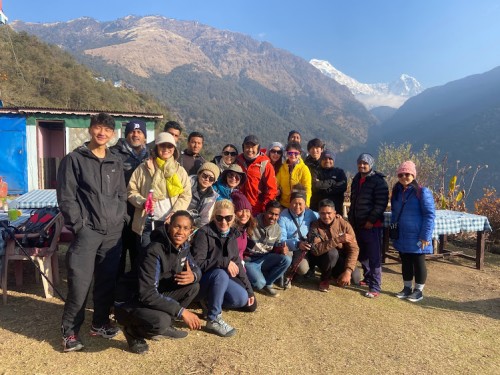
The Ghorepani Poon Hill Trek is a short Himalayan journey through the lower Annapurna region, combining mountain scenery, forest trails and Gurung villages without requiring a long stay at high altitude. The route reaches Poon Hill at 3,210 meters, one of the best-known viewpoints in the Annapurna region, before continuing through Tadapani to Ghandruk.
The trail begins after travelling from Kathmandu to Pokhara and continues through Nayapul, Tikhedhunga, Ghorepani, Poon Hill, Tadapani and Ghandruk. Along the way, the landscape changes from cultivated hills and river valleys to stone staircases, oak and rhododendron forests and open mountain viewpoints. The early-morning climb to Poon Hill is the main attraction, while Ghandruk adds a strong cultural element to the journey.
Our regular service package is USD 675 per person for a group of 2–5 people. This is a Kathmandu-based itinerary that includes the journey to Pokhara, Kathmandu sightseeing, accommodation, meals during the trek, guide and porter services, transportation and the other services listed in the package. Trekkers who have less time can also choose shorter Poon Hill itineraries from Pokhara.
If you are comparing this route with other short Himalayan journeys, our guide to short treks in Nepal gives a broader comparison of routes suitable for travellers with limited time.
The Ghorepani Poon Hill Trek changes character several times during the journey. After leaving Pokhara, the lower hills are marked by cultivated terraces, villages and river valleys. Once the walking begins around Nayapul and Tikhedhunga, the trail gradually becomes steeper and more enclosed by forest.
The climb towards Ulleri is particularly memorable for its extensive stone staircases. The ascent requires steady effort rather than technical ability, and the surrounding landscape changes as the trail gains elevation. Houses and farmland gradually give way to oak and rhododendron forest.
Ghorepani brings a colder mountain atmosphere. The most anticipated morning begins before sunrise, when trekkers leave the lodge with a headlamp and climb towards Poon Hill. The viewpoint opens towards a broad Himalayan panorama, and on a clear morning the first light reaches the surrounding peaks before the trail descends back towards Ghorepani.
From there, the route continues through forest towards Tadapani. The following descent towards Ghandruk brings another change in scenery as the forest begins to open and cultivated slopes and village settlements become more visible. Ghandruk is not simply an overnight stop. Its Gurung heritage, stone-paved paths, houses and mountain-facing location give the final part of the trek a distinct cultural character.
| Day | Route | Main Activity |
|---|---|---|
| Day 1 | Kathmandu | Arrival and transfer to hotel |
| Day 2 | Kathmandu | Kathmandu Valley sightseeing |
| Day 3 | Kathmandu – Pokhara | Tourist bus or flight to Pokhara |
| Day 4 | Pokhara – Nayapul – Tikhedhunga | Drive and begin trekking |
| Day 5 | Tikhedhunga – Ghorepani | Climb through Ulleri and forest |
| Day 6 | Ghorepani – Poon Hill – Tadapani | Sunrise and trek to Tadapani |
| Day 7 | Tadapani – Ghandruk | Forest descent and village visit |
| Day 8 | Ghandruk – Nayapul – Pokhara | Trek and drive to Pokhara |
| Day 9 | Pokhara – Kathmandu | Return to Kathmandu |
| Day 10 | Kathmandu | Airport transfer and departure |
The route follows the lower Annapurna foothills and connects several well-known trekking settlements:
Kathmandu → Pokhara → Nayapul → Tikhedhunga → Ghorepani → Poon Hill → Tadapani → Ghandruk → Nayapul → Pokhara → Kathmandu
The landscape changes noticeably along this route. The lower section contains farmland, villages and river valleys, while the trail around Ulleri and Ghorepani enters denser forest. Poon Hill provides the main high viewpoint before the route descends through Tadapani and Ghandruk.
This combination is one reason the trek works well for travellers who want mountain scenery and village life without spending many days at high altitude.
For travellers who want to stay longer in the Annapurna region, the Annapurna Base Camp Trek follows a substantially higher route into the Annapurna Sanctuary.
Poon Hill is the obvious attraction, but the appeal of the trek does not depend on the viewpoint alone.
The approach through Ulleri introduces trekkers to the stone staircases that are characteristic of many Himalayan trails. Higher up, the rhododendron and oak forests create a different atmosphere, particularly during spring when rhododendrons are in bloom.
The early morning at Poon Hill provides the most dramatic mountain views, while the forest trail towards Tadapani offers a quieter part of the journey. Ghandruk then adds a cultural dimension through its Gurung community, traditional houses, village paths and local institutions.
The route also passes streams, waterfalls, suspension bridges and terraced hillsides, so the experience continues to change even on a relatively short trek.
The Ghorepani Poon Hill Trek is generally considered moderate. It does not involve technical climbing, glaciers or specialised mountaineering skills, but it should not be mistaken for a completely easy walk.
The main physical challenge comes from the repeated stone staircases and elevation gain, particularly between Tikhedhunga and Ghorepani. The early morning climb to Poon Hill also requires a short uphill walk before sunrise.
Most of the difficulty comes from walking for several consecutive days rather than from extreme altitude. Regular walking, stair climbing and basic cardiovascular preparation in the weeks before the trek can make the route considerably more comfortable.
If you are looking for a much more demanding Himalayan experience, the Everest Three Passes Trek involves three high mountain passes above 5,400 meters and requires considerably greater preparation.
Spring is one of the most attractive periods for the trek. Rhododendrons begin flowering across sections of the forest, temperatures are comfortable for walking and mountain visibility is often good.
March can still feel cold in the mornings, particularly around Ghorepani, while April and May gradually become warmer.
Autumn generally offers stable trekking conditions and clear mountain views. September can still receive some rain after the monsoon, while October and November are usually drier and cooler.
This is also one of the busiest periods on the trail, especially around Ghorepani and Poon Hill.
Winter brings colder mornings and the possibility of snow around the higher parts of the route. Poon Hill and Ghorepani can be particularly cold before sunrise.
The trek remains possible in suitable conditions, but warm clothing and flexibility are important.
The monsoon brings frequent rainfall, wet trails, cloud cover and slippery sections. Leeches can also appear on forest trails.
The hills become exceptionally green during this period, but mountain views are less predictable. Travellers choosing the monsoon season should be prepared for changing conditions.
For a wider comparison of trekking seasons and routes, see the company's Trekking in Nepal in 2026 & 2027 guide.
Accommodation during the trek is provided in local tea houses and lodges. Rooms are generally simple, with twin-sharing arrangements being common.
Facilities vary from one village to another. Some lodges offer hot showers, charging facilities and Wi-Fi for an additional charge, but these services should not be treated as guaranteed throughout the route.
Kathmandu and Pokhara accommodation is provided according to the package arrangement, while the trekking section uses local mountain lodges.
Breakfast, lunch and dinner are included during the trekking days. Tea houses along the route serve familiar trekking meals such as dal bhat, noodles, rice, pasta, soup, eggs and other simple dishes.
Dal bhat remains a practical choice for long walking days because it provides a substantial meal and is widely available along the trail.
Drinking water can be purchased in villages or obtained from available sources and treated before consumption. Carrying a reusable bottle or hydration system is useful, particularly during longer uphill sections.
The Ghorepani Poon Hill Trek passes through the Annapurna Conservation Area, so trekkers need an Annapurna Conservation Area Permit (ACAP) before entering the trekking route. The current permit fee is NPR 3,000 per person for foreign trekkers. Children under 10 years old are generally exempt from the permit fee.
Trekkers also need a Trekkers’ Information Management System (TIMS) card. The current TIMS fee is NPR 2,000 per person for trekkers travelling with a licensed trekking agency and guide. Therefore, the total permit and registration cost is generally NPR 5,000 per person.
These permits are arranged before entering the trekking area and are included in the trekking service when stated in the package inclusions. Permit fees and trekking regulations can change, so we confirm the latest requirements before departure.
Trekkers should not assume that permits used for restricted-area or other Annapurna routes apply to the Ghorepani route in the same way.
Transportation is included according to the selected package and itinerary.
The journey normally connects:
Kathmandu → Pokhara → Nayapul → trekking route → Nayapul → Pokhara → Kathmandu
Kathmandu to Pokhara can be travelled by tourist bus or domestic flight. The trekking section begins after the road journey from Pokhara towards Nayapul.
The return from Ghandruk to Nayapul is completed by road after the walking section, followed by transportation to Pokhara.
The regular service package for the Ghorepani Poon Hill Trek costs USD 675 per person for a group of 2–5 trekkers. The price changes according to group size.
| Group Size | Price Per Person |
|---|---|
| 1 person | USD 690 |
| 2–5 people | USD 675 |
| 6–10 people | USD 641 |
| 11–15 people | USD 608 |
| 16–25 people | USD 574 |
It is important to understand what this price represents before comparing it with shorter Poon Hill packages. The USD 675 package is a Kathmandu-based 10-day journey, not simply the price of walking from Pokhara to Poon Hill.
The itinerary includes Kathmandu accommodation and sightseeing, transportation between Kathmandu and Pokhara, the trekking route through Ghorepani, Poon Hill, Tadapani and Ghandruk, accommodation and meals during the trek, guide and porter services, permits and other listed services.
Shorter three- or four-day Poon Hill packages starting from Pokhara can naturally cost less because they involve fewer trekking days, hotel nights, meals and transportation services. Comparing the two prices without comparing what each itinerary includes can therefore give a misleading impression of the actual cost.
Larger groups receive a lower per-person rate because several operating costs can be shared among more trekkers. Private departures can also be adjusted according to preferred dates, pace and additional travel requirements.
Travel insurance is strongly recommended for the trek. Your policy should cover trekking at the maximum elevation reached on the itinerary and should include emergency medical treatment and evacuation where necessary.
Although the route does not reach extreme Himalayan elevations, weather can change quickly and trails can become slippery after rain. Winter snow can also affect the higher sections.
Good pacing is more useful than rushing. Drink regularly, eat properly and tell your guide if you feel unusually tired, dizzy, nauseous or unwell.
The early Poon Hill climb requires particular care because it takes place before sunrise. A headlamp, warm clothing and sensible footwear make the ascent safer and more comfortable.
A licensed local guide handles route navigation, accommodation arrangements, communication with lodges and practical problems that may arise during the trek. A knowledgeable guide can also explain local customs, village life, forests and the communities encountered along the route.
Porters carry the main trekking luggage, allowing trekkers to walk with a lighter daypack. Their work is especially useful on the long staircase sections around Ulleri and on the repeated ascents and descents of the trail.
The goal is not simply to have someone lead the way. Local staff make it easier to manage accommodation, meals, changing trail conditions and unexpected adjustments during the journey.
The trek is suitable for travellers who want a short Himalayan experience without committing to a long, high-altitude journey. It is a good choice for first-time trekkers, couples, families with good fitness and travellers with limited time in Nepal.
Although the route is moderately difficult, you should be prepared for long stone staircases, uphill and downhill sections and several consecutive days of walking. Regular walking or exercise before departure will help, especially if you are not used to walking on steep or uneven trails.
Nepal Himalayas Trekking offers a wide range of trekking packages across Nepal, from short Himalayan viewpoints and culturally rich village trails to demanding high-altitude and remote wilderness journeys. If the Ghorepani Ghandruk Trek is not the right fit for your available time, preferred difficulty or desired landscape, these alternatives provide different ways to experience the Himalayas.
Everest Base Camp Trek is one of Nepal's most popular trekking routes. It takes you through the Sherpa villages of the Khumbu region towards the base camp of Mount Everest, with highlights including Namche Bazaar, Tengboche Monastery, Kala Patthar and spectacular views of Everest, Lhotse, Nuptse and Ama Dablam. The trek involves more time at high altitude than the Ghorepani route and requires careful acclimatization.
Annapurna Base Camp Trek leads into the natural amphitheatre of the Annapurna Sanctuary. The route combines terraced hillsides, rhododendron forests, Gurung villages, hot springs and close mountain views of Annapurna South, Machhapuchhre, Hiunchuli and other surrounding peaks. It is a strong choice for travellers who want a more immersive Annapurna experience than the shorter Poon Hill route.
Everest Three Passes Trek is a challenging high-altitude adventure across Kongma La, Cho La and Renjo La. The route also includes Everest Base Camp, Kala Patthar, Gokyo Lakes and several remote valleys of the Khumbu region. Because the passes rise above 5,000 meters and the itinerary involves long, demanding days, it is best suited to experienced trekkers with good fitness and previous high-altitude experience.
Manaslu Circuit Trek follows a remote route around Mount Manaslu, the world's eighth-highest mountain. The trail passes through subtropical valleys, pine and rhododendron forests, Tibetan-influenced villages and high mountain terrain before crossing the Larkya La Pass. This is a longer and more demanding trek than Ghorepani, with restricted-area regulations and a stronger sense of wilderness.
Langtang Valley Trek is a relatively accessible Himalayan trek from Kathmandu. The route passes through forests, Tamang and Sherpa settlements, yak pastures and the Langtang Valley towards Kyanjin Gompa. It offers mountain scenery and cultural experiences within a shorter itinerary, making it suitable for travellers who want a Himalayan trek without travelling to the Everest or Annapurna regions.
Upper Mustang Trek explores the dry, high-altitude landscapes north of the Annapurna and Dhaulagiri ranges. The route leads through dramatic cliffs, barren valleys, ancient monasteries, cave settlements and villages influenced by Tibetan culture. Upper Mustang is very different from the green forests and terraced hills of Ghorepani and is ideal for travellers interested in history, culture and trans-Himalayan scenery.
Kanchenjunga Trek is designed for travellers seeking a longer and more remote trekking experience in eastern Nepal. The route explores the northern and southern base-camp areas of Mount Kanchenjunga, the world's third-highest mountain, through isolated villages, forests, alpine valleys and high mountain landscapes. It requires more time, preparation and physical endurance than shorter Nepal trekking packages.
Everest View Trek is a shorter alternative in the Khumbu region for travellers who want to experience Sherpa culture and see Mount Everest without completing the full Everest Base Camp route. The itinerary commonly includes Namche Bazaar, Tengboche and viewpoints around the Everest region, while keeping the walking duration and maximum altitude lower than longer Everest treks.
Other options may include the Mardi Himal Trek, known for its quieter trails and close views of Machhapuchhre; the Tamang Heritage Trek, which focuses on village culture and Himalayan scenery near Langtang; and the Tsum Valley Trek, a remote cultural journey through a sacred Himalayan valley near the Manaslu region. The best route depends on your available time, fitness, preferred altitude, interest in culture or mountain views and tolerance for remote trekking conditions.
.
A trekking package should make the practical side of the journey clear before you leave Kathmandu. Our itinerary states the route, accommodation, meals, transportation, guide and porter services, permits, inclusions and exclusions so that you can understand what you are paying for.
The company works with government-licensed local guides and trekking staff familiar with the route. We can also adjust the itinerary when travellers need different departure dates, additional days or a different pace.
For travellers comparing routes, our Trekking in Nepal guide provides a broader overview of the country's major trekking regions and the type of experience each one offers.
For the Ghorepani Poon Hill Trek, this matters because the journey can be arranged as a complete Kathmandu-based experience rather than simply a short walk to Poon Hill. You can combine the trek with Kathmandu sightseeing, Pokhara and the Ghandruk route according to the selected itinerary.
Our Kathmandu-based Ghorepani Poon Hill Trek takes 10 days, including Kathmandu arrival and departure, sightseeing, travel between Kathmandu and Pokhara and the trekking section. Shorter versions of the Poon Hill trek can be completed in around three to five days when starting from Pokhara.
The trek is generally moderate. There is no technical climbing, but the route includes substantial stone staircases, uphill sections and several consecutive days of walking. The climb around Ulleri and the early morning ascent to Poon Hill require the most effort.
Yes. Beginners with reasonable fitness can complete the trek with proper pacing and preparation. You should be comfortable walking uphill and downhill for several hours and should prepare your legs for stairs before arriving in Nepal.
Poon Hill stands at 3,210 meters above sea level. It is the highest point of the standard Ghorepani Poon Hill route and is considerably lower than the high passes and base camps reached on longer Himalayan treks.
Spring from March to May and autumn from September to November are generally the preferred seasons. Spring is particularly attractive for rhododendron blooms, while autumn often provides clear mountain views and stable walking conditions.
The regular service package costs USD 675 per person for groups of 2–5 people. The price decreases for larger groups and is USD 690 for a solo traveller. The package is a complete Kathmandu-based itinerary, so the price should be compared with other packages according to their duration and inclusions.
Yes. A short Poon Hill itinerary can be arranged from Pokhara in around three days, depending on the route and transportation arrangements. The longer Ghorepani Poon Hill itinerary allows more time for Ghandruk, Pokhara and Kathmandu.
On a clear day, Poon Hill provides views towards several major peaks of the Annapurna and Dhaulagiri ranges, including Annapurna South, Dhaulagiri, Machhapuchhre and Nilgiri. Visibility depends on weather and atmospheric conditions, so mountain views cannot be guaranteed every morning.
The route enters the Annapurna Conservation Area, so the applicable conservation-area entry permit must be obtained. Current permit requirements and fees are confirmed before departure because regulations can change.
Walking time varies according to the section of the route. Most trekking days involve several hours of walking, while the Poon Hill morning includes an additional early climb before continuing towards Tadapani. Terrain, weather and individual walking pace can affect the actual duration.
Some tea houses provide Wi-Fi, hot showers and charging facilities for an additional fee, particularly in larger settlements. Availability and quality vary between lodges, so these facilities should be regarded as optional rather than guaranteed.
Yes. The itinerary can be adjusted according to your available time, preferred departure date, group size and travel arrangements. Shorter Poon Hill versions or additional days in Pokhara and Kathmandu can also be discussed before booking.
The Ghorepani Poon Hill Trek offers a compact route through some of the most accessible landscapes of the Annapurna region. You get the pre-dawn climb to Poon Hill, forest trails, mountain villages, Gurung culture and views of the Annapurna and Dhaulagiri ranges without spending weeks at high altitude.
For the complete 10-day Kathmandu-based itinerary, the regular package starts at USD 675 per person for groups of 2–5 trekkers. If you have a different number of days available, the route can be adjusted to suit your schedule.
For current availability, departure dates and customized arrangements, contact Nepal Himalayas Trekking.
After landing at Tribhuvan International Airport, you meet our representative outside the arrival hall and transfer to your hotel. Kathmandu traffic can be busy, especially during office hours, so the drive may take longer than the distance suggests.
The first day is kept light because international flights often arrive late or after a long journey. After checking in, you can rest, exchange money, purchase a local SIM card or walk around the nearby streets. If your luggage has not arrived or any trekking items are missing, Kathmandu is the best place to resolve the issue before heading into the hills.
In the evening, you meet the guide and receive a briefing about the Ghorepani Poon Hill Trek. The team checks your equipment, confirms the next day's sightseeing arrangements and answers questions about walking conditions, meals and accommodation.
You spend the day visiting major cultural sites in Kathmandu Valley, including Pashupatinath, Swayambhunath, Boudhanath, Kathmandu Durbar Square and Patan Durbar Square. The order may change according to traffic, opening hours and the time available at each site.
Pashupatinath can be crowded and active, particularly during religious festivals. At Swayambhunath, you climb a long staircase to reach the hilltop, where monkeys are commonly seen around the temple area. Boudhanath is easier to explore at a slower pace, with pilgrims walking clockwise around the stupa and shops selling Buddhist handicrafts.
The historic squares contain uneven stone and brick surfaces, so comfortable shoes are useful. Kathmandu can also be dusty and polluted, especially during dry periods. Carrying water and wearing a light mask can make the sightseeing more comfortable.
You return to the hotel with time to check your trekking bag, charge electronic devices and purchase any missing items. Keep your luggage organised because the following morning begins with the journey to Pokhara.
By Road 6-7 hours, b) by air 30 minutes
You travel from Kathmandu to Pokhara by tourist bus or domestic flight. The road journey usually takes several hours, but the actual duration depends on traffic, road construction, weather and occasional delays along the Prithvi Highway. The route follows river valleys and passes through busy roadside settlements before reaching the greener hills around Pokhara.
If you travel by bus, keep a light jacket, water and snacks within reach. Roadside stops are basic, and toilet facilities may not always be as comfortable as those in Kathmandu. Motion sickness can affect some travellers because the road includes frequent bends, so carry any medication you normally use.
A flight is much quicker, but domestic flights can be delayed by cloud, wind or airport congestion. After arriving in Pokhara, the air usually feels warmer and more relaxed than in Kathmandu. You can walk around the Lakeside area, organise last-minute trekking supplies and confirm the next day's early departure.
You leave Pokhara by road for Nayapul, where the walking section begins. The drive passes through lower hill settlements and cultivated slopes before reaching the trailhead. Road conditions can be rough in places, and the exact starting point may change because of local road improvements or seasonal conditions.
The first part of the trail feels relatively warm and humid, particularly in spring and summer. You walk through villages, terraced fields and forested sections while crossing small bridges and streams. Local people, mule trains and porters may share the trail, so keep to one side when others are passing.
During the monsoon, this lower section can become slippery and muddy. Rainwater runs across the trail, stones become slick and leeches may be present in damp grassy areas and forest sections. Wear a rain jacket, protect your backpack with a cover and apply leech-repellent cream or salt around your shoes and socks if necessary. Trekking poles are useful for balance on wet ground.
The walk to Tikhedhunga is not extremely high, but the gradual uphill sections can feel tiring after the drive from Pokhara. Drink regularly and avoid starting too quickly on the first walking day.
This is one of the most physically demanding days because the trail climbs steadily towards Ghorepani. The long stone staircase above Ulleri is the main challenge. The steps are uneven and vary in height, so maintaining a slow, regular pace is more effective than trying to climb quickly.
The trail passes through villages and forest, with occasional views opening between the trees. As you gain elevation, the air becomes cooler and the vegetation changes to oak and rhododendron. In spring, blooming rhododendrons add colour to the forest, while in winter the upper trail can feel cold and may contain icy or snowy sections.
During the monsoon, water often flows down the staircases, making the stones slippery. Rain can also reduce visibility and leave clothing damp for much of the day. Use shoes with firm grip, carry waterproof layers and keep spare socks in a dry bag. Leeches are more common on wet forest paths, so check your socks and trouser cuffs during breaks.
The final approach to Ghorepani is noticeably colder than Tikhedhunga. After checking into the lodge, keep warm clothing accessible rather than packed at the bottom of your bag. Hot drinks and a warm meal are especially welcome after the long ascent.
You leave the lodge before sunrise f