
Any Question? Email Us
info@nepalhimalayastrekking.comTalk To An Expert ( Prakash Lamsal )
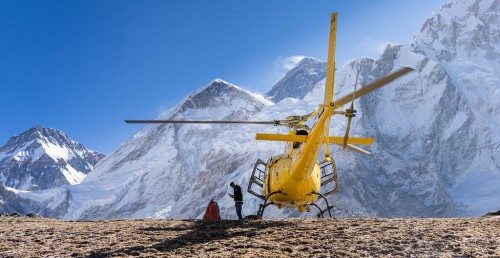
You trek into the Everest region on foot, following the classic route through Phakding, Namche Bazaar, Tengboche, Dingboche, Lobuche, and Gorak Shep before reaching Everest Base Camp and climbing Kala Patthar. Instead of spending several more days walking back toward Lukla, you return by helicopter from the Everest region, giving you a much shorter journey out and a completely different view of the Khumbu from the air.
The trek still includes the parts that make the Everest Base Camp experience demanding: gradual altitude gain, acclimatization, long days on the trail, and time in the villages of the Khumbu. The helicopter changes the return rather than the trek itself. After days of walking through the mountains, the flight offers a chance to see the glaciers, valleys, villages, and Himalayan peaks from above.
For travelers who want to experience the classic Everest Base Camp route but do not want to spend several additional days retracing the trail on the way back, this itinerary offers a practical alternative.
Detail | Information |
Duration | 10 days |
Trek Route | Lukla – Phakding – Namche – Tengboche – Dingboche – Lobuche – Gorak Shep – Everest Base Camp |
Maximum Altitude | 5,545 m at Kala Patthar |
Return | Helicopter from the Everest region |
Trek Difficulty | Moderate to challenging |
Daily Walking | Approximately 5–7 hours |
Trekking Distance | Approximately 65–75 km, depending on the route and acclimatization hikes |
Accommodation | Hotel in Kathmandu and teahouses on the trail |
Best Seasons | Spring and autumn |
Starting Price | USD 3,090 per person, sharing |
Note: Helicopter routing and flight operations depend on the booked package, weather, aircraft availability, and operating conditions. Confirm the exact return arrangement when booking.
The Everest Base Camp Trek with Helicopter Return follows the classic trekking route into the Khumbu, with the helicopter used for the return journey. You fly from Kathmandu to Lukla, walk through Phakding and Namche Bazaar, continue toward Tengboche, Dingboche, Lobuche, and Gorak Shep, and then make the final journey to Everest Base Camp and Kala Patthar.
After completing the high-altitude section of the trek, you return to the helicopter pickup point at Gorak Shep rather than retracing the entire trail to Lukla.
This is different from an Everest Base Camp Helicopter Tour, where the helicopter takes you directly into the Everest region without the multi-day trek. The helicopter-return itinerary gives you the walking experience, acclimatization days, Sherpa villages, monasteries, and high-altitude trail before replacing the return journey with a flight.
If you want the complete traditional trekking experience without a helicopter return, our Everest Base Camp Trek follows the conventional route in and out of the Everest region.
The helicopter return changes only the way you leave the Everest region. You still experience the main trekking route and the gradual progression toward Base Camp.
You can book our classic, 11-day Everest Base Camp Trek through the Nepal Himalayas Trekking booking system. We offer regular group departures and can also arrange private trips for travelers who prefer a more personalized experience. Simply choose your preferred departure date, provide your group details, and complete the booking process as outlined below.
Step 1: Check Your Preferred Departure Date
Contact Nepal Himalayas Trekking with your preferred travel dates and the number of people in your group. We will confirm the available 12-day departures and provide the current price.
Step 2: Confirm the Trip Details
Once you have selected a suitable date, we will discuss the trekking itinerary, helicopter-return arrangement, accommodation, inclusions, and any additional services you may require.
Step 3: Provide Your Booking Details
Send us the necessary traveler information, including your full name, passport details, nationality, contact information, and other details required to arrange the trek and permits.
Step 4: Secure Your Booking
A deposit is required to confirm your place on the selected departure. Once the payment is received, our team will send you a booking confirmation and the essential information for preparing for the trek.
A private departure gives you greater freedom over the dates and the composition of your group.
Step 1: Contact Nepal Himalayas Trekking with your preferred dates and group size.
Step 2: We will prepare the 11-day itinerary and confirm the availability of accommodation, domestic flights, guides, porters, and the helicopter return.
Step 3: Discuss any additional arrangements you would like, such as a private guide, single-room accommodation, extra porter support, additional nights in Kathmandu, or other services.
Step 4: Once the itinerary and cost have been agreed upon, make the required deposit to secure your private departure.
You can contact our team directly to receive the current payment instructions and booking details. Once your payment has been received, Nepal Himalayas Trekking will confirm your reservation and provide the information you need before arrival in Nepal.
If you have questions about the helicopter return, Lukla flights, permits, accommodation, or preparation for the high-altitude trek, you can discuss them with our team before making the final booking.
Ready to plan your Everest journey? Send Nepal Himalayas Trekking your preferred dates and group size, and our team will help you arrange the 12-day Everest Base Camp Trek with Helicopter Return.
The Everest Base Camp Trek with Helicopter Return begins with a flight from Kathmandu to Lukla, followed by trekking through Phakding, Namche Bazaar, Tengboche, Dingboche, and Lobuche toward Everest Base Camp. Two acclimatization days in Namche and Dingboche allow gradual adjustment to the increasing altitude, with optional hikes for mountain views. After reaching Everest Base Camp on Day 8, you return to Gorak Shep for the night. The following morning, you climb Kala Patthar (5,545 m) for panoramic views of Everest before taking a helicopter from Gorak Shep, subject to weather and operational conditions. Depending on the selected arrangement, the helicopter takes you directly to Kathmandu or via Lukla, with the final day reserved for onward travel or additional time in Kathmandu.
Trekking distances vary slightly according to the exact trail, side trips, and the location of individual teahouses. The figures below are therefore approximate rather than exact measurements.
Day | Trekking Route | Approx. Distance | Walking Time |
1 | Lukla to Phakding | ~7 km | 3–4 hrs |
2 | Phakding to Namche Bazaar | ~10 km | 5–6 hrs |
3 | Namche acclimatization hike | ~4 km | 3–4 hrs |
4 | Namche to Tengboche | ~10 km | 5–6 hrs |
5 | Tengboche to Dingboche | ~11 km | 5–6 hrs |
6 | Dingboche acclimatization hike | ~4 km | 3–4 hrs |
7 | Dingboche to Lobuche | ~9 km | 5–6 hrs |
8 | Lobuche to Everest Base Camp via Gorak Shep and back | ~13 km | 7–8 hrs |
9 | Gorak Shep to Kala Patthar and back | ~4 km walking | 2–3 hrs |
The total walking distance is approximately 65–75 km, depending on the exact trail and acclimatization hikes. The helicopter removes the need to walk the return section through Lobuche, Dingboche, Tengboche, Namche, and Lukla.
For a more detailed breakdown of expenses associated with the trek, see our Everest Base Camp Trek Cost guide.
The trip begins with the flight from Kathmandu to Lukla. After landing at Tenzing-Hillary Airport, you meet the trekking team and begin walking along the Dudh Koshi valley toward Phakding. The first day is relatively short, allowing your body to begin adjusting to the altitude.
The trail follows the Dudh Koshi River and crosses several suspension bridges before entering Sagarmatha National Park. From the river valley, the route climbs steadily toward Namche Bazaar, the largest settlement in the Khumbu and an important acclimatization stop.
The acclimatization day includes a short hike rather than complete inactivity. Many trekkers walk toward the Everest View Hotel for their first distant views of Everest and the surrounding peaks before returning to Namche.
This is also a good opportunity to explore the village, visit the Sherpa Museum, or rest before continuing higher into the valley.
For travelers interested in the area's mountain-view accommodation and breakfast stop, our Everest View Hotel guide can provide more information.
The trail climbs above the Dudh Koshi before passing through forests of pine and rhododendron. After descending toward the river, you climb again toward Tengboche, home to the famous Tengboche Monastery and broad views of Ama Dablam and the surrounding peaks.
The trail passes through Pangboche and gradually enters the more open alpine landscape above the tree line. As the altitude increases, the pace becomes slower and the scenery changes from forest to rock, pasture, and mountain terrain.
Dingboche provides another important acclimatization day. Depending on conditions and your guide's recommendation, you can take a gradual hike toward Nangkartshang for views of Ama Dablam, Island Peak, and other surrounding mountains before returning to the village.
The trail continues toward higher ground, passing the Thukla area and the memorials dedicated to climbers who lost their lives in the Himalayas. From here, the landscape becomes increasingly barren as you approach Lobuche.
This is one of the longest days of the trek. You first walk to Gorak Shep, leave unnecessary belongings at the lodge, and continue toward Everest Base Camp.
The route follows the rocky terrain beside the Khumbu Glacier before reaching Base Camp. The summit of Everest is not clearly visible from the main Base Camp area because Nuptse and the surrounding terrain obstruct the view, but the location remains one of the defining destinations of the trek.
After spending time at Base Camp, you return to Gorak Shep for the night.
An early start takes you from Gorak Shep toward Kala Patthar. At 5,545 m, it is the highest point reached on this itinerary and provides one of the broadest views of Mount Everest.
After returning to Gorak Shep, you prepare for the helicopter departure. The flight arrangement and pickup time depend on weather, aircraft availability, and the routing included in your package.
If the helicopter brings you directly to Kathmandu on Day 9, Day 10 can be used for departure or additional time in the city.
If your helicopter arrangement returns you to Lukla, the onward flight to Kathmandu takes place according to the confirmed schedule.
The helicopter return does not remove the permit requirements for the trekking route. You still need the permits and entry documents required to trek through the Everest region.
For this itinerary, the trekking permit requirements include:
The helicopter return does not replace these trekking permits because you still complete the Everest Base Camp route on foot. Current permit fees and applicable charges should be confirmed at the time of booking, as government and local authority fees can change.
If these permits are included in your package price, state that clearly in the inclusions section rather than making travelers calculate the cost themselves.
Kala Patthar, at 5,545 m, is the highest point reached on this itinerary. The climb from Gorak Shep is relatively short but steep, and the high altitude makes the ascent considerably harder than the distance alone suggests.
Many trekkers start before sunrise so they can reach the viewpoint while the mountains are beginning to catch the morning light. From Kala Patthar, you can see Everest, Lhotse, Nuptse, Pumori, and the surrounding Khumbu landscape.
The viewpoint is particularly valuable because the summit of Everest is not clearly visible from the main Base Camp area. Kala Patthar provides a much more open perspective toward the mountain.
After completing the Everest Base Camp section of the trek and climbing Kala Patthar, you return to Gorak Shep for the helicopter departure.
The return process generally follows these steps:
The helicopter pickup for this itinerary is from Gorak Shep, rather than from Everest Base Camp itself.
The return flight gives you a completely different perspective on the route you have just spent days walking.
From the Everest region, the helicopter rises above the high-altitude terrain and Khumbu Glacier. Peaks such as Everest, Lhotse, Nuptse, Ama Dablam, and Pumori can appear from angles that are difficult to appreciate from the trail.
As the flight continues toward the lower Khumbu, the landscape gradually changes from barren alpine terrain to greener valleys and forests. Villages that took hours to reach on foot pass below in a matter of minutes.
The actual flight time and routing depend on the aircraft, weather, air traffic, and whether your package includes a direct Kathmandu return or a Lukla connection.
Helicopter operations in the Everest region are affected by weather and visibility, particularly at high elevations. A flight scheduled for a particular time can therefore be delayed or postponed.
If the helicopter cannot operate as planned:
We recommend leaving some flexibility in your overall Nepal travel schedule rather than arranging an international departure immediately after the helicopter return.
High-altitude helicopter operations depend on weather, visibility, aircraft limitations, and aviation procedures. The safest approach is to follow the crew and guide's instructions rather than trying to influence the flight schedule.
Our current package options are structured according to the helicopter arrangement and whether the return is shared or private.
Package | Return Arrangement | Price |
Shared Helicopter Return | Gorak Shep → Kathmandu | USD 3,090 per person |
Private Helicopter Return | Gorak Shep → Kathmandu | USD 4,890 per person |
Helicopter to Lukla | Gorak Shep → Lukla, followed by flight to Kathmandu | USD 2,190–2,590 per person |
Prices can vary according to group size, travel dates, helicopter arrangements, and other services selected.
For a detailed comparison of the different ways to reach and leave Everest Base Camp, you can also explore our Everest Base Camp Trek Cost information.
You can customize the trek with additional services depending on your preferences and availability.
Private Helicopter Return: Upgrade from a shared helicopter arrangement to a private flight for your group.
Private Guide: Travel with a guide dedicated specifically to your group rather than joining a larger trekking group.
Additional Porter Support: Extra porter support can be arranged if you have more luggage or prefer to carry less during the trek.
Additional Kathmandu Nights: Add hotel nights before or after the trek if your international flight schedule requires more time in Kathmandu.
Trekking Gear Rental: Sleeping bags, down jackets, and other high-altitude equipment can be arranged where available.
Private Airport Transfers: Private airport transportation can be arranged instead of using the standard group transfer.
Adding services is straightforward:
For services such as private helicopter arrangements, early confirmation is recommended because availability can vary during busy trekking seasons.
The package is designed to cover the principal practical requirements of the journey, from your arrival in Kathmandu to your return from the Everest region by helicopter.
The package covers the permits required for the trekking route:
Flight arrangements vary according to the season.
Non-peak season — January, February, June, July, August and December:
Kathmandu to Lukla domestic flight ticket
Peak season — March, April, May, September, October and November:
Shared helicopter flight from Gorak Shep or Lobuche to Kathmandu
Helicopter operation remains subject to weather conditions and operational factors
The final pickup point and flight schedule are determined according to conditions on the day of operation.
Meals are provided throughout the trekking itinerary, with a combination of local and continental choices.
The trekking team provides both logistical and practical support throughout the route:
The following are generally excluded unless specifically stated in your package:
Your travel insurance should specifically cover high-altitude trekking and helicopter evacuation, if such coverage is required for your trip.
Autumn generally offers stable trekking conditions, clear mountain views, and pleasant conditions along much of the trail.
Spring brings warmer conditions at lower elevations, flowering rhododendrons, and generally good visibility in the mountains.
Winter can bring very cold temperatures and snow at higher elevations, although clear days can offer excellent mountain views.
Rain, cloud, and flight disruptions are more common during the monsoon period. Helicopter operations can also be affected by visibility and weather conditions.
For travelers combining trekking with a helicopter return, it is important to consider both trekking weather and flight conditions when choosing travel dates.
In Kathmandu, you stay in a hotel according to your selected package. During the trek, accommodation is provided in locally operated teahouses along the route. Rooms are generally simple, with twin beds and basic furnishings, while bathrooms may be shared, particularly at higher elevations.
The package includes 9 breakfasts, 9 lunches, and 8 dinners during the trek and Kathmandu stay, along with one farewell dinner.
Food becomes more limited and generally more expensive at higher elevations because supplies have to be transported into the Everest region. Charging facilities and Wi-Fi may be available at many teahouses for an additional fee, although connectivity can become less reliable as you climb higher.
Keep your passport, valuables, medication, electronics, and other essential items in your daypack.
Do not assume that every item you carried during the trek can automatically be loaded onto the helicopter. Baggage capacity is subject to aircraft weight limitations and operating conditions.
For a more detailed equipment guide, see our Everest Base Camp Trek Packing List.
This itinerary works particularly well for:
The helicopter does not remove the need for acclimatization or fitness. You still spend several days walking above 3,000 m and reach elevations above 5,000 m.
If you're unsure about the physical demands, our Everest Base Camp Trek Difficulty guide can help you understand what the route involves.
Feature | Standard EBC Trek | EBC Trek with Helicopter Return |
Trek to Everest Base Camp | Yes | Yes |
Acclimatization | Yes | Yes |
Kala Patthar | Optional | Included in this itinerary |
Walk back toward Lukla | Yes | No |
Helicopter return | No | Yes |
Overall duration | Longer | 10 days |
Cost | Lower | Higher |
Descent on foot | Yes | No |
If you would rather experience the Everest region entirely by air without the multi-day trek, see our Everest Base Camp Helicopter Tour.
Send us your preferred departure date and the number of people traveling.
Choose the appropriate shared or private trekking and helicopter arrangement.
If you need a private helicopter, extra porter support, additional Kathmandu nights, or trekking gear, tell us when making your inquiry.
We check the trekking dates, Lukla flights, accommodation, guides, and helicopter arrangements.
Once the itinerary and price are confirmed, make the required deposit to secure the booking.
Before departure, you'll receive your final itinerary, meeting information, flight details, packing guidance, and other necessary trip information.
The current shared package starts at USD 3,090 per person, while a private helicopter option is listed at USD 4,890 per person. A lower-cost option using a helicopter to Lukla followed by a regular flight to Kathmandu is approximately USD 2,190–2,590 per person, depending on the package.
The standard itinerary is 10 days, including the trek from Lukla to Everest Base Camp, the Kala Patthar hike, helicopter return arrangements, and departure or onward travel.
The helicopter pickup for this itinerary is at Gorak Shep, after you have returned from Everest Base Camp and completed the Kala Patthar hike.
Not on this itinerary. You return to Gorak Shep after visiting Base Camp, and the helicopter pickup is arranged from there.
No. Kala Patthar is reached on foot as part of the trekking itinerary. You then return to Gorak Shep for the helicopter departure.
The actual flight time depends on the routing, aircraft, weather, and operating conditions. Your confirmed flight arrangement will provide the expected routing and schedule.
The flight is monitored for the next suitable operating window. If a longer delay occurs, additional accommodation and alternative travel arrangements may be required.
Yes. The helicopter only changes the return journey. You still need proper acclimatization before reaching the higher elevations of the Everest region.
Yes. Kala Patthar is included in this itinerary.
Yes, a private helicopter return can be arranged as an upgrade, subject to availability.
The trek requires the Sagarmatha National Park Entry Permit and Khumbu Pasang Lhamu Rural Municipality Permit.
Spring and autumn are generally the preferred seasons for the Everest Base Camp Trek with helicopter return because of better trekking and mountain-view conditions.
It can be suitable for fit first-time trekkers who are prepared for long walking days and high altitude. Previous high-altitude trekking experience is helpful but not mandatory.
Our team arranges the trekking and helicopter components as part of the same trip rather than treating the flight as a separate last-minute addition.
We coordinate your trekking itinerary, accommodation, permits, domestic flights, guides, porters, and helicopter arrangements according to the package you choose.
Before booking, we'll explain the return routing, what's included, what isn't, and what can happen if weather affects the helicopter schedule. That way, you know what you're paying for before you leave Kathmandu.
Trek to Everest Base Camp, climb Kala Patthar, and return from the Everest region by helicopter instead of walking the entire route back.
Send us your preferred dates and group size at +977 9841044334 to check availability, pricing, and the helicopter return options for your trip.
We will begin our trek with the most scenic and exhilarating flight from Kathmandu to Lukla. This flight offers us stunning views of the Himalayas. When we land at the Tenzing-Hillary Airport, we will meet our trekking team and start the trek to Phakding. This downhill trail through the pine forests and Sherpa Villages provides a crafted voyage. This is a gentle introduction to the trek that lets us adjust to the rugged terrain and rising altitude. We will stay in Phakding overnight.
This trek that goes uphill from Phakding will reach Namche Bazaar at the end of the day. The trail includes forest paths, river crossings, with a challenging ascent towards Namche. Namche is a vibrant and bustling town that offers us the distant views of Mount Everest and Ama Dablam, with the local culture and tradition thriving at its peak. This place offers local markets, bakeries, and the serenity of mountain views. We will spend our night in a lodge in Namche Bazaar.
The rest day is scheduled for us to acclimatize and enjoy the surroundings of Namche Bazaar. An elective predawn trek awaits, leading to the Hotel Everest View, perched at an unparalleled altitude as the world's loftiest hostelry. This hike facilitates acclimatization to the rarefied atmosphere while captivating us with the ethereal ambiance of residing amidst colossal summits in splendid isolation. In the afternoon or evening, we explore the nearby Sherpa Museum to get insights into the proud history and culture of the Sherpa Community.
While we leave Namche Bazaar after a fruitful rest day, we will follow the scenic route above the Dudh Koshi River and descend through the lush forests of Phunki Tenga. The consummate and formidable ascent will transport us to the serene and sanctified environs of Tengboche Monastery. Nestled around the serene setting that is ringed by the towering views of the peaks like Ama Dablam, this place provides an opportunity to attend a peaceful chanting ceremony by the local monk. Overnight in the Tengboche teahouse.
We will have a short descent through our favourite rhododendron forests and pass through the ancient village named Pangboche. We will continue climbing beyond the tree line to the open alpine region. We have a glimpse of stone walls that are protecting the fields from the high-paced wind as we get near Dingboche. The altitude starts catching up as breathing gets flowers and mindful. We reach Dingboche early in the afternoon and rest to adjust to the thin air.
We will take an opportunity for rest for the acclimatization as we have gained a significant elevation. Dingboche is a major acclimatization point and creates a transit between ascending and descending. We have scheduled an optional hike to Nangkartsang Peak at an elevation of 5083m that offers enchanting views of the Himalayas like Makalu, with Imja Valley. We will witness the resilience and struggling happiness of mountain life here. We will gain a deep appreciation for the people who live here and serve the trekkers.
The trail of the tale today will wind through the alpine meadows to the pastures towards Thukla. From here, we will ascend the Thukla Pass, which has a pristine yet heart-wrenching site which has memorials to the climbers who lost during the Everest Expedition. This trek will be a little bit physically demanding, and the high-altitude environment will push our limits. It is a powerful reminder of the mountain’s power. After paying our respects, we will continue to Lobuche, which is nestled beyond towering peaks like Pumori and Nuptse, providing a colder and cooler setting.
The trek along the moraines of the glacier to Gorak Shep is our final overnight stop before we triumph over the Everest Base Camp. We commence at dawn, arriving at Gorak Shep for midday repast. Post-luncheon, we don our footwear for the culminating endeavor to Everest Base Camp. The base camp is draped with the ice towers and greets us at the base camp. Though Everest isn't visible here, we soak in the photogenic and achievement moments. The feeling of pride and awe is incomparable. We will return to Gorak Shep after a few hours for the overnight stay.
We have scheduled an early morning hike from Gorak Shep to Kala Patthar. Kala Patthar is also the highest point we will reach on this trek at etched elevation of 5545m. This peak provides us the gigantic and most stunning views of Everest which is often bathed in the golden sunrise light. We will enchant and soak in the views of the Himalayas and return to Gorak Shep for lunch.
After having lunch, a helicopter will land to receive us and we will board that flight. The aerial views of the great Himalayan range will provide a stunning and heart-warming experience.
This is our last day of the most memorable trekking experience. If the weather is fair and friendly, we will take an early flight from Lukla to Kathmandu. The Himalayas will be seen shrinking beneath our sight once again. We will finally arrive in Kathmandu to take back the amenities of urban life that we missed during our voyage to the Everest Base Camp and back. We will rest and enjoy the rest of the day at our own will and prepare for the departure tomorrow. We will also have a celebratory dinner to mark the achievement of Everest.
| Group Size | Price Per Person |
|---|---|
| 1 | USD 3,290 |
| 2-5 | USD 3,090 |
| 6-10 | USD 2,936 |
| 11-15 | USD 2,781 |
| 16-25 | USD 2,627 |
| Group Size | Price Per Person |
|---|---|
| 1 | USD 5,323 |
| 2-5 | USD 4,999 |
| 6-10 | USD 4,750 |
| 11-15 | USD 4,500 |
| 16-25 | USD 4,250 |
For short days traveler or kind of luxury traveler, this Everest base camp trek with helicopter return tour is most demanding and popular in the Nepal. Sometime because of bad weather or those guys don't like to come down by hiking and then this tour will be perfect and suitable in the Everest region. Not only this, Everest base camp trek with helicopter return tour is the perfect combination of hiking and helicopter ride of the Everest region. So this tour is most demanding and fabulous for adventure traveler in the Nepal.
Everest base camp trek with helicopter return tour is always depends on the using services, number of trekking days, number of trekkers or traveler & destination of helicopter tour. Normally we will offering such following way for this tour in the Nepal.
A. Cost will from $ 2190 USD to $ 2590 USD for Everest base camp trek with helicopter return to Lukla & B. Cost will from $ 4990 USD to $ 5890 USD for Everest base camp trek with helicopter return to Kathmandu.
Comparing only Everest base camp trek cost, this Everest base camp trek with return helicopter tour is slightly expensive but very very worth it. During this tour, traveler able to gain the experience of everything of the Everest region. Such as
- Great hiking / trekking from Lukla to Everest base camp / Kala Patthar.
- Will chance to fly with Small plane from Kathmandu to lukla to kathmandu.
- Will get incredible view of white snow mountains with fly return to Lukla Airport by helicopter. So Tour cost is one part but your unforgetable & lifetime experience are the another great part.
It is quite short days tour than Everest base camp trek and look like a kind of Luxury tour in Nepal. Comparing other trips, this Everest base camp trek with helicopter tour is slightly expensive but as a great services it's still reasonable. Normally we have two different offer for this Everst base camp trek with helicopter return in Everest region. They are called
1. Everest base camp trek with helicopter return tour to Lukla Airport: For this tour we Nepal Himalayas Trekking offering from $ 2190 USD to $ 2590 USD. Where will get 9 to 10 days Everest base camp trek with helicopter return tour to lukla from Gorakhshep.
2. Everest base camp trek with helicopter return to Kathmandu directly tour: For this tour we Nepal Himalayas Trekking company offering from $ 4990 USD to $ 5890 USD. With this cost traveler will get 9 to 10 days Everest base camp trek packages with guide & porter and helicopter return tour to Kathmandu directly from Gorakhshep.
If you are planning to travel to Nepal for Everest base camp trek with helicopter return tour, then we Nepal Himalayas Trekking company always sugegst please try to come in Spring and Autumn season. These Spring & Autumn season are the best time to do Everest base camp trek with helicopter return tour in Nepal. Normally March to May in Spring and September to December in Autumn season are perfect time to do any kinds of activities in the Nepal.
Normally if you are in group or more than 2 people and then cost will be quite cheaper than single. If you are alon then also possible to do this tour in the Nepal. In Everest region, there is still possible to do alone but we have some restricted trekking trail in Nepal. Such as
In this region not allowed to possible alone. We have to make special permit and need to hire a trekking guide for this trek in the Nepal.
The best seasons for trekking to the Everest Base Camp are generally the Spring and Autumn. These seasons provide the best weather conditions and offer the best views and shapes.
This trek to Everest Base Camp is moderately challenging and involves a few strenuous climbs, and the trek goes up to an elevation of 5545 high. Acclimatization days will be helpful for this trek.
The expedition to Everest Base Camp envelops you in the rich tapestry of Sherpa traditions, particularly within the vibrant hamlets of Namche Bazaar and Tengboche. We will get a lot of insights in places like Tengboche Monastery and the Sherpa Museum in Namche Bazaar.
The local festivals like Lhosar in the spring and Mani Rimdu in the autumn season align with the Vibrant communal gathering and ceremonies. Contact us to align the dates with these festivals. The Everest Base Camp blends it all.
The Everest Base Camp route starts with the flight to Lukla from Kathmandu and leads towards Namche through Phakding. We will pass through Tengboche, Dingboche, Lobuche, and Gorak Shep before stepping into the grandeur of Everest Base Camp. We will retrace the same path while returning.
Travel Insurance helps in covering medical emergencies in higher altitudes. It also helps in high-altitude evacuation and helps refurbish the lost or damaged gears and luggage. Verify the policies before buying one.
The most essential gears include waterproof boots and jackets, layered clothing, a sleeping bag, poles, bags, water bottles, a headlamp, sunglasses, water purification tablets, etc. Engaging with Nepal Himalayas trekking services facilitates the procurement of the gear and equipment.
A guide is not mandatory but recommended for navigation, safety, and cultural insights. Porters ease the load, carrying up to 15–20 kg. Hiring through agencies ensures proper support and enhances the experience.
Enjoy the popular trekking and tour packages in Nepal Himalayas. 2026.
Plan your Everest Base Camp Trek with our 14-day itinerary, 2026/27 cost guide, route, difficulty, altitude, packing list, permits, and experienced local guide support.
View DetailsEverest View trek is a very popular trek to view Mount Everest as compared to other trekking trail, because it provides the magnificent view of the Top of the world, Mount Everest.
View Details
Gokyo Valley trek is one of the best adventure trekking trail in Nepal. It is also one of the beautiful and popular trekking destination in Everest region.
View Details
Everest Three Passes Trek is the strenuous trekking in Everest. The trekking route covers all major viewpoints in Everest including Kongma La, Renjo La and Cho La
View Details
Participating in the Jiri to Everest Base Camp Trekking is the wonderful experience of following the footsteps of Sir Edmund Hillary and Tenzing Norgay in Nepal.
View Details
Everest Panorama Trek is just the right package for you if you are staying in Nepal for a short period of time and if you are looking for a short trek in Everest.
View Details
You trek into the Everest region on foot, following the classic route through Phakding, Namche Bazaar, Tengboche, Dingboche, Lobuche, and Gorak Shep before reaching Everest Base Camp and climbing Kala Patthar. Instead of spending several more days walking back toward Lukla, you return by helicopter from the Everest region, giving you a much shorter journey out and a completely different view of the Khumbu from the air.
The trek still includes the parts that make the Everest Base Camp experience demanding: gradual altitude gain, acclimatization, long days on the trail, and time in the villages of the Khumbu. The helicopter changes the return rather than the trek itself. After days of walking through the mountains, the flight offers a chance to see the glaciers, valleys, villages, and Himalayan peaks from above.
For travelers who want to experience the classic Everest Base Camp route but do not want to spend several additional days retracing the trail on the way back, this itinerary offers a practical alternative.
Detail | Information |
Duration | 10 days |
Trek Route | Lukla – Phakding – Namche – Tengboche – Dingboche – Lobuche – Gorak Shep – Everest Base Camp |
Maximum Altitude | 5,545 m at Kala Patthar |
Return | Helicopter from the Everest region |
Trek Difficulty | Moderate to challenging |
Daily Walking | Approximately 5–7 hours |
Trekking Distance | Approximately 65–75 km, depending on the route and acclimatization hikes |
Accommodation | Hotel in Kathmandu and teahouses on the trail |
Best Seasons | Spring and autumn |
Starting Price | USD 3,090 per person, sharing |
Note: Helicopter routing and flight operations depend on the booked package, weather, aircraft availability, and operating conditions. Confirm the exact return arrangement when booking.
The Everest Base Camp Trek with Helicopter Return follows the classic trekking route into the Khumbu, with the helicopter used for the return journey. You fly from Kathmandu to Lukla, walk through Phakding and Namche Bazaar, continue toward Tengboche, Dingboche, Lobuche, and Gorak Shep, and then make the final journey to Everest Base Camp and Kala Patthar.
After completing the high-altitude section of the trek, you return to the helicopter pickup point at Gorak Shep rather than retracing the entire trail to Lukla.
This is different from an Everest Base Camp Helicopter Tour, where the helicopter takes you directly into the Everest region without the multi-day trek. The helicopter-return itinerary gives you the walking experience, acclimatization days, Sherpa villages, monasteries, and high-altitude trail before replacing the return journey with a flight.
If you want the complete traditional trekking experience without a helicopter return, our Everest Base Camp Trek follows the conventional route in and out of the Everest region.
The helicopter return changes only the way you leave the Everest region. You still experience the main trekking route and the gradual progression toward Base Camp.
You can book our classic, 11-day Everest Base Camp Trek through the Nepal Himalayas Trekking booking system. We offer regular group departures and can also arrange private trips for travelers who prefer a more personalized experience. Simply choose your preferred departure date, provide your group details, and complete the booking process as outlined below.
Step 1: Check Your Preferred Departure Date
Contact Nepal Himalayas Trekking with your preferred travel dates and the number of people in your group. We will confirm the available 12-day departures and provide the current price.
Step 2: Confirm the Trip Details
Once you have selected a suitable date, we will discuss the trekking itinerary, helicopter-return arrangement, accommodation, inclusions, and any additional services you may require.
Step 3: Provide Your Booking Details
Send us the necessary traveler information, including your full name, passport details, nationality, contact information, and other details required to arrange the trek and permits.
Step 4: Secure Your Booking
A deposit is required to confirm your place on the selected departure. Once the payment is received, our team will send you a booking confirmation and the essential information for preparing for the trek.
A private departure gives you greater freedom over the dates and the composition of your group.
Step 1: Contact Nepal Himalayas Trekking with your preferred dates and group size.
Step 2: We will prepare the 11-day itinerary and confirm the availability of accommodation, domestic flights, guides, porters, and the helicopter return.
Step 3: Discuss any additional arrangements you would like, such as a private guide, single-room accommodation, extra porter support, additional nights in Kathmandu, or other services.
Step 4: Once the itinerary and cost have been agreed upon, make the required deposit to secure your private departure.
You can contact our team directly to receive the current payment instructions and booking details. Once your payment has been received, Nepal Himalayas Trekking will confirm your reservation and provide the information you need before arrival in Nepal.
If you have questions about the helicopter return, Lukla flights, permits, accommodation, or preparation for the high-altitude trek, you can discuss them with our team before making the final booking.
Ready to plan your Everest journey? Send Nepal Himalayas Trekking your preferred dates and group size, and our team will help you arrange the 12-day Everest Base Camp Trek with Helicopter Return.
The Everest Base Camp Trek with Helicopter Return begins with a flight from Kathmandu to Lukla, followed by trekking through Phakding, Namche Bazaar, Tengboche, Dingboche, and Lobuche toward Everest Base Camp. Two acclimatization days in Namche and Dingboche allow gradual adjustment to the increasing altitude, with optional hikes for mountain views. After reaching Everest Base Camp on Day 8, you return to Gorak Shep for the night. The following morning, you climb Kala Patthar (5,545 m) for panoramic views of Everest before taking a helicopter from Gorak Shep, subject to weather and operational conditions. Depending on the selected arrangement, the helicopter takes you directly to Kathmandu or via Lukla, with the final day reserved for onward travel or additional time in Kathmandu.
Trekking distances vary slightly according to the exact trail, side trips, and the location of individual teahouses. The figures below are therefore approximate rather than exact measurements.
Day | Trekking Route | Approx. Distance | Walking Time |
1 | Lukla to Phakding | ~7 km | 3–4 hrs |
2 | Phakding to Namche Bazaar | ~10 km | 5–6 hrs |
3 | Namche acclimatization hike | ~4 km | 3–4 hrs |
4 | Namche to Tengboche | ~10 km | 5–6 hrs |
5 | Tengboche to Dingboche | ~11 km | 5–6 hrs |
6 | Dingboche acclimatization hike | ~4 km | 3–4 hrs |
7 | Dingboche to Lobuche | ~9 km | 5–6 hrs |
8 | Lobuche to Everest Base Camp via Gorak Shep and back | ~13 km | 7–8 hrs |
9 | Gorak Shep to Kala Patthar and back | ~4 km walking | 2–3 hrs |
The total walking distance is approximately 65–75 km, depending on the exact trail and acclimatization hikes. The helicopter removes the need to walk the return section through Lobuche, Dingboche, Tengboche, Namche, and Lukla.
For a more detailed breakdown of expenses associated with the trek, see our Everest Base Camp Trek Cost guide.
The trip begins with the flight from Kathmandu to Lukla. After landing at Tenzing-Hillary Airport, you meet the trekking team and begin walking along the Dudh Koshi valley toward Phakding. The first day is relatively short, allowing your body to begin adjusting to the altitude.
The trail follows the Dudh Koshi River and crosses several suspension bridges before entering Sagarmatha National Park. From the river valley, the route climbs steadily toward Namche Bazaar, the largest settlement in the Khumbu and an important acclimatization stop.
The acclimatization day includes a short hike rather than complete inactivity. Many trekkers walk toward the Everest View Hotel for their first distant views of Everest and the surrounding peaks before returning to Namche.
This is also a good opportunity to explore the village, visit the Sherpa Museum, or rest before continuing higher into the valley.
For travelers interested in the area's mountain-view accommodation and breakfast stop, our Everest View Hotel guide can provide more information.
The trail climbs above the Dudh Koshi before passing through forests of pine and rhododendron. After descending toward the river, you climb again toward Tengboche, home to the famous Tengboche Monastery and broad views of Ama Dablam and the surrounding peaks.
The trail passes through Pangboche and gradually enters the more open alpine landscape above the tree line. As the altitude increases, the pace becomes slower and the scenery changes from forest to rock, pasture, and mountain terrain.
Dingboche provides another important acclimatization day. Depending on conditions and your guide's recommendation, you can take a gradual hike toward Nangkartshang for views of Ama Dablam, Island Peak, and other surrounding mountains before returning to the village.
The trail continues toward higher ground, passing the Thukla area and the memorials dedicated to climbers who lost their lives in the Himalayas. From here, the landscape becomes increasingly barren as you approach Lobuche.
This is one of the longest days of the trek. You first walk to Gorak Shep, leave unnecessary belongings at the lodge, and continue toward Everest Base Camp.
The route follows the rocky terrain beside the Khumbu Glacier before reaching Base Camp. The summit of Everest is not clearly visible from the main Base Camp area because Nuptse and the surrounding terrain obstruct the view, but the location remains one of the defining destinations of the trek.
After spending time at Base Camp, you return to Gorak Shep for the night.
An early start takes you from Gorak Shep toward Kala Patthar. At 5,545 m, it is the highest point reached on this itinerary and provides one of the broadest views of Mount Everest.
After returning to Gorak Shep, you prepare for the helicopter departure. The flight arrangement and pickup time depend on weather, aircraft availability, and the routing included in your package.
If the helicopter brings you directly to Kathmandu on Day 9, Day 10 can be used for departure or additional time in the city.
If your helicopter arrangement returns you to Lukla, the onward flight to Kathmandu takes place according to the confirmed schedule.
The helicopter return does not remove the permit requirements for the trekking route. You still need the permits and entry documents required to trek through the Everest region.
For this itinerary, the trekking permit requirements include:
The helicopter return does not replace these trekking permits because you still complete the Everest Base Camp route on foot. Current permit fees and applicable charges should be confirmed at the time of booking, as government and local authority fees can change.
If these permits are included in your package price, state that clearly in the inclusions section rather than making travelers calculate the cost themselves.
Kala Patthar, at 5,545 m, is the highest point reached on this itinerary. The climb from Gorak Shep is relatively short but steep, and the high altitude makes the ascent considerably harder than the distance alone suggests.
Many trekkers start before sunrise so they can reach the viewpoint while the mountains are beginning to catch the morning light. From Kala Patthar, you can see Everest, Lhotse, Nuptse, Pumori, and the surrounding Khumbu landscape.
The viewpoint is particularly valuable because the summit of Everest is not clearly visible from the main Base Camp area. Kala Patthar provides a much more open perspective toward the mountain.
After completing the Everest Base Camp section of the trek and climbing Kala Patthar, you return to Gorak Shep for the helicopter departure.
The return process generally follows these steps:
The helicopter pickup for this itinerary is from Gorak Shep, rather than from Everest Base Camp itself.
The return flight gives you a completely different perspective on the route you have just spent days walking.
From the Everest region, the helicopter rises above the high-altitude terrain and Khumbu Glacier. Peaks such as Everest, Lhotse, Nuptse, Ama Dablam, and Pumori can appear from angles that are difficult to appreciate from the trail.
As the flight continues toward the lower Khumbu, the landscape gradually changes from barren alpine terrain to greener valleys and forests. Villages that took hours to reach on foot pass below in a matter of minutes.
The actual flight time and routing depend on the aircraft, weather, air traffic, and whether your package includes a direct Kathmandu return or a Lukla connection.
Helicopter operations in the Everest region are affected by weather and visibility, particularly at high elevations. A flight scheduled for a particular time can therefore be delayed or postponed.
If the helicopter cannot operate as planned:
We recommend leaving some flexibility in your overall Nepal travel schedule rather than arranging an international departure immediately after the helicopter return.
High-altitude helicopter operations depend on weather, visibility, aircraft limitations, and aviation procedures. The safest approach is to follow the crew and guide's instructions rather than trying to influence the flight schedule.
Our current package options are structured according to the helicopter arrangement and whether the return is shared or private.
Package | Return Arrangement | Price |
Shared Helicopter Return | Gorak Shep → Kathmandu | USD 3,090 per person |
Private Helicopter Return | Gorak Shep → Kathmandu | USD 4,890 per person |
Helicopter to Lukla | Gorak Shep → Lukla, followed by flight to Kathmandu | USD 2,190–2,590 per person |
Prices can vary according to group size, travel dates, helicopter arrangements, and other services selected.
For a detailed comparison of the different ways to reach and leave Everest Base Camp, you can also explore our Everest Base Camp Trek Cost information.
You can customize the trek with additional services depending on your preferences and availability.
Private Helicopter Return: Upgrade from a shared helicopter arrangement to a private flight for your group.
Private Guide: Travel with a guide dedicated specifically to your group rather than joining a larger trekking group.
Additional Porter Support: Extra porter support can be arranged if you have more luggage or prefer to carry less during the trek.
Additional Kathmandu Nights: Add hotel nights before or after the trek if your international flight schedule requires more time in Kathmandu.
Trekking Gear Rental: Sleeping bags, down jackets, and other high-altitude equipment can be arranged where available.
Private Airport Transfers: Private airport transportation can be arranged instead of using the standard group transfer.
Adding services is straightforward:
For services such as private helicopter arrangements, early confirmation is recommended because availability can vary during busy trekking seasons.
The package is designed to cover the principal practical requirements of the journey, from your arrival in Kathmandu to your return from the Everest region by helicopter.
The package covers the permits required for the trekking route:
Flight arrangements vary according to the season.
Non-peak season — January, February, June, July, August and December:
Kathmandu to Lukla domestic flight ticket
Peak season — March, April, May, September, October and November:
Shared helicopter flight from Gorak Shep or Lobuche to Kathmandu
Helicopter operation remains subject to weather conditions and operational factors
The final pickup point and flight schedule are determined according to conditions on the day of operation.
Meals are provided throughout the trekking itinerary, with a combination of local and continental choices.
The trekking team provides both logistical and practical support throughout the route:
The following are generally excluded unless specifically stated in your package:
Your travel insurance should specifically cover high-altitude trekking and helicopter evacuation, if such coverage is required for your trip.
Autumn generally offers stable trekking conditions, clear mountain views, and pleasant conditions along much of the trail.
Spring brings warmer conditions at lower elevations, flowering rhododendrons, and generally good visibility in the mountains.
Winter can bring very cold temperatures and snow at higher elevations, although clear days can offer excellent mountain views.
Rain, cloud, and flight disruptions are more common during the monsoon period. Helicopter operations can also be affected by visibility and weather conditions.
For travelers combining trekking with a helicopter return, it is important to consider both trekking weather and flight conditions when choosing travel dates.
In Kathmandu, you stay in a hotel according to your selected package. During the trek, accommodation is provided in locally operated teahouses along the route. Rooms are generally simple, with twin beds and basic furnishings, while bathrooms may be shared, particularly at higher elevations.
The package includes 9 breakfasts, 9 lunches, and 8 dinners during the trek and Kathmandu stay, along with one farewell dinner.
Food becomes more limited and generally more expensive at higher elevations because supplies have to be transported into the Everest region. Charging facilities and Wi-Fi may be available at many teahouses for an additional fee, although connectivity can become less reliable as you climb higher.
Keep your passport, valuables, medication, electronics, and other essential items in your daypack.
Do not assume that every item you carried during the trek can automatically be loaded onto the helicopter. Baggage capacity is subject to aircraft weight limitations and operating conditions.
For a more detailed equipment guide, see our Everest Base Camp Trek Packing List.
This itinerary works particularly well for:
The helicopter does not remove the need for acclimatization or fitness. You still spend several days walking above 3,000 m and reach elevations above 5,000 m.
If you're unsure about the physical demands, our Everest Base Camp Trek Difficulty guide can help you understand what the route involves.
Feature | Standard EBC Trek | EBC Trek with Helicopter Return |
Trek to Everest Base Camp | Yes | Yes |
Acclimatization | Yes | Yes |
Kala Patthar | Optional | Included in this itinerary |
Walk back toward Lukla | Yes | No |
Helicopter return | No | Yes |
Overall duration | Longer | 10 days |
Cost | Lower | Higher |
Descent on foot | Yes | No |
If you would rather experience the Everest region entirely by air without the multi-day trek, see our Everest Base Camp Helicopter Tour.
Send us your preferred departure date and the number of people traveling.
Choose the appropriate shared or private trekking and helicopter arrangement.
If you need a private helicopter, extra porter support, additional Kathmandu nights, or trekking gear, tell us when making your inquiry.
We check the trekking dates, Lukla flights, accommodation, guides, and helicopter arrangements.
Once the itinerary and price are confirmed, make the required deposit to secure the booking.
Before departure, you'll receive your final itinerary, meeting information, flight details, packing guidance, and other necessary trip information.
The current shared package starts at USD 3,090 per person, while a private helicopter option is listed at USD 4,890 per person. A lower-cost option using a helicopter to Lukla followed by a regular flight to Kathmandu is approximately USD 2,190–2,590 per person, depending on the package.
The standard itinerary is 10 days, including the trek from Lukla to Everest Base Camp, the Kala Patthar hike, helicopter return arrangements, and departure or onward travel.
The helicopter pickup for this itinerary is at Gorak Shep, after you have returned from Everest Base Camp and completed the Kala Patthar hike.
Not on this itinerary. You return to Gorak Shep after visiting Base Camp, and the helicopter pickup is arranged from there.
No. Kala Patthar is reached on foot as part of the trekking itinerary. You then return to Gorak Shep for the helicopter departure.
The actual flight time depends on the routing, aircraft, weather, and operating conditions. Your confirmed flight arrangement will provide the expected routing and schedule.
The flight is monitored for the next suitable operating window. If a longer delay occurs, additional accommodation and alternative travel arrangements may be required.
Yes. The helicopter only changes the return journey. You still need proper acclimatization before reaching the higher elevations of the Everest region.
Yes. Kala Patthar is included in this itinerary.
Yes, a private helicopter return can be arranged as an upgrade, subject to availability.
The trek requires the Sagarmatha National Park Entry Permit and Khumbu Pasang Lhamu Rural Municipality Permit.
Spring and autumn are generally the preferred seasons for the Everest Base Camp Trek with helicopter return because of better trekking and mountain-view conditions.
It can be suitable for fit first-time trekkers who are prepared for long walking days and high altitude. Previous high-altitude trekking experience is helpful but not mandatory.
Our team arranges the trekking and helicopter components as part of the same trip rather than treating the flight as a separate last-minute addition.
We coordinate your trekking itinerary, accommodation, permits, domestic flights, guides, porters, and helicopter arrangements according to the package you choose.
Before booking, we'll explain the return routing, what's included, what isn't, and what can happen if weather affects the helicopter schedule. That way, you know what you're paying for before you leave Kathmandu.
Trek to Everest Base Camp, climb Kala Patthar, and return from the Everest region by helicopter instead of walking the entire route back.
Send us your preferred dates and group size at +977 9841044334 to check availability, pricing, and the helicopter return options for your trip.
We will begin our trek with the most scenic and exhilarating flight from Kathmandu to Lukla. This flight offers us stunning views of the Himalayas. When we land at the Tenzing-Hillary Airport, we will meet our trekking team and start the trek to Phakding. This downhill trail through the pine forests and Sherpa Villages provides a crafted voyage. This is a gentle introduction to the trek that lets us adjust to the rugged terrain and rising altitude. We will stay in Phakding overnight.
This trek that goes uphill from Phakding will reach Namche Bazaar at the end of the day. The trail includes forest paths, river crossings, with a challenging ascent towards Namche. Namche is a vibrant and bustling town that offers us the distant views of Mount Everest and Ama Dablam, with the local culture and tradition thriving at its peak. This place offers local markets, bakeries, and the serenity of mountain views. We will spend our night in a lodge in Namche Bazaar.
The rest day is scheduled for us to acclimatize and enjoy the surroundings of Namche Bazaar. An elective predawn trek awaits, leading to the Hotel Everest View, perched at an unparalleled altitude as the world's loftiest hostelry. This hike facilitates acclimatization to the rarefied atmosphere while captivating us with the ethereal ambiance of residing amidst colossal summits in splendid isolation. In the afternoon or evening, we explore the nearby Sherpa Museum to get insights into the proud history and culture of the Sherpa Community.
While we leave Namche Bazaar after a fruitful rest day, we will follow the scenic route above the Dudh Koshi River and descend through the lush forests of Phunki Tenga. The consummate and formidable ascent will transport us to the serene and sanctified environs of Tengboche Monastery. Nestled around the serene setting that is ringed by the towering views of the peaks like Ama Dablam, this place provides an opportunity to attend a peaceful chanting ceremony by the local monk. Overnight in the Tengboche teahouse.
We will have a short descent through our favourite rhododendron forests and pass through the ancient village named Pangboche. We will continue climbing beyond the tree line to the open alpine region. We have a glimpse of stone walls that are protecting the fields from the high-paced wind as we get near Dingboche. The altitude starts catching up as breathing gets flowers and mindful. We reach Dingboche early in the afternoon and rest to adjust to the thin air.
We will take an opportunity for rest for the acclimatization as we have gained a significant elevation. Dingboche is a major acclimatization point and creates a transit between ascending and descending. We have scheduled an optional hike to Nangkartsang Peak at an elevation of 5083m that offers enchanting views of the Himalayas like Makalu, with Imja Valley. We will witness the resilience and struggling happiness of mountain life here. We will gain a deep appreciation for the people who live here and serve the trekkers.
The trail of the tale today will wind through the alpine meadows to the pastures towards Thukla. From here, we will ascend the Thukla Pass, which has a pristine yet heart-wrenching site which has memorials to the climbers who lost during the Everest Expedition. This trek will be a little bit physically demanding, and the high-altitude environment will push our limits. It is a powerful reminder of the mountain’s power. After paying our respects, we will continue to Lobuche, which is nestled beyond towering peaks like Pumori and Nuptse, providing a colder and cooler setting.
The trek along the moraines of the glacier to Gorak Shep is our final overnight stop before we triumph over the Everest Base Camp. We commence at dawn, arriving at Gorak Shep for midday repast. Post-luncheon, we don our footwear for the culminating endeavor to Everest Base Camp. The base camp is draped with the ice towers and greets us at the base camp. Though Everest isn't visible here, we soak in the photogenic and achievement moments. The feeling of pride and awe is incomparable. We will return to Gorak Shep after a few hours for the overnight stay.
We have scheduled an early morning hike from Gorak Shep to Kala Patthar. Kala Patthar is also the highest point we will reach on this trek at etched elevation of 5545m. This peak provides us the gigantic and most stunning views of Everest which is often bathed in the golden sunrise light. We will enchant and soak in the views of the Himalayas and return to Gorak Shep for lunch.
After having lunch, a helicopter will land to receive us and we will board that flight. The aerial views of the great Himalayan range will provide a stunning and heart-warming experience.
This is our last day of the most memorable trekking experience. If the weather is fair and friendly, we will take an early flight from Lukla to Kathmandu. The Himalayas will be seen shrinking beneath our sight once again. We will finally arrive in Kathmandu to take back the amenities of urban life that we missed during our voyage to the Everest Base Camp and back. We will rest and enjoy the rest of the day at our own will and prepare for the departure tomorrow. We will also have a celebratory dinner to mark the achievement of Everest.

For short days traveler or kind of luxury traveler, this Everest base camp trek with helicopter return tour is most demanding and popular in the Nepal. Sometime because of bad weather or those guys don't like to come down by hiking and then this tour will be perfect and suitable in the Everest region. Not only this, Everest base camp trek with helicopter return tour is the perfect combination of hiking and helicopter ride of the Everest region. So this tour is most demanding and fabulous for adventure traveler in the Nepal.
Everest base camp trek with helicopter return tour is always depends on the using services, number of trekking days, number of trekkers or traveler & destination of helicopter tour. Normally we will offering such following way for this tour in the Nepal.
A. Cost will from $ 2190 USD to $ 2590 USD for Everest base camp trek with helicopter return to Lukla & B. Cost will from $ 4990 USD to $ 5890 USD for Everest base camp trek with helicopter return to Kathmandu.
Comparing only Everest base camp trek cost, this Everest base camp trek with return helicopter tour is slightly expensive but very very worth it. During this tour, traveler able to gain the experience of everything of the Everest region. Such as
- Great hiking / trekking from Lukla to Everest base camp / Kala Patthar.
- Will chance to fly with Small plane from Kathmandu to lukla to kathmandu.
- Will get incredible view of white snow mountains with fly return to Lukla Airport by helicopter. So Tour cost is one part but your unforgetable & lifetime experience are the another great part.
It is quite short days tour than Everest base camp trek and look like a kind of Luxury tour in Nepal. Comparing other trips, this Everest base camp trek with helicopter tour is slightly expensive but as a great services it's still reasonable. Normally we have two different offer for this Everst base camp trek with helicopter return in Everest region. They are called
1. Everest base camp trek with helicopter return tour to Lukla Airport: For this tour we Nepal Himalayas Trekking offering from $ 2190 USD to $ 2590 USD. Where will get 9 to 10 days Everest base camp trek with helicopter return tour to lukla from Gorakhshep.
2. Everest base camp trek with helicopter return to Kathmandu directly tour: For this tour we Nepal Himalayas Trekking company offering from $ 4990 USD to $ 5890 USD. With this cost traveler will get 9 to 10 days Everest base camp trek packages with guide & porter and helicopter return tour to Kathmandu directly from Gorakhshep.
If you are planning to travel to Nepal for Everest base camp trek with helicopter return tour, then we Nepal Himalayas Trekking company always sugegst please try to come in Spring and Autumn season. These Spring & Autumn season are the best time to do Everest base camp trek with helicopter return tour in Nepal. Normally March to May in Spring and September to December in Autumn season are perfect time to do any kinds of activities in the Nepal.
Normally if you are in group or more than 2 people and then cost will be quite cheaper than single. If you are alon then also possible to do this tour in the Nepal. In Everest region, there is still possible to do alone but we have some restricted trekking trail in Nepal. Such as
In this region not allowed to possible alone. We have to make special permit and need to hire a trekking guide for this trek in the Nepal.
The best seasons for trekking to the Everest Base Camp are generally the Spring and Autumn. These seasons provide the best weather conditions and offer the best views and shapes.
This trek to Everest Base Camp is moderately challenging and involves a few strenuous climbs, and the trek goes up to an elevation of 5545 high. Acclimatization days will be helpful for this trek.
The expedition to Everest Base Camp envelops you in the rich tapestry of Sherpa traditions, particularly within the vibrant hamlets of Namche Bazaar and Tengboche. We will get a lot of insights in places like Tengboche Monastery and the Sherpa Museum in Namche Bazaar.
The local festivals like Lhosar in the spring and Mani Rimdu in the autumn season align with the Vibrant communal gathering and ceremonies. Contact us to align the dates with these festivals. The Everest Base Camp blends it all.
The Everest Base Camp route starts with the flight to Lukla from Kathmandu and leads towards Namche through Phakding. We will pass through Tengboche, Dingboche, Lobuche, and Gorak Shep before stepping into the grandeur of Everest Base Camp. We will retrace the same path while returning.
Travel Insurance helps in covering medical emergencies in higher altitudes. It also helps in high-altitude evacuation and helps refurbish the lost or damaged gears and luggage. Verify the policies before buying one.
The most essential gears include waterproof boots and jackets, layered clothing, a sleeping bag, poles, bags, water bottles, a headlamp, sunglasses, water purification tablets, etc. Engaging with Nepal Himalayas trekking services facilitates the procurement of the gear and equipment.
A guide is not mandatory but recommended for navigation, safety, and cultural insights. Porters ease the load, carrying up to 15–20 kg. Hiring through agencies ensures proper support and enhances the experience.
One of our friend recommend to Mr. Prakash lamsal, the owner of Nepal Himalayas Trekking for Nepal Travel package. When we email to this trekking agency then according to our desire they suggest for us Everest base camp trek with helicopter return tour of the Everest region. Mr. Prakash offering quite reasonable cost for this trip for us and we agree for this trip with Nepal Himalayas Trekking company. And finally what we received it was more than great than our agreement. Our guide and sherpa are very helpful, kind and lovely.
We are going to highly recommend to this company for any kinds of tour in the Nepal.
Than you very much.
Christine & Ana.
Christine
17th Sep, 2022
I and my girlfriend have wonderful time in the Everest region with the help of Nepal Himalayas Trekking company. We don't have more than 11 days, although we are super exciting to do Everest base camp trek and Mount Everest sightseeing by helicopter. By luckly we met mr. Prakash in the street of thamel and operates this trip in this September, 2022. During the journey, there is raining but our incredible trip replace all this cloudy and raining moment. Because we have very helpful, kind, innocent trekking guide and porter in this journey & very young, experience & handsome helicopter pilote to return Kathmandu from Gorakhshep.
Thank you very much for everything. You guys are excellent. Have a good day.
Mr. Ryan & Melina
Ryan Lomas
17th Sep, 2022
I am very grateful to Mr. Prakash and Nepal Himalayas Trekking company for arranging this wonderful trip for me. The excursion was amazing with my guide & porters. They are very energetic and friendly. Everything was just the best. I highly recommend to Mr. Prakash and this Nepal Himalayas Trekking trekking agency in Nepal.
Josep Piyeno
19th Feb, 2023