
Any Question? Email Us
info@nepalhimalayastrekking.comTalk To An Expert ( Prakash Lamsal )
Any Question? Email Us
info@nepalhimalayastrekking.comTalk To An Expert ( Prakash Lamsal )
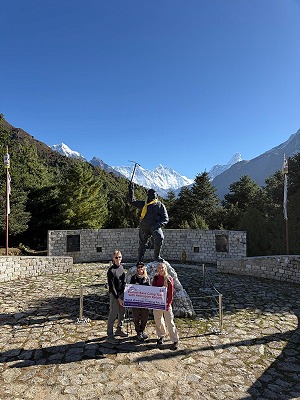
The Everest Base Camp Trek 7 Days from Kathmandu to Kathmandu is a condensed Himalayan adventure designed for experienced trekkers who want to reach the foot of Mount Everest (8,848.86 m / 29,031.7 ft) with limited vacation time. This short Everest Base Camp trek combines the famous Khumbu trekking trails, Sherpa mountain villages, dramatic Himalayan landscapes, and a planned helicopter return to reduce the time spent descending on foot.
Our 7 Days Everest Base Camp Trek is designed for travelers who are already in Kathmandu, Nepal, and ready to begin their Himalayan adventure. The itinerary covers 7 days from Kathmandu to Kathmandu, including the journey to the Everest region and the return to the capital.
If you are traveling to Nepal from another country, we recommend planning a total of 9 days, including one day for your arrival in Kathmandu and one day for your international departure.
Nepal Himalayas Trekking Recommendation: Sometimes, flights to and from Lukla are weather-dependent, we recommend allowing at least one additional buffer day whenever possible. This provides greater flexibility in case of flight delays or unexpected changes in mountain weather.
Organized by Nepal Himalayas Trekking, a locally owned trekking company based in Kathmandu, the journey follows the traditional Everest Base Camp route from Lukla through Phakding, Namche Bazaar, Tengboche, Dingboche, and the high-altitude settlements near the Khumbu Glacier.
The ultimate destination is Everest Base Camp at 5,364 meters (17,598 feet), where climbers prepare for expeditions to the world's highest mountain. Depending on weather, operational arrangements, and individual acclimatization, the itinerary may also offer an opportunity to experience spectacular views of Everest, Lhotse, Nuptse, Ama Dablam, and other Himalayan peaks.
Unlike a standard Everest Base Camp Trek, which normally allows approximately 12–14 days for trekking and acclimatization, this rapid itinerary requires exceptional planning and is suitable only for appropriately acclimatized, experienced hikers. Physical fitness alone does not prevent altitude sickness.
For travelers who have not already acclimatized, Nepal Himalayas Trekking recommends choosing a longer Everest Base Camp itinerary with proper acclimatization days.
Trip information | Details |
|---|---|
Trip name | Everest Base Camp Trek 7 Days |
Destination | Everest Region, Khumbu, Nepal |
Duration | 7 days, Lukla to helicopter return |
Starting point | Lukla (2,860 m / 9,383 ft) |
Highest trekking destination | Everest Base Camp (5,364 m / 17,598 ft) |
Optional viewpoint | Kala Patthar (approximately 5,545 m / 18,192 ft) |
Trip difficulty | Very strenuous; rapid altitude gain |
Trekking hours | Approximately 4–9+ hours per day |
Accommodation | Mountain teahouses and lodges |
Meals | Breakfast, lunch and dinner during trekking, if included in the package |
Transport | Fixed-wing flight to Lukla and planned helicopter return |
Trekking permits | Sagarmatha National Park and Khumbu Pasang Lhamu Rural Municipality permits |
Best trekking seasons | March–May and September–November |
Trek type | Private, guide-supported rapid itinerary |
Guide | Licensed, experienced local trekking guide |
Recommended for | Experienced, previously acclimatized trekkers |
Organizer | Nepal Himalayas Trekking, Kathmandu |
The seven-day schedule is counted from the Lukla flight and excludes international arrival and departure days in Kathmandu.
Reach Everest Base Camp at 5,364 m (17,598 ft), beneath the dramatic Khumbu Icefall.
Trek through Sagarmatha National Park, a UNESCO World Heritage Site.
Explore Namche Bazaar, the famous Sherpa trading town and gateway to Everest.
Experience views of Everest, Ama Dablam, Lhotse, Nuptse, Thamserku, and other Himalayan mountains.
Visit the culturally significant Tengboche Monastery area.
Discover traditional Sherpa villages, prayer flags, Buddhist monuments, and high-altitude mountain life.
Enjoy a planned scenic helicopter return, subject to weather and flight operations.
Travel with local guides familiar with the Khumbu region and the challenges of high-altitude trekking.
Illustrative rapid itinerary for travelers with documented recent acclimatization. Not recommended as a standard itinerary for travelers arriving directly from low altitude.
Day | Trekking route | Overnight altitude | Approx. distance / time |
|---|---|---|---|
1 | Fly to Lukla; trek to Phakding | 2,610 m / 8,563 ft | 8 km / 3–4 hrs |
2 | Phakding to Namche Bazaar | 3,440 m / 11,286 ft | 11 km / 5–7 hrs |
3 | Namche to Tengboche | 3,860 m / 12,664 ft | 9–10 km / 5–6 hrs |
4 | Tengboche to Dingboche | 4,410 m / 14,469 ft | 10–11 km / 5–6 hrs |
5 | Dingboche to Lobuche | 4,940 m / 16,207 ft | 8–9 km / 5–7 hrs |
6 | Lobuche to Gorak Shep, Everest Base Camp and back | 5,164 m / 16,942 ft | 11–13 km / 7–9+ hrs |
7 | Optional Kala Patthar hike; helicopter return from the Gorak Shep area | Return to lower altitude | 3–4 km hike / 2–4 hrs, if undertaken |
The cost of a 7-day Everest Base Camp trek depends on whether the package includes a shared or private helicopter, the number of travelers, guide and porter arrangements, accommodation standards, permits, and domestic transportation.
Rather than advertise an unverified fixed price, Nepal Himalayas Trekking should provide a personalized quotation for this specialized itinerary.
Cost factor | What travelers should know |
|---|---|
Domestic flights | Kathmandu/Ramechhap to Lukla |
Helicopter return | Shared or private; pickup and destination affect the price |
Trekking guide | Experienced, licensed guide with high-altitude knowledge |
Porter | Optional or included, depending on package |
Accommodation | Standard teahouse or upgraded lodges where available |
Meals | Full board or breakfast-only arrangements |
Permits | National park and local entry permits |
Group size | Private solo trips generally cost more per person |
Contingency | Weather delays, rerouting, and additional nights |
For a verified comparison, Nepal Himalayas Trekking currently lists its longer Everest Base Camp Trek with Helicopter Return with a shared-return option starting at USD 3,090 per person. That is a different itinerary, not a confirmed price for the 7-day trek.
A seven-day trek from Lukla to Everest Base Camp is not an appropriate standard recommendation for unacclimatized travelers.
Nepal Himalayas Trekking should assess recent altitude exposure, previous trekking experience, medical considerations, and available contingency days before offering this schedule.
Travelers who develop altitude sickness symptoms must not continue ascending to sleep higher. Worsening symptoms require descent and appropriate medical attention.
For most international visitors, a longer trek with acclimatization days at Namche Bazaar and Dingboche is the better option.
Spring: March to May
Generally favorable trekking conditions, longer daylight, rhododendron flowers at lower elevations, and the Everest climbing season.
Is October the Best Time to Trek in Nepal-Trail Facts
Autumn: September to November
Often clear mountain visibility, relatively stable post-monsoon conditions, and popular trekking weather.
Winter can bring severe cold and snow, while summer monsoon conditions increase the likelihood of clouds, rain, and transport disruptions. No season guarantees clear skies or helicopter operations.
The Everest Base Camp route offers a network of locally operated teahouses and mountain lodges.
At lower elevations such as Phakding and Namche Bazaar, travelers may find comfortable rooms, hot showers, and a wider choice of food. Above Dingboche, accommodation becomes simpler, nights become colder, and facilities are more limited.
Typical meals include dal bhat, noodle soup, vegetable fried rice, potatoes, porridge, eggs, pasta, and other locally available dishes.
Nepal Himalayas Trekking can help travelers choose suitable lodges based on their preferences, seasonal availability, and the conditions along the route.
Even though this itinerary lasts only seven days, trekkers must prepare for temperatures and weather typical of high-altitude Himalayan trekking.
Recommended equipment includes insulated down jackets, thermal base layers, waterproof outerwear, sturdy hiking boots, warm gloves, wool socks, sunglasses, sun protection, trekking poles, a headlamp, and a properly fitted backpack.
Carry a refillable water bottle, water purification method, personal medication, a first-aid kit, and comprehensive travel insurance covering high-altitude trekking and emergency evacuation.
A shorter itinerary does not mean lighter safety preparation.
Nepal Himalayas Trekking – Local Himalayan Expertise Since 2013
Nepal Himalayas Trekking is a locally owned adventure travel company based in Thamel, Kathmandu, specializing in Everest Base Camp trekking, Himalayan hiking adventures, helicopter-assisted treks, and customized Nepal travel experiences.
Led by experienced local trekking professionals, the company focuses on personal service, route knowledge, responsible tourism, and practical mountain safety.
Rather than treating every trekker the same, our team helps travelers choose itineraries that match their available time, previous altitude experience, fitness, and trekking goals.
For travelers from the United States, we provide pre-trip guidance about Nepal travel logistics, trekking equipment, mountain accommodation, permits, local transportation, and helicopter options.
Whether you are planning a short Everest adventure or a traditional two-week Himalayan expedition, our team can help design an experience that prioritizes your well-being and appreciation of the mountains.
Lukla: 2,860 m | Phakding: 2,610 m | Walking: 3–4 hours
Your Everest Base Camp adventure begins with a mountain flight to Lukla, one of Nepal's best-known Himalayan airstrips. During the main trekking seasons, flights may depart from Ramechhap instead of Kathmandu, requiring an early road transfer.
After meeting your local trekking team, follow the Dudh Koshi River through mountain settlements, prayer-wheel-lined paths, and traditional Sherpa villages. The route passes Chheplung and Ghat before reaching Phakding.
Enjoy your first night in a Himalayan teahouse while preparing for the climb toward Namche Bazaar.
Overnight: Phakding mountain lodge.

After breakfast, continue along the Dudh Koshi River, crossing several suspension bridges decorated with colorful Buddhist prayer flags.
The trail passes Monjo, where trekkers enter Sagarmatha National Park, and continues through Jorsalle before ascending toward Namche Bazaar.
A highlight of the day is crossing the famous high suspension bridge before climbing through pine forests toward Namche.
Namche Bazaar is the commercial and cultural heart of the Khumbu region, featuring trekking shops, mountain lodges, bakeries, and spectacular mountain scenery.
Overnight: Namche Bazaar teahouse.
Altitude note: The sleeping-altitude gain from Phakding is approximately 830 m. This is a significant ascent and requires particular caution.

Leave Namche Bazaar on a scenic mountain trail with expansive views of the Everest range. On clear days, trekkers can see Everest, Lhotse, Ama Dablam, and other impressive peaks.
Descend toward the Dudh Koshi River, cross the bridge near Phunki Tenga, and climb through rhododendron and conifer forests to Tengboche.
The village is home to the renowned Tengboche Monastery, one of the most important Buddhist monasteries in the Khumbu region.
Overnight: Tengboche or nearby lodge.

Today's journey takes you deeper into the high Himalayas. Descend through forests toward Deboche, cross the Imja Khola, and pass the beautiful settlement of Pangboche.
The landscape gradually becomes more open and alpine, revealing expansive views of Ama Dablam and the surrounding mountains.
Continue to Dingboche, a traditional mountain village surrounded by stone-walled fields.
Overnight: Dingboche teahouse.
Altitude note: The planned sleeping-altitude increase is approximately 550 m. A normal itinerary would provide an acclimatization day here before continuing higher.

Continue above Dingboche through the broad alpine landscape toward Dughla, also called Thukla.
After crossing the glacial stream, climb the steep trail toward the memorials dedicated to climbers and Sherpas who lost their lives in the Everest region.
The route then follows the lateral moraine of the Khumbu Glacier toward Lobuche, surrounded by dramatic Himalayan peaks.
Overnight: Lobuche mountain lodge.
Everest Base Camp: 5,364 m / 17,598 ft | Walking: 7–9+ hours
This is the main destination day of the Everest Base Camp Trek 7 Days.
Follow the rocky glacial trail from Lobuche to Gorak Shep, the final settlement before Everest Base Camp. After a break, continue across the uneven terrain beside the Khumbu Glacier.
Arriving at Everest Base Camp is a remarkable experience, with the towering Khumbu Icefall, surrounding mountain walls, and the atmosphere of the world's most famous mountaineering destination.
After photographs and time to appreciate the surroundings, return to Gorak Shep.
Overnight: Gorak Shep mountain lodge.
Kala Patthar: approximately 5,545 m / 18,192 ft | Helicopter return: weather permitting
For trekkers who are well acclimatized, feeling healthy, and have adequate time before their helicopter departure, an early-morning hike toward Kala Patthar may be possible.
Kala Patthar offers one of the most celebrated viewpoints of Mount Everest, with dramatic views of Nuptse, Pumori, and the Khumbu Glacier.
Return to Gorak Shep for the planned helicopter pickup. Depending on the confirmed booking, aircraft performance, and operating conditions, the flight may connect through Lukla before continuing to Kathmandu.
The helicopter return is a scenic conclusion to the journey, but flight operations can be delayed or canceled by weather. The itinerary must allow for alternatives and additional expenses if applicable.
Important: Helicopter evacuation or a scheduled return flight is not a substitute for acclimatization. Any symptoms of altitude illness must take priority over reaching Base Camp or Kala Patthar.
Airport Pickup and Drop-off: Complimentary private airport transfers upon your arrival in Kathmandu and departure from Nepal. (International & Domestic)
2 to 3 Star Category Hotel at Kathmandu with Breakfast
Daily Trekking Meals: Three freshly prepared meals—breakfast, lunch, and dinner—throughout the trekking journey.
Professional Trekking Guide: A knowledgeable, government-licensed, English-speaking Himalayan trekking guide with extensive experience in the Everest region.
Porter (Sherpa) to carry your bags. One Porter for Two trekkers.
Guide & Porter Expenses and Insurance: All expenses for your trekking guide, including salary, meals, accommodation, transportation, equipment, and required insurance.
Everest Trekking Permits: Required permits, including the Sagarmatha National Park Entry Permit and Khumbu Pasang Lhamu Rural Municipality Entry Permit.
Complimentary Trekking Gear: Use of a warm sleeping bag and down jacket during the trek, subject to availability and return after completion.
Mountain Lodge Accommodation: All Mountain accommodation in twin-shring Standard local teahouses and trekking lodges along the Everest Base Camp route.
Assistant Trekking Guides: Additional assistant guide support for trekking groups consisting of six or more participants.
Kathmandu to Lukla Flight: One-way domestic flight from Kathmandu or Ramechhap to Lukla, depending on seasonal flight operations.
Helicopter Return from Gorak Shep: A spectacular helicopter journey from Gorak Shep to Lukla, followed by a connecting helicopter flight to Kathmandu, as specified in the package itinerary.
Complimentary Trekking Souvenirs: A Nepal Himalayas Trekking company T-shirt and an Everest Base Camp trekking route map.
Altitude and Oxygen Monitoring: Access to a pulse oximeter for checking oxygen saturation and pulse rate during the high-altitude trek.
Basic First Aid Support: A first aid kit carried by the trekking guide for minor injuries and basic medical assistance.
Emergency Rescue Coordination: Assistance in arranging emergency evacuation or helicopter rescue when necessary. All associated rescue expenses must be covered by the traveler's insurance or personal funds.
Government Taxes and Service Charges: All applicable government taxes, VAT, local service charges, and official expenses related to the included services.
Traditional Nepali Farewell Dinner: A complimentary farewell dinner at a traditional Nepali restaurant in Kathmandu, featuring authentic Nepali cuisine and cultural performances.
International Flights: International airfare to and from Kathmandu, Nepal.
Nepal Tourist Visa: Visa application fees and related immigration expenses upon arrival in Nepal.
Meals: lunches, dinners, and personal expenses in Kathmandu, except for services specifically mentioned in the package inclusions.
All kinds of drinks: Like Tea, Coffee, Mineral water, Boiled drinking water, Desserts, alcoholic drinks, and other beverages purchased during the trek. But will get a Tea or Coffee at Breakfast Time.
Monastery and Heritage Entrance Fees: Entry charges for monasteries, temples, museums, and other sightseeing attractions not included in the itinerary.
Personal Trekking Expenses: Expenses for hot showers, battery charging, Wi-Fi, laundry, snacks, souvenirs, and other personal purchases.
Travel and Medical Insurance: Comprehensive travel insurance, including high-altitude trekking, emergency medical treatment, helicopter evacuation, and repatriation coverage.
Emergency Helicopter Rescue: Actual costs of emergency helicopter evacuation, medical treatment, hospital bills, and other rescue-related services.
Additional Helicopter Charter Flights: Extra helicopter charter expenses resulting from unfavorable weather, flight cancellations, delays, or itinerary changes beyond the agreed package services.
Unplanned Accommodation and Meals: Additional hotel stays, meals, and transportation caused by weather disruptions, flight delays, or personal itinerary modifications.
Tips and Gratuities: Voluntary tips for trekking guides, assistant guides, porters, helicopter ground staff, and other service personnel.
Additional Services: Optional activities, itinerary extensions, personal upgrades, and services not specifically listed under the package inclusions.
| Group Size | Price Per Person |
|---|---|
| 1 | USD 3,090 |
| 2-4 | USD 2,935 |
| 5-7 | USD 2,858 |
| 8-12 | USD 2,781 |
| 13+ | USD 2,626 |
