

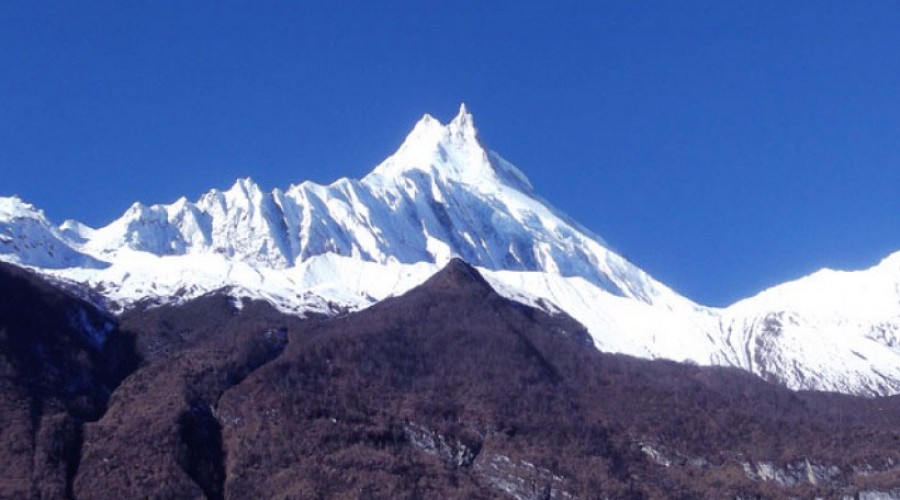
The Manaslu Circuit is a moderate-to-strenuous trek. You walk 5–8 hours a day for about 10 days, sleep as high as 4,460 m, and cross Larke La Pass (5,160 m) on a day that can last 8–10 hours, or 11–12 in snow. No technical climbing skills are needed, but you do need good fitness, a good head for heights on the bridges, and time to acclimatise.
Below is what each day actually asks of you, so you can judge whether our 14-day Manaslu Circuit Trek suits you.
What makes Manaslu difficult (and what doesn't)
Harder than most tea-house treks because of:
- Length. About 177 km (110 miles) on foot, with several 6–7 hour days back to back.
- Altitude. You sleep above 3,500 m for five nights and reach 4,460 m at Dharamsala before the pass.
- Remoteness. Trails are rougher and less used than in Everest or Annapurna. Some sections cross landslide zones or narrow ledges, and there are many suspension bridges.
- Basic facilities. Lodges are simpler than on the more popular routes. Dharamsala is dormitory-style, and hot showers, charging and Wi-Fi get scarcer with altitude.
Easier than you might fear because of:
- No technical climbing. It is a walking trek, and a guide is with you throughout.
- Built-in acclimatisation. Our itinerary includes a full rest day at Samagaon and short walking days above it.
- Porters carry your luggage. You only carry a daypack.
Day-by-day difficulty
Times are approximate and depend on your pace and conditions. Gains are in sleeping altitude.
| Day | Route | Sleeps at | Altitude change | Walking time | Difficulty |
|---|---|---|---|---|---|
| 2 | Kathmandu → Machha Khola (drive) | 930 m | n/a | 7–8 hrs driving | Easy (rough road) |
| 3 | Machha Khola → Jagat | 1,340 m | +410 m | 6–7 hrs | Moderate |
| 4 | Jagat → Deng | 1,860 m | +520 m | 6–7 hrs | Moderate |
| 5 | Deng → Namrung | 2,630 m | +770 m | 6–7 hrs | Hard |
| 6 | Namrung → Samagaon | 3,530 m | +900 m | 6–7 hrs | Hard |
| 7 | Rest day at Samagaon (optional hikes) | 3,530 m | 0 | 3–5 hrs optional | Easy |
| 8 | Samagaon → Samdo | 3,860 m | +330 m | 4–5 hrs | Easy–moderate |
| 9 | Samdo → Dharamsala | 4,460 m | +600 m | 4–5 hrs | Moderate |
| 10 | Dharamsala → Larke La → Bimthang | 3,720 m | +700 m up, −1,440 m down | 8–10 hrs (11–12 in snow) | Very hard |
| 11 | Bimthang → Tilije | 2,300 m | −1,420 m | 6–7 hrs | Hard (on the knees) |
| 12 | Tilije → Dharapani, drive to Besisahar | 760 m | −1,540 m | 5–6 hrs + drive | Moderate |
| 13 | Besisahar → Kathmandu (drive) | 1,400 m | n/a | 7–8 hrs driving | Easy |
The lower valley (Days 3–5): heat, bridges and distance
The first days are lower and warmer. Expect heat and humidity, especially in spring, and long days along the Budhi Gandaki gorge with steady ups and downs, waterfalls and suspension bridges. It is not the highest part of the trek, but it is where many people feel the distance for the first time. Day 5 climbs about 770 m in 6–7 hours.
Days 5–6: the biggest climbs
Namrung to Samagaon gains about 900 m in a day and takes you above 3,000 m for the first time. This is the biggest gain on the whole trek. As a general guideline above 3,000 m, aim for roughly 500 m of gain in sleeping altitude per day. Day 6 exceeds this, which is why it is followed by a full rest day. If you want a gentler profile, we can add a night at Lho (3,180 m); just ask us about the 15-day version.
Day 7: the rest day matters
Don't skip it. Use it for a short hike (Birendra Lake or Pungyen Gompa) and go back to sleep at the same altitude. "Climb high, sleep low" helps your body adapt before Dharamsala and the pass.
Days 8–9: short days, thinner air
The walking is shorter but the air is thinner, and you sleep at 4,460 m on Day 9. Expect a headache, poor sleep or low appetite. Dharamsala is basic and cold, so dress warmly and go to bed early.
The Larke La day (Day 10)
This is the day everything is building towards, and the reason the Manaslu Circuit is rated challenging.
- Start: before dawn, usually with a headlamp, to cross before the wind picks up.
- Climb: about 700 m up from Dharamsala over rocky moraine, steady rather than technical.
- Summit: Larke La at 5,160 m (16,929 ft), with views of Manaslu, Himlung Himal, Cheo Himal and Annapurna II. (Other sources quote 5,106–5,213 m, depending on where they measure.)
- Descent: a long, steep, rocky drop of about 1,440 m to Bimthang, sometimes over snow or ice. This is the part that tires people most.
- Duration: typically 8–10 hours, and up to 11–12 hours in snow or if someone is struggling.
What helps:
- Walk slowly and steadily; don't chase the person ahead.
- Carry water, snacks and warm layers. It is cold and windy at the top.
- Microspikes (ice cleats) make the icy descent much safer. Trekking poles save your knees.
- Tell your guide the moment you feel unwell. If it is dangerous, your guide may turn you around.
The pass can be closed by heavy snow in winter and after storms at any time, so build spare days into your plans. Check our Manaslu weather and season guide for the best months.
Days 11–12: don't underestimate the descent
After the pass you lose about 1,400 m on Day 11. It is scenic (rhododendron forest, then villages), but your knees and toes will notice. Poles and well-fitting boots make a real difference. By Day 12 you reach Dharapani, where the circuit joins the Annapurna Circuit, and a jeep takes you towards Besisahar.
Fitness self-test: are you ready?
You should be able to do these comfortably at least two months before departure. If you can't, train more or consider an easier trek.
- Long day on your feet. Walk 6–7 hours over hilly ground with a 6–8 kg pack.
- Back-to-back days. Do that on two or three days in a row without feeling wrecked.
- Big climbs. Comfortably ascend 800–1,000 m in a day hike.
- Long descents. Walk downhill for 2–3 hours without knee pain. Many people forget this one, but it is the hardest part of Days 10 and 11.
- Stair or incline session. Climb stairs or a steep incline for 45–60 minutes at a steady pace without stopping.
Training tips: for 8–12 weeks, do a weekly long hike with a loaded pack, two or three cardio sessions (running, cycling, incline walking) and one or two strength sessions (squats, lunges, step-ups, core). Break in your boots on the long hikes.
Experience: you don't need previous high-altitude experience, but multi-day trekking experience helps a lot.
Who shouldn't do the Manaslu Circuit?
Talk to your doctor before booking, and think carefully if any of these apply:
- Heart, lung or blood-pressure conditions that aren't well controlled. Altitude adds stress.
- Serious knee, hip or back problems. The long descents and rough trails are punishing.
- A strong fear of heights. There are many suspension bridges with mesh sides and some narrow ledges over landslide sections.
- Little walking experience. If you have never done consecutive 6–7 hour days, choose a shorter trek first.
- Rigid schedules. Weather and road delays happen. You need spare days and the flexibility to change plans.
- Children. Only experienced, healthy young trekkers who can explain how they feel should attempt Larke La, and only after a medical check.
None of this means you can't try. It means you should prepare seriously or pick a better-matched trek.
Altitude sickness: the real risk
The greatest danger on this trek is Acute Mountain Sickness (AMS), not the terrain. Headache, nausea, poor sleep and loss of appetite are early signs.
- Ascend gradually and use the rest day.
- Drink plenty of water and eat well, even when you have no appetite.
- Report symptoms to your guide straight away.
- Descend if symptoms worsen. Never climb higher with worsening symptoms.
- Ask your doctor about altitude medication before you travel. Don't self-prescribe.
- Buy travel insurance that covers helicopter evacuation up to at least 5,200 m.
How Manaslu compares with other treks
- Everest Base Camp (5,364 m at base camp; higher at Kala Patthar): busier, with more comfortable lodges, but it needs a flight to Lukla. See our Everest Base Camp Trek.
- Annapurna Circuit (Thorong La, 5,416 m): the pass is higher, but the trail is more developed with more facilities. Manaslu is more remote and less crowded. See our Annapurna Circuit Trek.
- Shorter options: if the full circuit is too much, try our Manaslu Short Trek (10 days), which doesn't cross Larke La, or the Manaslu Circuit with Jeep Return from Dharapani.
Best ways to make the trek easier
- Choose the right season. Spring (March–May) and autumn (September–November) give the most stable conditions. See the permit and fee guide for restricted-area details.
- Add a spare day or a Lho night. More time equals easier acclimatisation.
- Hire a porter. Carrying just a daypack saves energy on long days.
- Pack well. Layers, a warm sleeping bag, microspikes and broken-in boots make a big difference.
- Go with a licensed guide who knows the pass. A guide reads the weather, paces the group and makes the descent call if needed. A licensed guide is compulsory in this restricted area anyway.
FAQ
Is the Manaslu Circuit harder than Everest Base Camp?
Usually yes in terms of length, remoteness and trail conditions. It has fewer tea houses, less developed trails and a high pass to cross. Base camp treks are more crowded but generally more comfortable.
Can a beginner do the Manaslu Circuit?
A fit first-time trekker can complete it with good preparation, a licensed guide and correct acclimatisation. Multi-day trekking experience is strongly recommended.
How many hours do you walk each day?
Usually 5–8 hours. The Larke La day takes 8–10 hours, and up to 11–12 in snow.
How high does the trek go?
Larke La Pass is 5,160 m (16,929 ft). The highest sleeping altitude is Dharamsala at 4,460 m.
Can I do it solo?
Yes, with a licensed guide. Since March 2026 one person can obtain the permit without a partner. Read the full details on our Manaslu Circuit Trek page, and see the cost breakdown.
Ready to plan your Manaslu Circuit?
If you've read this far and feel ready, see the full day-by-day itinerary, inclusions and departures for our 14-day Manaslu Circuit Trek. Not sure whether you're fit enough? Message us on WhatsApp at +977 9841044334 and we'll help you decide.








Add Your Comment