
Any Question? Email Us
info@nepalhimalayastrekking.comTalk To An Expert ( Prakash Lamsal )
Any Question? Email Us
info@nepalhimalayastrekking.comTalk To An Expert ( Prakash Lamsal )
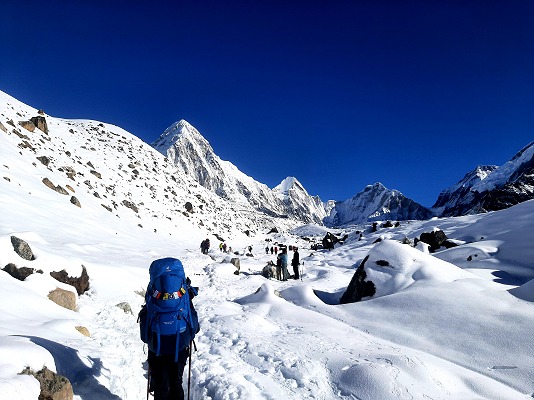
The Everest Base Camp Family Trek is a 15-day guided journey through the Khumbu region of Nepal, following the classic route from Lukla to Everest Base Camp at 5,364 meters and Kala Patthar at 5,545 meters. The trail passes through Phakding, Namche Bazaar, Tengboche, Dingboche, Lobuche and Gorak Shep, combining high Himalayan scenery with Sherpa villages, Buddhist monasteries, suspension bridges and changing mountain landscapes. The trek does not require technical climbing, but it is a moderate to strenuous high-altitude journey involving several hours of walking each day, steep and uneven sections, changing weather, cold conditions and increasingly basic facilities at higher elevations. Gradual acclimatization, a comfortable walking pace, suitable preparation and attention to the health and energy levels of every family member are essential. Our guide manages the route, daily schedule, acclimatization and practical logistics so families can focus on enjoying the journey together.
For families looking for the standard route and broader package information, you can also review our Everest Base Camp Trek.
| Feature | Details |
|---|---|
| Trek Duration | 15 Days |
| Region | Khumbu, Everest |
| Starting Point | Lukla |
| Destination | Everest Base Camp |
| Everest Base Camp Altitude | 5,364 m |
| Highest Point | Kala Patthar, 5,545 m |
| Walking Time | Generally 5–8 hours per trekking day |
| Distance | Approximately 125–130 km round trip, depending on route variations |
| Difficulty | Moderate to Strenuous |
| Accommodation | Mountain teahouses and lodges |
| Acclimatization | Namche Bazaar and Dingboche |
| Best Seasons | Spring and autumn |
| Trek Style | Guided family trek |
| Standard Package Price | USD 1,537–1,890 per person, depending on group size |
Children who are accustomed to walking, hiking and outdoor activities may be able to complete the Everest Base Camp Trek with their families. We maintain a manageable pace, allow additional rest breaks and encourage children to communicate immediately if they feel tired, uncomfortable or unwell. Parents should provide warm clothing, comfortable trekking shoes, sun protection, water and regular meals, while the child's daypack should remain light.
If a younger child becomes tired during a particular section, we can arrange an additional porter to carry the child as an optional service, but this must be discussed and arranged with us before the trek. Whether this support is suitable depends on the child's size and age, trail conditions, weather, altitude and porter suitability, so it should not be considered a guaranteed option for every section of the route. The trek also gives children an opportunity to experience Sherpa villages, Buddhist monasteries, suspension bridges and Himalayan landscapes while developing confidence, patience and a sense of achievement.
Adults can generally manage the physical demands of the Everest Base Camp Trek, but being fit does not eliminate the effects of high altitude. We organize the route and daily schedule around the needs of the whole family, allowing parents to support children and older family members without expecting everyone to maintain the same walking speed. Adults can also enjoy the Khumbu's mountain scenery, Sherpa culture, monasteries and famous Everest landmarks while sharing the achievement of reaching Everest Base Camp and Kala Patthar with their family.
Older adults can participate in the Everest Base Camp Family Trek when they are suitably prepared and physically able to manage high-altitude trekking. We consider fitness, mobility, previous hiking experience and individual requirements when planning the journey, while allowing appropriate rest opportunities along the route. Family members should communicate with the guide if an older trekker feels unusually tired or unwell, and anyone with individual medical or altitude concerns should discuss their plans with a doctor before the trek.
Our approach to family trekking is to organize the journey around the abilities of the family rather than expecting children, adults and older family members to maintain the same pace. We adjust the walking rhythm and rest periods when required and provide practical support throughout the route. The itinerary also includes acclimatization days in Namche Bazaar and Dingboche, giving the family time to adjust gradually to increasing elevation. This allows different generations to experience the Everest Base Camp journey together while respecting the individual abilities and needs of each family member.
Several factors make the Everest Base Camp journey more manageable for families:
With these factors in place, families can approach the trek at a manageable pace while allowing each member to adjust according to their own ability and energy level.
The Everest Base Camp Family Trek remains a moderate to strenuous journey, mainly because of altitude, terrain and consecutive days of walking:
Families should therefore approach the trek with realistic expectations and prioritize acclimatization, health, regular rest and a comfortable walking pace rather than trying to maintain a fixed speed.
Preparation should begin well before arriving in Nepal because the trail becomes progressively more demanding as elevation increases. Families should gradually build stamina and leg strength through regular walking, hiking, stair climbing and practice on uphill and downhill terrain. Children should also become comfortable wearing their trekking shoes and carrying a light daypack before the trek so that neither feels unfamiliar on the trail.
Mental and practical preparation are equally important. Children should understand that the trek involves several hours of walking each day, early mornings, cold temperatures, basic mountain accommodation and steep or uneven sections. Families should be prepared for tiredness and possible weather-related changes to the daily plan, while children should be encouraged to communicate openly if they feel tired, uncomfortable, dizzy or unwell. The aim is to make several hours of walking familiar before arriving in Nepal while maintaining a positive and flexible approach throughout the journey.
The Everest Base Camp Family Trek package includes round-trip flights between Kathmandu to Lukla. During peak trekking seasons, these flights may operate from Manthali Airport in Ramechhap instead of Kathmandu due to increased air traffic. When this applies, we arrange the transfer from Kathmandu to Manthali, which takes around 4–5 hours by road, followed by the flight to Lukla. Flight schedules can change because of weather and operational conditions, so we confirm the departure airport and flight arrangements before the trek.
Families who prefer to travel by helicopter can also arrange helicopter services as an additional option at an extra cost, subject to weather and availability. A helicopter flight between Kathmandu and Lukla can be arranged for families who prefer this option, while other helicopter arrangements may also be possible depending on the itinerary, current operating conditions and availability. Helicopter services are separate from the standard trek package, and we confirm the applicable cost and arrangements based on the selected service and travel date.
The Everest Base Camp Family Trek costs USD 1,890 per person for a solo trekker, while the per-person price decreases for larger groups. The 15-day package includes the additional cost of the added trekking day, covering the extra teahouse accommodation, meals and applicable guide and porter services.
| Group Size | 15-Day Price Per Person |
|---|---|
| 1 person | USD 1,890 |
| 2–5 people | USD 1,790 |
| 6–10 people | USD 1,706 |
| 11–15 people | USD 1,621 |
| 16–25 people | USD 1,537 |
Personal expenses such as snacks, additional drinks, charging, Wi-Fi, hot showers, personal trekking equipment, travel insurance, souvenirs and tips are not included in the package and should be budgeted separately.
Choosing the right trekking team is especially important for a family trek because different family members may have different walking abilities, energy levels and needs. We focus on making the journey manageable, well organized and comfortable while keeping the family together throughout the route.
Our experienced, government-licensed guides understand the Everest Base Camp route, altitude, changing weather and the practical challenges of trekking with children and older family members. We adjust the walking rhythm and rest periods according to the family rather than expecting everyone to maintain the same pace.
The itinerary includes acclimatization in Namche Bazaar and Dingboche to give the body time to adjust to increasing elevation. Our guide monitors how each family member is feeling, encourages regular hydration and rest, and advises the family when symptoms of altitude sickness or excessive fatigue appear.
Families may include children, adults and older members with different levels of trekking experience. We plan the daily journey around the abilities of the group and can discuss additional rest, pacing adjustments or practical support where needed.
We arrange the main trekking logistics, including accommodation, meals, permits, domestic flights, guides and porters, so families can concentrate on the trek rather than managing arrangements along the route. We also brief families before departure and help them prepare for the conditions they will encounter at higher elevations.
Our team provides assistance with route navigation, daily schedules, basic first-aid needs and changing trail conditions. If a family member becomes unusually tired or unwell, we assess the situation with the family and guide the safest next step rather than simply continuing the planned itinerary.
Reaching Everest Base Camp is important, but completing the trek safely and comfortably is our priority. We allow regular breaks, encourage families to communicate openly about tiredness or discomfort and maintain a realistic pace throughout the journey.
Every family is different, so we can discuss the ages of your children, previous hiking experience, preferred travel dates and specific requirements before the trek. Where appropriate, we can also discuss options such as additional porter support or itinerary adjustments.
Every family has different ages, walking experience and travel preferences, so the Everest Base Camp Family Trek can be adjusted according to your family's needs. If you prefer a slower pace, we can discuss adding an extra acclimatization or descent day, adjusting walking distances or allowing more rest along the route. Families can also discuss accommodation preferences, travel dates, additional Kathmandu sightseeing and other arrangements with Nepal Himalayas Trekking before booking.
For families travelling with young children or older members, we can plan the itinerary around the least experienced or slowest member of the group. Additional porter support can also be arranged when required, including support for carrying a young child, subject to the child's size, trail conditions, altitude and porter suitability. Contact us with your family size, ages, experience and preferred travel dates, and we can discuss the most suitable arrangement.
The Everest Base Camp Family Trek requires more preparation than an ordinary family holiday, but with appropriate fitness, realistic expectations, gradual acclimatization and experienced trekking support, families can experience one of Nepal's most famous Himalayan routes together.
Before booking, we recommend discussing the ages of your family members, previous hiking experience, preferred travel dates and any specific requirements with our team. This allows us to understand your family better and help you prepare for the altitude, walking days and conditions along the route.
If you are ready to plan your family journey to Everest Base Camp, you can review our Everest Base Camp Trek package for the complete route, current pricing and package details. You can also make an enquiry with us to discuss your family's requirements, travel dates and preparation before booking.
We meet you at the airport and take you to your hotel in Kathmandu. In the evening, you meet your guide for the pre-trek briefing covering the route, altitude rules, permits and a gear check. Anything you are missing, such as a down jacket, sleeping bag or trekking poles, can be rented in Thamel. An early night is recommended because the Lukla flight leaves early the following morning.
Meals: None
Overnight: Kathmandu hotel
The flight to Lukla takes about 35 minutes. In spring and autumn, the flight may operate from Ramechhap instead, requiring a 4- to 5-hour drive from Kathmandu followed by a short flight to Lukla. From Lukla, the trail follows the Dudh Koshi River past mani walls, chortens and prayer flags. The route is mostly gentle and slightly downhill, making this a shorter walking day after gaining significant altitude by air.
Distance: About 8 km
Walking time: 3–4 hours
Meals: Breakfast, lunch and dinner
Overnight: Teahouse, Phakding
Today is the first demanding walking day. You cross several suspension bridges and enter Sagarmatha National Park at Monjo, where permits are checked, before crossing the high Hillary Suspension Bridge. The trail then climbs steeply for around two to three hours toward Namche Bazaar. On a clear day, you may get your first glimpse of Everest along the way. Namche is the Sherpa capital of the region, with bakeries, gear shops and a small museum.
Distance: About 10 km
Walking time: 5–6 hours
Elevation gain: +830 m
Overnight: Teahouse, Namche Bazaar
Today is an acclimatization day with a short and slow walk. The usual option is to walk toward the Everest View Hotel at 3,880 m for views of Everest, Lhotse and Ama Dablam, followed by a visit to Khumjung village before returning to Namche. The principle is to climb higher during the day and sleep lower. Families should drink regularly throughout the day and allow time for rest. The afternoon can be spent visiting the Sherpa museum or the national park visitor centre.
Walking time: 3–4 hours
Overnight: Namche Bazaar
The trail follows a mostly level hillside above the valley with views of Ama Dablam and Thamserku. It then descends toward the Dudh Koshi River at Phunki Thenga, where you can stop for lunch, before climbing around 600 meters through forest to Tengboche. Tengboche is home to the largest monastery in the Khumbu and has an impressive setting with Ama Dablam behind it. You can ask your guide about the afternoon prayers.
Distance: About 10 km
Walking time: 5–6 hours
Overnight: Tengboche
The trail descends through rhododendron forest to Deboche before crossing the Imja Khola and continuing through Pangboche. Above Pangboche, the trees become thinner and the landscape opens into higher alpine country. Dingboche sits in a broad valley surrounded by stone-walled potato fields, with Island Peak visible at the far end.
Distance: About 11 km
Walking time: 5–6 hours
Elevation gain: +550 m
Overnight: Dingboche
Today is another important acclimatization day. The usual option is the Nangkartshang Ridge at about 5,083 meters, which takes you higher than the following night's sleeping elevation. If you are not feeling strong enough for the ridge, a shorter walk toward Chhukung at around 4,730 meters provides a gentler alternative. Either way, you return to Dingboche to sleep at 4,410 meters. Views include Makalu, Lhotse, Ama Dablam and Island Peak.
Walking time: 4–5 hours
Overnight: Dingboche
This is a relatively short day in distance, but the altitude makes the walking more demanding. The trail climbs toward Thukla, also known as Dughla, for lunch and then continues steeply toward the Chukpi Lhara memorial, where stone chortens honour climbers and Sherpas who lost their lives in the Himalayas. From there, the trail follows the Khumbu Glacier moraine toward Lobuche. Accommodation is basic and cold at this elevation, and appetite can decrease, so regular meals remain important.
Distance: About 8 km
Walking time: 5–6 hours
Elevation gain: +530 m
Overnight: Lobuche
You walk from Lobuche to Gorak Shep, which takes around three hours. After lunch, continue along the rocky moraine toward Everest Base Camp, with the Khumbu Icefall visible above the camp. The Base Camp section takes around three to four hours for the round trip before returning to Gorak Shep. During April and May, expedition tents can fill the Base Camp area, while outside the climbing season it can be much quieter. Gorak Shep is the highest overnight stop of the trek, and poor sleep is normal at this elevation.
Walking time: About 7–8 hours in total
Overnight: Gorak Shep
Why Base Camp first? Arriving at Gorak Shep with the afternoon available allows you to complete the Base Camp walk before returning for the night. Kala Patthar is then climbed at sunrise the following morning, when the mountain views are often at their clearest. Your guide may swap the order depending on weather conditions or how the group is feeling.
The day begins before sunrise with a climb toward Kala Patthar. The ascent takes around two to three hours in the cold. The reward is a sunrise view of Everest, Nuptse, Lhotse and Pumori. After returning to Gorak Shep for breakfast, you begin the long descent through Lobuche and Thukla to Pheriche. As you lose altitude, the air becomes thicker and many trekkers find that their appetite and sleep improve.
Walking time: Roughly 8–9 hours in total
Overnight: Pheriche
After the demanding high-altitude section, today's descent is deliberately shorter and more comfortable. The trail follows the Imja Valley through Pangboche and continues toward Tengboche. As the elevation decreases, vegetation gradually returns and the surrounding landscape becomes greener. Reaching Tengboche gives the family time to rest rather than completing another long descent to Namche on the same day.
Walking time: About 5–6 hours
Overnight: Tengboche
The trail descends through forest toward Phunki Thenga and then climbs gradually along the hillside toward Namche Bazaar. The walking distance is shorter than the longer high-altitude days, giving the family another manageable day as they continue losing elevation. Once in Namche, there is time to relax, enjoy the wider choice of food and explore the town.
Walking time: About 4–5 hours
Overnight: Namche Bazaar
Today is the final walking day. The trail descends toward the Dudh Koshi, crosses the Hillary Suspension Bridge and continues through Monjo and Phakding before the final steady climb into Lukla. After completing the trek, you can relax in Lukla and enjoy dinner with your guide and porter team.
Distance: About 18 km
Walking time: 6–7 hours
Overnight: Lukla
An early flight takes you from Lukla to Kathmandu, with the flight taking about 35 minutes when weather conditions allow. After arriving in Kathmandu, you can return to your hotel, enjoy a hot shower and spend the rest of the afternoon at leisure.
Meals: Breakfast
Overnight: Kathmandu hotel
Your Everest Base Camp Family Trek ends today. We arrange your airport transfer for your international flight. We recommend keeping at least two free days after the Lukla flight when planning your international departure because mountain weather can cause flight delays or cancellations.
Optional extra day: A Kathmandu heritage tour covering Kathmandu Durbar Square, Swayambhunath, Boudhanath and Pashupatinath can be added before or after the trek on request. You can also extend your Nepal journey with a Chitwan Jungle Safari, offering opportunities to explore the national park, spot wildlife and experience the Terai region.