

Complete Gear Guide for High-Altitude Trekking in Nepal
The Everest Base Camp Trek (5,364 meters) is a demanding high-altitude journey in Nepal’s Khumbu region. Weather shifts quickly. Mornings start below freezing. The midday sun feels intense. Nights drop well below zero at higher camps. Everest Base Camp trek with helicopter return trekking package offers a short and different taste of adventure, but you need similar trekking gear.
The right gear improves comfort, protects your health, and increases your chances of completing the trek safely.
This guide covers:
- Recommended gear list for EBC in autumn
- How to choose the right hiking boots for Everest Base Camp
- Best trekking gear brands for the Everest Base Camp trek
- Recommended sleeping bags for Everest conditions
- Where to buy high-quality trekking poles near you
Recommended Gear List for Everest Base Camp Trek in Autumn
Autumn (October–November) is the peak trekking season. Skies remain clear, and mountain visibility is excellent. However, temperatures above 4,000 meters remain cold, especially at night.
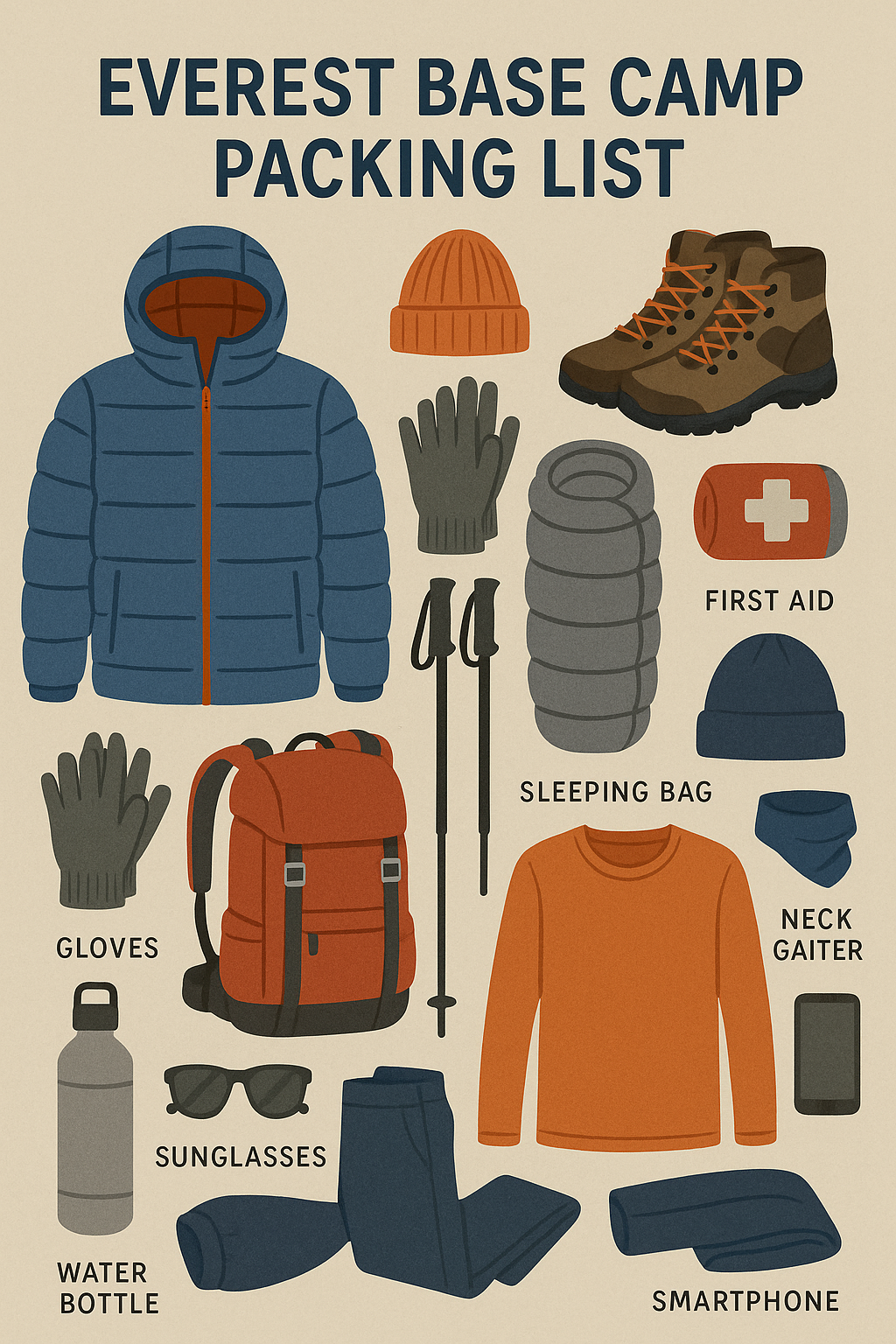
1. Clothing: Follow the 3-Layer System
Base Layers
- 2–3 moisture-wicking thermal tops
- 2–3 thermal bottoms
- Avoid cotton
Mid Layers
- Fleece jacket for daily trekking
- Insulated down jacket for evenings and high elevations
Outer Shell
- Waterproof, windproof jacket
- Lightweight waterproof pants
Trekking Clothes
- 2–3 quick-dry trekking pants
- 3–4 breathable shirts (synthetic or merino wool)
Accessories
- Warm hat
- Sun hat
- Neck gaiter
- Inner gloves and insulated gloves
- UV-protection sunglasses
Recommended Gear List for Everest Base Camp Trek in Spring
Spring (March–May) is another excellent season for Everest Base Camp. The weather becomes more stable as winter ends. Lower elevations warm up and snow starts melting at higher sections of the trail. Spring brings longer daylight hours and moderate temperatures, but mornings and nights remain cold.
Essential Clothing for Spring
Base Layers
2–3 moisture-wicking thermal tops and bottoms for early mornings and higher altitudes
Mid Layers
- Lightweight fleece for daytime warmth
- Insulated jacket for mornings and evenings
Outer Shell
Waterproof jacket and pants for occasional rain or snow
Trekking Clothes
- Quick-dry trekking pants
- Breathable short- and long-sleeve shirts
Accessories
- Warm hat
- Sun hat
- Neck gaiter
- Inner gloves and insulated gloves
- UV sunglasses
Spring weather can change rapidly. Carry layers that adapt to cool mornings, mild afternoons, and cold nights.
How to Choose the Right Hiking Boots for the Everest Base Camp Trek
Footwear is critical. The trail includes rocky paths, suspension bridges, glacier moraines, and uneven stone steps.
When selecting boots:
- Choose mid or high-cut for ankle support
- Ensure waterproof lining, such as Gore-Tex
- Look for deep tread for a strong grip
- Leave enough toe space for downhill walking
- Break them in before arrival in Nepal
Do not start the trek with brand-new boots. Test them on long hikes first.
Best Trekking Gear Brands for Everest Base Camp Trek
High altitude requires reliable equipment. Experienced trekkers often prefer trusted outdoor brands known for durability and cold-weather performance.
Top recommended brands:
- The North Face – insulated jackets and layers
- Mountain Hardwear – sleeping bags and technical insulation
- Arc'teryx – waterproof shell jackets
- Salomon – trekking footwear
- Lowa – supportive hiking boots
- Black Diamond – trekking poles and headlamps
- Osprey – trekking backpacks
These brands are available globally and also in Kathmandu’s Thamel area.
Recommended Sleeping Bags for Everest Base Camp Conditions
Teahouses provide beds and blankets, but higher elevations like Lobuche and Gorakshep remain extremely cold.
Choose a sleeping bag with:
- Comfort rating of at least –10°C
- Down insulation for better warmth-to-weight ratio
- Mummy shape for heat retention
- Compression sack for easy packing
Adding a sleeping bag liner increases warmth and hygiene.
Where to Buy High-Quality Trekking Poles for the Everest Base Camp Trek
Trekking poles reduce knee strain during long descents from Kala Patthar and Namche Bazaar. They also improve balance on rocky and icy terrain.
You can buy trekking poles:
- From outdoor retailers in your home country
- From certified online outdoor stores
- In Kathmandu, before flying to Lukla
Choose:
- Adjustable aluminum or carbon fiber poles
- Reliable locking systems
- Comfortable ergonomic grips
Quality poles make a noticeable difference over multiple trekking days.
Backpack and Luggage Essentials for EBC
- 60–80L duffel bag for porter transport
- 30–40L daypack with rain cover
- Dry bags for organizing clothing and electronics
- Keep total duffel weight within 15kg
Health, Safety, and Documents for Everest Base Camp Trek
Carry:
- High-SPF sunscreen
- UV-protection sunglasses
- Headlamp with spare batteries
- Water purification tablets or a filter bottle
- Personal medications
- Passport copies
- Travel insurance covering high altitude trekking
- Sagarmatha National Park Permit
- Khumbu Rural Municipality Permit
- Nepali Rupees for personal expenses
Final Packing Advice for Everest Base Camp
- Test all gear before departure
- Pack light but pack smart
- Focus on warmth, durability, and comfort
- Respect the porter's weight limits
The Everest Base Camp Trek demands preparation. With the right hiking boots, proper sleeping bag, trusted trekking poles, and reliable outdoor brands, you reduce risk and improve performance.
Prepare well. Trek smart. Reach Everest Base Camp with confidence.







Add Your Comment