

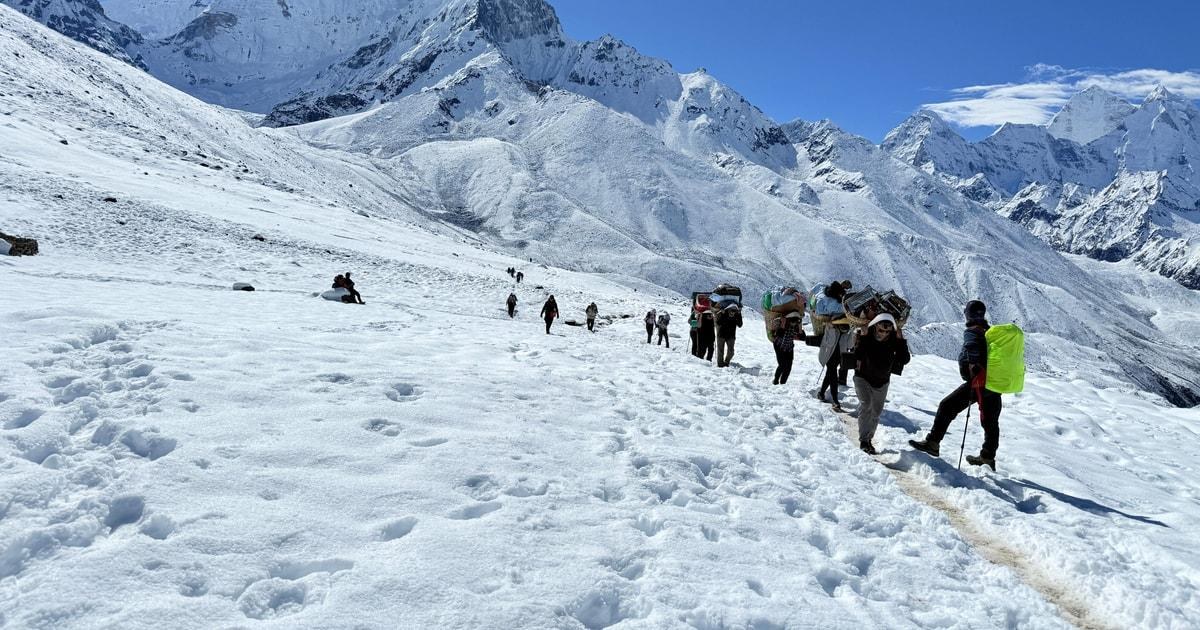
Can you trek to Everest Base Camp in February? Yes. February is a possible month for the Everest Base Camp Trek in Nepal, offering peaceful trails, dramatic snow-covered Himalayan scenery and opportunities for excellent mountain visibility. However, freezing temperatures, snow, icy trails and unpredictable winter weather make it more demanding than trekking during spring or autumn.
The Everest Base Camp Trek in February takes travelers through the Khumbu region to Everest Base Camp at 5,364 meters (17,598 feet), with an optional ascent to Kala Patthar at approximately 5,545 meters (18,192 feet).
Although February falls outside the main trekking season, it can be a rewarding time for well-prepared hikers who prefer fewer crowds and a quieter Himalayan experience.
At Nepal Himalayas Trekking, our locally based trekking team helps travelers plan winter journeys with suitable acclimatization, experienced guides, accommodation arrangements and flexible itineraries that account for February's mountain conditions.
Whether you are planning a February 2027 Everest Base Camp Trek from the USA, UK, Australia, Germany or elsewhere, this guide explains the essential details before booking.
Everest Base Camp Trek in February – Quick Facts
Trip information | February trekking details |
|---|---|
Destination | Everest Base Camp, Nepal |
Region | Everest / Khumbu / Sagarmatha National Park |
Season | Winter, approaching early spring |
Standard duration | 12–14 trekking and travel days |
Recommended complete trip | 15–16 days including Kathmandu and contingency |
Maximum planned altitude | Kala Patthar, approximately 5,545 m / 18,192 ft |
Starting point | Lukla, 2,860 m / 9,383 ft |
Typical February weather | Cold, often dry periods, with possible snowstorms |
Upper mountain nights | Often well below freezing |
Trek difficulty | Strenuous in winter |
Accommodation | Teahouses and mountain lodges |
Recommended experience | Previous hiking experience and good fitness |
Standard guided trek | From USD 1,690 per person, subject to confirmation |
Main attraction | Snow-covered peaks and relatively quiet trails |
Is February a Good Time for the Everest Base Camp Trek?
February can be a good time to trek to Everest Base Camp for travelers who are comfortable hiking in freezing temperatures and who value quieter trails over warmer weather.
The Nepal Tourism Board identifies spring and autumn as the most favorable general trekking seasons but also recognizes the opportunities for winter travel, including bright sunshine and mountain views.
For February trekkers, the principal advantages are the peaceful atmosphere, potentially clear mountain views and the beauty of winter landscapes. The disadvantages are equally important: short daylight hours, cold bedrooms, snow-covered sections and a greater possibility of itinerary changes.
Five reasons to consider Everest Base Camp in February
Fewer trekkers: February usually has significantly less trekking traffic than April, May, October or November.
Snow-covered mountain scenery: Everest, Lhotse, Nuptse, Ama Dablam and Pumori can appear especially striking against winter skies.
Potentially excellent visibility: Cold, dry air can provide remarkable views on settled-weather days, although clear conditions are not guaranteed.
Quieter teahouses: Some lodges have fewer guests, creating opportunities for a more personal mountain experience.
A different Himalayan atmosphere: Snow-covered villages, frozen streams and peaceful monasteries create a distinctive winter trekking experience.
February is not necessarily cheaper or safer than the main trekking seasons. Lower visitor numbers do not remove the challenges of altitude, severe cold or restricted services.
Everest Base Camp Weather in February
February is one of the coldest months along the Everest Base Camp trekking route. Weather varies considerably with altitude, sun exposure, wind, cloud cover and passing winter storms.
Lower villages such as Lukla and Namche Bazaar may experience relatively comfortable temperatures in direct sunlight, while Dingboche, Lobuche and Gorak Shep can remain freezing even during daytime.
Estimated February temperatures along the EBC route
Approximate planning ranges, not verified historical monthly averages or a forecast. Actual temperatures can fall outside these ranges.
Location | Elevation | Daytime | Nighttime |
|---|---|---|---|
Lukla | 2,860 m | 2°C to 10°C | -8°C to 0°C |
Phakding | 2,610 m | 4°C to 12°C | -6°C to 1°C |
Namche Bazaar | 3,440 m | -2°C to 7°C | -12°C to -4°C |
Tengboche | 3,860 m | -4°C to 5°C | -15°C to -7°C |
Dingboche | 4,410 m | -7°C to 3°C | -18°C to -10°C |
Lobuche | 4,940 m | -10°C to 0°C | -22°C to -13°C |
Gorak Shep | 5,164 m | -12°C to -2°C | -25°C to -15°C |
Everest Base Camp | 5,364 m | -15°C to -5°C | Below -20°C possible |
The temperature ranges above should be used only for general equipment planning. Wind chill can make conditions feel much colder, particularly around Lobuche, Gorak Shep and Kala Patthar.
How cold is Everest Base Camp in February?
At Everest Base Camp, daytime air temperatures can remain below freezing, while nighttime temperatures may fall below -20°C (-4°F). Strong winds can make exposed sections feel substantially colder.
Trekkers should carry properly insulated clothing, winter gloves, suitable footwear and a sleeping bag with an appropriate comfort rating for severe cold.
Does It Snow at Everest Base Camp in February?
Dingboche Valley View in Everest Region
View over the Gorak Shep village from Kala Patthar near the Everest Base Camp, Himalayas, Nepal.
10
Yes, snowfall is possible at Everest Base Camp in February. Snow can accumulate around Dingboche, Lobuche, Gorak Shep and the final approach to Base Camp, while icy patches can develop on shaded trails and steep slopes.
However, February does not mean that every section of the trail is continuously covered in deep snow. Conditions vary between years and even between consecutive days.
After significant snowfall, trekking guides may need to adjust walking times, delay departure, use suitable traction equipment or cancel unsafe sections.
Nepal Himalayas Trekking's winter trekking approach: We recommend assessing trail conditions locally before proceeding beyond Dingboche and again before the final ascent to Gorak Shep. Reaching Base Camp should never take priority over safe descent.
Can You See Mount Everest Clearly in February?
February can offer outstanding views of Mount Everest during stable weather. The winter atmosphere can produce sharp visibility, especially after cloud systems clear.
The most rewarding viewpoints include:
Everest View area near Namche Bazaar: A classic panorama including Everest, Lhotse and Ama Dablam.
Tengboche: Impressive views of Ama Dablam, Everest and surrounding peaks when conditions are clear.
Nangkartshang above Dingboche: A high viewpoint overlooking the Imja Valley and surrounding mountains.
Kala Patthar: One of the most celebrated viewpoints for Everest, Nuptse and Pumori.
Remember that the Everest summit is not prominently visible from the actual Everest Base Camp location because surrounding terrain blocks much of the view. Kala Patthar provides the more famous Everest panorama.
Everest Base Camp Trek February Itinerary – 14 Days
This itinerary follows the traditional route from Kathmandu to Lukla and Everest Base Camp, with acclimatization days in Namche Bazaar and Dingboche.
Winter conditions may require an additional night, a shorter walking day or a change of route.
Day | Trekking itinerary | Overnight altitude | Walking time |
|---|---|---|---|
1 | Fly Kathmandu–Lukla; trek to Phakding | 2,610 m | 3–4 hrs |
2 | Trek Phakding to Namche Bazaar | 3,440 m | 6–7 hrs |
3 | Acclimatization hike near Namche | 3,440 m | 3–5 hrs |
4 | Trek Namche to Tengboche | 3,860 m | 5–6 hrs |
5 | Trek Tengboche to Dingboche | 4,410 m | 5–6 hrs |
6 | Acclimatization at Dingboche | 4,410 m | 3–4 hrs |
7 | Trek Dingboche to Lobuche | 4,940 m | 5–6 hrs |
8 | Trek to Gorak Shep; hike to EBC and return | 5,164 m | 7–9 hrs |
9 | Optional Kala Patthar hike; descend to Pheriche | 4,240 m | 6–8 hrs |
10 | Trek Pheriche to Namche Bazaar | 3,440 m | 6–7 hrs |
11 | Trek Namche to Lukla | 2,860 m | 6–8 hrs |
12 | Fly Lukla to Kathmandu | 1,400 m | Flight day |
13 | Contingency day for weather or itinerary changes | Kathmandu | Flexible |
14 | Additional contingency or departure day | Kathmandu | Flexible |
Altitudes and walking times are approximate. The Kala Patthar ascent and other high sections depend on conditions and guide assessment.
Important February itinerary advice: Although this is presented as a 14-day Kathmandu-to-Kathmandu plan, international travelers should ideally allow 15–16 days in Nepal, including arrival arrangements and extra weather contingency. A departure flight immediately after the planned Lukla return is not recommended.
For the standard trekking route, visit our 14-Day Everest Base Camp Trek itinerary, cost and services.
Everest Base Camp Trek Cost in February 2027
The cost of a February Everest Base Camp Trek depends on the package category, number of trekkers, accommodation, guide and porter arrangements, and flight logistics.
Nepal Himalayas Trekking currently advertises its standard 14-day Everest Base Camp Trek from USD 1,690 per person. Its luxury package is advertised at USD 4,890 per person.
Trek package | Indicative price per person |
|---|---|
Budget EBC Trek | USD 1,490–1,590 |
Standard guided EBC Trek | From USD 1,690 |
Private EBC Trek | Custom quotation |
EBC Trek with Helicopter Return | Approximately USD 2,590–3,290+ |
Luxury EBC Trek | Approximately USD 3,590–6,000+ |
These are planning estimates based on package positioning, not confirmed February 2027 offers. Winter helicopter services and premium lodge availability must be checked individually.
What is usually included in the standard package?
The published standard Everest Base Camp package includes Kathmandu airport transfers, domestic flights, trekking accommodation, meals during the trek, an experienced licensed guide, porter support, applicable permits and a pre-trip briefing.
International flights, Nepal visa fees, personal expenses, travel insurance and emergency evacuation are generally excluded.
For February, travelers should also budget for winter equipment, possible extra hotel nights, flight disruptions and unexpected transport changes.
Is Everest Base Camp Trekking in February Safe?
The Everest Base Camp Trek can be undertaken in February, but it requires careful preparation and flexibility. It is not risk-free, even with a guide.
The main concerns are:
Acute mountain sickness and other altitude illnesses
Snow, ice and slipping hazards
Hypothermia and frostbite
Short daylight hours
Cold, poorly insulated accommodation
Flight cancellations and weather delays
Reduced access to some mountain services
Altitude sickness in February
Cold weather does not prevent altitude sickness. Travelers ascending above 2,500 meters may develop acute mountain sickness, and serious altitude illnesses can occur at higher elevations.
The February itinerary should retain proper acclimatization days at Namche Bazaar and Dingboche. Trekkers with symptoms should not ascend further; worsening symptoms or signs of serious altitude illness require prompt descent and medical attention.
Winter conditions make early recognition of symptoms, conservative pacing and a reliable evacuation plan particularly important.
Is February suitable for beginners?
February is not the easiest season for a first Himalayan trek. Fit beginners with substantial hiking preparation may be able to complete the route with an experienced guide, but people without cold-weather hiking experience should consider spring or autumn instead.
Accommodation and Food on the February Everest Trek
Teahouses operate along the Everest Base Camp route during winter, but not every lodge remains open throughout February.
Larger settlements such as Namche Bazaar generally offer more accommodation choices, while the higher villages have fewer services and more basic facilities.
Typical conditions include unheated bedrooms, shared bathrooms, communal dining areas with heating at certain hours and additional charges for hot water, device charging or showers.
Food options may include dal bhat, noodle soup, fried rice, potatoes, eggs, pancakes and hot drinks. Menus and availability vary by lodge.
For winter trekkers, Nepal Himalayas Trekking should confirm lodging arrangements before departure rather than assuming that every preferred lodge will be operating.
What to Pack for Everest Base Camp in February
Cold-weather clothing
Thermal base layers, fleece, insulated down jacket, waterproof shell, winter gloves and warm hat.
Footwear and traction
Warm waterproof trekking boots, wool socks, gaiters, trekking poles and microspikes when appropriate.
Sleeping equipment
A sleeping bag with a comfort rating suitable for the expected lodge temperatures, potentially around -20°C or colder.
Essential accessories
Headlamp, insulated water bottle, UV sunglasses, sunscreen, lip balm, power bank and personal first-aid supplies.
Travelers should confirm equipment requirements with their guide before departure. Microspikes are useful on some icy trails, but they do not make steep or exposed winter terrain automatically safe.
Everest Base Camp in February vs March and April
Factor | February | March | April |
|---|---|---|---|
Season | Winter | Early spring | Spring |
Temperatures | Very cold | Cold to cool | Generally milder |
Trekking crowds | Low | Increasing | High |
Snow and ice | Significant possibility | Possible | Possible at altitude |
Lodge availability | More limited | Improving | Broadest choice |
Mountain visibility | Often excellent in settled weather | Often good | Variable |
Overall suitability | Prepared winter hikers | Most well-prepared trekkers | Broad range of trekkers |
February is especially attractive to trekkers who prioritize solitude and winter scenery. March is often a better compromise between colder, quieter conditions and the warmer spring season.
April is generally more suitable for those seeking milder temperatures and a livelier trekking atmosphere.
Why Choose Nepal Himalayas Trekking for a February EBC Trek?
Nepal Himalayas Trekking is a locally owned trekking company based in Thamel, Kathmandu, offering guided Himalayan trekking packages, private journeys, group departures and customized itineraries.
The team is led by Managing Director Prakash Lamsal, whose experience includes numerous Everest Base Camp treks and guiding in other major Himalayan trekking regions.
For winter trekking, our approach focuses on:
Local route knowledge: Understanding mountain settlements, trail variations and winter travel logistics.
Acclimatization: Preserving appropriate rest days instead of unnecessarily rushing toward Base Camp.
Flexible planning: Adjusting schedules when snowfall, wind or flight disruptions affect the route.
Personalized services: Private guides, porter arrangements and accommodation based on traveler requirements.
Responsible decision-making: Prioritizing health, safe trail conditions and descent when necessary.
We believe that a successful winter Everest Base Camp Trek is not simply about reaching 5,364 meters. It is about experiencing the Khumbu responsibly, respecting local communities and returning safely.
Plan Your February 2027 Everest Base Camp Trek
February offers a special opportunity to explore the Everest region outside the busiest trekking months. For the right traveler, the combination of quiet mountain trails, winter scenery and Sherpa hospitality can make this an unforgettable journey.
Plan your winter Everest Base Camp Trek with Nepal Himalayas Trekking, whether you prefer a standard guided journey, a private trek or a customized itinerary with extra acclimatization and contingency days.
View Everest Base Camp Trek packages and make an inquiry
3. Frequently Asked Questions – February Everest Base Camp Trek
These concise answers are designed to address common Google search queries, People Also Ask topics and conversational AI questions.
1. Can I trek to Everest Base Camp in February?
Yes. Everest Base Camp is accessible to trekkers in February when trail and weather conditions permit. However, snow, ice, freezing temperatures and flight disruptions can affect the journey. Experienced local guides and flexible schedules are recommended.
2. Is Everest Base Camp open in February?
Everest Base Camp does not have a conventional seasonal opening or closing date. The trekking route can be used in February, but severe weather may temporarily make sections unsafe or impassable. Some teahouses may also close for winter.
3. How cold is Everest Base Camp in February?
Temperatures at Everest Base Camp can remain below freezing during the day and fall below -20°C at night. Wind chill can make conditions feel considerably colder.
4. Is February too cold for Everest Base Camp?
Not necessarily, but February is unsuitable for travelers who are unprepared for prolonged freezing conditions. Proper equipment, fitness, acclimatization and conservative decision-making are essential.
5. Does Everest Base Camp have snow in February?
Snowfall is possible throughout February, particularly at higher elevations. Snow depth and trail conditions vary each year, so trekkers should prepare for both snow-covered and relatively clear trails.
6. Is Everest Base Camp crowded in February?
February generally has fewer trekkers than March, April, May, October and November. It is a good option for travelers seeking quieter trails and less crowded mountain lodges.
7. Can beginners trek to Everest Base Camp in February?
Well-prepared beginners with strong fitness and cold-weather hiking experience may be able to complete the trek. However, spring and autumn are usually better choices for first-time Himalayan trekkers.
8. How much does the Everest Base Camp Trek cost in February 2027?
Nepal Himalayas Trekking's standard Everest Base Camp Trek is advertised from USD 1,690 per person. Private winter arrangements, additional contingency days and special services may change the final price.
9. Are flights to Lukla available in February?
Flights can operate in February, subject to airline schedules, weather and airport conditions. Poor visibility, wind and other weather factors may cause delays or cancellations.
10. Can I take a helicopter back from Everest Base Camp in February?
A helicopter return may be possible when weather, aircraft availability, landing conditions and operational restrictions permit. It should not be treated as a guaranteed winter return option.
11. What is the best time of February to trek to Everest Base Camp?
Neither early nor late February guarantees better conditions. Late February may bring a gradual seasonal transition toward spring, but severe winter weather can occur at any time. Choose dates with sufficient flexibility.
12. Is February better than March for the Everest Base Camp Trek?
February generally offers quieter trails but colder conditions. March usually brings somewhat warmer temperatures and increasing lodge availability. March is often preferable for first-time trekkers.
13. Can Americans trek to Everest Base Camp in February?
Yes. Travelers from the United States can trek to Everest Base Camp in February, subject to Nepal entry requirements and trekking arrangements. US travelers should plan international flights, travel insurance and extra days for potential weather disruptions.
14. Do I need travel insurance for a February Everest Base Camp Trek?
Comprehensive travel insurance is strongly recommended. The policy should explicitly cover trekking above 5,500 meters, altitude-related medical treatment, emergency evacuation and relevant winter activities.
15. How many days should I plan for an Everest Base Camp Trek in February?
Allow approximately 12–14 days for the standard Kathmandu-to-Kathmandu trek, plus extra time for international arrival and weather contingencies. A 15–16-day Nepal itinerary is generally more practical.







Add Your Comment