

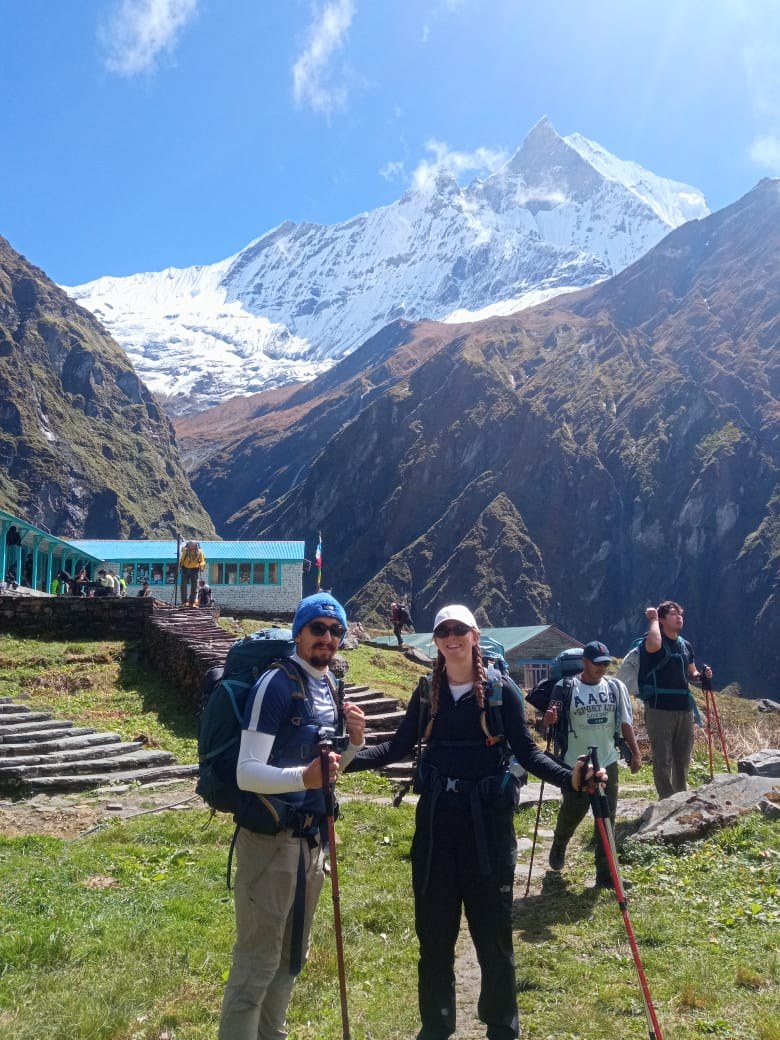
The Ghorepani Poon Hill with Mardi Himal Trek combines two different trekking experiences in Nepal's Annapurna region into one 10-day journey. You begin with the traditional villages, forest trails and famous sunrise viewpoint of Ghorepani Poon Hill before continuing through Tadapani, Ghandruk and Landruk towards the Mardi Himal trekking route. Instead of returning to Pokhara after visiting Poon Hill, you continue your journey into a higher and quieter mountain landscape.
The main reason to combine these routes is the contrast between their scenery and trekking experiences. Poon Hill is known for its wide sunrise panorama of the Annapurna and Dhaulagiri ranges, while Mardi Himal takes you closer to Machhapuchhre and the surrounding mountains. Along the way, you pass through Gurung villages, walk beneath rhododendron and oak forests, climb towards High Camp and continue to the Mardi Himal Base Camp area at approximately 4,500 metres.
At Nepal Himalaya Trekking (NHT), we arrange this as a continuous 10-day itinerary, connecting the two routes through Tadapani, Ghandruk and Landruk. The package costs USD 595 per person and includes a licensed trekking guide, accommodation, trekking meals, applicable permits, private jeep transportation and a domestic flight from Pokhara to Kathmandu. This guide explains why the combination is worthwhile, how the route connects, what to expect each day and what the package includes.
Quick Facts: Ghorepani Poon Hill with Mardi Himal Trek
| Information | Details |
|---|---|
| Trek name | Ghorepani Poon Hill with Mardi Himal Trek |
| Duration | 10 days |
| Region | Annapurna region, Nepal |
| Starting point | Kathmandu |
| Trek starting point | Ulleri |
| Main viewpoints | Poon Hill and Mardi Himal Base Camp |
| Poon Hill altitude | 3,210 m |
| Highest planned point | Approximately 4,500 m |
| Main villages | Ghorepani, Tadapani, Ghandruk and Landruk |
| Accommodation | Hotels and mountain teahouses |
| Transportation | Tourist bus, private jeep and domestic flight |
| Difficulty | Moderate to challenging |
| Best seasons | Spring and autumn |
| Package cost | USD 595 per person |
| Permits | ACAP, TIMS and applicable local permits |
Why Combine Ghorepani Poon Hill with Mardi Himal Trek?
Combining Poon Hill and Mardi Himal is a good choice if you want more than a short sunrise trek but do not have enough time for a longer Annapurna journey. The two routes connect naturally through the villages around Tadapani, Ghandruk and Landruk, allowing you to continue towards Mardi Himal without returning to Pokhara between the trekking sections.
The combination also gives you a wider range of scenery and walking conditions. You experience the village trails and panoramic viewpoint around Ghorepani before moving into the forested approach and higher ridges of Mardi Himal. These differences make the combined journey more varied than completing either trek on its own.
1. Experience Two Different Himalayan Viewpoints
Poon Hill and Mardi Himal provide different perspectives of the Annapurna mountains. From Poon Hill at approximately 3,210 metres, you can see a broad panorama of the Annapurna and Dhaulagiri ranges. The early morning light makes this viewpoint a highlight for trekkers and photographers, especially when the weather is clear. The Mardi Himal section takes you higher towards the mountain ridges beneath Machhapuchhre. From the upper trail and Base Camp area, the surrounding peaks appear closer, creating a different experience from the wide panorama at Poon Hill. Visiting both viewpoints gives you two distinct mountain perspectives during one trekking holiday.
2. See How the Landscape Changes Along the Route
The first part of the trek passes through terraced hillsides, stone steps, villages and forest trails. Around Ghorepani and Tadapani, rhododendron and other woodland vegetation add variety to the walking experience. In spring, parts of the forest become particularly colourful when the rhododendrons bloom. After Landruk, the trail climbs towards the Mardi Himal trekking area. The route passes through forest before becoming more open as you approach the higher camps and ridges. This gradual change in landscape is one of the main advantages of combining the two routes.
3. Walk Through Traditional Gurung Villages
The route from Tadapani to Landruk takes you through Ghandruk, one of the well-known Gurung settlements in the Annapurna region. The village is recognised for its traditional houses, stone-paved paths and mountain surroundings. It offers a cultural experience between the two main trekking sections. Continuing through this village area also makes the route more than a journey between viewpoints. You get time to observe the settlements, local architecture and everyday life in the foothills before moving towards the more forested and higher sections of Mardi Himal.
4. Continue Beyond the Usual Poon Hill Route
Many trekkers visit Poon Hill, return to Ghorepani and follow the established route back towards Pokhara. The combined itinerary takes a different direction after the viewpoint. You continue to Tadapani, then through Ghandruk and Landruk, connecting with the approach to Mardi Himal. This route gives you additional trekking days and takes you into another part of the Annapurna region without returning to Pokhara between the two sections. It is a practical option for travellers who want to extend their Poon Hill experience and have enough time for a higher mountain route.
5. Get Closer Views of Machhapuchhre
Machhapuchhre, also known as Fishtail Mountain, is one of the most recognisable peaks in the Annapurna region. The Mardi Himal route is attractive because it takes trekkers towards the ridges beneath the mountain, providing closer views as the trail climbs above the forest. The mountain scenery becomes more prominent on the approach to High Camp and the upper viewpoint. When visibility is good, you can see Machhapuchhre alongside other peaks in the Annapurna range. This closer perspective complements the wider panorama you experience from Poon Hill.
6. Experience a Gradual Change in Trekking Conditions
The journey begins on the established Poon Hill trail, where you walk through villages, forest and stone staircases. After reaching Landruk, the route enters the Mardi Himal trekking area and gradually climbs towards Low Camp and High Camp. This creates a clear change in the type of walking you experience during the holiday. However, the Mardi Himal section is not simply an easy extension of Poon Hill. The higher elevation, sustained uphill walking and hike towards Base Camp require good fitness and preparation. The combination is best suited to trekkers who want a more demanding journey after completing the Poon Hill section.
7. Explore More of the Annapurna Region in One Holiday
The combined route covers a wider area than either trek alone. You travel from Ulleri to Ghorepani, visit Poon Hill, continue through Tadapani and Ghandruk, and then follow the Mardi Himal trail towards High Camp and Base Camp. Because the routes connect through Landruk, you do not need to return to Pokhara and begin a separate trek. This makes good use of your time in the Annapurna region, particularly if you have around 10 days available for the full journey from Kathmandu and back.
8. Combine Village Experiences with Higher Mountain Walking
The Poon Hill section includes established village trails and settlements where you can experience the cultural side of the Annapurna region. Ghandruk and Landruk are important stops on the connection between the two routes, offering a contrast to the higher mountain environment later in the trek. After Landruk, the focus shifts towards forest trails, higher camps and exposed ridges. The change from village walking to the upper Mardi Himal trail gives the journey a varied character and makes the two sections complementary rather than repetitive.
9. Choose a Longer Trek Without Taking on a Full Circuit
Some travellers want a longer experience than the short Poon Hill route but do not have enough time for a full Annapurna Circuit or another extended trek. The combined Poon Hill and Mardi Himal route provides a middle option, with a mix of village trekking, mountain viewpoints and higher-altitude walking. The itinerary takes 10 days from arrival in Kathmandu to final departure. It includes the road journey to Pokhara, the connected trekking route and a return domestic flight. It is suitable for travellers who want to explore two popular trekking areas without committing to a much longer expedition.
10. Arrange Both Routes Through One Trekking Package
Combining the two treks through one organised package means you do not need to arrange separate guides, permits and transportation for each section. The package includes an English-speaking, government-licensed guide, trekking accommodation and meals, applicable permits, private jeep transportation and the Pokhara to Kathmandu flight. The package price is USD 595 per person. Porter service is optional and costs an additional USD 150, with one porter suggested for every two trekkers. Having the main arrangements organised together makes it easier to plan the journey from Kathmandu through the two trekking areas and back.
Ghorepani Poon Hill vs Mardi Himal Trek: What Is the Difference?
Although both routes are in the Annapurna region, they offer different experiences. Poon Hill is known for its sunrise panorama and established village trail, while Mardi Himal is known for its higher ridge route and closer views of Machhapuchhre.
Understanding these differences helps explain why the combined trek appeals to travellers who want both a scenic village route and a more demanding mountain section. The comparison below highlights what each route contributes to the 10-day journey.
| Feature | Ghorepani Poon Hill Trek | Mardi Himal Trek |
|---|---|---|
| Main attraction | Sunrise panorama from Poon Hill | Higher mountain ridge and Base Camp area |
| Main viewpoint | Poon Hill, 3,210 m | Mardi Himal Base Camp area, approximately 4,500 m |
| Landscape | Villages, terraced hillsides and forests | Forest trails, higher ridges and mountain terrain |
| Cultural experience | Ghorepani and Ghandruk village areas | Landruk approach, followed by more remote upper trails |
| Trekking character | Established village trekking route | Higher and more demanding mountain route |
| Mountain views | Wide views of Annapurna and Dhaulagiri | Closer views of Machhapuchhre and the Annapurna range |
| Main appeal | Sunrise and village scenery | Higher viewpoints and ridge walking |
The combined route includes the main experiences of both treks. You visit Poon Hill first, continue through the villages around Ghandruk and Landruk, and then follow the Mardi Himal trail towards its higher viewpoints. If you are comparing the individual routes, you can also read our Ghorepani Poon Hill Trek package and Mardi Himal Trek package information.
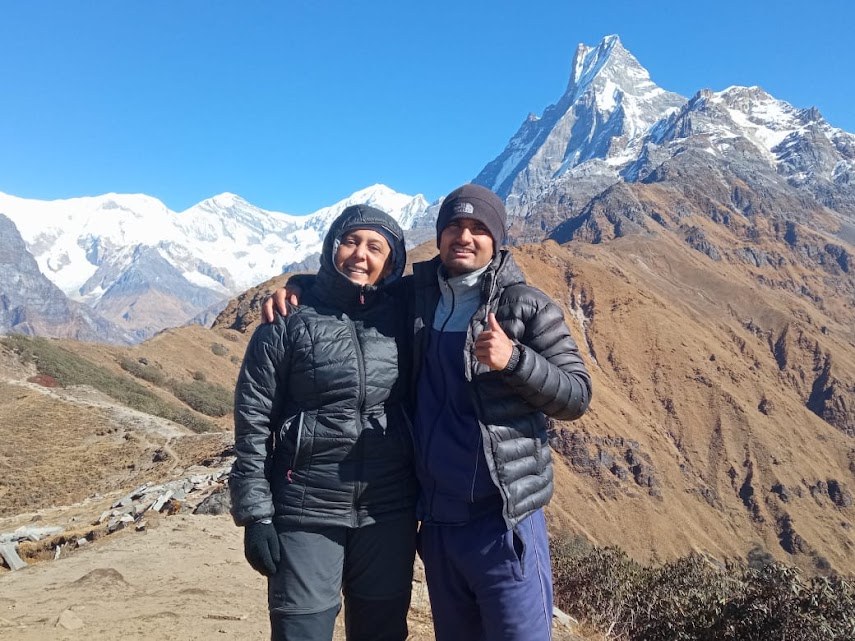
Combined Ghorepani Poon Hill and Mardi Himal Trek Route
The route connects the two trekking areas through Tadapani, Ghandruk and Landruk. After visiting Poon Hill, you continue towards Tadapani rather than returning to Pokhara, then walk through Ghandruk and Landruk to reach the Mardi Himal trail.
The route follows this sequence:
Kathmandu → Pokhara → Ulleri → Ghorepani → Poon Hill → Tadapani → Ghandruk → Landruk → Low Camp → High Camp → Mardi Himal Base Camp → Badal Danda → Siding → Pokhara → Kathmandu.
How the Two Routes Connect
Poon Hill section: You drive from Pokhara to Ulleri and trek to Ghorepani. After the early morning visit to Poon Hill, you continue to Tadapani, where you stay overnight.
Village connection: From Tadapani, you trek through Ghandruk and continue to Landruk. This is the connecting section between the Poon Hill trail and the Mardi Himal route. It takes you through village landscapes before the trail begins climbing towards the higher camps.
Mardi Himal section: From Landruk, you trek to Low Camp and then High Camp. The following day, you hike towards Mardi Himal Base Camp and return to Badal Danda for the overnight stay.
Return to Pokhara: On the final trekking day, you descend from Badal Danda to Siding. A private jeep takes you back to Pokhara, where you take the included flight to Kathmandu according to the available schedule.
Best Time for Ghorepani Poon Hill with Mardi Himal Trek
Spring and autumn are generally the best seasons for the combined trek. These periods usually provide more favourable walking conditions and good opportunities for mountain views, although weather can change at any time in the Himalayas.
The route passes through lower villages, forested sections and higher mountain terrain, so conditions can differ considerably between the start and end of the trek. It is important to prepare for warmer daytime temperatures at lower elevations as well as cold mornings and evenings near High Camp.
Spring (March to May)
Spring is a popular season for trekking in the Annapurna region. The forests around Ghorepani, Tadapani and Ghandruk can be especially attractive when rhododendrons bloom, generally during the spring months. The lower sections become warmer, while higher camps can still be cold. The upper Mardi Himal trail may have snow or icy patches early in the season, depending on recent weather. Carry warm clothing and check the conditions before setting out towards Base Camp.
Autumn (September to November)
Autumn is another favourable season for the combined trek. After the monsoon, the hills are generally green, and clearer weather often provides good visibility of the Annapurna range and Machhapuchhre. October and November are popular trekking months. Daytime conditions are often comfortable for walking, although temperatures fall in the mornings and evenings, especially at higher elevations.
Winter (December to February)
Winter trekking is possible, but temperatures become much colder as you gain elevation. Snow, ice and strong winds can affect the upper Mardi Himal trail, particularly around High Camp and the route towards Base Camp. If you plan to trek in winter, bring suitable insulated clothing and check the latest trail and accommodation conditions with your guide. The hike towards Base Camp may need to change depending on snow, weather and safety.
Monsoon (June to August)
The monsoon brings frequent rain to the Annapurna region. Trails can become muddy and slippery, and cloud cover may reduce mountain visibility. Leeches can also be present in wet forested areas. Road conditions and landslides may affect transportation during this period. Although trekking can be possible with preparation, spring and autumn are generally better choices for this combined route.
| Season | General conditions | Recommendation |
|---|---|---|
| Spring | Rhododendron blooms, warmer lower trails and variable conditions at higher elevations | Excellent |
| Autumn | Often clearer mountain views and comfortable walking conditions | Excellent |
| Winter | Cold temperatures, possible snow and icy upper trails | Possible with preparation |
| Monsoon | Rain, slippery trails, leeches and reduced visibility | Less favourable |
10-Day Ghorepani Poon Hill with Mardi Himal Trek Itinerary
Our 10-day itinerary begins with your arrival in Kathmandu and continues by tourist bus to Pokhara. From there, a private jeep takes you to Ulleri, where you start the trekking section towards Ghorepani and Poon Hill. After visiting Poon Hill, you continue through Tadapani, Ghandruk and Landruk before joining the Mardi Himal trail. The journey reaches its highest planned point on the hike towards Mardi Himal Base Camp, then descends to Siding for the return drive to Pokhara and flight to Kathmandu.
| Day | Route | Main activity | Overnight |
|---|---|---|---|
| 1 | Arrival in Kathmandu | Airport pickup, hotel transfer and trip meeting at Nirvana office | Kathmandu |
| 2 | Kathmandu to Pokhara | Drive by tourist bus | Pokhara |
| 3 | Pokhara to Ulleri, trek to Ghorepani | Private jeep and trek | Ghorepani |
| 4 | Ghorepani to Poon Hill to Tadapani | Sunrise hike and trek | Tadapani |
| 5 | Tadapani to Landruk via Ghandruk | Village and forest trail | Landruk |
| 6 | Landruk to Low Camp | Trek towards Mardi Himal | Low Camp |
| 7 | Low Camp to High Camp | Climb towards the upper ridge | High Camp |
| 8 | High Camp to Mardi Himal Base Camp and Badal Danda | Hike towards Base Camp and descend | Badal Danda |
| 9 | Badal Danda to Siding, drive to Pokhara and fly to Kathmandu | Trek, private jeep and domestic flight | Kathmandu |
| 10 | Final departure | Airport transfer | — |
Day 1: Arrival in Kathmandu
Upon arrival at Tribhuvan International Airport, our team will pick you up according to your arrival time and transfer you to your hotel. After you have settled in, we arrange a trip meeting at the Nirvana office to discuss the trekking route, transportation, equipment and practical preparations for the journey.
Day 2: Drive from Kathmandu to Pokhara by Tourist Bus
After breakfast, you travel from Kathmandu to Pokhara by tourist bus. The road journey follows Nepal's highway through river valleys, hillsides, towns and rural settlements. After reaching Pokhara, you transfer to your hotel in Lakeside and prepare for the drive to Ulleri the following morning.
Day 3: Drive from Pokhara to Ulleri and Trek to Ghorepani
You leave Pokhara by private jeep and drive towards Ulleri, where the trekking section begins. From Ulleri, the trail climbs through hillside settlements, stone steps and forested areas towards Ghorepani. The ascent is sustained, so walk at a steady pace and take breaks when needed. Ghorepani is your overnight stop before the early morning hike to Poon Hill.
Day 4: Trek from Ghorepani to Poon Hill and Continue to Tadapani
You start early for the hike to Poon Hill at approximately 3,210 metres. From the viewpoint, you can enjoy a sunrise panorama of the Annapurna and Dhaulagiri ranges when the weather is clear. After spending time at the viewpoint, you return to Ghorepani for breakfast and continue towards Tadapani through forested trails and mountain terrain.
Day 5: Trek from Tadapani to Landruk via Ghandruk
After breakfast, you continue towards Ghandruk, a well-known Gurung village in the Annapurna region. The village is recognised for its traditional houses, stone-paved paths and mountain surroundings. From Ghandruk, you continue to Landruk, completing the village connection between the Poon Hill section and the approach to Mardi Himal.
Day 6: Trek from Landruk to Low Camp
Today, you leave Landruk and climb towards Low Camp. The trail passes through forested terrain as you move away from the main village settlements. The scenery gradually changes, with trees, narrow paths and occasional openings towards the surrounding hills and mountains. Low Camp is your overnight stop on the Mardi Himal route.
Day 7: Trek from Low Camp to High Camp
After breakfast, you continue uphill towards High Camp. The trail gains elevation above the forest, and the landscape becomes more open as you approach the higher ridge. Depending on weather and visibility, you may see Machhapuchhre and the Annapurna range along the way. Walk steadily and allow time to adjust to the increasing altitude.
Day 8: Trek from High Camp to Mardi Himal Base Camp and Return to Badal Danda
You begin early for the hike towards Mardi Himal Base Camp, the highest and most demanding day of the itinerary. The trail follows the upper ridge towards the mountain viewpoint, where you can enjoy closer views of Machhapuchhre and the surrounding Annapurna peaks when conditions are clear. After the hike, you retrace your route and descend towards Badal Danda for the overnight stay. The exact point reached depends on weather, trail conditions and your physical condition, and your guide will assess whether it is safe to continue.
Day 9: Trek from Badal Danda to Siding, Drive to Pokhara and Fly to Kathmandu
After breakfast, you descend from Badal Danda towards Siding through forest and hillside settlements. At Siding, a private jeep takes you back to Pokhara. From there, you take the included domestic flight to Kathmandu according to the available flight schedule. Weather and operational conditions can affect domestic flights, so any onward international travel should allow suitable flexibility.
Day 10: Final Departure
According to your international flight schedule, our team transfers you to Tribhuvan International Airport for your final departure. This marks the end of your combined Ghorepani Poon Hill and Mardi Himal trekking journey.
Ghorepani Poon Hill with Mardi Himal Trek Cost (2026/2027)
The package price for the 10-day Ghorepani Poon Hill with Mardi Himal Trek is USD 595 per person. The package combines the two trekking sections with the main accommodation, guide, meal, permit and transportation arrangements needed for the journey.
The price includes two hotel nights in Kathmandu, one hotel night in Lakeside Pokhara, teahouse accommodation during the trek, trekking meals, a licensed English-speaking guide, applicable permits, private jeep transportation and the domestic flight from Pokhara to Kathmandu. Porter service is optional and costs an additional USD 150.
| Package details | Cost |
|---|---|
| 10-day combined trek | USD 595 per person |
| Porter service | USD 150 per porter |
| Suggested porter arrangement | One porter for two trekkers |
The USD 595 price is the package price per person. Confirm the applicable quotation for your group size and travel dates before booking.
What's Included in the Package?
- Airport transfer services during arrival and departure according to your flight schedule.
- Two nights of hotel accommodation in Kathmandu with breakfast.
- One night of hotel accommodation in Lakeside, Pokhara, with breakfast.
- Accommodation during the trek.
- Breakfast, lunch and dinner during the trekking period, including a cup of tea or coffee.
- Experienced English-speaking, government-licensed trekking guide.
- Guide's salary, food, equipment and insurance.
- Applicable permits, including ACAP, TIMS and local permits.
- Pokhara to Kathmandu domestic flight ticket.
- Kathmandu to Pokhara tourist bus ticket.
- Private jeep transportation from Pokhara to Ulleri and Siding to Pokhara.
- Nepal Nirvana Trails duffel bag for porter use.
- Trekking map and water purification tablets.
- First-aid kit with an oximeter and Diamox.
- Official expenses, government taxes and VAT.
What's Excluded from the Package?
- International flight tickets and Nepal entry visa.
- Travel and health insurance covering emergency rescue and evacuation.
- Personal expenses during trekking, including snacks, alcoholic and non-alcoholic beverages, Coke, juice, bottled and hot water, Wi-Fi, battery charging and hot showers.
- Lunch and dinner in Pokhara.
- Porter service: USD 150. One porter is suggested for every two trekkers.
- Extra hotel nights in Kathmandu and Pokhara.
- Tips for the trekking guide and porter. Tips are appreciated.
How Difficult Is the Combined Poon Hill and Mardi Himal Trek?
The Ghorepani Poon Hill with Mardi Himal Trek is a moderate to challenging journey. The first part follows an established trekking route with village trails, stone steps, forest paths and regular ascents and descents. The second part climbs towards Low Camp and High Camp before reaching the higher Mardi Himal Base Camp area.
The hike from High Camp towards Base Camp is the most demanding part of the itinerary because of the elevation and sustained walking. You should be comfortable walking for several hours on consecutive days and be prepared for colder conditions at higher elevations. Previous trekking experience is helpful, although it is not essential for travellers with good fitness and suitable preparation.
Who Is This Trek Suitable For?
This combined trek is suitable for travellers who want to visit both Poon Hill and Mardi Himal in one holiday, enjoy mountain scenery and village walks, and have enough time for a 10-day journey. It is a good option for people who are comfortable with consecutive walking days and want to reach a higher viewpoint than Poon Hill alone. It may be less suitable for travellers who prefer short and easy walks, have very limited time or are uncomfortable with higher-altitude trekking. If you are unsure about the difficulty, discuss your fitness, previous trekking experience and travel plans with our team before booking.
Fitness and Preparation
You should prepare for the trek before arriving in Nepal. Regular walking, hiking, stair climbing and cardiovascular exercise can help build the fitness needed for the route, especially for the uphill sections around Ulleri, Ghorepani and the Mardi Himal trail.
A useful preparation routine includes:
- Walking or hiking several times a week.
- Practising uphill and downhill walking.
- Building leg strength through exercises such as squats and step-ups.
- Carrying a light daypack during training walks.
- Using your trekking boots before the trip to reduce the risk of blisters.
Altitude and Safety on the Combined Trek
The route begins at lower elevations around Ulleri and Ghorepani before climbing towards the higher Mardi Himal trail. The highest planned point is approximately 4,500 metres, so altitude awareness is important even though the trek is shorter than many high-altitude Himalayan routes. Altitude sickness can affect trekkers regardless of their fitness. Common symptoms include headache, nausea, dizziness, unusual tiredness and loss of appetite. Do not ignore symptoms or continue ascending if you feel unwell. Tell your guide promptly so that your condition can be assessed.
Our package includes a first-aid kit and an oximeter. An oximeter can help monitor oxygen saturation, but it cannot diagnose or rule out altitude sickness by itself. Diamox is listed among the supplied first-aid items, but it should only be taken following appropriate medical advice and should not replace gradual ascent or descent when necessary. Travel and health insurance covering trekking at the planned altitude, emergency rescue and evacuation is essential. Insurance is not included in the package.
Accommodation and Food During the Trek
The package includes two nights in a Kathmandu hotel, one night in a Lakeside Pokhara hotel and accommodation during the trekking days. On the trail, you stay in mountain teahouses, where facilities are generally simpler than those in city hotels and can vary between villages and higher camps. Breakfast, lunch and dinner are included during the trekking period, along with a cup of tea or coffee. Common teahouse meals include dal bhat, noodles, fried rice, soups, potatoes and eggs. Hot showers, Wi-Fi, battery charging and bottled or hot drinking water are personal expenses and are not included in the package.
What to Pack for Poon Hill and Mardi Himal Trek
The trek passes through different elevations and weather conditions, so pack clothing that can be layered. Lower villages can be relatively warm during the day, while mornings and nights near High Camp can be cold. A waterproof outer layer is also useful because weather can change during the trek. Your main equipment should include comfortable trekking boots, a daypack, warm clothing, a headlamp, reusable water bottles and personal medication. The following checklist covers the main items to prepare.
Clothing
- Moisture-wicking trekking shirts.
- Comfortable trekking trousers.
- Warm fleece or insulating mid-layer.
- Down jacket or suitable insulated jacket.
- Waterproof and windproof outer jacket.
- Thermal base layers.
- Warm hat and sun hat.
- Gloves.
- Several pairs of trekking socks.
- Comfortable clothes for evenings.
Trekking Equipment
- Broken-in trekking boots with good grip.
- Daypack with rain cover.
- Trekking poles.
- Headlamp with spare batteries.
- Reusable water bottles.
- Sunglasses and sunscreen.
- Personal toiletries and quick-drying towel.
- Power bank and charging cables.
- Personal medication and basic blister care.
Additional Items for the Higher Trail
For the upper Mardi Himal section, bring warmer gloves, additional insulating layers and suitable footwear for potentially cold or snowy conditions. Microspikes may be useful if icy trail conditions are expected, but their need depends on the season and current conditions. Ask your guide about the latest trail situation before departure.
Practical Tips for the Combined Trek
The route includes a mixture of stone steps, village paths, forest trails and higher mountain terrain. Preparing for these changes makes the journey more comfortable and helps you manage your energy throughout the 10 days. A few practical details are particularly important: start early for Poon Hill, take the climb towards High Camp steadily, keep warm layers accessible and remain flexible on the Base Camp day. These tips can help you prepare for the main stages of the combined route.
- Prepare for the Ulleri climb: The walk towards Ghorepani includes a sustained ascent and many stone steps. Start at a steady pace and take breaks when needed.
- Start early for Poon Hill: The sunrise viewpoint is a major highlight. Carry a headlamp and warm clothing for the early morning walk.
- Take care on stone steps: The steps around the Poon Hill route can be tiring, especially during descents. Trekking poles can help if you are comfortable using them.
- Allow time in Ghandruk: The village is an important part of the route connection. Take time to observe the traditional houses, stone paths and mountain surroundings.
- Prepare for the change in terrain: After Landruk, the route climbs towards the Mardi Himal forest and higher camps. Conditions become colder as you gain elevation.
- Keep warm layers accessible: Temperatures can drop quickly at higher elevations, particularly in the morning and evening. Keep gloves and an insulating layer where you can reach them easily.
- Do not rush the High Camp ascent: The climb from Low Camp to High Camp involves gaining elevation. Walk steadily and inform your guide if you develop symptoms of altitude sickness.
- Be flexible on the Base Camp day: Weather, snow, trail conditions and your health determine whether it is safe to continue towards the planned viewpoint. Follow your guide's assessment.
- Carry safe drinking water: Use safe drinking water and the supplied purification tablets according to their instructions. Bottled and hot water are personal expenses.
- Keep cash for personal expenses: Hot showers, Wi-Fi, charging, snacks and drinks are excluded from the package. Carry enough local currency for these purchases.
- Pack for changing weather: Lower villages and higher camps can have very different temperatures. Use layers so you can adjust your clothing while walking.
- Allow flexibility for the return flight: The Pokhara to Kathmandu flight on Day 9 depends on the operating schedule and weather. Keep your international departure plans flexible where possible.
Why Trek with Nepal Himalaya Trekking?
At Nepal Himalaya Trekking, we organise the Ghorepani Poon Hill with Mardi Himal Trek as a complete 10-day journey. Our local team manages the main arrangements, including transportation, accommodation, permits and trekking guide services.
Why choose us?
- Connected trekking route: We arrange the journey from Ghorepani and Poon Hill through Tadapani, Ghandruk and Landruk to the Mardi Himal trail.
- Licensed trekking guide: An experienced, English-speaking, government-licensed guide accompanies you throughout the trek.
- Transportation arrangements: Our package includes the Kathmandu–Pokhara tourist bus, private jeep to Ulleri, jeep from Siding to Pokhara and flight from Pokhara to Kathmandu.
- Accommodation and meals: We arrange hotel stays in Kathmandu and Pokhara, teahouse accommodation during the trek, and breakfast, lunch and dinner on the trekking route.
- Permit arrangements: We include the applicable ACAP, TIMS and local permits.
- Safety preparation: We provide a first-aid kit with an oximeter. Our guide also helps monitor your condition and assess trail conditions during the trek.
- Clear package cost: Our 10-day package costs USD 595 per person. Porter service is available for an additional USD 150, with one porter recommended for every two trekkers.
We coordinate the main arrangements from your arrival in Kathmandu to your return flight. Visit our Nepal Himalaya Trekking to learn more about our trekking services or contact our team to plan your journey.
Plan Your Ghorepani Poon Hill with Mardi Himal Trek
If you want to experience the sunrise panorama of Poon Hill and continue towards the higher ridges of Mardi Himal, this 10-day combined trek provides a varied way to explore the Annapurna region. You pass through traditional villages, forest trails and higher mountain terrain without returning to Pokhara between the two trekking sections.
The package costs USD 595 per person and includes a licensed trekking guide, accommodation, trekking meals, applicable permits, private jeep transportation and the Pokhara to Kathmandu flight. To discuss your travel dates, group arrangements and package details, visit our Contact Us page or explore our Nepal Himalaya Trekking homepage.
Frequently Asked Questions
1. Can you combine Ghorepani Poon Hill and Mardi Himal Trek?
Yes. The two routes can be combined through Tadapani, Ghandruk and Landruk. After visiting Poon Hill, you continue towards Tadapani and then follow the village connection to Landruk before joining the Mardi Himal route.
2. How many days does the combined Poon Hill and Mardi Himal Trek take?
The itinerary takes 10 days, including arrival in Kathmandu, the drive to Pokhara, the trekking journey, the return flight to Kathmandu and final departure.
3. How much does the Ghorepani Poon Hill with Mardi Himal Trek cost?
The package price is USD 595 per person. Porter service costs an additional USD 150, with one porter suggested for every two trekkers. Confirm the applicable quotation for your group size and travel dates before booking.
4. What is the highest point of the combined trek?
The highest planned point is Mardi Himal Base Camp at approximately 4,500 metres. The exact point reached depends on weather, trail conditions and your physical condition on the day.
5. Is the combined Poon Hill and Mardi Himal Trek difficult?
It is a moderate to challenging trek. The route includes uphill and downhill walking, stone steps, forest trails and higher-altitude sections. The hike from High Camp towards Mardi Himal Base Camp is the most demanding day.
6. What is the best time for the combined trek?
Spring (March to May) and autumn (September to November) are generally the best seasons. Spring offers rhododendron blooms, while autumn often provides clearer mountain views and favourable walking conditions.
7. Do I need previous trekking experience?
Previous experience is helpful but not compulsory. Trekkers with good fitness, proper preparation and the ability to walk for several consecutive days can consider this route.
8. Are permits included in the NHT package?
Yes. The package includes applicable permits, including the Annapurna Conservation Area Permit (ACAP), TIMS and local permits.
9. Is a porter included in the package?
No. Porter service is excluded and costs USD 150. We suggest one porter for every two trekkers.
10. Does the package include the Pokhara to Kathmandu flight?
Yes. The package includes the domestic flight from Pokhara to Kathmandu on Day 9. The flight operates according to the available schedule and weather and operational conditions.
11. Is travel insurance included?
No. You must arrange your own travel and health insurance. It should cover trekking at the planned altitude, emergency rescue and evacuation.
12. Can the Mardi Himal Base Camp hike change because of weather?
Yes. The hike towards Base Camp depends on weather, snow, trail conditions and your physical condition. Your guide may adjust the day's plan if continuing would be unsafe.








Add Your Comment