

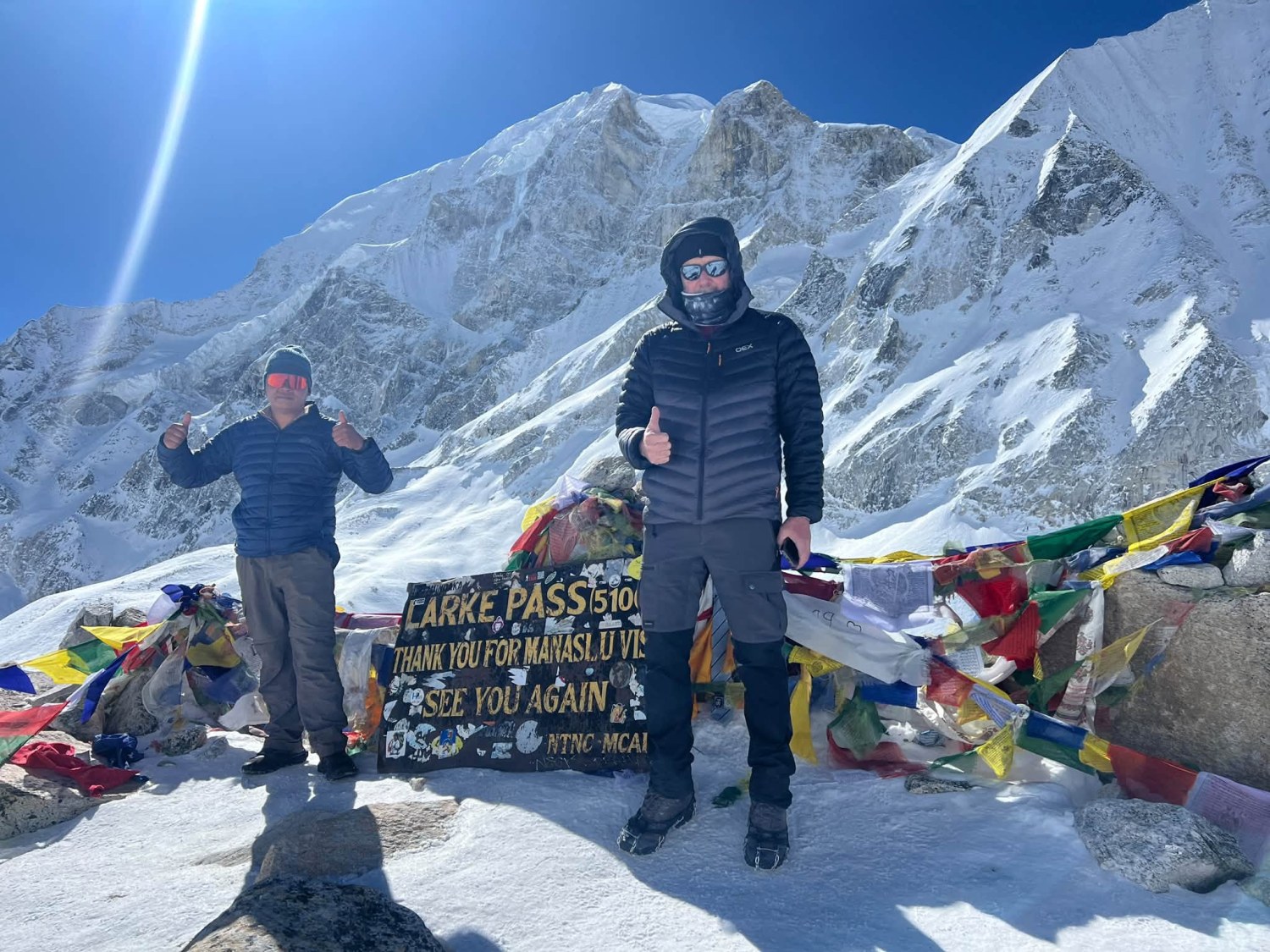
The Manaslu Circuit Trek in January takes you through the remote mountain villages of the Gorkha region during the coldest part of Nepal's winter. The route follows the Budhi Gandaki River, climbs through the Nubri Valley towards Samagaun and Samdo, and reaches Larkya La Pass at approximately 5,106 metres before descending towards Bimthang and Dharapani. Clear winter mornings can offer excellent views of Mount Manaslu and the surrounding peaks, while fewer trekkers create a quieter atmosphere along the trail.
However, January is one of the most challenging months for attempting the complete Manaslu Circuit. Temperatures fall below freezing at higher elevations, snowfall can cover sections of the trail, and some teahouses may close or provide limited services. The main uncertainty is the crossing of Larkya La. Heavy snow, strong winds, poor visibility or icy trail conditions can delay the crossing or make it unsafe. The lower route can also be affected by changing road and trail conditions.
At Nepal Himalaya Trekking, we recommend a January departure only for trekkers who have suitable high-altitude experience, proper winter equipment and enough flexibility to change their plans. Our standard Manaslu Circuit itinerary takes 14 days, but winter conditions can require additional nights or prevent a safe crossing of the pass. Before booking, discuss your experience and travel dates with our team, and confirm the latest trail, accommodation and weather conditions.
Quick Facts: Manaslu Circuit Trek in January
The Manaslu Circuit is a restricted-area trekking route in Nepal's Gorkha District. The standard route starts at Machha Khola, follows the Budhi Gandaki Valley through Jagat, Deng and Namrung, and reaches Samagaun before continuing towards Samdo and Dharamsala. After crossing Larkya La, trekkers descend to Bimthang and continue towards Dharapani.
January requires more preparation than the main spring and autumn seasons. The following table summarises the route and our standard package information. Elevations, walking times and route distance are approximate; actual conditions and daily arrangements may change during winter.
| Trek detail | Information |
|---|---|
| Trekking region | Manaslu, Gorkha District, Nepal |
| Standard NHT duration | 14 days |
| Starting point | Machha Khola |
| Ending point | Dharapani |
| Highest point | Larkya La Pass, approximately 5,106m |
| Mount Manaslu | 8,163m |
| Approximate route distance | Around 177km, depending on route measurement |
| Daily walking | Approximately 5–8 hours on trekking days, depending on the stage |
| January weather | Cold, with possible snowfall and icy trails at higher elevations |
| Accommodation | Teahouses and lodges; upper-village availability must be confirmed |
| Difficulty | Challenging to strenuous in winter |
| Guide requirement | Licensed guide arranged through a registered trekking agency |
| Main permits | Manaslu Restricted Area Permit, MCAP and ACAP |
| TIMS | Agency-issued TIMS card under current Nepal Tourism Board guidance |
| Best suited to | Experienced trekkers with winter equipment and flexible schedules |
| NHT group price | USD 1,290 per person for groups of 2–5 |
| January suitability | Depends on weather, trail conditions and accommodation availability |
Is January a Good Time for the Manaslu Circuit Trek?
January offers a different experience of the Manaslu region. The main trekking trails are generally quieter than in spring and autumn, and clear mornings can provide impressive views of the surrounding mountains. Snow may cover the upper valley and create a winter landscape around Samagaun, Samdo and the high route towards Larkya La.
The disadvantages are important, particularly if your main objective is to complete the full circuit. Freezing nights, possible snowfall, limited lodge operations and uncertain pass conditions can disrupt the standard itinerary. For most trekkers, March to May and September to November are more dependable periods. January is better considered a specialist winter departure rather than a normal trekking-season option.
Who Should Consider Trekking in January?
January may suit trekkers who have previous high-altitude experience, are comfortable walking in cold conditions and can adapt when the guide changes the schedule. You should be prepared for long walking days, snow or ice on sections of the route, basic accommodation and the possibility of waiting or turning back if Larkya La is unsafe. Flexible international travel arrangements are also important.
Who Should Avoid January?
We do not recommend January as the first choice for beginners, families with young children or travellers who must finish the circuit within a fixed number of days. Physical fitness alone does not prepare someone for freezing temperatures, altitude, snow-covered trails or a delayed pass crossing. If completing the full circuit is essential, choose a more reliable season.
Advantages of Trekking in January
The main advantages are the quieter trails and the possibility of clear winter views. Trekkers who enjoy cold-weather travel may appreciate the snow-covered scenery and the calmer atmosphere in the villages. These benefits depend on suitable weather and should not outweigh the practical risks of winter conditions.
- Fewer trekking groups than during the main spring and autumn seasons.
- Clear winter mornings can provide excellent mountain views.
- Snow can create striking scenery in the upper Nubri Valley.
- Villages and trails may feel quieter.
- A more demanding winter experience for suitably prepared trekkers.
Disadvantages of Trekking in January
The disadvantages affect both comfort and the likelihood of completing the standard route. Snow, ice and strong winds can slow progress, while reduced lodge operations may require changes to overnight stops. The most significant uncertainty is whether conditions will allow a safe crossing of Larkya La.
- Freezing nights in Samagaun, Samdo and Dharamsala.
- Possible snowfall and icy walking surfaces.
- Strong winds and poor visibility around Larkya La.
- Limited accommodation and meal options in some upper villages.
- Shorter daylight hours for completing long stages.
- Possible additional costs if weather delays the itinerary.
Manaslu Circuit Trek Weather in January
January is the coldest part of winter in the Manaslu region. Conditions change considerably as the route climbs from the lower Budhi Gandaki Valley towards Samagaun, Samdo and the high mountain terrain below Larkya La. Lower villages are generally milder during sunny afternoons, but mornings and evenings can still be cold. At higher elevations, freezing nights are common and temperatures can fall considerably below freezing.
Snowfall is possible in the upper valley, and frost or frozen ground may remain on shaded sections of the trail. Wind can make exposed locations feel much colder than sheltered villages. Rather than relying on one temperature estimate for the entire circuit, prepare for changing conditions, including severe cold around Dharamsala and the pass.
January Weather by Elevation
The higher the route climbs, the colder and more exposed the conditions generally become. Actual temperatures vary with wind, cloud cover, recent snowfall and the amount of sunshine. The descriptions below are general seasonal guidance, not guaranteed temperature records or a forecast for a particular departure date.
| Location or section | Approximate elevation | Typical January conditions |
|---|---|---|
| Machha Khola | 930m | Cool mornings and evenings; relatively mild compared with the upper valley |
| Jagat | 1,340m | Cold mornings and nights, with milder afternoons in sunshine |
| Deng | 1,860m | Cooler mornings and evenings |
| Namrung | 2,630m | Noticeably colder, particularly after sunset |
| Samagaun | 3,530m | Freezing nights are common; snow is possible |
| Samdo | 3,860m | Very cold nights and possible snow-covered trails |
| Dharamsala | 4,460m | Severe winter cold and potentially difficult accommodation conditions |
| Larkya La Pass | 5,106m | Exposed high-altitude conditions, with wind, snow and ice risks |
| Bimthang | 3,720m | Cold conditions, with possible snow on the descent |
Weather in the Lower Budhi Gandaki Valley
The first trekking stages from Machha Khola through Jagat and Deng are generally warmer than the upper valley. The trail follows the Budhi Gandaki River through settlements, forested slopes, suspension bridges and narrow paths. Walking can be comfortable during sunny afternoons, although shaded sections and early starts remain cold.
Winter does not eliminate difficult conditions in the lower section. Paths may be muddy or damaged, and the Budhi Gandaki corridor experienced flood damage in October 2026. Check the latest road access, bridges and trail diversions before travelling to Machha Khola rather than assuming that the route is unchanged from earlier trekking seasons.
Weather Around Namrung and Samagaun
Temperatures become noticeably colder after Namrung as the trail enters the higher Nubri Valley. Samagaun, at approximately 3,530 metres, is an important overnight stop because it gives trekkers time to rest and acclimatise before continuing towards Samdo. Nights can be freezing, and basic rooms without adequate insulation may feel particularly cold. Keep your insulated jacket, gloves and warm hat accessible instead of packing them inside your main luggage. Drink regularly, eat proper meals and use the acclimatisation day to rest and prepare for the colder stages ahead.
Weather Around Samdo and Dharamsala
Samdo and Dharamsala require particular attention in January. Their elevation and exposed surroundings bring colder conditions, while snow and frozen ground can affect the walking route. Wind can make the approach towards Dharamsala and Larkya La feel much colder than conditions in the lower villages.
A clear morning in Samdo does not guarantee safe conditions higher on the route. Before continuing, the guide should consider recent snowfall, wind strength, visibility, the condition of the trail and whether suitable accommodation is available at Dharamsala. The decision to proceed should depend on the actual conditions, not simply the original itinerary.
Snowfall and Daylight in January
Snowfall is one of the main factors that can affect the upper Manaslu route in January. Fresh snow may cover trail markers and uneven ground, while compacted snow can become slippery in shaded areas. These conditions can slow the group and make sections that are straightforward in other seasons more difficult.
January has shorter daylight hours than the main trekking seasons. This leaves less time to complete long stages, particularly when snow slows walking. The guide should choose the start time and stopping points according to visibility, weather and trail conditions. An early start is common for a pass crossing, but walking in darkness is not automatically safe when the route is icy or difficult to identify.
Manaslu Circuit Trek Route Conditions After the October 2026 Floods
The October 11, 2026, Budhi Gandaki flood damaged parts of the lower Manaslu trekking corridor, including trails, bridges, access roads and local facilities. The damage affected areas around Machha Khola, Khorlabesi, Jagat and nearby settlements, disrupting access and trekking activity.
On October 25, 2026, reports from the Trekking Agencies' Association of Nepal and local authorities indicated that trekking had resumed after partial repairs. Vehicles could reach Machha Khola, and a short alternative trail had been established at Yaru Bagar to bypass a damaged section. Trekkers were also using repaired sections through Khorlabesi, Jagat, Philim and Nyak Phedi towards the Nubri Valley and Larkya La. This was a partial reopening, not confirmation that every damaged section had returned to its original condition. See the Nepal News report on the reopening after flood repairs and the Kathmandu Post report on tourism resuming in Manaslu.
What the Flood Repairs Mean for January Trekkers
The October reopening provides useful background for planning, but it cannot confirm the condition of the route in January 2027. Temporary crossings, repaired trail sections and road access can change because of further rainfall, landslides, snowfall and local maintenance. The lower trail therefore needs another check close to the departure date.
Before starting, confirm that vehicles can reach the agreed trekking starting point, that the Yaru Bagar alternative remains usable and that bridges and walking sections are suitable for trekkers and support staff. Also check whether teahouses along the lower route are operating normally. Do not rely on an old reopening notice as proof of current trail conditions.
Larkya La Pass in January: Can You Cross It?
Larkya La Pass, at approximately 5,106 metres, is the highest and most demanding point of the Manaslu Circuit. The standard crossing starts from Dharamsala, climbs over exposed high-altitude terrain and descends towards Bimthang. In January, snow and ice can make this stage considerably more difficult than during the main trekking seasons.
A safe crossing depends on recent snowfall, snow depth, visibility, wind, trail conditions and the guide's assessment. There is no fixed January date on which the pass is guaranteed to be open. If snow has accumulated heavily or conditions are unstable, the guide may decide that crossing is unsafe. Waiting, turning back or changing the itinerary is safer than attempting the pass simply to stay on schedule.
Why Larkya La Is More Difficult in January
The route above Dharamsala is exposed to severe cold, and sections may be covered with snow or hard ice. Walking becomes slower when the path is difficult to identify or each step requires extra care. Strong winds and poor visibility can also make navigation and protection from the cold more challenging.
Microspikes or crampons may be useful in suitable conditions, but carrying traction equipment does not make every snow condition safe. Deep snow, avalanche-prone slopes, unstable weather or poor visibility may require a delay or cancellation. Trekkers should follow the guide's assessment and never treat reaching the pass as more important than safety.
What Happens If Larkya La Is Closed?
If the pass becomes unsafe, the group may need to wait, return along the route or agree on another plan with the trekking agency. The appropriate decision depends on the group's location, trail conditions, available accommodation and current local information. There is no alternative route that guarantees completion of the standard circuit when Larkya La cannot be crossed.
Discuss this possibility before booking, particularly if you have a fixed international departure or onward travel arrangement. Extra days provide flexibility but cannot guarantee that the pass will become safe. If conditions remain unsuitable, the group must be prepared to change the route or abandon the crossing.
Manaslu Circuit Trek Difficulty in January
The Manaslu Circuit is a demanding high-altitude trek because of its long walking stages, gradual ascent, remote location and Larkya La crossing. January adds further challenges through freezing temperatures, possible snowfall, icy trails and fewer accommodation options. A stage that normally takes several hours may take longer when snow covers the path or the group needs to walk more cautiously.
Previous high-altitude trekking experience is strongly recommended for January departures. Trekkers should have good cardiovascular fitness, strong legs and the ability to walk for several hours in cold conditions while carrying a daypack. They must also be comfortable changing plans when the weather, trail or accommodation makes the standard itinerary unsuitable.
Is the January Manaslu Trek Suitable for Beginners?
We do not recommend January as the first choice for beginners attempting the complete Manaslu Circuit. Someone may be physically fit and still struggle with high-altitude cold, snow-covered trails, limited lodge facilities or a delayed pass crossing. Fitness alone does not prepare a trekker for winter mountain conditions.
If you are new to high-altitude trekking, spring or autumn is generally a more practical time for your first Manaslu experience. If you still want to consider January, discuss your previous trekking experience, equipment, schedule and expectations with our team before confirming a booking.
Physical Preparation for a January Departure
Prepare for consecutive days of walking rather than relying only on short, intense workouts. Regular hikes, uphill walking, stair climbing and strength exercises for your legs can help develop the endurance needed for the route. Include longer walks with a daypack so you become comfortable carrying your personal equipment. Training cannot prevent altitude sickness or make unsafe winter conditions safe. It can, however, help you manage the physical demands of the trek. If you have concerns about your ability to walk at high altitude, seek appropriate medical advice before booking.
Manaslu Circuit Trek 14-Day Itinerary
The following is the standard 14-day route, beginning in Kathmandu and ending after the drive back from the Dharapani area. It shows the usual route sequence and planned overnight stops, but it is not a guaranteed January operating schedule. Snow, closed lodges or unsafe pass conditions may require extra days, revised overnight arrangements or a decision not to cross Larkya La.
The itinerary includes an acclimatisation day in Samagaun before continuing towards Samdo and Dharamsala. This rest day is important, but it does not guarantee that every trekker will adjust to the altitude or that the pass will be safe. Confirm actual walking times, accommodation and transport arrangements before departure.
| Day | Route | Approximate elevation | Activity |
|---|---|---|---|
| 1 | Arrival in Kathmandu | 1,400m | Airport pickup, hotel check-in and trek preparation |
| 2 | Kathmandu to Machha Khola | 930m | Drive to the trekking starting point |
| 3 | Machha Khola to Jagat | 1,340m | Trek through the Budhi Gandaki Valley |
| 4 | Jagat to Deng | 1,860m | Continue through villages and river valleys |
| 5 | Deng to Namrung | 2,630m | Walk through forested sections and mountain settlements |
| 6 | Namrung to Samagaun | 3,530m | Trek via Lho and Sho towards the upper Nubri Valley |
| 7 | Acclimatisation in Samagaun | 3,530m | Rest and optional acclimatisation walk, depending on conditions |
| 8 | Samagaun to Samdo | 3,860m | Continue towards the upper valley |
| 9 | Samdo to Dharamsala | 4,460m | Walk towards the high camp area |
| 10 | Dharamsala to Larkya La and Bimthang | 5,106m / 3,720m | Cross the pass only if conditions are safe |
| 11 | Bimthang to Tilije | Approximately 2,300m | Descend through alpine and forested terrain |
| 12 | Tilije to Dharapani, then Besisahar | Lower elevation | Trek to Dharapani and continue by road |
| 13 | Besisahar to Kathmandu | 1,400m | Drive back to Kathmandu |
| 14 | Departure from Kathmandu | 1,400m | Airport transfer |
Samagaun Acclimatisation Day
The acclimatisation day in Samagaun is important because the route continues above 3,500 metres. It gives trekkers time to rest, monitor how they are responding to altitude and prepare for the higher villages ahead. Depending on the weather and each person's condition, a short walk may be arranged, but strenuous activity should not be treated as compulsory.
In January, snow and cold may affect walking routes around the village. The guide should choose an appropriate activity or recommend rest when conditions are poor. If anyone develops symptoms of altitude illness, the priority is medical assessment and, when necessary, descent rather than continuing the planned activity.
Walking from Samdo to Dharamsala
The stage from Samdo to Dharamsala takes the group closer to Larkya La and requires careful pacing. The trail becomes more exposed, temperatures are lower and accommodation options are limited. Snow or frozen ground can make the walk slower than expected.
Before leaving Samdo, the guide should confirm that Dharamsala is operating and that conditions allow the group to continue. If accommodation is unavailable or the approach is unsafe, the overnight plan may need to change. Continuing without suitable shelter is not an acceptable way to preserve the original itinerary.
Crossing Larkya La to Bimthang
The crossing from Dharamsala over Larkya La to Bimthang is the longest and most demanding stage of the standard itinerary. It involves a sustained climb to approximately 5,106 metres, followed by a descent to a lower elevation. Snow, ice, wind and poor visibility can increase the time and effort required.
The group should attempt the crossing only after the guide has assessed the latest conditions. If the pass is unsafe, the itinerary must change. Reaching Bimthang on the planned day is never more important than the safety of trekkers and staff.
Winter Pacing and Contingency Planning
The 14-day itinerary is a standard route plan, not a fixed winter timetable. January trekkers should avoid arranging international flights, onward travel or other non-refundable plans too tightly around the expected Larkya La crossing date. Snowfall, strong wind, poor visibility and lodge availability can all affect the schedule.
Where your travel arrangements allow, we recommend keeping two to three additional contingency days. These days provide flexibility if the group needs to wait or change its plan, but they do not guarantee that Larkya La will become safe to cross. If conditions remain unsuitable, the group must be prepared to change the route or abandon the crossing.
- Start each day after the guide has checked the weather and trail conditions.
- Keep walking stages manageable rather than trying to make up lost time.
- Take breaks to drink, eat and adjust clothing.
- Avoid unnecessary side trips when the weather is poor or the group is tired.
- Aim to reach the overnight lodge with enough daylight to settle in.
- Review the next day's plan with the guide each evening.
- Never continue towards the pass simply because accommodation or flights have already been booked.
Manaslu Circuit Trek Cost in January 2027
The cost of the Manaslu Circuit Trek depends on group size, transport arrangements, accommodation, permits and the services included in the package. NHT's published standard group rate is USD 1,290 per person for groups of two to five, with different rates for solo bookings and larger groups. These are the published standard package rates, not a separate guaranteed quotation for every January 2027 departure.
Winter conditions can create additional expenses if the trek needs extra nights, a changed transport arrangement or a longer itinerary. Before booking, confirm how additional accommodation, meals, guide and porter days, transport changes and permit extensions would be charged if the original 14-day plan cannot be followed.
Manaslu Circuit Trek Group Price
The following is the NHT published group price table. The per-person rate decreases as the group size increases. Confirm the booking arrangement, departure availability and package inclusions before making payment.
| Group size | Published price per person |
|---|---|
| 1 person | USD 1,390 |
| 2–5 people | USD 1,290 |
| 6–10 people | USD 1,226 |
| 11–15 people | USD 1,161 |
| 16–25 people | USD 1,097 |
See our Manaslu Circuit Trek package for the standard itinerary and package details. The page displays a one-person rate while also showing a minimum group size of two, so solo travellers should contact us to confirm the current booking arrangement, guide costs and whether a suitable group departure is available.
Does the Manaslu Trek Cost More in January?
The published package rate does not automatically change because you are travelling in January. However, the actual cost may increase if winter conditions require extra days or changes to the standard route. A delayed pass crossing, for example, may mean additional accommodation, meals and staff costs.
Before booking, ask the agency to explain how these extra costs are handled and whether the package includes any contingency days. Do not assume that the standard 14-day price covers an unlimited delay caused by snow, a closed pass or unavailable accommodation.
Possible Additional Winter Expenses
January trekking can involve expenses that are less common during the main seasons. Depending on actual conditions and available services, you may need to budget for additional accommodation, meals, hot drinks, equipment, charging and transport changes.
- Extra nights if snowfall or poor weather delays the crossing.
- Additional meals and hot drinks during an unplanned stop.
- Winter equipment not already included in your personal gear.
- Additional transport costs if road access or the return plan changes.
- Personal snacks, charging and hot-water services where available.
- Changes to travel arrangements if the trek takes longer than planned.
Ask for a written breakdown of package inclusions and exclusions. Confirm whether additional nights, extra transport, personal equipment and emergency arrangements are included or charged separately.
Accommodation on the Manaslu Circuit in January
Teahouses and lodges are the main accommodation along the Manaslu Circuit, but winter availability becomes less predictable as the route climbs. Some lower villages have resident communities and may continue providing accommodation, while individual businesses may reduce services or close during the coldest weeks. Above Samagaun, the number of operating lodges can be more limited.
Samdo and Dharamsala need particular attention. Do not assume every lodge will be open or that a room will be available when you arrive. Confirm the accommodation plan with local operators before leaving the lower villages. If Dharamsala is closed or cannot provide suitable shelter, the standard pass-crossing plan may no longer be practical. A safe alternative must be agreed before attempting the high route.
What Are Teahouses Like in Winter?
Rooms are generally basic, with simple beds and shared facilities. Heating may be available only in the shared dining area, and bedrooms are not necessarily heated. Hot showers may be unavailable or limited at higher elevations, so a suitable sleeping bag, thermal clothing and spare dry layers are important.
Bring enough personal equipment to stay warm even when lodge facilities are basic. Ask the agency to confirm which accommodation is expected to be operating at Samdo and Dharamsala during your departure period.
Food and Drinking Water in January
Teahouses along the lower route generally provide meals such as dal bhat, noodles, soups, potatoes and rice dishes. The choice may become more limited at higher elevations, particularly when fewer lodges are operating or supplies are difficult to transport. Eat regular meals and drink enough water even when the cold reduces your feeling of thirst.
Water needs extra care in winter because bottles and exposed water sources can freeze. Carry a reusable bottle or insulated flask and follow your guide's advice about safe drinking water. Use treated, boiled or properly filtered water rather than drinking directly from streams. Warm drinks can make it easier to maintain fluid intake during cold walking days.
Safe Water and Winter Meals
Keep water inside your pack or an insulated bottle to reduce the chance of it freezing. If you use a water filter, check that it is suitable for freezing conditions and protect it according to the manufacturer's instructions. Water-treatment tablets or boiled water can be practical alternatives, depending on the available facilities.
Choose filling meals and carry snacks for long walking stages. At higher elevations, meal choices may be limited, so tell the guide about dietary requirements before the trek. Do not rely on a particular menu or hot-water service being available at every lodge in January.
What to Pack for the Manaslu Circuit Trek in January
January requires more serious winter preparation than a normal spring or autumn trek. Your clothing and equipment should keep you warm during long walking days, protect you from wind and snow, and allow you to stay comfortable when temperatures fall after sunset. Test your equipment before the trek rather than packing it for the first time on departure day.
Use a layering system so you can adjust your clothing as your walking effort and the temperature change. Keep your warmest layers, gloves, hat and waterproof protection accessible rather than buried inside your main luggage.
Clothing and Insulation
Your clothing should manage moisture during uphill walking while providing enough insulation during breaks and cold evenings. Carry spare dry layers because wet clothing can make it difficult to stay warm in winter conditions.
- Moisture-wicking thermal base layers.
- Fleece or another warm mid-layer.
- Insulated down or synthetic jacket.
- Waterproof and windproof outer jacket.
- Warm trekking trousers.
- Waterproof or wind-resistant over-trousers.
- Thermal leggings for cold evenings and sleeping.
- Warm wool or synthetic trekking socks.
- Spare socks in case your feet become wet.
- Insulated gloves or mittens.
- Lightweight liner gloves.
- Warm hat that covers your ears.
- Neck gaiter, buff or balaclava.
Footwear and Walking Equipment
Good footwear is important on uneven trails and possible snow-covered sections. Your boots should be broken in before the trek and provide suitable grip and support. Traction equipment should be selected according to the actual trail conditions and the guide's advice.
- Well-broken-in waterproof trekking boots.
- Gaiters for snow and wet trail conditions.
- Trekking poles with suitable baskets.
- Microspikes or other traction equipment if recommended.
- Comfortable daypack with a rain cover.
- Waterproof pack liner or dry bags for spare clothing.
Do not buy or use technical crampons without knowing how to fit and walk in them. Ask the guide whether traction equipment is needed and suitable for the actual route conditions.
Sleeping and Personal Equipment
Winter nights can be very cold, especially at higher elevations where lodge heating may be limited. Choose a sleeping bag according to its comfort rating and the expected overnight conditions. Keep batteries and electronic devices protected from the cold.
- Winter sleeping bag suitable for the expected sub-zero conditions.
- Headlamp with spare batteries.
- Sunglasses with suitable UV protection.
- Snow goggles if conditions warrant them.
- Sunscreen and high-SPF lip balm.
- Reusable water bottles or an insulated flask.
- Water purification tablets or a suitable filter.
- Power bank and charging cables.
- Personal medication and a small first-aid kit.
- Blister care supplies.
- High-energy snacks.
- Passport, permits, insurance details and emergency contacts.
Optional Technical Winter Equipment
The need for microspikes, crampons, an ice axe or other technical equipment depends on the snow and ice conditions. Carrying technical equipment without the necessary skills does not make a difficult slope safe, and not every January departure will require the same equipment.
Ask the trekking agency and guide to assess the expected conditions before buying or renting specialist equipment. If the route requires technical skills or equipment beyond the group's experience, the crossing should not be attempted.
Manaslu Trek Permits in January 2027
Foreign trekkers need the relevant restricted-area and conservation-area permits for the Manaslu Circuit. The main permits are the Manaslu Restricted Area Permit (RAP), Manaslu Conservation Area Permit (MCAP) and Annapurna Conservation Area Permit (ACAP). These should be arranged through the required registered-agency process before entering the restricted area.
The Nepal Tourism Board also lists the Manaslu Circuit among routes requiring a licensed guide and an agency-issued TIMS card. Permit rates and requirements can change, so confirm the current fees, nationality categories and package inclusions before departure. Do not assume that a permit fee or requirement from an older article is still current.
Manaslu Restricted Area Permit (RAP)
January falls within the December to August fee period for the Manaslu Restricted Area Permit. The Nepal Tourism Board lists the fee as USD 75 per person for the first seven days and USD 10 per person for each additional day beyond the first seven days. The final amount depends on the number of days covered by the permit.
The permit must be arranged through the required agency process and carried during the trek. Check the Nepal Tourism Board trekking permit information for the current fee schedule before booking.
Manaslu Conservation Area Permit (MCAP)
The Manaslu Conservation Area Permit is required for the section of the route inside the Manaslu Conservation Area. The NTNC online permit system lists the entry fee as NPR 3,000 for foreign nationals and NPR 1,000 for SAARC nationals, including tax. Confirm the applicable amount and nationality category when the permit is issued. Check the current fee and application conditions through the NTNC online permit system.
Annapurna Conservation Area Permit (ACAP)
The standard Manaslu Circuit exits through the Annapurna region, so trekkers also need the Annapurna Conservation Area Permit. The NTNC online permit system lists the entry fee as NPR 3,000 for foreign nationals and NPR 1,000 for SAARC nationals, including tax, subject to confirmation at the time of application.
Do You Need a TIMS Card for the Manaslu Circuit?
Yes. Current Nepal Tourism Board TIMS guidance lists the Manaslu Circuit among the routes requiring a licensed guide and an agency-issued TIMS card. The published fee is NPR 2,000 for most foreign nationals and NPR 1,000 for SAARC nationals, with the card arranged through a registered trekking agency.
There is conflicting information on the NHT package page: its inclusion list mentions TIMS, while its FAQ says TIMS is not required for restricted-area treks. We recommend confirming the current requirement and whether the fee is included in your written quotation before booking. See the Nepal Tourism Board TIMS Card guidance.
Can You Trek Manaslu Alone in January?
The Department of Immigration revised its restricted-area permit policy in March 2026, allowing individual foreign trekkers to obtain permits through a registered trekking agency. However, solo trekkers must still be accompanied by a licensed guide, and the agency must arrange the required trip and permit process. Travelling alone therefore does not allow you to trek the restricted section independently. If you are booking as one person, confirm the permit arrangement, guide cost, transport, accommodation and package price with the agency before paying. Read the Kathmandu Post report on the revised solo trekking rules.
Practical Safety Tips for the Manaslu Circuit Trek in January
Winter trekking requires careful decisions throughout the route, not only on the day of the pass crossing. Cold exposure, snow-covered trails, altitude, shorter daylight and limited accommodation can combine to make an ordinary trekking stage more difficult. Follow your guide's instructions and allow the schedule to change when conditions require it.
The Manaslu region is remote, and emergency assistance may take time to reach a trekking group. Prepare for cold conditions, report health problems early and make sure your insurance covers the actual altitude and activities planned. The following precautions are particularly important around Samagaun, Samdo, Dharamsala and Larkya La.
1. Allow Time for Acclimatisation
Follow the planned acclimatisation stop at Samagaun and avoid rushing to gain elevation. A rest day gives your body more time to adjust, but it does not guarantee that altitude sickness will not occur. Tell your guide if you feel unwell or develop new symptoms.
2. Recognise Altitude Sickness Symptoms
Headache, nausea, dizziness, unusual tiredness and loss of appetite can be signs of acute mountain sickness. More serious symptoms can include confusion, difficulty walking straight, breathlessness at rest or a worsening cough. Report symptoms early. Serious altitude illness requires immediate medical assessment and descent.
3. Do Not Force the Larkya La Crossing
The pass should only be attempted when the guide considers the weather, snow, visibility and trail safe. If conditions deteriorate, wait or change the plan. A fixed itinerary or pre-booked flight is never a reason to take an avoidable risk.
4. Check Snow and Ice Conditions
Snow can cover uneven ground and trail markers, while compacted snow may become slippery. Use suitable boots and follow the guide's advice about trekking poles, gaiters and traction equipment. Walk carefully on steep or exposed sections.
5. Protect Your Hands, Feet and Face
Cold injury can develop when skin is exposed to low temperatures, wind or wet clothing. Wear insulated gloves, warm socks and suitable footwear. Keep your face covered when necessary, and change out of wet clothing as soon as possible.
6. Keep Your Clothing Dry
Avoid allowing sweat to soak your base layers during the climb. Adjust your layers before you become too hot, and put on insulation during breaks. Keep spare socks and warm clothing protected in waterproof bags.
7. Eat and Drink Regularly
Cold weather can reduce your appetite and make you less aware of thirst. Eat regular meals and carry snacks for the walking day. Drink treated water throughout the trek, even when you do not feel thirsty.
8. Start Early Only When Conditions Allow
The Larkya La crossing usually requires an early start, but the guide must consider visibility, trail conditions and weather. Do not leave in unsafe darkness simply to follow a standard departure time.
9. Stay With the Group
Do not walk alone or take unplanned shortcuts, especially on snow-covered sections where the trail may be unclear. Keep the group within sight and follow the guide's instructions at difficult crossings and exposed areas.
10. Carry Essential Personal Safety Equipment
Keep a headlamp, spare batteries, warm gloves, sunglasses, water and personal medication accessible. Protect electronic devices and spare batteries from low temperatures, as battery performance can drop in the cold.
11. Confirm Insurance and Emergency Arrangements
Your travel insurance should explicitly cover trekking at the elevations on this route and emergency helicopter evacuation where available. Check exclusions, altitude limits and the claims procedure before travelling. Discuss the emergency plan with the agency and guide before starting the trek.
12. Follow Local Route and Weather Updates
The lower Manaslu route experienced flood damage in October 2026, and some sections reopened after partial repairs. Check the latest information about bridges, trail diversions, road access and lodge operations before departure. Conditions can change after a travel update is published.
Why Choose Nepal Himalaya Trekking for the Manaslu Circuit?
We are a Nepal-based trekking agency, and our standard Manaslu Circuit itinerary follows the route through Machha Khola, Jagat, Deng, Namrung, Samagaun, Samdo, Dharamsala, Larkya La and Bimthang. The itinerary includes an acclimatisation day at Samagaun before the group continues towards the pass.
For a January departure, the most important part of planning is not simply following the standard itinerary. It is checking the actual route and lodge conditions, preparing suitable winter equipment and allowing the guide to make decisions based on the weather and the group's condition. We recommend discussing your previous trekking experience, fitness, equipment and available travel dates with our team before confirming a winter departure.
Alternative Trekking Options in Nepal
If winter conditions on Manaslu do not suit your travel plans, you can consider another trekking region. However, changing the destination does not automatically remove winter risks. High-altitude routes in the Everest and Annapurna regions can also experience snow, freezing temperatures and weather-related delays.
The Everest Base Camp and Annapurna Circuit treks offer different landscapes and cultural experiences. Both include high-altitude walking, so check the winter conditions and suitability of the route before choosing an alternative. You can browse more trekking information on our Nepal Himalaya Trekking blog.
Everest Base Camp Trek
The Everest Base Camp Trek follows the Khumbu Valley towards Everest Base Camp and Kala Patthar. The route passes Sherpa villages and monasteries, with views of some of the world's highest mountains. Winter conditions remain cold, and flights to and from Lukla can be affected by weather. See our Everest Base Camp Trek package for the route and standard itinerary. Like Manaslu, this is a high-altitude trek, so check the winter conditions before booking.
Annapurna Circuit Trek
The Annapurna Circuit crosses Thorong La Pass at approximately 5,416 metres and passes through the Manang and Mustang regions. It offers a different landscape and cultural experience, but Thorong La is also a high mountain pass that can be affected by winter snow and wind. It should not be treated as an automatically safer January alternative. Explore our Annapurna Circuit Trek package and check the expected winter conditions before choosing your departure.
Frequently Asked Questions About the Manaslu Circuit Trek in January
The following answers cover the main questions about winter weather, pass conditions, accommodation, permits and costs. January plans should always be based on current local information because conditions can change between the time of booking and the actual departure.
1. Is January a good month for the Manaslu Circuit Trek?
January is suitable mainly for experienced trekkers who are prepared for severe cold, possible snow and changes to the itinerary. It is not the most reliable month for completing the full circuit because Larkya La may become difficult or unsafe to cross.
2. Does it snow on the Manaslu Circuit in January?
Snowfall is possible, especially in the upper villages and around Larkya La. The amount and timing vary from year to year, so check the forecast and local trail conditions before and during the trek.
3. Can you cross Larkya La Pass in January?
A January crossing may be possible when weather and trail conditions are suitable, but it is not guaranteed. Heavy snow, ice, strong wind or poor visibility can make the pass unsafe. Follow your guide's assessment and be prepared to delay or cancel the crossing.
4. Are teahouses open on the Manaslu Circuit in January?
Some lower-village teahouses may remain open, but winter availability becomes more limited at higher elevations. Samdo and Dharamsala require particular confirmation before departure. Do not assume that all planned overnight stops will have operating lodges.
5. How cold is the Manaslu Circuit in January?
January brings freezing nights at higher villages and severe cold around Dharamsala and Larkya La. Conditions vary with elevation, wind and weather, so carry proper winter clothing and a sleeping bag suitable for the expected overnight conditions.
6. How difficult is the Manaslu Circuit in January?
It is more difficult than the standard spring and autumn trek because of cold, possible snow, icy trails, shorter daylight and limited accommodation. Previous high-altitude trekking experience and winter preparation are strongly recommended.
7. How many days are needed for the Manaslu Circuit in January?
The standard NHT itinerary is 14 days, but January trekkers should allow extra time for weather delays, accommodation changes or a postponed pass crossing. The full circuit may not be possible if conditions at Larkya La become unsafe.
8. How much does the Manaslu Circuit Trek cost in January 2027?
NHT's published standard price is USD 1,290 per person for groups of two to five. The one-person rate is USD 1,390, while larger groups have lower per-person rates. Confirm the January departure, inclusions and possible extra-day charges with the agency before booking.
9. Do I need a guide for the Manaslu Circuit Trek?
Yes. The Manaslu restricted area requires trekkers to arrange the permit through a registered trekking agency and be accompanied by a licensed guide. Individual trekkers can apply through an agency, but they cannot trek the restricted section independently.
10. Which permits are required for the Manaslu Circuit?
Foreign trekkers generally need the Manaslu Restricted Area Permit, Manaslu Conservation Area Permit and Annapurna Conservation Area Permit. The Nepal Tourism Board also lists the Manaslu Circuit among routes requiring an agency-issued TIMS card. Confirm the current requirements and package inclusions before departure.
11. Is the Manaslu Circuit safe after the October 2026 flood?
Trekking resumed after partial repairs were reported in October 2026, but that reopening does not guarantee that every trail, bridge or road will remain unchanged. Check the latest local and agency updates before travelling, particularly for the lower Budhi Gandaki corridor.
12. Can I trek the Manaslu Circuit alone?
The revised restricted-area policy allows individual foreign trekkers to obtain permits through a registered trekking agency, provided they are accompanied by a licensed guide. You cannot independently trek the restricted section without the required guide and agency arrangements.
13. What should I pack for the Manaslu Circuit in January?
Pack thermal base layers, an insulated jacket, waterproof outerwear, warm trousers, insulated gloves, a warm hat, thermal socks, waterproof trekking boots, a suitable sleeping bag, a headlamp, sunglasses, sunscreen, water-treatment supplies and personal medication. Traction equipment should be selected according to current trail conditions and the guide's advice.
14. Is the Manaslu Circuit suitable for beginners in January?
We do not recommend January for beginners attempting the full circuit. Cold weather, altitude, possible snow and uncertain accommodation make it more demanding than trekking during the main seasons. Spring and autumn are generally better choices for a first high-altitude trek.
15. Should I add extra days to a January Manaslu itinerary?
Yes, if your travel schedule allows. Two or three contingency days can provide flexibility if snowfall, wind or poor visibility delays the crossing. Extra days do not guarantee that Larkya La will be safe to cross, so the group must be prepared to change the plan if necessary.
Final Thoughts: Should You Trek Manaslu in January 2027?
The Manaslu Circuit Trek in January offers a quieter winter experience, but it is one of the most demanding times to attempt the full route. Cold temperatures, possible snowfall, limited accommodation above Samagaun and uncertain conditions at Larkya La can change the itinerary significantly. The standard 14-day schedule should therefore be treated as a route plan rather than a promise of completion.
If you have winter trekking experience, suitable equipment and flexibility, January may be worth considering after the latest conditions have been checked. For most trekkers, spring and autumn provide a more dependable opportunity to complete the Manaslu Circuit. The decision should depend on your experience, the actual weather and the availability of safe accommodation and trail access. Contact Nepal Himalaya Trekking before booking a January 2027 departure so we can discuss your experience, check the available arrangements and explain possible changes to the standard itinerary. .
Add Your Comment