

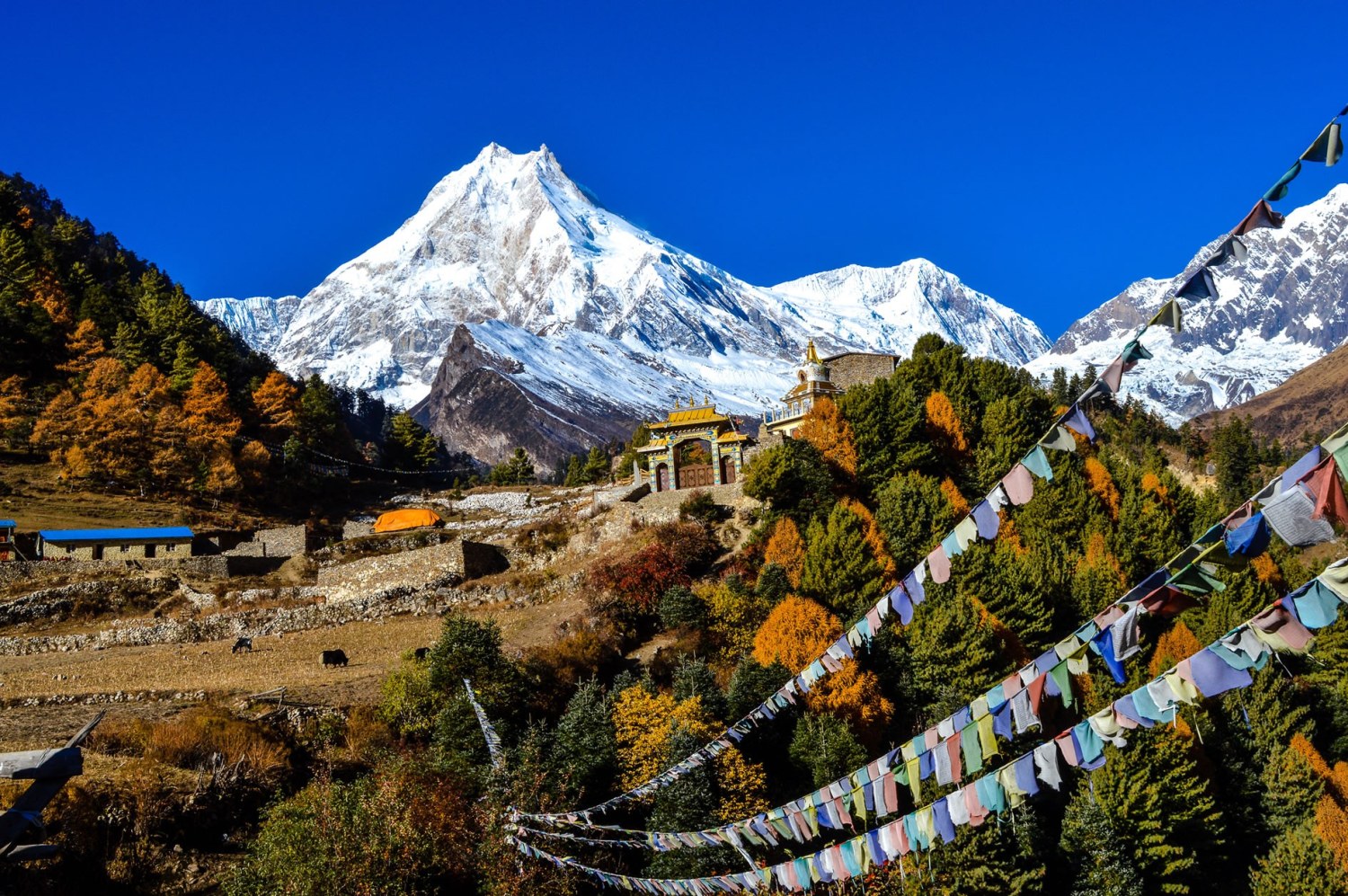
The Manaslu Circuit acclimatization day usually takes place in Samagaon, at around 3,530 metres, after several days of steady ascent through the Budhi Gandaki valley. Trekkers spend a second night here before heading toward Samdo and eventually Larkya La Pass. Rather than being a day of doing nothing, it gives the body time to adjust to the altitude while allowing trekkers to explore the surrounding landscape at an unhurried pace.
For many trekkers, the day begins with a short hike toward Birendra Lake, while others continue farther toward Manaslu Base Camp if they are acclimatizing well. There is also time to explore Samagaon village, rest at the lodge, and prepare for the colder and higher trail ahead. The point is not to cover more distance, but to arrive at the next stage of the trek better prepared for the altitude.
Manaslu Acclimatization Day at a Glance
| Detail | Information |
|---|---|
| Main stop | Samagaon |
| Elevation | ~3,530 m |
| Typical stay | 2 nights |
| Main purpose | Altitude acclimatization |
| Popular hike | Birendra Lake |
| Longer option | Manaslu Base Camp |
| Next stage | Samdo |
How Long Is the Samagaon Acclimatization Day?
Most trekkers spend the morning on a short acclimatization hike and return to Samagaon around midday or early afternoon. The remainder of the day is used for lunch, rest, village exploration and preparation for the higher trail toward Samdo.
What Is the Manaslu Circuit Acclimatization Day?
Every well-built high-altitude itinerary contains at least one day where forward progress on the map is deliberately slowed. On the Manaslu Circuit Trek, that day falls at Samagaon, usually after the trek has already climbed steadily through Machha Khola, Jagat, Deng, Namrung and Lho. Rather than pushing on toward Samdo immediately, trekkers stay a second night in Samagaon.
The word acclimatization suggests stillness, but the day is rarely spent lying in a lodge bed. Most itineraries include a walk to a higher point during the day, then a return to sleep at the same elevation as the night before. This pattern, often summarised by guides as climbing high and sleeping low, gives the body exposure to reduced oxygen without asking it to sleep through the hardest part of that exposure. The Manaslu Circuit Trek acclimatization stop at Samagaon is where this principle is applied most deliberately on the whole route, precisely because the terrain above it rises so quickly toward Samdo, Dharmasala and eventually Larkya La Pass.
Why Is Acclimatization Important on the Manaslu Circuit?
Air at 3,500 metres carries meaningfully less oxygen than air at sea level, and the body does not adjust to that difference instantly. Given time, it responds by producing more red blood cells, breathing more efficiently, and adjusting circulation to cope with the thinner air. Given too little time, it responds with headaches, nausea, disturbed sleep and, in more serious cases, acute mountain sickness.
The Manaslu route is unforgiving in one particular respect: the distance between Samagaon and Larkya La Pass covers well over 1,500 vertical metres, much of it above 4,000 metres where the margin for error narrows considerably. A trekker who rushes through this section without pausing to adapt is taking on a level of risk that has little to do with fitness and everything to do with physiology. Physical fitness helps with the demands of the trail, but it does not determine how quickly someone acclimatizes to altitude, which is part of why altitude features so heavily in any honest assessment of Manaslu Circuit Trek difficulty. A day built around Manaslu Circuit altitude acclimatization exists precisely because cardiovascular fitness and altitude tolerance are two separate things, and only one of them can be trained for in a gym at home.
This is not a section written to alarm anyone away from the trek. The point is simply that the day earns its place in the schedule, and that treating it as optional carries a real cost further up the route.
Where Is the Acclimatization Day on the Manaslu Circuit?
The rest day at Samagaon fits into a longer progression that begins at low elevation and climbs gradually through the Budhi Gandaki valley before turning north toward the Tibetan border region:
Machha Khola → Jagat → Deng → Namrung → Lho → Samagaon → Samdo → Larkya La
Samagaon marks the point where the trek shifts character. Below it, the villages are largely Gurung and the terrain is forested and river-carved. Above it, the landscape opens into high alpine country with strong Tibetan Buddhist influence, and the air grows sharp enough that even a short uphill stretch leaves most trekkers noticeably out of breath. The acclimatization day is one part of the wider Manaslu Circuit Trek itinerary, which gradually takes trekkers from the lower Budhi Gandaki valley toward Larkya La Pass.
| Point | Approx. Elevation |
|---|---|
| Machha Khola | 900–1,000 m |
| Namrung | ~2,630 m |
| Lho | ~3,180 m |
| Samagaon | ~3,530 m |
| Samdo | ~3,875 m |
| Larkya La | ~5,106 m |
Placing the rest day here, rather than earlier at Lho or later at Samdo, reflects a balance. Samagaon is high enough that acclimatization genuinely matters, yet low enough that a full day of activity remains reasonably comfortable. It also happens to be one of the most interesting villages on the route, which makes the day considerably more rewarding than a rest stop chosen for elevation alone.
What to Do on the Samagaon Acclimatization Day
Calling this a rest day undersells it. Most trekkers spend at least half of it moving, and the choice of activity depends on how the body is coping with the altitude so far.
From what we have seen on the Manaslu Circuit, most trekkers find Birendra Lake the more practical acclimatization walk from Samagaon. The longer route toward Manaslu Base Camp suits those who have settled into the altitude comfortably and are ready for a demanding day.
Hike to Birendra Lake
The short walk to Birendra Lake is the most common choice among trekkers on their acclimatization day, and for good reason. The trail climbs gently from Samagaon for roughly forty minutes to an hour, opening onto a turquoise glacial lake fed directly by meltwater from Manaslu's northern flank. The colour of the water shifts with the light, and on a clear morning the mountain itself rises directly behind it, close enough that the scale becomes genuinely difficult to process.
The round trip rarely takes more than two to three hours at a relaxed pace, which leaves plenty of the day free. For trekkers who are feeling well and acclimatizing normally, it is one of the gentler ways to gain some additional altitude exposure without turning the day into a strenuous outing.
Hike Toward Manaslu Base Camp
For trekkers who are acclimatizing well and want a more demanding option, the walk toward Manaslu Base Camp offers a longer and steeper alternative. This route climbs well above Samagaon, often passing Birendra Lake on the way, and continues up moraine and rougher trail toward the base camp itself.
This is not a casual half-day outing. Depending on trail conditions and pace, it can take the better part of a full day, and the elevation gain is substantial enough that it should only be attempted by trekkers who feel strong and are showing no symptoms of altitude discomfort. Weather at this elevation can change quickly, so guides typically make the final call on whether conditions and group fitness support this option on a given day.
Explore Samagaon Village
Not every acclimatization activity needs to involve climbing higher. Samagaon itself rewards slow exploration. The village is built from solid stone houses roofed in a style distinct from the lower valley, and its monasteries, prayer wheels and chortens reflect a Tibetan Buddhist heritage that has shaped daily life here for generations. Yaks graze on the terraced slopes above the village, and the pace of life, unhurried and largely unchanged by the trekking season passing through it, offers a different kind of acclimatization altogether. Wandering through the narrow lanes, watching villagers go about milling barley or tending livestock, gives the day texture beyond the physical benefit of the climb.
Rest and Prepare for the Higher Trail
Not every trekker needs, or should attempt, a long uphill walk. For some, the wiser use of the day is genuine rest: eating well, drinking plenty of water, sleeping when the body asks for it, and simply allowing the previous days of walking to settle. This is particularly true for anyone already showing mild symptoms of altitude discomfort, where a further climb would work against the point of the day rather than support it.
Preparing gear for the stretch ahead also belongs here. The trail from Samagaon toward Samdo, Dharmasala and Larkya La climbs into consistently colder and more exposed terrain, and this is the last comfortable point to sort layers, check boots, and repack before the trek's most demanding section begins.
What Is the Best Acclimatization Hike from Samagaon?
There is no single correct answer, since the right choice depends on fitness, how the body has responded to altitude so far, and how the group's itinerary and weather line up on the day.
| Hike | Difficulty | Approx. time | Suitable for |
|---|---|---|---|
| Samagaon village walk | Easy | 1–2 hrs | Everyone |
| Birendra Lake | Moderate | 2–4 hrs | Most trekkers |
| Manaslu Base Camp | More demanding | Full/long day | Well-acclimatized trekkers |
Birendra Lake tends to be the most popular middle ground, offering a genuine sense of achievement and extraordinary scenery without demanding a level of fitness or acclimatization that not every trekker has reached by this point in the trip.
How High Is Samagaon?
Samagaon sits at roughly 3,500 metres above sea level, a height at which the effects of reduced oxygen become noticeable to almost everyone, regardless of fitness level built up at lower altitude. Above this point, the trek climbs toward Samdo at nearly 3,900 metres and then toward Dharmasala, the final camp before Larkya La, which itself crosses above 5,100 metres.
This is why Samagaon altitude matters so much to the structure of the itinerary. Samagaon is an important point to pause before the trail climbs into considerably higher terrain, where altitude becomes an increasingly important consideration.
Can You Skip the Acclimatization Day on the Manaslu Circuit?
It is technically possible to build a shorter Manaslu itinerary that omits a dedicated rest day at Samagaon, and some rushed schedules do exactly that. It is rarely advisable. The days immediately following Samagaon climb steeply toward Larkya La, and skipping the acclimatization stop removes one of the few built-in opportunities for the body to adjust before facing that climb.
Trekkers who are naturally quick to acclimatize, who have spent recent time at altitude elsewhere, or who are on a tightly constrained schedule sometimes ask about compressing the itinerary. A guide with direct experience on this route is the right person to make that judgement, since it depends heavily on how an individual trekker's body responds day to day rather than on any fixed rule. Reputable itineraries, including the ones followed by most established operators, retain the rest day precisely because the risk of removing it outweighs the modest time saved.
What Happens After the Acclimatization Day?
Once the rest day at Samagaon is complete, the trail continues toward progressively higher and more exposed terrain: Samagaon → Samdo → Dharmasala → Larkya La Pass → Bimthang. Samdo, at close to 3,875 metres, is the last proper village before the high pass, and it functions almost as a second, smaller staging point for the days ahead. From there, the trek climbs to Dharmasala, a basic and often cold camp used solely as a launching point for the pass crossing, before the long and demanding day over Larkya La itself.
This is the section where the value of the Samagaon rest day tends to become most apparent. Individual responses to altitude vary, but trekkers who have acclimatized reasonably well generally find the days after Samdo demanding yet manageable, while those who skipped or rushed the process more often struggle with the same stretch.
How to Stay Safe During Manaslu Acclimatization
A handful of straightforward habits make a meaningful difference to how well the body copes with altitude on this stretch of the trek.
- Walk at a deliberately slow, steady pace rather than rushing between points
- Avoid overexertion, particularly on the Manaslu Base Camp hike
- Drink water consistently throughout the day, more than usual thirst alone would suggest
- Eat properly, since appetite often drops at altitude even when the body needs the calories
- Sleep as much as the body asks for, without treating rest as wasted time
- Tell your guide immediately about any headache, nausea, dizziness or unusual fatigue
- Never continue upward while experiencing symptoms that are worsening rather than settling
- Learn to recognise the basic signs of altitude sickness before the trek begins, not after symptoms appear
None of these require special equipment or training. They require honesty with yourself and with your guide, which is often the harder part.
Manaslu Circuit Acclimatization Day: Suggested Schedule
A typical day at Samagaon might look something like this, though guides adjust the plan based on group fitness and weather.
| Time | Activity |
|---|---|
| 6:30 AM | Breakfast |
| 7:30 AM | Begin acclimatization hike |
| Morning | Walk toward Birendra Lake or a higher viewpoint |
| Midday | Return toward Samagaon |
| Afternoon | Lunch and rest |
| Late afternoon | Explore the village or relax at the lodge |
| Evening | Dinner and preparation for the next day's trek |
The shape of the day matters more than the exact timing: activity in the morning, rest in the afternoon, and an early night before the trail begins climbing again the following day.
Manaslu Acclimatization Day FAQs
Where is the acclimatization day on the Manaslu Circuit?
The main acclimatization day falls at Samagaon, roughly 3,530 metres, before the trail continues toward Samdo and Larkya La Pass.
What is the altitude of Samagaon?
Samagaon sits at approximately 3,500 metres above sea level.
What do you do on the Manaslu acclimatization day?
Most trekkers hike to Birendra Lake or toward Manaslu Base Camp, explore the village, or rest, depending on how they are feeling.
Can I hike to Manaslu Base Camp during acclimatization?
Yes, if you are acclimatizing well and your guide confirms the weather and trail conditions support it. It is a longer and more demanding option than the walk to Birendra Lake.
Is Birendra Lake worth visiting?
Most trekkers consider it one of the highlights of the Samagaon stop, with striking turquoise water set directly beneath Manaslu.
Can I skip the acclimatization day?
It is possible on paper, but it is not recommended given how steeply the trail climbs immediately afterward toward Larkya La.
How many acclimatization days are needed on the Manaslu Circuit?
Most itineraries include one dedicated acclimatization day, at Samagaon, though this can vary depending on the pace of the itinerary and individual response to altitude.
What should I do if I feel symptoms of altitude sickness?
Tell your guide immediately, stop ascending, rest, hydrate, and follow their guidance. Symptoms that worsen rather than improve should never be ignored.
Why Trek the Manaslu Circuit With Nepal Himalayas Trekking?
The Manaslu Circuit requires thoughtful planning, particularly once the trail climbs above Samagaon toward Samdo and Larkya La. Nepal Himalayas Trekking helps trekkers arrange the practical details of the journey, including the itinerary, permits, accommodation, transportation and trekking support.
Our local team can also help you choose an itinerary with appropriate time for acclimatization and prepare for the higher sections of the trail. Whether you prefer a private trek or a group departure, we can help plan the route around your preferred dates, pace and trekking requirements.
Ready to Trek the Manaslu Circuit?
Ready to experience the Manaslu Circuit? Contact Nepal Himalayas Trekking to discuss your preferred dates, itinerary and trekking requirements. Our team can help you plan the journey from the starting point through Samagaon, Larkya La and the remainder of the circuit.
[Plan Your Manaslu Circuit Trek]
Planning the Rest of Your Manaslu Circuit Trek
The acclimatization day at Samagaon is one part of the wider Manaslu Circuit Trek itinerary. Our main trek guide covers the complete route, including the walking stages, altitude changes, difficulty, permits and the best seasons for travelling.
Trekkers with extra time can continue over Larkya La Pass, the high point of the circuit, or extend the journey into the Tsum Valley. Get in touch with our team if you would like help shaping an itinerary around either option.
What Can You Do After the Manaslu Circuit Trek?
Finishing the Manaslu Circuit does not have to mark the end of your time in Nepal. If you have additional days, there are several ways to continue your journey depending on how much trekking and sightseeing you want to do.
If you are still looking for another major Himalayan trek, the Everest Base Camp Trek offers a chance to experience the Khumbu region and stand beneath the world's highest mountain. You can also choose the Annapurna Circuit Trek for another long-distance Himalayan journey, or the Annapurna Base Camp Trek if you prefer a shorter route into the Annapurna sanctuary.
For a slower few days after the trek, Pokhara is an excellent place to rest and enjoy the lakeside atmosphere. You can also try paragliding before travelling onward to Chitwan National Park, where jungle safaris offer a completely different experience of Nepal.








Add Your Comment