

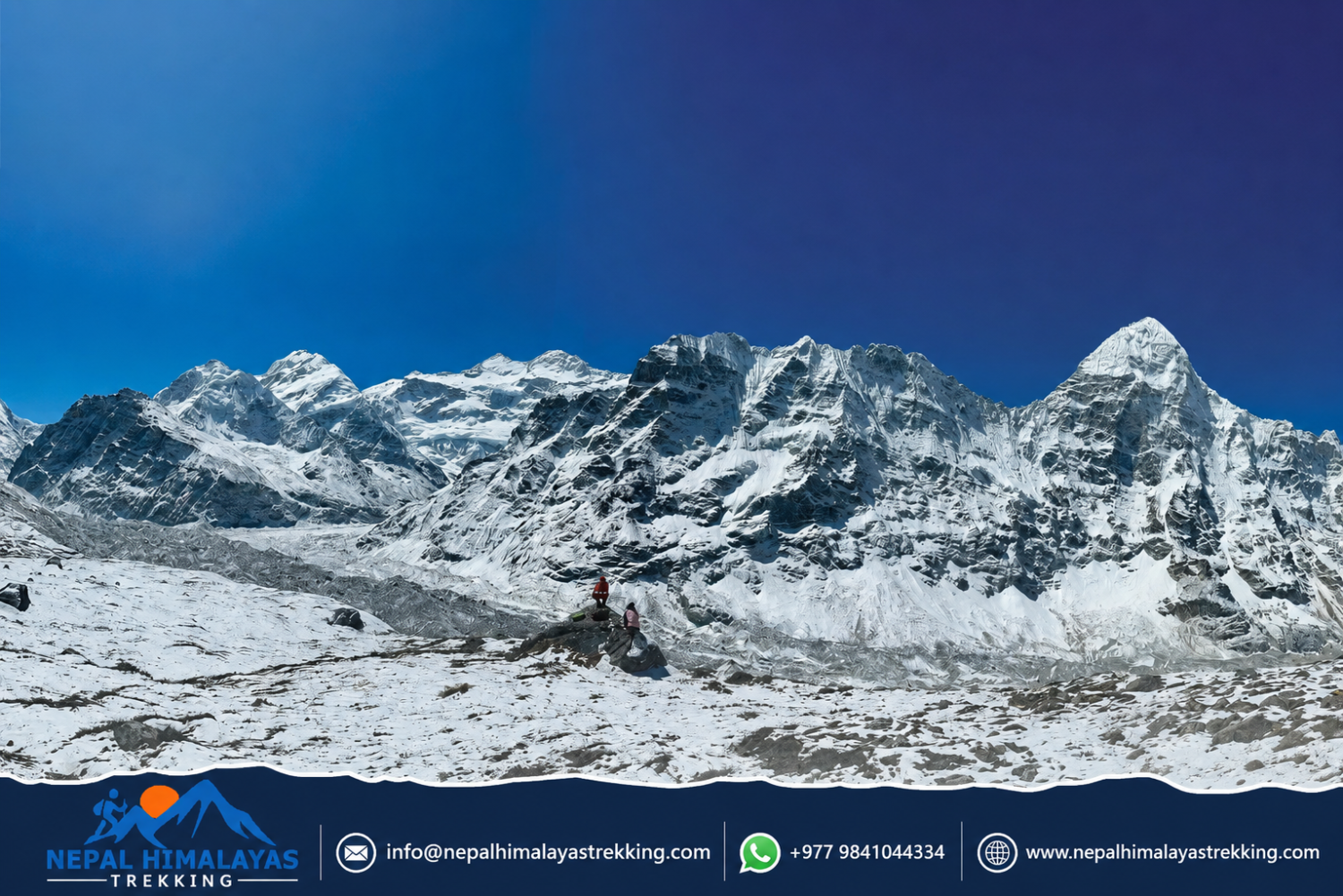
Nepal Himalayas Trekking: Organizing the Best Off the Beaten Path Treks in Nepal (2026/2027)
Everest Base Camp and the Annapurna Circuit have earned their fame for good reason. Yet a growing number of travellers now arrive in Kathmandu asking a different question: where can they find genuine off-the-beaten-path treks in Nepal, routes where the trail is considerably quieter than the country's major trekking corridors? The answer lies scattered across Nepal's less-travelled valleys, in regions where Tibetan Buddhist culture, high mountain passes, and villages untouched by mass tourism still shape the rhythm of daily life.
This guide covers five such destinations: Manaslu, Tsum Valley, Nar Phu, Kanchenjunga, and Dolpo. Each offers something distinct, and none of them can be reduced to a single description. Manaslu rewards those who want a classic Himalayan circuit without the crowds. Tsum Valley draws travellers toward monasteries and a quiet spiritual life. Nar Phu carries you into stone villages that feel suspended somewhere between centuries. Kanchenjunga demands stamina and rewards it with weeks of genuine wilderness. Dolpo, further west, remains one of the most remote inhabited landscapes on earth. Together they differ considerably in difficulty, duration, infrastructure, and the kind of culture a trekker encounters along the trail.
The guide combines route knowledge and permit experience from Nepal Himalayas Trekking, a government-licensed trekking operator based in Thamel, Kathmandu, with practical information for planning these restricted-area treks.
What Are Off-the-Beaten-Path Treks in Nepal?
Before ranking these five routes, it helps to define what separates them from the country's more established trails. A trek earns the label "off the beaten path" not because it lacks beauty (Everest and Annapurna have plenty of that) but because of what surrounds the walking itself.
These routes tend to share a few qualities. Trekker numbers stay low throughout the season. Villages remain more isolated, with fewer guesthouses and less predictable supply chains. Local and Tibetan-influenced traditions continue largely as they have for generations, without having reshaped themselves around tourism. Long stretches of trail pass through terrain far from any major town, and the logistics behind reaching them, permits, staffing, and transport- ask more of both traveller and operator.
None of this means these treks are inaccessible or unsafe. It means a visitor should expect a different pace of life along the trail, one where the mountains feel less like a well-worn stage and more like a place still going about its own business.
5 Best Off-the-Beaten-Path Treks in Nepal
Ranking these treks by which is "best" misses the point somewhat, since each suits a different kind of traveller. What follows instead separates them by the experience each one offers.
1. Manaslu Circuit Trek
Manaslu Circuit Trek stands as the strongest all-round choice for anyone who wants the structure of a classic Himalayan circuit without the volume of foot traffic found on Annapurna. The trail circles the eighth-highest mountain on earth, crossing the dramatic Larkya La Pass at over 5,100 metres before descending into landscapes that shift, sometimes within a single day, from subtropical forest to high alpine desert.
The Manaslu Conservation Area protects much of the route, and the villages within it, particularly toward Samagaon and Samdo, carry a strongly Tibetan Buddhist character. Prayer flags, chortens, and monasteries punctuate the trail rather than decorate it as an afterthought. Teahouse trekking is well established here, so travellers get comfortable lodging without sacrificing the sense of remoteness.
The trek generally runs twelve to fourteen days and sits at a challenging difficulty level, largely because of the altitude gained before and during the Larkya La crossing. Spring and autumn remain the most reliable seasons. Because Manaslu falls within a restricted area, trekkers need both a special permit and a licensed guide, a requirement worth building into any planning timeline well in advance.
2. Tsum Valley Trek
Tsum Valley Trek belongs to a different category of experience entirely. Where Manaslu offers scenery and physical achievement in roughly equal measure, Tsum leans toward culture and quiet. Sometimes called the "hidden valley," it sits tucked against the Ganesh Himal range and was closed to outside visitors until relatively recently.
Traditional villages here have preserved a Tibetan Buddhist way of life with unusual consistency. Monasteries such as Mu Gompa and Rachen Gompa anchor the upper valley, and the pace of the trail invites a slower kind of attention than most Himalayan routes demand. Visitor numbers remain modest even by the standards of these five destinations, which gives the valley an atmosphere closer to pilgrimage than expedition.
Difficulty falls somewhere between moderate and challenging, and the trek typically runs fourteen to eighteen days, often combined with the lower portion of the Manaslu Circuit. Spring and autumn again offer the most dependable weather. As with Manaslu, Tsum Valley requires a restricted-area permit.
3. Nar Phu Valley Trek
Nar Phu Valley Trek occupies some of the most dramatic terrain on this list. The twin villages of Nar and Phu sit in a narrow valley walled in by cliffs, and their isolation has kept a distinct Tibetan-influenced culture largely intact. Stone houses stack against the hillside, and the silence of the upper valley makes it easy to forget how close the Annapurna region lies just beyond the Kang La Pass.
It is worth saying plainly that remote does not mean untouched. Nar Phu has seen visitors for years, and infrastructure has slowly improved. What sets it apart is simply how much quieter and less developed it remains compared with Nepal's major trekking corridors. Limited teahouses, a restricted-area designation, and a landscape that still feels genuinely wild all contribute to that sense.
Most itineraries run nine to twelve days, often extended by joining the Annapurna Circuit before or after. The trek sits at a challenging difficulty level, largely due to the high pass and the exposed terrain around it, and spring and autumn remain the seasons of choice.
4. Kanchenjunga Trek
Kanchenjunga Trek asks more of a trekker than any of the other routes here, and it answers that demand with weeks of uninterrupted wilderness. Tucked into the far eastern corner of Nepal beneath the world's third-highest mountain, the trek reaches both the North and South Base Camps, threading through settlements so remote that some sections still rely on camping rather than teahouses.
This is not a trek to underestimate. Long trekking days, high-altitude terrain, and restricted-area requirements make it one of the more demanding options on this list, better suited to trekkers who already have some high-altitude experience behind them. In exchange, it offers something increasingly hard to find in Nepal: multiple weeks where the trail, the mountains, and the handful of villages along the way feel entirely your own.
Expect an eighteen- to twenty-four-day itinerary, with spring and autumn again the preferred seasons. Kanchenjunga requires both a restricted-area permit and a conservation-area permit.
5. Dolpo Trek
Dolpo Trek sits at the far end of the remoteness scale, and deliberately so. Tucked into northwestern Nepal, much of the region lies within the rain shadow of the Himalaya, where Tibetan Buddhist culture and traditional mountain life have remained remarkably well preserved. Shey Phoksundo, one of the deepest lakes in Nepal, stands out for its striking turquoise water surrounded by steep cliffs and rugged Himalayan terrain.
Dolpo is not a single trekking experience. The region includes several distinct routes, each offering a different level of remoteness and difficulty. The Lower Dolpo Trek is one of the most accessible ways to explore the region, combining Shey Phoksundo Lake, high mountain passes, remote villages, and traditional Tibetan Buddhist culture. The Upper Dolpo Trek ventures farther into the remote northern valleys, where ancient villages, monasteries, high passes, and centuries-old trans-Himalayan traditions define the journey.
For trekkers looking for an even more unconventional Himalayan adventure, the Mugu to Mustang Trek crosses some of the least-travelled landscapes of western and northwestern Nepal, linking remote mountain regions through high passes and isolated settlements. The Shey Phoksundo Trek, meanwhile, provides a shorter alternative for travellers primarily interested in the spectacular lake and the surrounding Dolpo landscape without committing to a much longer traverse of the region.
Infrastructure remains genuinely limited across much of Dolpo, so camping plays a larger role than on the other four treks in this guide. Costs can also be higher because of permits, staffing, domestic flights, camping equipment, and the logistics involved in reaching such remote areas. For travellers whose main reason for coming to Nepal is to experience genuine distance from the modern world, Lower Dolpo, Upper Dolpo, Mugu to Mustang, and Shey Phoksundo each offer a different way into one of the country's most remote Himalayan regions.
Itineraries vary considerably depending on the route. Lower Dolpo and Shey Phoksundo can be completed in shorter itineraries, while Upper Dolpo and Mugu to Mustang generally require substantially more time and preparation. Spring and autumn are suitable for most routes, while certain areas within the Himalayan rain shadow can offer a longer trekking window. Restricted-area permits apply to several Dolpo routes, with specific requirements depending on the itinerary chosen.
Comparing the Five Treks at a Glance
| Trek | Best For | Difficulty | Remoteness | Typical Duration |
|---|---|---|---|---|
| Manaslu | High-pass adventure and culture | Challenging | High | 12 to 14 days |
| Tsum Valley | Culture and monasteries | Moderate to challenging | High | 14 to 18 days |
| Nar Phu | Remote villages and Tibetan culture | Challenging | Very high | 9 to 12 days |
| Kanchenjunga | Wilderness and serious trekking | Challenging | Very high | 18 to 24 days |
| Dolpo | Remote wilderness and Tibetan culture | Very challenging | Exceptional | 18 to 27+ days |
At a Glance: Which Trek Is Most Remote?
- Most accessible: Manaslu
- Best for culture: Tsum Valley
- Best short remote trek: Nar Phu
- Best for wilderness: Kanchenjunga
- Most remote: Dolpo
Which Remote Trek in Nepal Is Best for You?
Best overall: Manaslu. For trekkers who want mountain scenery, cultural depth, a genuine high pass, and reasonably established teahouse infrastructure all in one route, Manaslu balances these demands better than any of the others.
Best for culture: Tsum Valley. Travellers drawn to monasteries, village life, and Tibetan Buddhist tradition will find Tsum offers more of that per day of walking than anywhere else on this list.
Best for remote villages: Nar Phu. Anyone wanting to go further into the Himalayan landscape, quite literally into stone villages that feel cut off from the modern calendar, should look toward Nar Phu.
Best for wilderness: Kanchenjunga. Experienced trekkers seeking a longer, more isolated adventure, with weeks of trail that see almost no other foreign visitors, will find that here.
Best for extreme remoteness: Dolpo. Travellers prepared for demanding logistics, long trekking days, and limited infrastructure, in exchange for arguably the most remote inhabited landscape in Nepal, should choose Dolpo.
Which Off-the-Beaten-Path Trek in Nepal Should You Choose?
"Off the beaten path" carries a different weight depending on which of these five routes a trekker chooses, so it helps to lay out what remoteness actually means on the ground. Consider a rough scale:
- Manaslu: High
- Tsum Valley: High
- Nar Phu: Very high
- Kanchenjunga: Very high
- Dolpo: Exceptional
That scale reflects several practical factors: how much accommodation exists along the trail, whether roads reach anywhere near the route, how reliable mobile connectivity remains, how far the nearest medical facility sits, how many other trekkers you're likely to encounter, and what permit and guide requirements apply. The further a route sits on this scale, the more planning, budget, and physical preparation it tends to demand.
Best Time for Remote Treks in Nepal
| Destination | Best Season |
|---|---|
| Manaslu | Spring and autumn |
| Tsum Valley | Spring and autumn |
| Nar Phu | Spring and autumn |
| Kanchenjunga | Spring and autumn |
| Dolpo | Generally spring and autumn, though some routes suit the rain-shadow season particularly well |
Spring (roughly March through May) and autumn (September through November) offer the clearest skies and most stable weather across all five regions, which is why nearly every operator in Nepal points trekkers toward these windows. Dolpo is the exception worth noting, since parts of the region lie in Tibet's rain shadow and can be trekked slightly outside the usual calendar with reasonable conditions.
Permits and Guide Requirements
All five of these treks pass through areas that Nepal's government classifies as restricted, which means the usual TIMS card and national park permit are not enough on their own. Regulations shift periodically, so anyone planning one of these routes should confirm current requirements and fees before booking rather than relying on older published figures.
Why the Permit Matters
A restricted-area permit is not simply a formality collected at a checkpoint. Nepal's government uses the restricted-area system to control how many trekkers pass through its most sensitive border regions each year, many of which sit close to the Tibetan frontier and hold strategic as well as ecological significance. The fee itself also funds conservation work, trail maintenance, and community development in these regions, so the money paid at the permit desk has a direct bearing on the villages a trekker later walks through.
Beyond the administrative reasoning, the permit carries a practical weight for the trekker. Without it, a checkpoint official along the trail can turn a party back regardless of how far they have already walked, and no travel insurance policy will cover an evacuation from a restricted area entered without the correct paperwork. Every one of these permits is also tied to a licensed guide arranged through a registered agency, which rules out fully independent, guideless trekking on any of these five routes regardless of group size. Booking through a registered agency well ahead of departure is less a bureaucratic step than the mechanism that makes the rest of the trip possible.
Where to Get the Permits
Restricted-area permits are issued by Nepal's Department of Immigration, but a trekker cannot apply for one directly. As of a March 2026 policy update, the process works as follows: trekkers must still go through a TAAN-registered trekking agency (a company registered with the Trekking Agencies' Association of Nepal), which submits the application along with passport and visa details on the trekker's behalf. One change worth noting for 2026/27 planning: the old rule requiring a minimum of two foreign trekkers per permit has been dropped, so solo travellers can now obtain a restricted-area permit individually. A licensed guide remains mandatory regardless of group size, and current rules cap each guide at seven trekkers. The Department of Immigration also now accepts applications before arrival in Nepal, using the trekker's approved visa number, and agencies report turnaround of roughly one to three working days once documents are submitted, considerably faster than the old in-person, Kathmandu-only process.
Conservation-area permits, such as those for the Manaslu Conservation Area, the Annapurna Conservation Area, or the Kanchenjunga Conservation Area, are issued separately, typically through the Nepal Tourism Board office in Kathmandu or the National Trust for Nature Conservation (NTNC), and are again usually handled by the trekking agency alongside the restricted-area permit rather than something a trekker arranges independently.
Because these rules have shifted meaningfully within the past year, and Nepal's government has a track record of adjusting restricted-area policy without much advance notice, anyone planning one of these five treks should confirm the current process and fees directly with a registered agency before booking rather than relying on older published guides.
In practice, this means the permit process happens well before you land in Kathmandu. Nepal Himalayas Trekking arranges all restricted-area and conservation-area permits directly for trekkers booking any of these five routes, collecting the required documents in advance and handling the Department of Immigration paperwork so nothing is left to sort out once you arrive.
- Manaslu requires a restricted-area permit alongside the Manaslu Conservation Area entry fee.
- Tsum Valley requires its own restricted-area permit, often issued alongside the Manaslu permit since the two treks frequently combine.
- Nar Phu requires a restricted-area permit in addition to the standard Annapurna Conservation Area fee.
- Kanchenjunga requires both a restricted-area permit and a conservation-area permit.
- Dolpo requires a restricted-area permit, with the specific cost and conditions depending on which route within the region a trekker follows.
A licensed guide is mandatory for all restricted areas, which also means solo, unguided trekking is not an option on any of these five routes.
How Much Do Remote Treks in Nepal Cost?
Budgeting for these treks looks quite different from budgeting for Everest or Annapurna, mainly because permit fees and guide requirements add costs that don't apply on the more established trails. As a general pattern, Dolpo and Kanchenjunga sit at the higher end of the price range, largely because of their length, remoteness, and heavier reliance on camping logistics. Manaslu and Tsum Valley tend to be more accessible financially, particularly on shorter or more streamlined itineraries.
Costs across all five destinations are shaped by a similar set of factors: permit fees, guide wages, porter costs, accommodation (teahouse or camping, depending on the route), food, ground transportation, any domestic flights involved, and the added logistics that restricted areas require. Travellers comparing quotes between operators should ask specifically what each of these categories includes, since the gap between a bare-bones itinerary and a properly supported one often comes down to exactly these line items.
Off-the-Beaten-Path Treks vs Everest and Annapurna
Everest Base Camp trek offers famous mountain views and infrastructure built up over decades of tourism. The Annapurna Circuit offers similarly diverse landscapes with relatively easy access. Both remain excellent treks, but both also mean sharing the trail with a great many other people, particularly during peak season.
Manaslu offers a quieter circuit with a stronger Tibetan cultural presence than Annapurna typically provides. Tsum Valley offers something closer to a spiritual retreat than a mountain trek in the conventional sense. Nar Phu delivers remote stone villages and high Himalayan terrain within a fraction of the time commitment some of these other treks demand. Kanchenjunga stretches into a genuine wilderness expedition, weeks long, through country that sees only a trickle of foreign visitors each year. Dolpo, further still, offers a degree of remoteness and cultural distinctiveness that few places in Nepal, or arguably anywhere in the Himalaya, can match.
Other Remote and Alternative Treks in Nepal
Manaslu, Tsum Valley, Nar Phu, Kanchenjunga, and Dolpo are strong starting points, but they are not the only routes worth considering, and not every traveller is ready to commit to a fully restricted, high-remoteness itinerary on a first visit to Nepal. For trekkers who want to pair a taste of the wild with a more established trail, or who are simply narrowing down their first Himalayan trip, worthwhile alternatives include:
- The Everest Base Camp Trek, still the benchmark Himalayan trek for most first-time visitors and the natural comparison point for anyone weighing crowds against remoteness; those short on time often look at the best short Everest Base Camp trek itinerary or an Everest Base Camp trek with helicopter return to shave days off the standard schedule.
- The Annapurna Circuit Trek, which pairs diverse landscapes, from subtropical valleys to the high desert beyond Thorong La Pass, with considerably easier logistics than any of the five treks above, and remains a popular choice for anyone searching for the best Annapurna trek for beginners.
- The Annapurna Base Camp Trek, a shorter, non-restricted alternative for travellers who want Himalayan scenery without the permit requirements of Manaslu or Nar Phu, and a common answer to the search for a short trek in the Annapurna region.
- The Manaslu Tsum Valley Trek, a combined route that links the Manaslu Circuit with the Tsum Valley side trip for travellers who want both landscapes in a single itinerary.
- The Shey Phoksundo Trek, focused on Nepal's deepest lake and the surrounding Dolpo wilderness, for those who want the scenery without committing to a full Upper Dolpo crossing.
- The Makalu Base Camp Trek, through the Makalu Barun National Park in eastern Nepal, a region nearly as remote as Kanchenjunga and rich in biodiversity, including red panda and snow leopard habitat.
- The Ganesh Himal Trek, a lesser-known route near Tsum Valley that suits trekkers wanting a shorter, quieter alternative with a similar cultural backdrop.
- The Upper Mustang Trek, into the former Kingdom of Lo, offering a different flavour of Tibetan Buddhist culture and dramatic high-desert scenery north of the Annapurna region.
Each of these can be arranged as a standalone trip or combined with one of the five treks covered above, and Nepal Himalayas Trekking can advise on which pairing makes sense given your available time and fitness level.
Frequently Asked Questions
What is the best off-the-beaten-path trek in Nepal?
Manaslu offers the strongest overall balance of scenery, culture, and manageable logistics, which makes it the most commonly recommended starting point among these five treks.
Which is the most remote trek in Nepal?
Dolpo generally holds that distinction, owing to its distance from major towns, limited infrastructure, and the extended permit and camping logistics the region requires.
Is Manaslu less crowded than Everest Base Camp?
Yes. Manaslu sees considerably fewer trekkers each season than Everest Base Camp, largely because of its restricted-area status and the guide requirement that comes with it.
Is Tsum Valley difficult?
Tsum sits at a moderate to challenging level. The walking itself is manageable for most trekkers with reasonable fitness, though altitude and multiple trekking days still require proper preparation.
Do I need a guide for Nar Phu Valley?
Yes. Nar Phu falls within a restricted area, so a licensed guide is mandatory for every trekker on the route.
Is Kanchenjunga suitable for beginners?
Not typically. The trek's length, altitude, and remote terrain make it better suited to trekkers who already have some high-altitude trekking experience.
Why is Dolpo considered one of Nepal's most remote trekking regions?
Its distance from road access, limited infrastructure, heavy reliance on camping, and largely undisturbed Tibetan Buddhist culture all combine to place Dolpo at the far end of Nepal's remoteness spectrum.
What is the best season for remote trekking in Nepal?
Spring and autumn suit nearly all five treks, with Dolpo offering some additional flexibility due to its position in the Himalayan rain shadow.
Which Remote Trek Should You Choose
The choice, in the end, comes down to what a traveller actually wants from three or so weeks in the Himalaya.
- Choose Manaslu if you want the best balance of adventure, culture, and infrastructure, all within a manageable window of time.
- Choose Tsum Valley if culture and a slower, more spiritual pace matter more to you than covering serious distance.
- Choose Nar Phu if remote stone villages and dramatic high-altitude scenery draw you more than length of trip.
- Choose Kanchenjunga if you're ready for a longer wilderness expedition and want weeks of trail with almost no other foreign trekkers on it.
- Choose Dolpo if genuine, uncompromising remoteness is the whole point of the journey for you.
Each of these five treks rewards a slightly different kind of traveller, and none of them asks to be compared directly against Everest or Annapurna. They exist, instead, as an answer to a question more and more people are asking of Nepal: not simply where the mountains are highest, but where the walking still feels like discovery rather than a well-trodden itinerary. Manaslu, Tsum Valley, Nar Phu, Kanchenjunga, and Dolpo each answer that question in their own way, and the right one for you depends less on which trail is objectively best and more on what kind of remoteness, culture, and physical challenge you're prepared to meet along the way.
Ready to Book Your Trek
Restricted-area treks like these leave little room for error. A missed permit, an unlicensed guide, or a poorly planned acclimatization schedule can end a trip before it properly begins, which is why working with an established local operator matters more here than it might on Nepal's busier trails. Nepal Himalayas Trekking is a government-licensed operator based in Thamel, Kathmandu, with government-certified guides, transparent package inclusions, and permits handled directly on the trekker's behalf.
Restricted-area permits take time to arrange, and the guide-to-trekker ratio on these routes means planning ahead genuinely matters, particularly if you're aiming for the spring or autumn window most of these treks share. The team can put together a private, fully customised itinerary for any of the five routes above, or help you combine one with an alternative like Shey Phoksundo, Makalu Base Camp, or Upper Mustang.
Reach the team directly at info@nepalhimalayastrekking.com or via WhatsApp at +977 984-1044334 to discuss dates, group size, and permit timelines, or to request a tailored quote for the trek that fits you best. The office sits in Thamel, Kathmandu, at Amrit Marg, for anyone who prefers to plan in person before heading into the mountains.







Add Your Comment