

Is November a good time to trek to Everest Base Camp?
Yes. November is one of the most rewarding months for the Everest Base Camp Trek in Nepal, particularly for travelers who value clear Himalayan views, generally dry trails and a quieter trekking atmosphere than the busiest weeks of October. The main challenges are freezing nights, cold mornings above 4,000 meters and the possibility of snow, ice or weather-related flight delays.
For most first-time Himalayan trekkers, early to mid-November offers the most comfortable balance between mountain visibility and cold-weather conditions.
Organized by Nepal Himalayas Trekking, a Nepal-based trekking company in Kathmandu, the journey follows the traditional Everest trail through Lukla, Phakding, Namche Bazaar, Tengboche, Dingboche, Lobuche and Gorak Shep before reaching Everest Base Camp at 5,364 meters.
Everest Base Camp Trek in November: Trip facts
Trip information | Details |
|---|---|
Destination | Everest Base Camp, Khumbu, Nepal |
Maximum elevation | Kala Patthar, approximately 5,545 m |
Everest Base Camp elevation | 5,364 m |
Standard duration | 14 days |
Best November period | Early to mid-November |
Trekking difficulty | Moderate to strenuous |
Accommodation | Local mountain teahouses |
Trekking style | Guided private or group trek |
Trekking season | Late autumn |
Starting point | Kathmandu, via Lukla |
Permits | Sagarmatha National Park and Khumbu local entry permits |
Recommended preparation | Endurance training, cold-weather gear and acclimatization |
Organizer | Nepal Himalayas Trekking Pvt. Ltd. |
Why choose the Everest Base Camp Trek in November?
November is the final full month of Nepal's traditional autumn trekking season. As the monsoon moisture retreats, many mornings bring excellent mountain visibility across the Khumbu region.
1. Excellent opportunities for mountain photography
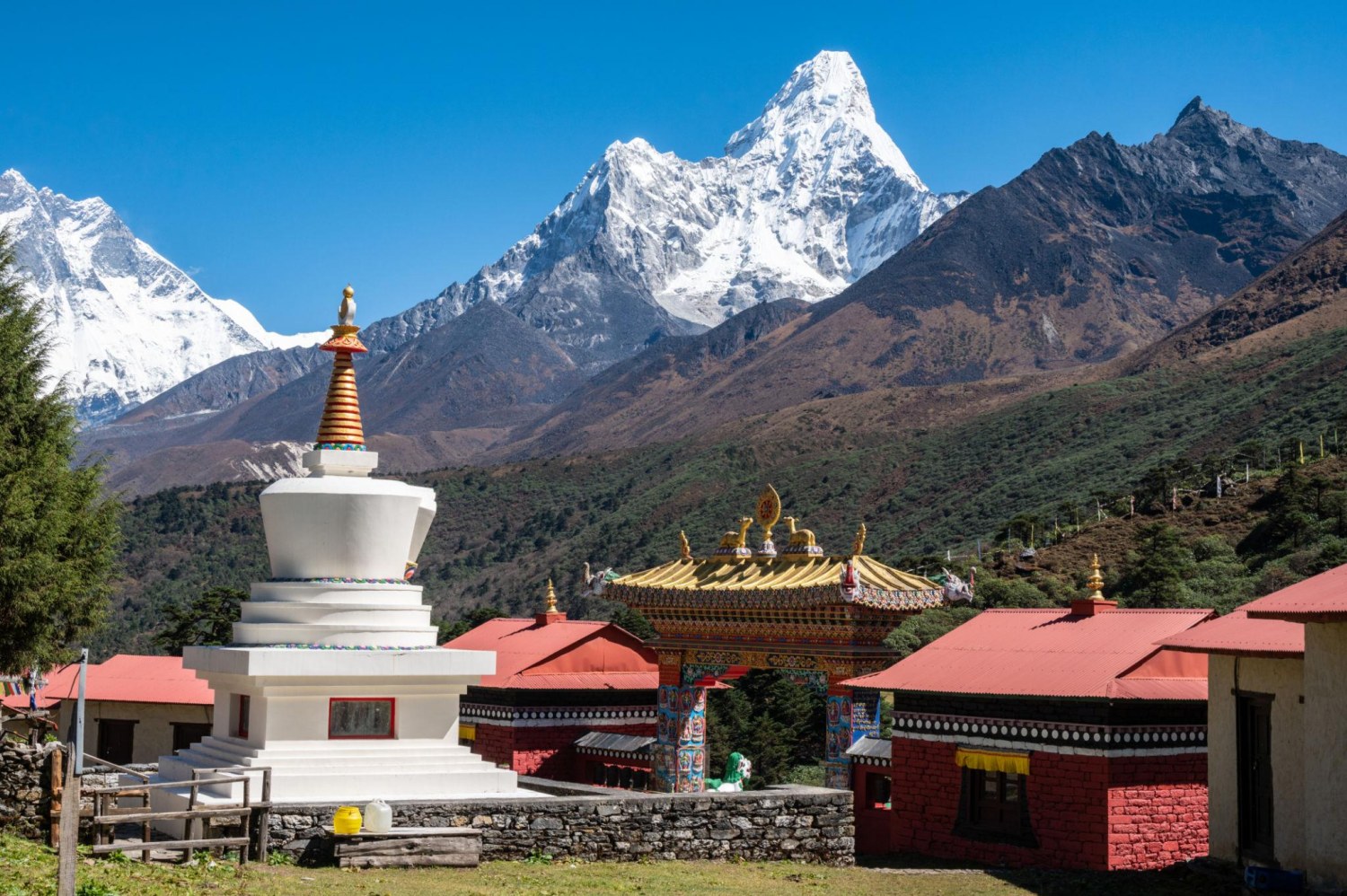
On clear days, trekkers can enjoy remarkable views of Mount Everest (8,848.86 m), Lhotse (8,516 m), Nuptse (7,861 m), Ama Dablam (6,812 m), Thamserku and other Himalayan peaks.
Kala Patthar is particularly popular because it offers a more direct view of Everest's summit than the glacier-side viewpoint at Everest Base Camp itself.
2. Generally drier trekking trails
November often brings lower rainfall than the monsoon season. The lower trails are usually less muddy, although shaded sections and upper-altitude routes may develop frost or ice.
3. Fewer trekkers later in the month
October is traditionally a very busy month. November can remain popular, especially during its first weeks, but traffic generally decreases as winter approaches.
This may make it easier to enjoy quieter villages and teahouse dining rooms, although accommodation availability should never be assumed.
4. Rich Sherpa culture and Himalayan villages
The Everest route is not only about reaching Base Camp. Travelers pass through Sherpa communities, Buddhist monasteries, prayer-flag-lined trails and traditional mountain settlements.
Depending on the Tibetan lunar calendar, the Mani Rimdu festival at Tengboche may fall during the November travel period. Travelers should confirm the specific year's festival dates before planning around it.
Everest Base Camp weather in November
November usually has relatively dry, sunny weather, but conditions change significantly with altitude.
The temperature in Namche Bazaar is very different from the temperature at Lobuche or Gorak Shep. Travelers should prepare for both warm sunshine during daytime walking and severe cold after sunset.
November temperature by trekking destination
Approximate planning ranges, not observed daily averages or forecasts. Actual temperatures may fall outside these ranges.
Destination | Elevation | Daytime | Nighttime |
|---|---|---|---|
Lukla | 2,860 m | 6 to 12°C | -2 to 3°C |
Phakding | 2,610 m | 8 to 13°C | -1 to 4°C |
Namche Bazaar | 3,440 m | 4 to 10°C | -7 to -2°C |
Tengboche | 3,867 m | 1 to 7°C | -10 to -4°C |
Dingboche | 4,410 m | -2 to 5°C | -13 to -7°C |
Lobuche | 4,940 m | -5 to 2°C | -17 to -10°C |
Gorak Shep | ~5,164 m | -6 to 1°C | -20 to -12°C |
These broad ranges are synthesized from published November trekking-weather guides; they are not measurements taken by Nepal Himalayas Trekking
Typical November nighttime cold along the route
-20°C-15°C-10°C-5°C0°CLuklaNamcheTengbocheDingbocheLobucheGorak Shep
Illustrative midpoints of the planning ranges above, not measured monthly averages.
Early November vs mid-November vs late November
Period | Weather characteristics | Suitable for |
|---|---|---|
November 1–10 | Usually milder, often busy | First-time Everest trekkers |
November 11–20 | Colder nights, often fewer visitors | Travelers seeking a balance |
November 21–30 | Increasingly cold, shorter daylight | Experienced cold-weather hikers |
Local planning recommendation: Choose the first half of November if you are especially concerned about freezing temperatures. Choose the second half if quieter trails matter more and you have appropriate winter clothing and flexibility.
Is the Everest Base Camp Trek difficult in November?
The Everest Base Camp Trek is a non-technical high-altitude hike, but November's colder temperatures add physical and logistical challenges.
The most important difficulty is altitude, not simply the number of kilometers walked. Travelers ascend from Lukla at approximately 2,860 meters to Everest Base Camp at 5,364 meters, with the optional Kala Patthar viewpoint rising even higher.
Altitude sickness can affect fit and experienced trekkers as well as beginners. A good itinerary includes acclimatization days, a gradual sleeping-altitude increase and a guide who recognizes warning signs.
A responsible trekking company should never guarantee that every traveler will reach Everest Base Camp. If symptoms suggest serious altitude illness, the priority is stopping ascent, arranging descent and obtaining medical help when required.
Everest Base Camp Trek in November: 14-day itinerary
Recommended standard itinerary, starting and ending in Kathmandu.
Day 1: Arrival in Kathmandu
Airport reception, hotel transfer and trekking briefing.
Day 2: Kathmandu preparation
Gear inspection, permits and optional cultural sightseeing.
Day 3: Fly to Lukla and trek to Phakding
Scenic mountain flight followed by an introductory walk along the Dudh Koshi valley.
Day 4: Phakding to Namche Bazaar
Cross suspension bridges and climb toward the Sherpa trading center at 3,440 m.
Day 5: Acclimatization in Namche
Take a gradual acclimatization hike and return to Namche to sleep.
Day 6: Namche to Tengboche
Walk through rhododendron forest and enjoy views toward Ama Dablam.
Day 7: Tengboche to Dingboche
Continue through Pangboche toward the open alpine valley at 4,410 m.
Day 8: Acclimatization in Dingboche
Short hike to higher ground, followed by rest and recovery.
Day 9: Dingboche to Lobuche
Ascend gradually past Thukla and the memorial area.
Day 10: Lobuche to Everest Base Camp
Walk to Gorak Shep, continue to Base Camp at 5,364 m and return to Gorak Shep.
Day 11: Kala Patthar and trek to Pheriche
Optional early hike to Kala Patthar, followed by descent to lower altitude.
Day 12: Pheriche to Namche Bazaar
Descend through familiar Sherpa villages and mountain scenery.
Day 13: Namche to Lukla
Complete the final trekking section and celebrate the journey.
Day 14: Fly to Kathmandu
Return by scheduled flight, subject to weather and operational conditions.
Important: This is a sample 14-day schedule, not a confirmed departure. In November, add one or two contingency days beyond the trekking program if international flight arrangements allow. Lukla flights may operate via Ramechhap/Manthali during busy periods, and route or overnight arrangements may change for safety.
How much does the Everest Base Camp Trek cost in November?
The cost depends on group size, hotel standards, porter services, transport, guide arrangements and whether the trip is private or shared.
For Nepal Himalayas Trekking, a standard 14-day Everest Base Camp Trek can be promoted from USD 1,590 per person, subject to confirmation of the current November departure price and package inclusions.
A typical guided package may include trekking permits, an experienced local guide, selected accommodation, arranged mountain transport and airport transfers. Meals, porter service, Kathmandu hotels, insurance and personal expenses must be stated explicitly in the selected package's inclusions.
Travelers should ask for a written price quotation showing exactly what is included, rather than comparing advertised prices alone.
View the Everest Base Camp Trek package and request a November quotation
What to pack for the Everest Base Camp Trek in November
November trekking requires careful layering because temperatures can change rapidly during a single day.
Essential equipment includes:
A high-quality insulated down jacket and thermal base layers.
A cold-weather sleeping bag suitable for potentially severe overnight temperatures, often around a -15°C to -20°C comfort-rating target for colder departures, selected with expert advice.
Waterproof and wind-resistant outer layers.
Insulated gloves, warm socks, thermal trousers and a wool hat.
Well-fitted trekking boots with reliable grip.
Sunglasses, high-SPF sunscreen and lip protection.
Trekking poles and a headlamp with spare batteries.
Reusable water bottles or insulated hydration containers.
Personal medications, a basic first-aid kit and suitable travel insurance.
The sleeping bag's actual comfort rating matters more than its advertised extreme or survival rating.
Can beginners trek to Everest Base Camp in November?
Yes, beginners with good preparation may successfully complete the Everest Base Camp Trek in November. However, it should not be treated as an easy first hike.
A first-time trekker should ideally have experience walking on uneven terrain, the ability to hike for several consecutive days and enough time to acclimatize.
Preparation should begin several months before departure and include regular walking, uphill hiking, strength training and testing boots and equipment.
For travelers with pre-existing health conditions, consultation with a qualified medical professional experienced in altitude-related issues is especially important.
Are Lukla flights reliable in November?
November often offers favorable flying conditions compared with Nepal's monsoon months, but Lukla Airport remains weather-sensitive.
Low cloud, wind, visibility restrictions and other operational factors can delay or cancel flights. A clear morning in Kathmandu does not guarantee safe flying conditions at Lukla.
During peak trekking periods, some flights may operate between Ramechhap/Manthali and Lukla instead of Kathmandu and Lukla. The operating airport must be confirmed for the actual travel dates.
Nepal Himalayas Trekking can assist travelers with coordinating scheduled flights, ground transportation and suitable alternatives when available. Helicopter flights are also weather-dependent and should not be described as guaranteed replacements.
October vs November: Which is better for Everest Base Camp?
Factor | October | November |
|---|---|---|
General trekking weather | Favorable autumn conditions | Often dry and clear |
Temperature | Relatively warmer | Colder, especially at night |
Trekker numbers | Often very busy | Generally decreases through the month |
Mountain visibility | Often excellent | Often excellent |
Sleeping conditions | Cold at altitude | Potentially very cold |
Best suited to | Travelers prioritizing warmth | Travelers comfortable with cold |
Both months are excellent seasonal options. October is generally preferable for trekkers who want milder temperatures, while November can appeal to those seeking a less crowded experience without moving fully into winter.
Why book your November Everest Base Camp Trek with Nepal Himalayas Trekking?
Nepal Himalayas Trekking Pvt. Ltd. is a Kathmandu-based trekking and travel company offering guided Himalayan adventures, including private and group Everest Base Camp journeys.
Our approach emphasizes local destination knowledge, practical itinerary planning and clear communication before and during the trek.
For November departures, we focus on appropriate acclimatization, cold-weather preparation, experienced local trekking support and realistic planning around Himalayan weather.
Travelers can discuss private departures, group options, porter arrangements and customized itineraries according to their interests, fitness and available travel dates.
Plan your Everest Base Camp Trek in November
Explore the Himalayas with a locally based trekking operator in Nepal.
WhatsApp: +977 9841044334
info@nepalhimalayastrekking.com
Thamel, Kathmandu, Nepal
Explore Everest Base Camp Trek
Frequently asked questions about Everest Base Camp Trek in November
Is November a good month for Everest Base Camp Trek?
Yes. November generally offers dry conditions, excellent opportunities for Himalayan views and fewer trekkers as the month progresses. The main disadvantage is colder weather, especially above 4,000 meters.
How cold is Everest Base Camp in November?
Around the Base Camp and Gorak Shep area, daytime temperatures can hover near or below freezing, while nighttime temperatures can drop to approximately -10°C to -20°C or lower in severe conditions. Wind can make exposed locations feel much colder.
Does it snow at Everest Base Camp in November?
Yes, snowfall is possible, especially at higher elevations and toward late November. November is generally drier than the monsoon months, but clear weather is never guaranteed.
Can I see Mount Everest clearly in November?
November often offers excellent visibility, particularly in the morning. Kala Patthar is one of the best viewpoints for seeing Everest, while the Base Camp location itself does not offer the same unobstructed summit view.
Is November suitable for solo travelers?
Yes. Solo travelers can arrange a private guided trek or join an organized group. An experienced local guide is particularly valuable for route decisions, altitude monitoring and unexpected weather changes.
What is the best week in November for Everest Base Camp?
Early to mid-November is generally a good choice for balancing clearer autumn weather with less extreme cold. Late November can also be rewarding for travelers comfortable with colder conditions.
How many days do I need for Everest Base Camp in November?
A standard Kathmandu-to-Kathmandu itinerary is commonly 14 days, but additional contingency time is strongly recommended for flight disruptions or changes in trekking conditions.
Can I take a helicopter back from Everest Base Camp in November?
Helicopter return arrangements may be available from suitable landing locations, such as the Gorak Shep area, subject to aircraft availability, weather, landing restrictions and operational approval. A helicopter return should never be guaranteed in advance.
What permits are needed for Everest Base Camp?
The usual route requires the Sagarmatha National Park entry permit and the Khumbu Pasang Lhamu Rural Municipality entry permit. Requirements and fees should be checked before travel.
Is Everest Base Camp Trek in November worth it?
For properly prepared travelers, absolutely. The combination of crisp Himalayan scenery, Sherpa villages, high-altitude landscapes and the achievement of reaching Everest Base Camp makes November a compelling trekking season, provided travelers respect the cold and altitude.







Add Your Comment