

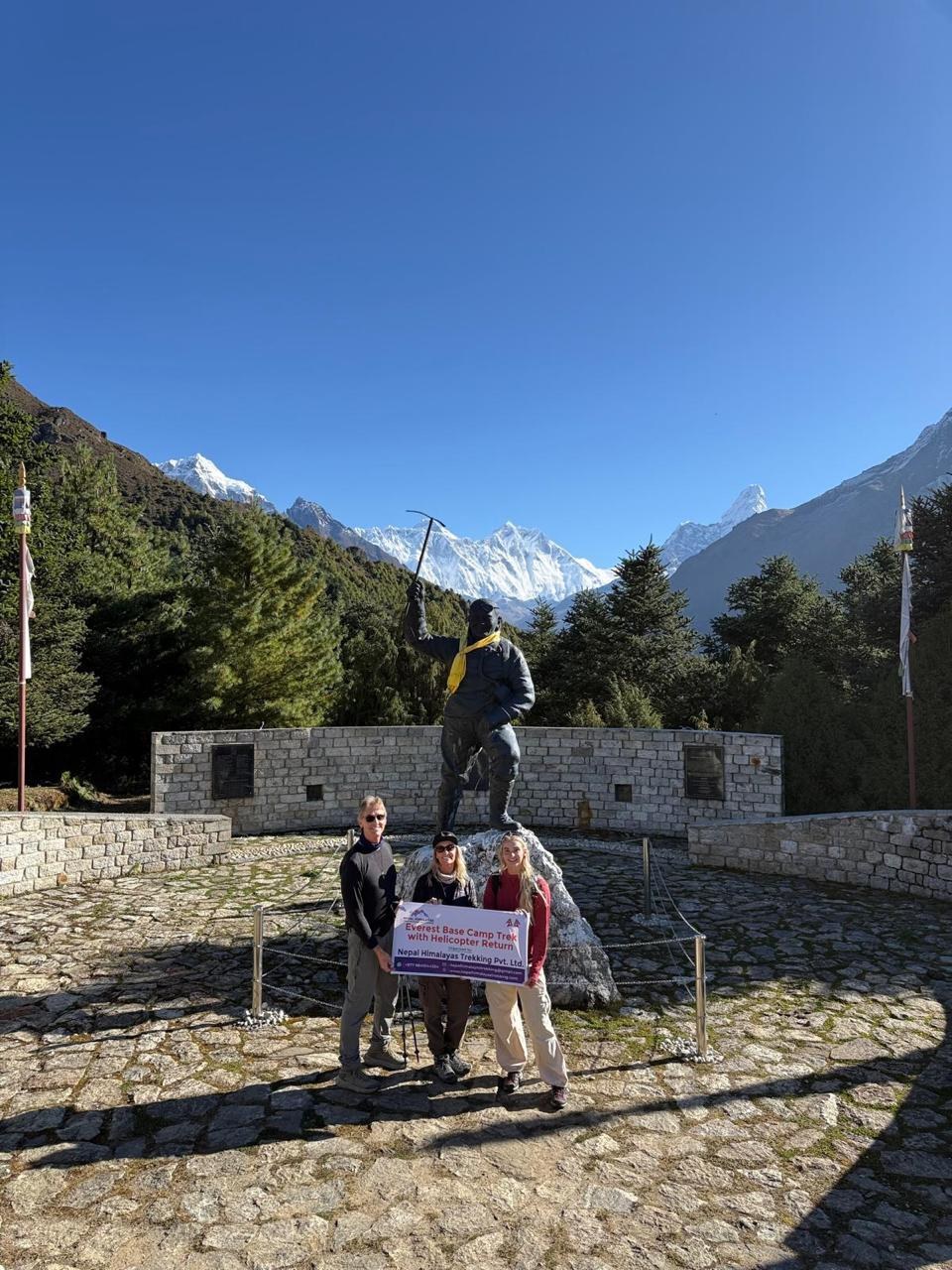
The Everest Base Camp Trek with Helicopter Return combines a classic Himalayan trekking experience with a helicopter journey back from the mountains. Starting from Lukla, the route passes through Phakding, Namche Bazaar, Tengboche, Dingboche and Lobuche before reaching Everest Base Camp at approximately 5,364 metres. After visiting Base Camp and climbing Kala Patthar, you return by helicopter instead of walking the entire route back to Lukla.
This trek is a practical option for travellers who want to reach Everest Base Camp on foot but have limited time for the return journey. Our standard arrangement includes a helicopter flight from Gorak Shep to Lukla, followed by a domestic flight to Kathmandu. A direct helicopter return towards Kathmandu may also be available as an optional arrangement at an additional cost, subject to confirmation and operating conditions.
Although the helicopter shortens the return journey, you still experience the main trekking route on foot. You cross suspension bridges, walk through traditional Sherpa settlements, visit Tengboche Monastery and follow the trail towards the Khumbu Glacier. The itinerary also includes an early morning climb to Kala Patthar, one of the best viewpoints for seeing Mount Everest and the surrounding Himalayan peaks.
Quick Facts: Everest Base Camp Trek with Helicopter Return
| Trek detail | Information |
|---|---|
| Duration | 11 days |
| Destination | Everest Base Camp, Khumbu, Nepal |
| Starting point | Kathmandu |
| Trekking route | Lukla to Everest Base Camp |
| Highest point | Kala Patthar, approximately 5,545 m |
| Everest Base Camp | Approximately 5,364 m |
| Gorak Shep | Approximately 5,164 m |
| Standard helicopter return | Gorak Shep to Lukla, followed by a domestic flight to Kathmandu |
| Optional return | Direct helicopter arrangement towards Kathmandu |
| Accommodation | Kathmandu hotel and mountain teahouses |
| Main highlights | Namche Bazaar, Tengboche, Dingboche, Everest Base Camp and Kala Patthar |
What Is the Everest Base Camp Trek with Helicopter Return?
The Everest Base Camp Trek with Helicopter Return follows the classic trail from Lukla to Everest Base Camp, but replaces most of the return walk with a helicopter flight. You trek through the Khumbu region, spend acclimatization days in Namche Bazaar and Dingboche, and continue towards Lobuche and Gorak Shep. After visiting Everest Base Camp and climbing Kala Patthar, you return to Gorak Shep for the helicopter pickup.
Under the standard arrangement, the helicopter takes you from Gorak Shep to Lukla, where you connect with a domestic flight to Kathmandu. This saves you from walking the full route back through Lobuche, Dingboche, Namche Bazaar and Phakding. If you prefer to return towards Kathmandu by helicopter, you can request the direct option when booking. Its availability, route and price must be confirmed before your trek. If you are comparing this trip with the full walking journey, you can also explore our Everest Base Camp Trek for the standard itinerary.
Why Choose Everest Base Camp Trek with Helicopter Return?
The main reason to choose this trek is that you can reach Everest Base Camp on foot without spending several additional days walking back to Lukla. You experience the important villages, mountain landscapes and high-altitude trails of the Khumbu region before returning by air. The helicopter journey also gives you a different perspective of the Everest region. It is particularly useful if your holiday schedule does not allow enough time for the complete round-trip trek. Here are ten reasons to consider this option.
1. Reach Everest Base Camp on Foot
The helicopter does not replace the main trekking journey. You still walk from Lukla through Phakding, Namche Bazaar, Tengboche, Dingboche and Lobuche before reaching Everest Base Camp. Along the way, you experience the mountain villages, local teahouses, suspension bridges and changing landscapes of the Khumbu region. This is different from visiting Everest only by helicopter, as you have time to experience the trail and settlements on foot.
2. Save Several Days on the Return Journey
Walking from Gorak Shep back to Lukla requires several more days on the trail. A helicopter pickup replaces most of this return journey and can help you reach Kathmandu sooner when flights operate as scheduled. This is useful for travellers with limited annual leave, fixed holiday dates or other travel plans in Nepal. You should still allow extra time in case weather or flight conditions cause delays.
3. Climb Kala Patthar for the Everest Viewpoint
Everest Base Camp is the main destination, but it does not provide the clearest view of Everest's summit because Nuptse and nearby ridges obstruct much of the mountain. For a wider view, our itinerary includes an early morning climb to Kala Patthar at approximately 5,545 metres. On a clear day, you can see Mount Everest, Lhotse, Nuptse, Pumori and other surrounding peaks.
4. See the Khumbu Region from the Air
During the trekking section, you experience the Khumbu landscape from the trail, passing through valleys, forests, rocky slopes and glacial terrain. The helicopter journey provides a different perspective of the region, with possible aerial views of mountain ridges, glaciers and deep valleys. The actual views depend on visibility, weather and the confirmed flight route.
5. Avoid Walking the Same Trail Back
The classic Everest Base Camp trek follows the same general route in both directions. After visiting Base Camp and Kala Patthar, you normally walk back through Gorak Shep, Lobuche, Dingboche and Namche Bazaar before reaching Lukla. With the helicopter-return option, you leave the region from Gorak Shep rather than repeating most of this section on foot.
6. Reduce the Amount of Downhill Walking
The return journey from the high-altitude settlements involves several days of descending. Although walking downhill may seem easier than climbing, uneven ground and long walking hours can still be tiring after reaching Base Camp. Taking a helicopter from Gorak Shep avoids most of this additional walking and provides a shorter finish to the trekking section.
7. Fit the Trek into a Limited Holiday
The full round-trip Everest Base Camp trek requires more time because you need to walk back to Lukla. If you have work commitments, international travel plans or other destinations to visit in Nepal, the helicopter option can help you experience the main route within a shorter holiday. You should not remove acclimatization days to save time, and you still need to allow flexibility for possible flight disruptions.
8. Combine a Multi-Day Trek with a Helicopter Journey
This trek brings together two ways of experiencing the Everest region. You spend most of the journey walking through the Khumbu Valley, staying in mountain teahouses and visiting local settlements. The final helicopter journey adds an aerial experience without replacing the main trekking section.
9. Have More Time After Returning from the Mountains
Returning by helicopter can leave you with additional time compared with walking all the way back to Lukla. Depending on your actual arrival in Kathmandu, you may have time for sightseeing, rest or another destination in Nepal. This depends on the flight schedule and weather, so it should not be treated as guaranteed extra time.
10. Choose Between Different Helicopter Return Arrangements
The standard package includes a helicopter from Gorak Shep to Lukla and a connecting domestic flight to Kathmandu. A direct helicopter return towards Kathmandu may also be arranged as an optional upgrade. These arrangements have different costs and operating requirements, so we recommend discussing your preferred option with us before confirming the booking.
Everest Base Camp Helicopter Tour vs Classic Trek vs Trek with Helicopter Return
There are three common ways to experience the Everest region: a helicopter tour, the classic Everest Base Camp trek and a trek with helicopter return. They differ in the time required, the amount of walking involved and the experience they offer.
Everest Base Camp Helicopter Tour
An Everest Base Camp Helicopter Tour is suitable for travellers who want to see the Everest region without completing a multi-day trek. Depending on the selected tour, the flight may include a landing or stop in the region, subject to weather, altitude and operating conditions. It is a practical option for visitors with very limited time or those who do not want to undertake several days of high-altitude walking. However, it does not provide the same experience of walking through Sherpa villages and staying in mountain teahouses.
Classic Everest Base Camp Trek
The classic Everest Base Camp Trek is for travellers who want to complete the journey on foot in both directions. After visiting Base Camp and climbing Kala Patthar, you follow the return trail through Gorak Shep, Lobuche, Dingboche and Namche Bazaar before reaching Lukla. This option gives you more time on the trail and a longer experience of the Khumbu region. It is suitable if you have enough days and prefer to complete the full return journey on foot.
Everest Base Camp Trek with Helicopter Return
The Everest Base Camp Trek with Helicopter Return combines the main trekking experience with a shorter journey back from the mountains. You walk from Lukla to Everest Base Camp, climb Kala Patthar and return to Gorak Shep before taking the arranged helicopter flight. Under the standard package, you fly to Lukla and connect with a domestic flight to Kathmandu. It is a suitable middle option if you want to reach Base Camp on foot but do not want to spend several additional days walking back.
Which Option Should You Choose?
- Everest Base Camp Helicopter Tour: Choose this if you mainly want an aerial experience of the Everest region and have very little time.
- Classic Everest Base Camp Trek: Choose this if you want to walk the route in both directions and have enough days for the full journey.
- Everest Base Camp Trek with Helicopter Return: Choose this if you want to reach Everest Base Camp on foot but prefer to shorten the return journey.
- Before deciding: Consider your available time, budget, physical preparation, altitude and flexibility in case of flight delays.
Our 11-Day Everest Base Camp Trek with Helicopter Return Itinerary
Our 11-day itinerary starts in Kathmandu and follows the classic trekking route from Lukla to Everest Base Camp. We include acclimatization days in Namche Bazaar and Dingboche before continuing towards Lobuche and Gorak Shep. After visiting Base Camp, you climb Kala Patthar early the following morning and return by helicopter instead of walking back to Lukla.
Trekking route: Kathmandu → Lukla → Phakding → Namche Bazaar → Tengboche → Dingboche → Lobuche → Gorak Shep → Everest Base Camp → Gorak Shep → Kala Patthar → Gorak Shep → Helicopter return.
Day 1: Arrival in Kathmandu
After arriving at Tribhuvan International Airport, we welcome you and arrange your transfer to the hotel. You can rest after your journey and prepare for the trek. Later, we arrange a briefing to explain the route, daily walking schedule, altitude considerations and practical details of the trip. We also help you check your trekking equipment and travel documents so you have time to arrange any essential items before departure.
Day 2: Fly to Lukla and Trek to Phakding (2,610 m)
We take an early flight to Lukla from Kathmandu or travel to Ramechhap/Manthali for the flight, depending on the departure arrangements for your travel date. After landing at Lukla, approximately 2,860 metres, we meet our local trekking team and begin walking towards Phakding. The trail follows the Dudh Koshi River through small settlements, forested sections and suspension bridges. This relatively short first walk gives you time to settle into the trekking routine.
Walking time: Approximately 3–4 hours.
Overnight: Teahouse in Phakding.
Day 3: Trek from Phakding to Namche Bazaar (3,440 m)
After breakfast, we continue along the Dudh Koshi River, crossing suspension bridges and passing villages such as Monjo and Jorsale. We enter Sagarmatha National Park before reaching the Hillary Suspension Bridge. Beyond the bridge, the trail climbs steadily towards Namche Bazaar. We maintain a comfortable pace and take regular breaks during the ascent. Namche is the main trading and accommodation centre in the Khumbu region, with mountain views and facilities for trekkers.
Walking time: Approximately 5–6 hours.
Overnight: Teahouse in Namche Bazaar.
Day 4: Acclimatization Day in Namche Bazaar
We spend an additional day in Namche Bazaar to allow your body to adjust to the increasing altitude. You can explore the village, visit local shops or enjoy the mountain surroundings. We may also arrange an acclimatization walk towards Everest View Hotel at approximately 3,880 metres, depending on your condition and the group's pace. After the walk, we return to Namche for another night.
Walking time: Approximately 3–4 hours for the optional acclimatization walk.
Overnight: Teahouse in Namche Bazaar.
Day 5: Trek from Namche Bazaar to Tengboche (3,860 m)
We leave Namche Bazaar and follow the hillside trail, with views of the surrounding mountains when the weather is clear. The route descends towards the Dudh Koshi River before climbing through forested terrain to Tengboche. The village is known for Tengboche Monastery and its impressive mountain setting. We have time to explore the surroundings before settling into our accommodation. Depending on the confirmed accommodation arrangement, we spend the night in Tengboche or nearby Debuche.
Walking time: Approximately 5–6 hours.
Overnight: Teahouse in Tengboche or nearby Debuche, depending on accommodation availability.
Day 6: Trek from Tengboche to Dingboche (4,410 m)
We continue towards Pangboche and follow the trail into the upper Imja Valley. Along the way, we pass small settlements and gradually enter more open terrain as the forest becomes less dense. The landscape offers wider views of the surrounding mountain slopes and peaks. After reaching Dingboche, we settle into the teahouse and prepare for the next acclimatization day. As we are now above 4,000 metres, we maintain a steady pace and monitor how you are adjusting to the altitude.
Walking time: Approximately 5–6 hours.
Overnight: Teahouse in Dingboche.
Day 7: Acclimatization Day in Dingboche
We spend another day in Dingboche to allow further adjustment to the altitude before continuing towards Lobuche and Gorak Shep. An optional hike to Nangkartshang Hill, approximately 5,083 metres, provides views of the surrounding peaks and valleys. The ascent can take approximately 3–4 hours or longer, depending on the route, pace and conditions. We recommend following your guide's advice and returning to Dingboche with enough time to rest before the next trekking day.
Walking time: Approximately 3–4 hours or longer for the optional acclimatization walk.
Overnight: Teahouse in Dingboche.
Day 8: Trek from Dingboche to Lobuche (4,940 m)
We leave Dingboche and follow the trail towards Dughla, also known as Thukla, through increasingly rugged terrain. From the Thukla area, we climb towards the memorials built in remembrance of climbers who lost their lives in the Himalayas. We take time to visit the memorial area respectfully before continuing towards Lobuche. The trail becomes more exposed, with rocky ground and views of the surrounding glacial landscape. After reaching Lobuche, we settle into our teahouse and prepare for the following day's trek to Everest Base Camp.
Walking time: Approximately 5–6 hours.
Overnight: Teahouse in Lobuche.
Day 9: Trek to Everest Base Camp and Return to Gorak Shep
We leave Lobuche and follow the rocky trail towards Gorak Shep, approximately 5,164 metres. After reaching the teahouse and leaving unnecessary belongings, we continue towards Everest Base Camp at approximately 5,364 metres. The trail follows uneven ground beside the Khumbu Glacier and its rocky moraines. At Base Camp, we have time to experience the expedition area and its surrounding ice formations and mountain terrain. Everest's summit is not fully visible from the main Base Camp area because Nuptse and nearby ridges obstruct much of the view. This is why we include the Kala Patthar climb the following morning. After visiting Base Camp, we return to Gorak Shep for the night.
Walking time: Approximately 7–8 hours in total, depending on trail conditions and pace.
Overnight: Teahouse in Gorak Shep.
Day 10: Climb Kala Patthar and Return by Helicopter
We start early for the ascent from Gorak Shep to Kala Patthar, approximately 5,545 metres, the highest point of this itinerary. The climb is steep, and the altitude makes the ascent physically demanding. On a clear morning, the viewpoint offers a broad view of Mount Everest, Lhotse, Nuptse, Pumori and other surrounding peaks.
After enjoying the viewpoint, we descend to Gorak Shep and prepare for the helicopter pickup. Under our standard package, the helicopter takes you from Gorak Shep to Lukla, where you connect with a domestic flight to Kathmandu. If you have selected the optional direct helicopter arrangement, your return follows the route confirmed before booking.
After arriving in Kathmandu, we arrange the planned farewell dinner if the return transport operates as scheduled. The timing of the Kala Patthar climb, helicopter pickup and connecting flight depends on weather, visibility and operating conditions. If there is a delay, the day's arrangements may need to change.
Overnight: Hotel in Kathmandu, provided the planned return transport operates as scheduled.
What Happens If the Helicopter Flight Is Delayed or Cancelled?
Helicopter flights from Gorak Shep depend on weather, visibility and operating conditions. If the flight cannot operate as planned, we coordinate with our guide and local team to assess the available options and explain the next steps. Depending on the circumstances, you may need to wait for a suitable flying window or use an alternative return arrangement if one is available. Additional accommodation, meals or transport may involve extra costs if the disruption affects the planned itinerary. Refunds, rebooking and other arrangements follow the confirmed booking terms. We recommend keeping flexibility in your wider Nepal travel schedule rather than arranging an international departure immediately after the planned helicopter return.
Day 11: Airport Transfer and Optional Nepal Experiences
After breakfast, we arrange your transfer to Tribhuvan International Airport according to your international flight schedule, assuming the return from the mountains has proceeded as planned. If you have additional time in Nepal, we can help arrange other experiences, including Kathmandu sightseeing, yoga or meditation sessions, a Pokhara tour or a Chitwan jungle safari. These activities are optional and available at an additional cost. Pokhara and Chitwan generally require additional travel days.
Meal: Breakfast, as included in the package.
Important: If the helicopter or connecting flight is delayed or cancelled, your planned airport transfer may need to change. Allow sufficient flexibility before your international departure.
How Difficult Is the Everest Base Camp Trek with Helicopter Return?
The trekking section is challenging because you gradually climb from Lukla to elevations above 5,000 metres. The route passes through Namche Bazaar, Tengboche, Dingboche and Lobuche before reaching Gorak Shep and Everest Base Camp. The highest point is Kala Patthar at approximately 5,545 metres, where the thin air makes even a relatively short climb demanding.
The helicopter return reduces the walking required on the way back to Lukla, but it does not make the ascent easier. You still need to complete several days of high-altitude walking, including the trek to Base Camp and the Kala Patthar climb. Previous hiking experience, suitable physical preparation and proper acclimatization will help you manage the journey.
Physical Preparation
We recommend preparing with regular walking, uphill hikes and aerobic exercise before travelling to Nepal. Practising several hours of walking on consecutive days can help you become familiar with the effort required during a multi-day trek. Technical climbing skills are not necessary for the standard route, but you should be comfortable walking uphill and downhill on uneven mountain trails. The Kala Patthar ascent deserves particular attention because of its steep gradient and high elevation. Follow your guide's advice and avoid pushing yourself if you are struggling physically.
Altitude and Acclimatization
Altitude is one of the main challenges of this trek. You start at Lukla, approximately 2,860 metres, and gradually ascend towards Gorak Shep at approximately 5,164 metres before climbing Kala Patthar. Our itinerary includes acclimatization days in Namche Bazaar and Dingboche to give your body time to adjust before continuing higher.
However, rest days do not eliminate the risk of altitude sickness. Inform your guide if you experience a persistent headache, nausea, dizziness, unusual tiredness or difficulty sleeping. Severe or worsening symptoms require immediate attention. You may need to stop ascending and descend to a lower elevation, depending on the severity of your condition. For more information about symptoms, prevention and treatment, read our guide to altitude sickness on the Everest Base Camp Trek.
Best Time for Everest Base Camp Trek with Helicopter Return
Spring and autumn are the main trekking seasons for the Everest region. Both periods generally offer suitable conditions for walking and good opportunities to see the Himalayan peaks. However, mountain weather can change quickly, and helicopter operations depend on visibility and flying conditions. Even during the main trekking seasons, delays and cancellations are possible. We recommend keeping some flexibility in your travel schedule, especially around the return flight.
Spring: March to May
Spring brings warmer daytime temperatures at lower elevations and increased activity along the Everest trail as the climbing season approaches. Rhododendrons bloom in the lower forests, while the upper Khumbu region becomes busy with trekkers and mountaineering expeditions. Cloud and changing weather can still affect mountain visibility and helicopter operations, so allow some flexibility around your planned return.
Autumn: September to November
Autumn is another popular season for trekking in the Khumbu region. Following the monsoon, the skies often become clearer, creating good opportunities for mountain views. October and November are particularly busy, so accommodation and domestic flights can experience high demand. Booking ahead and allowing additional time for possible helicopter delays are sensible precautions.
Winter and Monsoon
Winter brings colder conditions, particularly around Lobuche and Gorak Shep, where temperatures can fall well below freezing. Snowfall and strong winds may affect trail conditions and helicopter operations. During the monsoon, rain, cloud and reduced visibility, especially at lower elevations, can also disrupt flights. Trekking outside the main seasons may still be possible, but it requires careful planning and suitable preparation. Contact us with your preferred travel dates so we can discuss the conditions and available arrangements.
Everest Base Camp Trek with Helicopter Return Cost
The cost of the Everest Base Camp Trek with Helicopter Return depends on your group size, travel dates and selected return arrangement. The standard package includes a helicopter flight from Gorak Shep to Lukla, followed by a domestic flight to Kathmandu. Travellers who prefer a direct helicopter return towards Kathmandu can choose a different arrangement at a higher cost.
| Return arrangement | Package price |
|---|---|
| Standard: Gorak Shep to Lukla by helicopter, then flight to Kathmandu | USD 2,590 |
| Shared direct helicopter return towards Kathmandu | USD 3,090 |
| Private direct helicopter return towards Kathmandu | USD 4,890 |
The standard option is suitable for travellers who are comfortable connecting through Lukla. The shared direct option offers a direct helicopter return arrangement, while the private option provides a separately arranged private flight. The actual availability and applicable price depend on the travel date, group and operating conditions.
For the full package details and booking arrangements, visit our Everest Base Camp Trek with Helicopter Return package. Contact us for a current quotation and confirmation of the services included in your selected package.
What's Included in Our Everest Base Camp Trek with Helicopter Return Package?
The exact inclusions depend on the return arrangement and services confirmed in your booking. The package may include the following services where listed in your quotation:
- Airport transfers in Kathmandu as outlined in the itinerary.
- Hotel accommodation in Kathmandu as specified in the package.
- Teahouse accommodation during the trekking section.
- Domestic flight arrangements between Kathmandu and Lukla, including the applicable Ramechhap/Manthali transfer when required.
- Helicopter return from Gorak Shep to Lukla under the standard arrangement.
- Domestic flight from Lukla to Kathmandu under the standard return arrangement.
- Direct helicopter return only when selected and confirmed in the booking.
- Trekking guide and porter services as stated in the confirmed package.
- Meals during the trek as specified in the package.
- Required trekking permits and local entry fees if listed as included in the confirmed quotation.
- Farewell dinner in Kathmandu, as specified in the itinerary.
Important: The scheduled helicopter return is a planned part of your itinerary. Emergency helicopter evacuation for a medical reason is a separate service and should not be assumed to be included in the package.
What's Not Included in Our Everest Base Camp Trek with Helicopter Return Package?
Unless specifically listed in your confirmed quotation, the following expenses are not included:
- International flights to and from Nepal.
- Nepal entry visa fees.
- Travel insurance, including high-altitude trekking and emergency helicopter evacuation coverage.
- Personal trekking equipment, clothing and footwear.
- Personal expenses such as drinks, snacks, charging, Wi-Fi, hot showers and laundry.
- Additional accommodation, meals or transport resulting from delays or changes outside the planned itinerary.
- Optional direct helicopter upgrade if it is not included in the selected package price.
- Tips for the guide, porter and other trekking staff.
- Optional Kathmandu, Pokhara or Chitwan tours and activities.
- Any services or expenses not specifically listed as included in your confirmed booking.
Who Can Consider the Everest Base Camp Trek with Helicopter Return?
This trek is suitable for travellers who want to reach Everest Base Camp on foot but prefer a shorter return journey. It allows you to experience the main Khumbu trekking route without allocating several additional days to walking back to Lukla.
It may be a good option for:
- Travellers with limited holiday time: Those who want to reach Everest Base Camp but cannot take the additional days required for the full return trek.
- Trekkers seeking the main Everest experience: Those who want to walk through the Khumbu region, visit Base Camp and climb Kala Patthar rather than experience the mountains only from the air.
- People interested in helicopter travel: Those who want to combine a multi-day mountain trek with an aerial return journey.
- Experienced hikers: Those who are comfortable with several hours of walking and understand the physical demands of high-altitude trekking.
- Small groups and private travellers: Those who want to discuss travel dates and suitable helicopter arrangements for their group.
- Travellers with flexible schedules: Those who can allow additional time in Nepal if weather or operating conditions delay the return flight.
Although the helicopter reduces the walking required on the return journey, you still need to complete the demanding ascent to Everest Base Camp and Kala Patthar. Good preparation and the ability to adjust to high altitude remain essential. If you have more time in the Khumbu region and want to explore a different route, you can also consider our Gokyo Trek or the more demanding Everest Three Passes Trek. You can find more trekking options on our Everest region page.
Travel Insurance and Helicopter Safety
Travel insurance is an important part of planning an Everest Base Camp Trek with Helicopter Return. Your policy should cover high-altitude trekking up to at least the maximum elevation of your itinerary, approximately 5,545 metres, as well as emergency helicopter evacuation in Nepal. Do not assume that a standard travel insurance policy automatically covers high-altitude trekking or helicopter rescue.
It is important to understand the difference between your scheduled helicopter return and an emergency evacuation. The scheduled flight from Gorak Shep is part of your planned itinerary and follows the return arrangement confirmed with us. Emergency helicopter evacuation may be required if you develop a serious altitude-related illness, suffer an injury or experience another medical emergency during the trek. It is a separate service, and its cost is not automatically covered by your trekking package or insurance policy.
Before travelling, check your policy's maximum altitude limit, emergency evacuation coverage, medical expenses and exclusions. Helicopter flights are also subject to weather, visibility, landing conditions and aviation operating requirements. A confirmed booking does not guarantee that a flight can operate in unsuitable conditions. Understand the possible alternatives and additional expenses if your planned return is delayed or cancelled.
Why Trek with Nepal Himalayas Trekking?
As a local trekking agency in Nepal, we organise Everest Base Camp journeys with attention to the practical details of high-altitude travel. Our planning starts with the walking route and acclimatization schedule in the Khumbu region. We include rest days in Namche Bazaar and Dingboche, allowing trekkers time to adjust before continuing towards Lobuche and Gorak Shep.
Our trekking guides accompany you throughout the walking section, helping maintain a suitable pace and observing how you respond to the increasing altitude. They can advise when to take breaks, explain trail conditions and help identify symptoms that may require medical attention or a change in the trekking plan. The helicopter return requires separate coordination because flights from Gorak Shep depend on weather, visibility and operating conditions. We explain the difference between the standard return via Lukla and the optional direct helicopter arrangement before booking. Our team also coordinates the planned pickup and connecting flight arrangements and communicates with you if changing conditions affect the schedule.
Before you confirm your trek, we clarify the itinerary, accommodation, package inclusions, helicopter arrangements and possible additional expenses in case of delays. Our aim is to help you understand the journey clearly and prepare for both the trekking challenges and the practical requirements of returning from the Everest region. Learn more about our services through the Nepal Himalayas Trekking homepage.
Ready to Book Your Everest Base Camp Trek with Helicopter Return?
If you want to reach Everest Base Camp on foot and return by helicopter, we can help arrange the journey around your available time and preferred flight option. Share your travel dates and group size, along with whether you prefer the standard helicopter return via Lukla or the optional direct arrangement.
We will explain the itinerary, applicable package cost, included services and flight arrangements before you confirm your booking. For a personalised quotation or further information, contact our team.
Frequently Asked Questions
How many days does the Everest Base Camp Trek with Helicopter Return take?
Our itinerary takes 11 days, including arrival in Kathmandu, the trekking journey, helicopter return and final airport transfer. The schedule may change if weather or flight operations disrupt the planned return.
Does the helicopter take us directly from Gorak Shep to Kathmandu?
Under our standard arrangement, the helicopter takes you from Gorak Shep to Lukla, where you connect with a domestic flight to Kathmandu. A direct helicopter return towards Kathmandu may be available as an optional upgrade when arranged and confirmed before booking.
Do we still trek to Everest Base Camp?
Yes. You walk from Lukla through the Khumbu region to Gorak Shep and continue on foot to Everest Base Camp at approximately 5,364 metres. The helicopter replaces most of the return journey after your Kala Patthar visit.
Is Kala Patthar included in the itinerary?
Yes. We include an early morning climb from Gorak Shep to Kala Patthar at approximately 5,545 metres on Day 10. It is the highest point of the itinerary and offers views of Everest and the surrounding peaks when the weather is clear.
Is the helicopter return included in the package price?
The standard arrangement includes a helicopter flight from Gorak Shep to Lukla, followed by a domestic flight to Kathmandu, as specified in the package. The optional direct helicopter return towards Kathmandu has a different price. Check your confirmed quotation to understand which arrangement is included.
What happens if the helicopter cannot fly because of bad weather?
If weather or operating conditions prevent the helicopter from flying, you may need to wait for a suitable flying window or use an available alternative return arrangement. Additional accommodation, meals and transport may involve extra costs. Refunds and rebooking arrangements follow the confirmed booking terms. We recommend keeping flexibility in your travel schedule.
Is the Everest Base Camp Trek with Helicopter Return easier than the classic trek?
It reduces the walking required on the return journey, but the trekking section remains challenging. You still walk to Everest Base Camp and climb Kala Patthar at high altitude. Proper physical preparation and acclimatization are essential.
Do I need travel insurance for this trek?
Yes. We strongly recommend insurance that covers high-altitude trekking up to approximately 5,545 metres and emergency helicopter evacuation in Nepal. Check the policy carefully because some standard travel insurance plans exclude trekking above certain elevations or helicopter rescue.
What is the best season for this trek?
Spring (March to May) and autumn (September to November) are the main trekking seasons. These periods generally offer suitable walking conditions and good opportunities for mountain views. However, helicopter flights can still be delayed by weather and visibility at any time of year.
Can beginners join the Everest Base Camp Trek with Helicopter Return?
Beginners with good physical preparation may be able to complete this trek, but it is not an easy first hiking trip. The route reaches high altitude, and the Kala Patthar ascent is physically demanding. We recommend preparing with regular walking and uphill exercise before travelling to Nepal.
Can I choose the direct helicopter return instead of flying via Lukla?
Yes. You can request the optional direct helicopter return towards Kathmandu instead of the standard arrangement via Lukla. This must be discussed and confirmed before booking. Availability and additional costs depend on the actual flight arrangement.
Should I book an international flight on the day after the helicopter return?
We do not recommend relying on the helicopter returning exactly on schedule when planning an international departure. Weather, visibility and operating conditions can delay the helicopter, while the connecting domestic flight may also be affected. Allowing an additional buffer day in Kathmandu is a safer approach.








Add Your Comment