

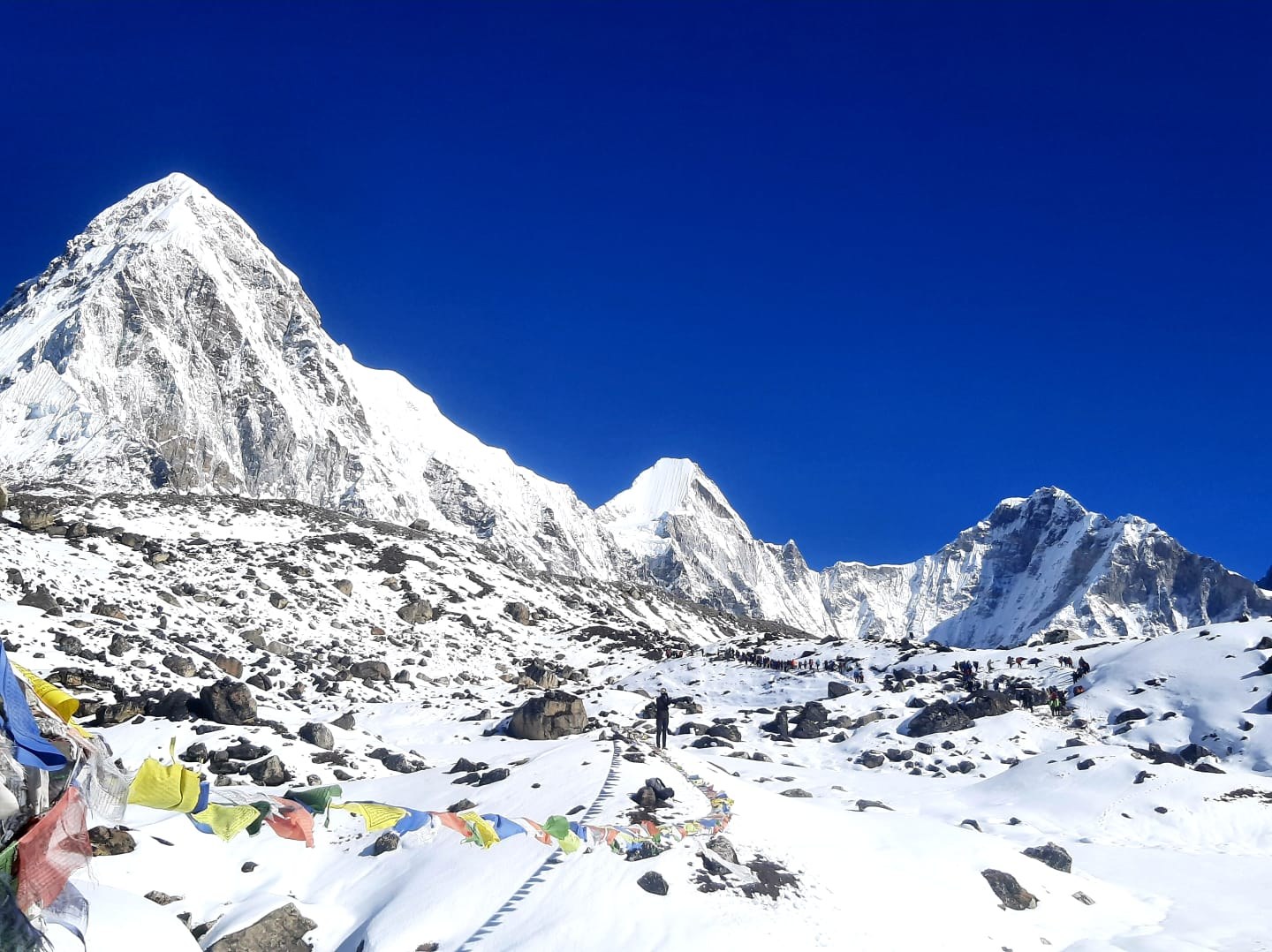
The latest Everest Base Camp Trek update concerns official weather and trekking safety warnings for late October 2026. Nepalese authorities have warned of heavy rainfall, snowfall, snowstorms and possible avalanches, with high-altitude trekking discouraged during the October 29–31 risk period.
The warning may affect trekking conditions, road transfers and flights to Lukla. Rain can make lower trails slippery and increase landslide risks, while snow, freezing temperatures, strong winds and poor visibility can make higher sections hazardous. Trekkers should follow official safety advice and their guide's instructions rather than continue simply to keep to a planned itinerary. If you are considering this Himalayan adventure, explore our Everest Base Camp Trek package to learn about the classic route and trekking arrangements. Before choosing your travel dates, check the latest forecasts and follow any safety advice that applies to your intended departure period.
Everest Base Camp Trek Heavy Rainfall and Snowfall: What Authorities Have Announced
The Department of Hydrology and Meteorology (DHM) forecast rainfall and snowfall in parts of Nepal from October 29 to 31, with heavy precipitation possible in some locations and a risk of heavy snowfall, snowstorms and avalanches in high-hill and Himalayan areas. Check the official DHM website for the latest weather bulletins.
The weather system behind the warning was Cyclone Arnab, which developed over the Bay of Bengal on October 25 and made landfall along India's Andhra Pradesh coast on October 28. It weakened after moving inland, but its remaining moisture was expected to interact with other atmospheric conditions and influence Nepal's weather. The NASA Earth Observatory report on Cyclone Arnab documents the storm's development and landfall, while Onlinekhabar's October 29 weather report describes the expected effects in Nepal.
The storm caused damage and transport disruption in parts of India, while regional forecasts also raised concerns about rain and gusty winds in Bangladesh. For trekkers in Nepal, the main issue is the expected weather on the ground, rather than the cyclone's direct impact in another country. Separately, Home Minister Sudhan Gurung discussed disaster preparedness and ways to strengthen the emergency-response capacity of Nepal’s security forces during a meeting with the UN Resident Coordinator on October 28, 2026. This broader preparedness effort is relevant to the country’s response to potential weather-related emergencies. Trekkers planning to travel in the Everest region should continue to follow the latest official weather bulletins and safety instructions from the relevant authorities.
Several Nepalese authorities and trekking organisations issued precautionary advice. The Department of Tourism advised tourists and mountaineers to avoid high-altitude Himalayan areas from October 28 to November 1. The NDRRMA urged people to remain alert during October 29–31, while the Trekking Agencies' Association of Nepal (TAAN) advised trekking agencies to take precautions and suspend journeys towards high-altitude destinations and passes where necessary. The Department of Immigration also temporarily suspended the issuance of permits for certain restricted areas during October 29–31. Reports on these measures are available from Nepal News and the report on restricted-area permit suspensions.
These announcements have different scopes. A weather forecast describes expected conditions, a safety advisory tells people how to respond to risk, and a restricted-area permit suspension applies to specified areas. The permit measure alone does not establish a permanent closure of the standard Everest Base Camp Trek route. However, trekkers should not interpret that distinction as permission to ignore the separate high-altitude safety advice.
If your trek falls within the warning period, speak to your trekking agency about postponement or other arrangements. Trekkers already in the Khumbu should follow local instructions and their guide's assessment, remaining in a safe place when advised.
Everest Base Camp Trek Weather Forecast by Location
Weather conditions vary with elevation, and a national forecast does not mean every village will experience the same precipitation. The table below outlines potential concerns during the October 29–31 warning period. It is a planning guide, not a live observation of conditions at each location.
| Location or route section | Potential weather concern | Practical consideration |
|---|---|---|
| Lukla | Rain, cloud and reduced visibility | Check flight status and follow airline instructions. |
| Phakding and lower trails | Wet stone steps and slippery paths | Take extra care on uneven and exposed sections. |
| Namche Bazaar | Unsettled weather and reduced visibility | Ask about local conditions before moving onward. |
| Tengboche and Dingboche | Falling temperatures and possible wintry conditions | Prepare for cold weather and check conditions ahead. |
| Lobuche and Gorak Shep | Snowfall, freezing temperatures, wind and poor visibility | Avoid exposed sections when conditions are unsafe. |
| Everest Base Camp and Kala Patthar | Possible snow and ice | Follow your guide's advice and postpone exposed walks when necessary. |
The forecast does not establish a specific snow depth or confirm the operational status of each trail. Decisions should be based on current official instructions and conditions on the ground.
How Heavy Rainfall and Snowfall Could Affect the Everest Base Camp Trek Route
The route climbs from the lower Dudh Koshi valley through Phakding and Namche Bazaar towards Tengboche, Dingboche, Lobuche and Gorak Shep. Rain can make lower trails slippery, while snow and freezing temperatures can make higher sections harder to navigate. Strong winds and poor visibility may further complicate walking.
Weather disruption can also affect transport and accommodation plans. A delayed Lukla flight may change arrival or departure arrangements, while adverse trail conditions can slow walking or make an exposed section unsafe. Planned walking hours and booked return transport should never take priority over safety advice.
Trail conditions between Lukla and Namche Bazaar
The lower route includes stone steps, forest paths, suspension bridges and trails beside the Dudh Koshi River. Rain can make stone surfaces slippery and increase the risk of slipping on muddy sections. Walk carefully, allow extra time when conditions permit, and follow local instructions if a restriction is announced.
Trail conditions above Namche Bazaar
As the route gains elevation, temperatures generally fall and the trail becomes more exposed to cold, wind and possible snowfall. Fresh snow can cover uneven ground and icy patches, while poor visibility can make route-finding more difficult. Ask your guide about conditions ahead before leaving a lodge, and wait in a safe location if travel is not advisable.
Everest Base Camp and Kala Patthar during snowfall
Everest Base Camp stands at 5,364 metres, while Kala Patthar reaches 5,545 metres. At these elevations, cold, wind and visibility can change quickly. Snow may make the path harder to follow, and ice can increase the risk of falls. Do not attempt either destination simply to keep to your schedule or take photographs. If conditions deteriorate, postponing the walk or turning back is the safer choice.
Is the Everest Base Camp Trek Route Closed?
The October 2026 announcements include high-altitude safety advice and a temporary suspension of permits for certain restricted areas. These measures should not automatically be described as a permanent, route-wide closure of the standard Everest Base Camp Trek.
However, the distinction between a route closure and a safety advisory does not remove the immediate risk. Authorities and trekking organisations advised against high-altitude trekking during the October 29–31 warning period. Trekkers should follow that advice, confirm their plans with their agency and avoid beginning or continuing an exposed journey against official instructions.
For the latest information, check official notices and ask your trekking agency to confirm the current arrangements for your departure date. If you are comparing different ways to reach the Everest region, our guide to Everest Base Camp Trek alternative routes explains other approaches. However, an alternative route is not automatically safer during severe weather, so current safety advice should guide your decision.
Everest Base Camp Trek Road Way: Kathmandu, Ramechhap and Salleri
Road access is important for trekkers travelling from Kathmandu to Ramechhap for a Lukla flight or continuing by road towards Salleri. Heavy rainfall can increase the risk of landslides, muddy surfaces, falling debris and delays on hilly roads. The effect depends on conditions along each road, so a national weather warning should not be treated as proof that a particular road is closed.
Kathmandu to Ramechhap road
Trekkers whose Lukla flights depart from Ramechhap should confirm their departure point and road transfer arrangements before leaving Kathmandu. Rain, landslides or traffic delays may affect the journey and cause passengers to miss a scheduled flight. Check road conditions with your transport operator and allow sufficient time for the transfer.
Kathmandu to Salleri road
The Kathmandu–Salleri journey is relevant to trekkers taking a road-based approach to the Everest region. Heavy rainfall may affect hilly roads, particularly where landslides or muddy sections develop. This update does not establish a verified official closure of the Kathmandu–Salleri road as of October 29, 2026. Confirm current conditions with your transport operator and follow any official restrictions before travelling.
Everest Base Camp Trek Flight: Lukla and Ramechhap
Lukla is a mountain airport where visibility, wind and cloud can affect safe flight operations. On October 28, Nepal's Civil Aviation Authority issued an aviation safety alert highlighting possible weather-related risks during October 29–30. Rain, strong winds and reduced visibility can affect take-offs, landings and airport operations, but the alert does not mean that all Lukla flights have been cancelled. See the report on CAAN's aviation safety alert.
Check your flight status with the airline or trekking agency before travelling to the airport. Keep flexibility in your departure and return plans, as a buffer day may help with ordinary delays but cannot guarantee travel during severe weather. Helicopter operations also depend on safe flying conditions, so a helicopter should not be treated as a guaranteed alternative.
What to do if your Lukla flight is delayed or cancelled
Contact your airline and trekking agency for updated information and possible rebooking arrangements. Ask about accommodation or transfer changes if your departure is postponed. Avoid rushing into a road journey or continuing a high-altitude trek simply to recover lost time.
Everest Base Camp Trek Weather: Is October Still the Best Time?
October is traditionally one of the most popular months for the Everest Base Camp Trek because autumn often brings clear mountain views and favourable daytime walking conditions. However, seasonal patterns do not guarantee uninterrupted sunshine. The October 2026 warning shows why checking current forecasts remains important, even during the main trekking season.
For a future trek, use the usual autumn season as a starting point, then check the forecast for your actual travel dates. If an official high-altitude warning is in effect, follow the safety advice rather than relying on the month or your planned itinerary. If you are considering the trek beyond the current warning period, explore our Everest Base Camp Trek package for information about the route and arrangements.
Everest Base Camp Trek Difficulty During Heavy Rainfall and Snowfall
The Everest Base Camp Trek is physically demanding because of its altitude, long walking days and remote location. Rain can increase the risk of slipping on lower trails, while snow and freezing conditions can make higher sections slower and more difficult. Poor visibility can complicate route-finding, and severe weather may make access to medical care or emergency assistance more challenging.
Weather can increase the time needed to reach the next settlement or make an exposed section unsuitable for travel. Follow your guide's assessment and be prepared to wait in a safe place or turn back. If you develop symptoms of altitude sickness, tell your guide promptly and do not continue ascending to maintain the schedule. Before departure, review our guide to altitude sickness on the Everest Base Camp Trek, including symptoms, prevention and treatment so you know what warning signs to recognise.
Everest Base Camp Trek Preparation: What to Do Before Departure
Preparation includes checking the forecast, carrying suitable clothing and allowing flexibility for delays. During the October 29–31 warning period, it also means confirming whether your planned high-altitude activity should be postponed under current official advice. Pack warm layers, waterproof outerwear, gloves, a hat, suitable trekking boots and spare dry socks. Keep essential medicines, travel documents, phone power and emergency contact details accessible. Equipment helps you manage cold and wet conditions, but it cannot make an unsafe route safe.
Advice for trekkers already on the trail
Follow instructions from authorities and your guide, and remain in a secure location when advised. Avoid exposed sections and optional viewpoints during dangerous conditions. Keep in contact with your guide and lodge staff, conserve phone battery and follow updated local instructions.
Advice for trekkers who have not departed
If your trek is due to start during the advisory period, contact your trekking agency before leaving for the airport or road transfer. Discuss postponement or itinerary changes and review flight, transport and accommodation arrangements before travelling. The absence of a route-specific closure announcement is not proof that conditions are safe.
How Nepal Himalayas Trekking Supports Trekkers During Weather Disruptions
At Nepal Himalayas Trekking, safety decisions should be based on official advisories, current local conditions and the judgement of the guide on the ground. When weather affects flights, roads or trails, trekkers need clear information about possible delays and whether it is safe to continue.
If you are considering joining our Everest Base Camp Trek, our team can help you understand the route and discuss arrangements for your planned dates. For questions about the trek or your travel plans, contact our team. We encourage every trekker to check official forecasts, allow flexibility and put safety ahead of the itinerary. No trekking agency can guarantee that flights will operate or trails will remain safe during severe weather, so decisions must follow official instructions and conditions at the time.
Frequently Asked Questions About the Everest Base Camp Trek Weather Update
Is the Everest Base Camp Trek closed in October 2026?
The announcements include high-altitude safety advice and a temporary suspension of permits for certain restricted areas. They do not, by themselves, establish a permanent closure of the entire standard Everest Base Camp Trek route. However, authorities and trekking organisations advised against high-altitude trekking during October 29–31. Trekkers should follow that advice and confirm arrangements before travelling.
When is heavy rainfall and snowfall expected in Nepal?
The reported forecast identifies October 29–31 as a key period for adverse conditions, while the Department of Tourism's high-altitude advisory extends through November 1. Conditions can vary by location, so check the latest DHM forecast before travelling.
Will it snow at Everest Base Camp?
Snowfall is a stated risk in high-altitude Himalayan areas during the warning period. The exact timing and amount at Everest Base Camp depend on local conditions. The general warning does not confirm a specific snow depth or establish whether the route will remain accessible after snowfall.
Are Lukla flights cancelled because of the weather?
The weather warning and aviation safety alert identify a potential for disruption, but they do not confirm that all Lukla flights have been cancelled. Check your scheduled flight directly with your airline or trekking agency.
Is the Kathmandu to Salleri road open?
This update does not establish a verified official closure of the Kathmandu–Salleri road as of October 29, 2026. Heavy rainfall may increase the risk of landslides and delays. Confirm current conditions with your transport operator and follow any official restrictions.
Is October the best time for the Everest Base Camp Trek?
October is traditionally popular because autumn often offers favourable trekking conditions and mountain views. However, seasonal popularity does not eliminate the possibility of heavy rainfall, snowfall or travel disruption. Check the forecast and official safety advice for your actual travel dates.
What should I do if I am already trekking during the warning?
Follow instructions from authorities and your guide, and remain in a safe location when advised. Avoid exposed trails and optional high viewpoints during dangerous conditions. Do not continue just to maintain the itinerary, and report symptoms of altitude sickness to your guide promptly.
Can I take a helicopter if my Lukla flight is cancelled?
A helicopter is not a guaranteed alternative during severe weather. Operations depend on visibility and safe flying conditions, and availability can be limited. Contact your trekking agency and airline to discuss realistic options.
Does the restricted-area permit suspension apply to the standard Everest Base Camp Trek?
The reported permit measure concerns specified restricted areas. It should not automatically be described as a permanent closure of the standard Everest Base Camp route. The separate high-altitude safety advice remains important for trekkers in the Khumbu.
Where can I check the latest Everest Base Camp Trek weather?
Check the Department of Hydrology and Meteorology for official forecasts and notices. Confirm route and transport information with your trekking agency, guide, airline or transport operator before setting out. A forecast, a safety advisory and a confirmed road or flight status answer different questions, so check the relevant information for each decision.
Final Thoughts: Plan Around the Everest Base Camp Trek Weather
The October 2026 warning highlights how a weather system that makes landfall in a neighbouring country can still influence conditions in Nepal. Cyclone Arnab weakened after crossing India's Andhra Pradesh coast, but its remaining moisture and interaction with other atmospheric conditions were expected to contribute to rainfall and snowfall in Nepal.
If you are planning a future trek, explore our Everest Base Camp Trek package to learn more about the journey and its arrangements. For help with your questions or trekking plans, contact our team. If you are already in the mountains during a weather warning, prioritise a safe location and your guide's advice over the itinerary. Good preparation means understanding the risks, allowing flexibility and being willing to postpone or turn back when conditions demand it.








Add Your Comment