

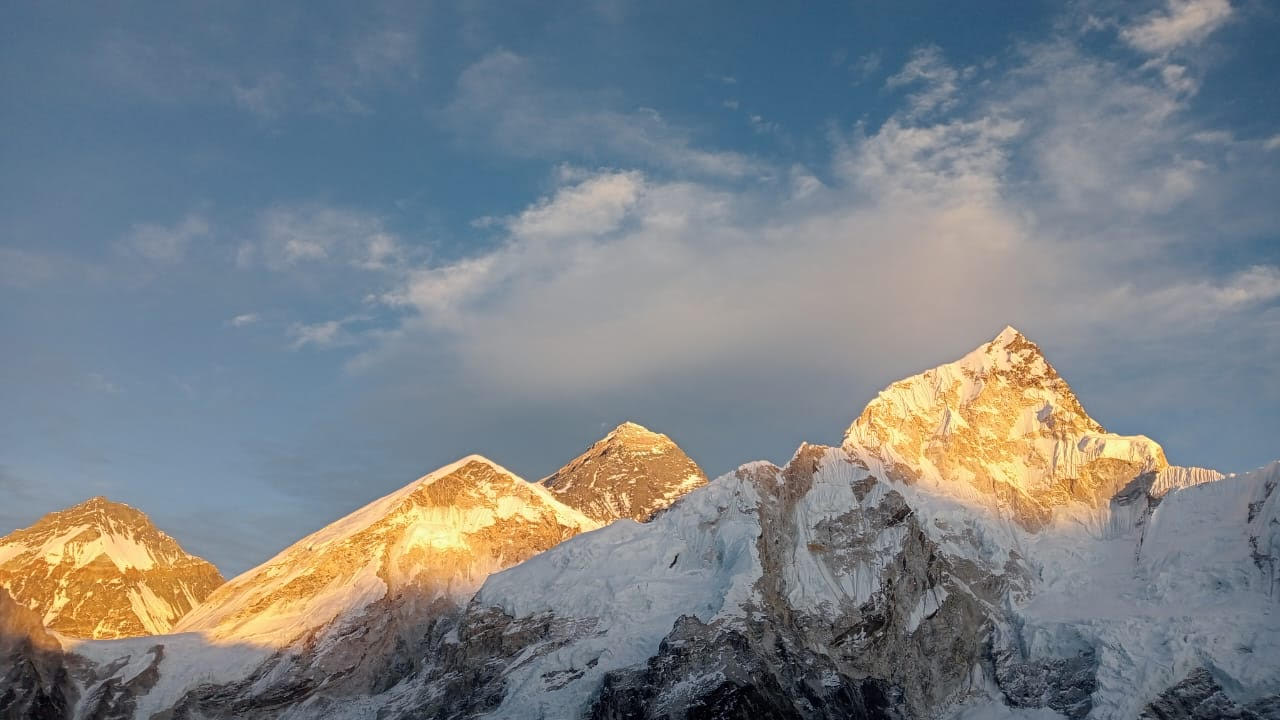
How tall is Mount Everest? The most current and accurate answer is 8,848.86 meters (29,031.7 feet). This iconic measurement represents not just a geographical truth but also a symbol of human curiosity, technological advancement, and international cooperation.
Whether you're an aspiring trekker, a passionate geographer, or just curious, knowing the true Height of Mount Everest adds depth to the legend of this majestic Himalayan giant.
🏔️ How Tall is Mount Everest? | Height, History & Measurement Insights
Mount Everest, known as Sagarmatha in Nepali and Chomolungma in Tibetan, holds the awe-inspiring title of the World's Highest Mountain. But how tall is Mount Everest exactly? The answer is both simple and fascinating, involving science, geography, and a bit of controversy.
📏 Official Height of Mount Everest: 8,848.86 Meters (29,031.7 Feet)
The official height of Mount Everest is 8,848.86 meters (29,031.7 feet) above sea level. This measurement was jointly declared by Nepal and China in 2020, resolving a long-standing discrepancy between previous measurements.
This updated figure includes the snow cap on the summit, providing a more accurate and universally accepted height.
🧭 Who Measured Mount Everest and When?
Over the years, Everest’s height has been calculated multiple times using increasingly advanced technology:
| Year | Measurement | Country/Agency |
|---|---|---|
| 1856 | 8,840 m (29,002 ft) | British Survey of India |
| 1955 | 8,848 m (29,029 ft) | Indian Government Survey |
| 1975 | 8,848.13 m (29,029 ft) | China Survey |
| 1999 | 8,850 m (29,035 ft) | U.S. GPS Survey (National Geographic) |
| 2020 | 8,848.86 m (29,031.7 ft) | Nepal & China Joint Survey |
The 2020 survey used Global Navigation Satellite Systems (GNSS) and ground-penetrating radar to measure both the rock height and the snow layer.
🧊 Does the Height of Everest Change?
Yes, Mount Everest’s height is not fixed. Several factors cause subtle fluctuations:
Plate tectonics: Everest sits on the collision zone of the Indian and Eurasian plates, which causes it to rise a few millimeters every year.
Earthquakes: The 2015 Nepal earthquake slightly altered the mountain's structure, prompting further studies on its elevation.
Climate change: Melting glaciers and snow compaction may also influence summit height over time.
📍 Height Above Sea Level vs. Prominence
Height above sea level: 8,848.86 meters – the most accepted method globally.
Topographic prominence: Mount Everest also ranks as the most prominent peak in the world, standing dramatically above all nearby terrain.
🏆 Everest’s Standing Among the World’s Tallest Mountains
Here’s how Everest compares to other giants:
| Rank | Mountain | Height (m) | Location |
|---|---|---|---|
| 1 | Mount Everest | 8,848.86 | Nepal/China |
| 2 | K2 (Mount Godwin-Austen) | 8,611 | Pakistan/China |
| 3 | Kangchenjunga | 8,586 | Nepal/India |
| 4 | Lhotse | 8,516 | Nepal/China |
| 5 | Makalu | 8,485 | Nepal/China |
No peak on Earth surpasses Mount Everest in sheer vertical elevation above sea level.
🧗 Why Knowing Everest’s Height Matters
Understanding Everest’s precise height is more than a trivia fact—it’s crucial for:
Geological research and tectonic studies
Mountaineering logistics and oxygen planning
Tourism and mapping accuracy
International collaboration in science
📚 Fun Facts About Everest's Height
If measured from the Earth’s center, Mount Chimborazo in Ecuador is technically farther from the core due to the equatorial bulge.
Everest’s summit grows approximately 4 mm per year due to plate movement.
The summit is in the death zone—an altitude above 8,000 meters where oxygen levels are dangerously low.








Add Your Comment