
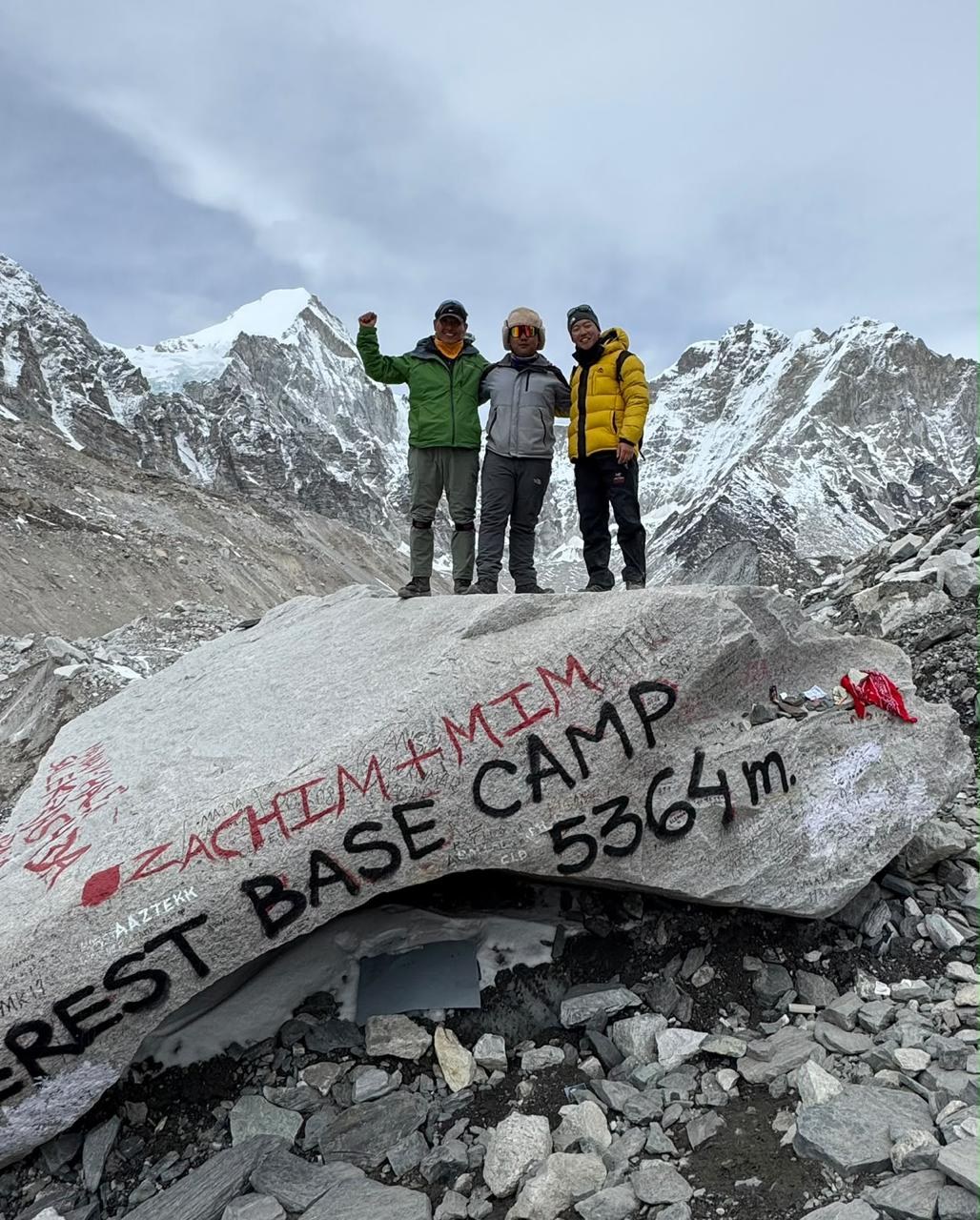
The Everest Base Camp and Gokyo Lakes Trek is a 17-day journey through two distinctive valleys in Nepal's Khumbu region. Rather than following the standard Everest Base Camp trail in both directions, this route turns towards Dole after Namche Bazaar, continues through Machhermo to Gokyo, and crosses Cho La Pass to rejoin the main Everest Base Camp trail at Lobuche. Along the way, you explore the Gokyo Lakes, climb Gokyo Ri, visit Everest Base Camp at 5,364 metres, and hike to Kala Patthar at approximately 5,545 metres. The journey brings together glacial lakes, high mountain viewpoints, Sherpa settlements, and the rugged landscape surrounding the Khumbu Glacier.
At Nepal Himalayas Trekking, we organise this 17-day trek for travellers who want to experience both Gokyo Valley and Everest Base Camp in one journey. Our itinerary includes an acclimatisation day in Namche Bazaar and a shorter trekking stage between Dole and Machhermo before reaching Gokyo. It also allows time for the Gokyo Ri ascent, the Cho La Pass crossing, and the Everest Base Camp excursion. The package is listed at USD 2,090 per person and includes the main trekking arrangements, such as domestic flights, mountain accommodation, meals during the trek, an English-speaking guide, porter support, and the required permits.
Why Combine Everest Base Camp and Gokyo Lakes in One Trek?
Combining Everest Base Camp and Gokyo Lakes allows you to experience two different parts of the Khumbu in one continuous journey. The classic Everest Base Camp trail takes you through familiar Sherpa settlements and towards the Khumbu Glacier, while the Gokyo route introduces a different landscape of glacial lakes, open valleys, and high mountain viewpoints. Instead of returning along the same outward trail from Namche Bazaar, this itinerary branches towards Dole and Machhermo, visits Gokyo, and crosses Cho La Pass to reconnect with the main Everest Base Camp route at Lobuche.
The combination offers several distinct high-altitude experiences within one itinerary. You can climb Gokyo Ri for views across the lakes and surrounding peaks, cross Cho La Pass between the two valleys, visit Everest Base Camp, and hike to Kala Patthar. These sections make the journey longer and more demanding than the standard EBC trek, but they also allow you to explore a broader area of the Everest region. The route is particularly suitable for trekkers who have enough time, good physical preparation, and an interest in going beyond the classic Everest Base Camp trail.
Gokyo Lakes
The Gokyo Lakes are a group of glacial lakes in the upper Gokyo Valley. Dudh Pokhari, commonly known as the third lake, lies beside Gokyo village, while other lakes extend farther through the valley. The colour of the water changes with the light and weather, and the surrounding landscape includes glaciers, rocky slopes, and high mountain peaks. The lakes are a major natural attraction within Sagarmatha National Park.
Gokyo Ri
Gokyo Ri rises to approximately 5,357 metres and is reached by a steep climb from Gokyo village. The ascent is physically demanding because of the altitude, but the summit provides broad views of Everest, Lhotse, Makalu, Cho Oyu, the surrounding glaciers, and the Gokyo Lakes below. We schedule the climb as a separate day so that trekkers can return to the village and rest before continuing towards Thagnag.
Cho La Pass
Cho La Pass stands at approximately 5,420 metres and connects the Gokyo Valley with the Everest Base Camp route. The crossing requires careful footing, particularly where loose stones, snow, or ice cover the trail. Conditions can differ considerably between trekking seasons and even from one day to another. Our guide checks the conditions before the crossing and helps the group maintain a suitable pace. Trekkers should avoid rushing on the steeper sections and follow the guide's instructions throughout the pass.
Combine a Helicopter Return with the Gokyo Trek
You can combine the Gokyo Lakes and Everest Base Camp Trek with a helicopter return to shorten the journey back to Kathmandu. After exploring Gokyo Valley, climbing Gokyo Ri, crossing Cho La Pass, and visiting Everest Base Camp, you can arrange a helicopter flight from the Everest region instead of trekking all the way back to Lukla. This option can save several days of walking and offers aerial views of the Khumbu mountains, glaciers, and valleys.
A helicopter return is an additional arrangement and is not included in the standard USD 2,090 package. The departure point, flight route, availability, and additional cost depend on weather, landing conditions, and the operator's schedule. If you are interested in combining this trek with a helicopter return, contact our team before booking so we can discuss the available options and adjust the itinerary accordingly.
Everest Base Camp and Gokyo Lakes Trek Highlights
- Explore the glacial lakes of the Gokyo Valley.
- Climb Gokyo Ri, approximately 5,357 metres, for panoramic Himalayan views.
- Cross Cho La Pass at approximately 5,420 metres.
- Visit Everest Base Camp at 5,364 metres.
- Hike to Kala Patthar at approximately 5,545 metres.
- Spend an acclimatisation day in Namche Bazaar.
- Follow the quieter approach through Dole and Machhermo before joining the main EBC trail.
- Experience Sherpa villages, Buddhist traditions, mountain lodges, and the landscapes of Sagarmatha National Park.
Everest Base Camp and Gokyo Lakes Trek Route
Kathmandu → Lukla → Phakding → Namche Bazaar → Acclimatisation Day in Namche → Dole → Machhermo → Gokyo Lakes → Gokyo Ri → Gokyo → Thagnag (Dragnag) → Cho La Pass → Dzongla → Lobuche → Gorak Shep → Everest Base Camp → Gorak Shep → Kala Patthar → Pheriche → Namche Bazaar → Phakding → Lukla → Kathmandu → Departure.
The Everest Base Camp and Gokyo Lakes Trek follows a circular route through the Khumbu region of Nepal, combining the Gokyo Valley with the classic Everest Base Camp trail. After flying from Kathmandu to Lukla, we trek through Phakding and Namche Bazaar. Beyond Namche, the route branches away from the main Everest Base Camp trail towards the Gokyo Valley, passing through Dole and Machhermo before reaching Gokyo village.
From Gokyo, the trail crosses the Ngozumpa Glacier to Thagnag before climbing over Cho La Pass (approximately 5,420m) and descending to Dzongla. The route then joins the classic Everest Base Camp trail near Lobuche. We continue to Gorak Shep and Everest Base Camp (5,364m), with an early-morning hike to Kala Patthar (approximately 5,545m) the following day. After visiting these landmarks, we descend through Pheriche and Namche Bazaar before returning to Lukla.
Everest Base Camp and Gokyo Lakes Trek Itinerary: 17 Days
Our 17-day itinerary follows the Gokyo Valley route before joining the classic Everest Base Camp trail at Lobuche. It includes an acclimatisation day in Namche Bazaar, an overnight stop in Machhermo, a separate day for Gokyo Ri, and the crossing of Cho La Pass.
Day 1: Arrival in Kathmandu
Upon your arrival at Tribhuvan International Airport in Kathmandu, our representative will welcome you and transfer you to your hotel. After checking in, you can rest or explore the nearby streets and prepare any last-minute trekking equipment. We will also arrange a pre-trek briefing to discuss the route, itinerary, and important details about the journey.
Day 2: Fly from Kathmandu to Lukla and Trek to Phakding
After breakfast, you travel to the airport for your flight to Lukla. Depending on the season and flight operations, the flight may depart from Kathmandu or Manthali Airport in Ramechhap. The flight offers views of the Himalayan landscape before you land at Lukla. Once you arrive, you meet the trekking crew and begin walking towards Phakding.
Day 3: Trek from Phakding to Namche Bazaar
Today, you follow the Dudh Koshi River through pine forests and traditional Sherpa settlements, crossing several suspension bridges along the way. After passing Monjo, you enter Sagarmatha National Park, where your permits are checked. The trail then climbs steadily towards Namche Bazaar, the main trading centre of the Khumbu region, where you stay overnight.
Day 4: Acclimatisation Day in Namche Bazaar
You spend an additional day in Namche Bazaar to help your body adjust to the increasing altitude. You can explore the village, visit the local market, or take an acclimatisation hike to nearby viewpoints. Walking to higher elevations and returning to Namche for the night helps your body adapt before continuing towards the Gokyo Valley.
Day 5: Trek from Namche Bazaar to Dole
Leaving Namche Bazaar, we follow the trail towards the Gokyo Valley, branching away from the main Everest Base Camp route beyond Namche. The trail passes through the Kyangjuma area and continues towards Mong La and Phortse Tenga before climbing through the forested hillside to Dole. As we gain elevation, the landscape gradually becomes more open, with views of the surrounding mountains.
Day 6: Trek from Dole to Machhermo
Today, you continue climbing through the Gokyo Valley, passing open alpine landscapes and small settlements along the trail. The route gradually gains elevation as you walk towards Machhermo, a quiet mountain village surrounded by impressive Himalayan scenery. You reach Machhermo and spend the night there, allowing time to rest before continuing to Gokyo.
Day 7: Trek from Machhermo to Gokyo Lakes
After breakfast, you follow the trail towards Gokyo, passing through rocky terrain and glacial landscapes. As you gain altitude, the views of the surrounding mountains become increasingly impressive. You continue towards the Gokyo Lakes, a series of high-altitude glacial lakes known for their clear blue water, and reach Gokyo village for an overnight stay.
Day 8: Hike to Gokyo Ri and Return to Gokyo
Today, you hike to Gokyo Ri, one of the major viewpoints in the Everest region. The climb is steep and demanding, but reaching the summit rewards you with panoramic views of Everest, Lhotse, Makalu, Cho Oyu, and the surrounding Himalayan peaks. After spending time enjoying the scenery and taking photographs, you descend to Gokyo village and stay overnight.
Day 9: Trek from Gokyo to Thagnag (Dragnag)
After breakfast, we leave Gokyo and head towards Thagnag, also known as Dragnag. The trail crosses the Ngozumpa Glacier, the largest glacier in Nepal, before reaching the settlement of Thagnag on the other side. This is a shorter trekking day that allows us to prepare for the challenging Cho La Pass crossing the following day.
Day 10: Trek from Thagnag to Dzongla via Cho La Pass
We start early for the crossing of Cho La Pass (approximately 5,420m), one of the most challenging sections of the trek. The trail climbs from Thagnag towards the pass, crossing rocky and glaciated terrain. After reaching the top, we descend carefully towards Dzongla. Weather and trail conditions can affect the difficulty of this crossing, so following the guide's instructions is important.
Day 11: Trek from Dzongla to Lobuche
After breakfast, you leave Dzongla and follow the trail towards Lobuche. The route gradually descends and joins the main Everest Base Camp trekking trail. As you continue through the rugged alpine landscape, you can enjoy views of the surrounding mountains and glacial valleys before reaching Lobuche, where you stay overnight.
Day 12: Trek from Lobuche to Gorak Shep and Visit Everest Base Camp
You begin the day with a trek from Lobuche towards Gorak Shep, following the rocky trail beside the Khumbu Glacier. After reaching Gorak Shep and having lunch, you continue towards Everest Base Camp at 5,364 metres. You spend time exploring the base camp area and enjoying views of the surrounding glacier and mountains before returning to Gorak Shep for the night.
Day 13: Hike to Kala Patthar and Trek to Pheriche
We wake early for the hike to Kala Patthar (approximately 5,545m), one of the main viewpoints of the Everest region. From the top, we can see Mount Everest and several surrounding Himalayan peaks. After enjoying the mountain views, we return to Gorak Shep for breakfast before descending towards Pheriche. The descent takes us back to lower elevations after several days at high altitude.
Day 14: Trek from Pheriche to Namche Bazaar
After breakfast, we descend through the Khumbu Valley, passing through Pangboche and Tengboche before continuing towards Phunki Tenga and Sanasa. From Sanasa, the trail climbs back to Namche Bazaar. Although much of the day involves descending, the final uphill section makes this a long trekking day.
Day 15: Trek from Namche Bazaar to Lukla
Today, you retrace the trail towards Lukla, descending through forests and traditional Sherpa villages. You pass through Phakding and cross several suspension bridges along the Dudh Koshi River before completing the final uphill section to Lukla. After reaching Lukla, you celebrate the completion of your trekking journey with the team and spend the night there.
Day 16: Fly from Lukla to Kathmandu
After breakfast, you take a return flight from Lukla to Kathmandu, enjoying your final aerial views of the Himalayan landscape. Upon arrival, our representative will transfer you to your hotel. You can spend the rest of the day relaxing, exploring Kathmandu, or enjoying the included farewell dinner.
Day 17: Departure from Kathmandu
Your Everest Base Camp and Gokyo Lakes Trek concludes today. Depending on your flight schedule, our representative will transfer you to Tribhuvan International Airport for your departure. We hope you leave Nepal with wonderful memories of the Khumbu region and your journey through the Everest and Gokyo valleys.
Cost of the Everest Base Camp and Gokyo Lakes Trek
The listed price for the 17-day Everest Base Camp and Gokyo Valley Trek with Nepal Himalayas Trekking is USD 2,090 per person. The package includes two nights of hotel accommodation in Kathmandu with breakfast, return domestic flights between Kathmandu and Lukla, mountain teahouse accommodation, and three meals a day during the trekking days. It also covers the required trekking permits, an English-speaking guide, and one porter shared between two trekkers.
The package also includes airport transfers, applicable government taxes and VAT, a farewell cultural dinner with our team, a trekking-team first-aid kit, and a sleeping bag for use during the trek. We provide each trekker with a Nepal Himalayas Trekking T-shirt and company cap. If you have specific requirements for accommodation, room arrangements, additional nights, or changes to the itinerary, please discuss them with our team before booking.
Package Price
| Package | Duration | Listed price |
|---|---|---|
| Everest Base Camp Trek and Gokyo Valley Trek | 17 days | USD 2,090 per person |
Services Included
The listed package includes the following services:
- Airport pickup and drop-off by private vehicle for international and domestic arrivals and departures, as arranged in the itinerary.
- Two nights of hotel accommodation in Kathmandu, including breakfast.
- Round-trip domestic flight tickets between Kathmandu and Lukla, including applicable airline taxes and fuel surcharges.
- Mountain accommodation in standard teahouses or lodges along the itinerary.
- Breakfast, lunch, and dinner during the trekking days.
- Sagarmatha National Park entry permit.
- Khumbu local entrance fee.
- An experienced English-speaking trekking guide, including the guide's meals, accommodation, salary, and insurance.
- Porter support, with one porter shared between two trekkers, including the porter's meals, accommodation, salary, and insurance.
- Government taxes and VAT.
- Farewell cultural dinner in Kathmandu with the Nepal Himalayas Trekking team.
- Trekking-team first-aid kit.
- One sleeping bag for use during the trek.
- One Nepal Himalayas Trekking T-shirt and one company cap.
Services Not Included
The following expenses are not included in the package unless confirmed separately:
- International airfare and Nepal visa fees.
- Lunch and dinner in Kathmandu.
- Travel and medical insurance, including emergency evacuation coverage.
- Drinks such as tea, coffee, bottled water, juice, and alcoholic beverages.
- Personal expenses, including hot showers, Wi-Fi, device charging, laundry, snacks, and telephone use.
- Tips for the guide and porters.
- Costs arising from natural calamities, flight disruption, accidents, or other circumstances beyond the company's control.
- Services not specifically mentioned in the package's inclusion list.
How Difficult Is the Everest Base Camp and Gokyo Lakes Trek?
The Everest Base Camp and Gokyo Lakes Trek is a demanding high-altitude journey. It involves 17 days of travel, repeated ascents and descents, several nights above 4,000 metres, and the crossing of Cho La Pass at approximately 5,420 metres. The Gokyo Ri climb and the excursion to Everest Base Camp also take place above 5,000 metres. The main challenge is not technical climbing but the combination of altitude, walking duration, uneven terrain, and the physical effort required over consecutive days.
The route is graded Moderate, but trekkers should not interpret this as an easy walk. In our experience of organising treks in the Everest region, a steady pace and a sensible approach to altitude are essential. The long ascent to Namche, the rocky trail around the Ngozumpa Glacier, the Cho La crossing, and the final approach to Gorak Shep each place different demands on the body. Good preparation and a realistic understanding of the route make a significant difference.
Who Can Do This Trek?
This trek is suitable for people with good general fitness who can walk for several hours on consecutive days and are comfortable with steep, uneven mountain trails. Previous high-altitude trekking experience is beneficial, especially for the Cho La crossing, although it does not remove the risk of altitude sickness.
Beginners may be able to complete the route with appropriate preparation, a gradual itinerary, and guidance from an experienced team. However, this is a demanding trek rather than an ideal first mountain walk. Anyone with relevant medical concerns should seek medical advice before booking.
Acclimatisation and Altitude Sickness
Acclimatisation is essential on the Everest Base Camp and Gokyo Lakes Trek because the route reaches elevations above 5,000 metres. Our itinerary includes an acclimatisation day in Namche Bazaar before continuing towards Dole, Machhermo, and Gokyo. The walk from Namche to Dole involves a considerable increase in sleeping altitude, followed by further gradual gains towards Gokyo. The shorter walking stage between Dole and Machhermo helps break up the journey, but it does not replace proper acclimatisation or remove the risk of altitude sickness.
Altitude sickness can affect anyone, regardless of age, fitness, or previous trekking experience. Common symptoms include headache, nausea, dizziness, unusual tiredness, and loss of appetite. Do not ignore symptoms or continue ascending simply to keep to the schedule. Tell your guide immediately if you feel unwell. Worsening symptoms or signs of a serious altitude-related condition require prompt medical attention and descent. We recommend comprehensive travel insurance that specifically covers high-altitude trekking and emergency helicopter evacuation.
Best Time for the Everest Base Camp and Gokyo Lakes Trek
Spring and autumn are generally the preferred seasons for this trek. Spring, from March to May, brings milder conditions in the lower valleys and rhododendron blooms in the forested sections. As you climb towards Dole, Machhermo, and Gokyo, the landscape becomes increasingly alpine, and temperatures remain cold at night. Autumn, from September to November, usually offers clearer mountain views after the monsoon and is a popular time for both the Gokyo and Everest Base Camp routes.
The season alone does not guarantee suitable conditions every day. Cho La Pass is particularly sensitive to snow, ice, wind, and visibility, and conditions can change quickly at this elevation. During winter, heavy snow may make the pass difficult or temporarily impassable. During the monsoon, rain, cloud, and flight disruption can affect the lower trail and Lukla flights. Our team monitors conditions and makes decisions based on safety rather than attempting to cross the pass in unsuitable weather.
Spring: March to May
Spring is a popular season for trekking in the Khumbu, with longer daylight hours and generally milder daytime temperatures in the lower valleys. The lower forests can be colourful with blooming rhododendrons, while the higher sections remain cold. Snow may still be present around Cho La, particularly earlier in the season, so the pass crossing depends on current conditions.
Autumn: September to November
Autumn generally brings clear mountain views after the monsoon, making it one of the busiest periods on the Everest trails. October and November are especially popular, and teahouses can become busy along the main route. Trekkers should book in advance and prepare for cold mornings and evenings at Gokyo, Dzongla, Lobuche, and Gorak Shep.
Winter and Monsoon
Winter brings colder temperatures and a greater possibility of snow and ice at high elevations. Cho La may become difficult to cross, and the itinerary can require changes if conditions are unsafe. During the monsoon, rainfall, cloud, wet trails, and flight delays can affect the journey. These seasons require greater flexibility and careful advice from an experienced local team.
Accommodation and Food During the Trek
Accommodation along the route is mainly in local teahouses and mountain lodges. Rooms are generally simple, commonly with twin beds and shared bathroom facilities. The availability of attached bathrooms, hot showers, charging points, and Wi-Fi varies from one village to another. Facilities become more basic at higher settlements such as Gokyo, Thagnag, Dzongla, Lobuche, and Gorak Shep, where supplies and services are more limited than in Namche Bazaar.
Meals during the trek are served at teahouses and generally include familiar options such as dal bhat, noodles, rice, soup, potatoes, pasta, eggs, and pancakes. Dal bhat is a practical choice for many trekkers because it provides a filling meal, and refills may be available depending on the lodge. We recommend eating regularly, carrying snacks for longer walking days, and drinking sufficient safe water. Hot drinks and bottled water can become more expensive as you gain altitude, so a reusable bottle and suitable purification method are useful.
What to Expect at Higher Villages
At Gokyo and the settlements beyond it, the choice of accommodation and meals is usually more limited than in Namche Bazaar. The number of lodges is smaller, and facilities may be basic, particularly during busy trekking periods. At Gorak Shep, rooms can be cold and availability limited, so trekkers should be prepared for simple conditions rather than expecting the comfort of a city hotel.
Packing List for the Combined Trek
Packing for the combined route requires preparation for cold temperatures, strong sunlight, wind, and possible snow. You will move from the lower Dudh Koshi Valley to high settlements and viewpoints above 5,000 metres, where temperatures can drop sharply after sunset. A layering system is more practical than relying on one heavy jacket because it allows you to adjust your clothing while walking and during breaks.
Your footwear and cold-weather equipment deserve particular attention. Well-broken-in trekking boots help on rocky trails and uneven descents, while warm gloves, a hat, waterproof layers, and a suitable sleeping bag are important for the upper villages and Cho La Pass. We include a sleeping bag in the package, and our team provides pre-trek guidance so that you can prepare according to the season and avoid carrying unnecessary equipment.
Essential Clothing and Equipment
- Moisture-wicking base layers and thermal underwear.
- Fleece or insulated mid-layer.
- Warm down jacket.
- Waterproof and windproof jacket and trousers.
- Trekking trousers and comfortable walking clothes.
- Warm hat, sun hat, and gloves.
- Wool or synthetic trekking socks.
- Well-broken-in, waterproof trekking boots.
- Lightweight shoes or sandals for evenings.
- Daypack and duffel bag.
- Sleeping bag suitable for cold mountain nights (provided by our team).
- Adjustable trekking poles.
- Headlamp with spare batteries.
- Sunglasses with strong UV protection.
- Sunscreen and SPF lip balm.
- Reusable water bottle and water purification tablets or filter.
- Personal medication and a small first-aid kit.
- Power bank and charging cables.
- Passport, permits, insurance details, and emergency contacts.
Everest Base Camp and Gokyo Lakes Trek Compared with Other Everest Routes
The standard Everest Base Camp Trek is the more direct option for travellers whose main goal is to visit Everest Base Camp and Kala Patthar. Our 14-day itinerary follows the classic route through Phakding, Namche Bazaar, Tengboche, Dingboche, Lobuche, and Gorak Shep, with acclimatisation days in Namche and Dingboche. It does not include Gokyo Valley or Cho La Pass, making it shorter than the combined 17-day journey.
The combined Gokyo and EBC route is suited to trekkers who want to explore both valleys and are prepared for the additional walking and high pass. The Everest Three Passes Trek is a more extensive circuit that includes Kongma La, Cho La, and Renjo La. Each route has a different level of difficulty and time commitment, so the right choice depends on your available days, physical preparation, and trekking goals.
Classic Everest Base Camp Trek
The classic EBC route follows the main trail from Lukla through Phakding, Namche Bazaar, Tengboche, Dingboche, Lobuche, and Gorak Shep. It includes visits to Everest Base Camp and Kala Patthar before returning through Pheriche and Namche Bazaar. Our standard package takes 14 days and is a suitable choice for travellers who want to focus on the Everest Base Camp experience.
Everest Base Camp and Gokyo Lakes Trek
The combined route branches away from the classic trail after Namche Bazaar and visits Dole, Machhermo, and Gokyo before crossing Cho La Pass. It then joins the main EBC trail at Lobuche and continues to Everest Base Camp and Kala Patthar. The 17-day itinerary offers more landscape variety and additional high-altitude experiences than the standard EBC trek.
Everest Three Passes Trek
The Three Passes Trek is a longer and more demanding route through the Khumbu, crossing Kongma La, Cho La, and Renjo La. It visits several of the same areas as the combined Gokyo and EBC trek but follows a wider circuit. Trekkers considering this route should have strong fitness, enough time, and a clear understanding of the demands of multiple high mountain passes.
Common Mistakes to Avoid During the Everest Base Camp and Gokyo Lakes Trek
Rushing the trek: Walking too quickly can lead to early fatigue. Maintain a comfortable pace, especially on uphill sections.
Ignoring altitude sickness symptoms: Report headaches, nausea, dizziness, or unusual tiredness to your guide instead of continuing silently.
Underestimating Cho La Pass: Snow, ice, and rocky sections can make the crossing challenging. Follow your guide's instructions and allow enough time.
Skipping acclimatisation: Use the Namche Bazaar rest day properly and avoid unnecessary physical exertion.
Poor physical preparation: Build your endurance before the trek through regular walking, uphill hikes, and stair climbing.
Wearing unsuitable footwear: Break in your trekking boots before departure to reduce the risk of blisters and discomfort.
Packing too much: Carry essential clothing and equipment without adding unnecessary weight to your backpack.
Underestimating mountain temperatures: Pack warm layers for overnight stays in Gokyo, Dzongla, Lobuche, and Gorak Shep.
Not drinking enough water: Stay hydrated throughout the day and use a reliable water purification method.
Ignoring changing weather: Be prepared for schedule adjustments, particularly around Cho La Pass, where conditions can affect safe passage.
Depending entirely on digital payments: Carry enough Nepalese rupees for personal expenses because payment facilities are limited in remote villages.
Choosing unsuitable travel insurance: Check that your policy covers trekking at the route's maximum altitude and emergency helicopter evacuation.
Overlooking personal rest and nutrition: Eat regular meals and allow time to recover after demanding walking days.
Making tight flight connections: Keep a buffer after your return flight from Lukla because weather-related delays can affect your travel schedule.
What Our Guide Says About the Route
Our guide recommends taking the Everest Base Camp and Gokyo Lakes Trek at a steady pace rather than rushing to complete each stage. The route involves several demanding sections, particularly the climb to Gokyo Ri, the Cho La Pass crossing, and the walk to Everest Base Camp. Weather and trail conditions can change quickly at higher elevations, so following the guide's instructions, taking sufficient rest, and communicating any signs of altitude sickness are important. The Cho La crossing should only be attempted when conditions are suitable.
A Note for Solo Travellers
Solo travellers are welcome to enquire about the Everest Base Camp and Gokyo Lakes Trek. However, travelling alone does not necessarily mean having a private guide and porter at the standard group price. The package cost may vary depending on whether you join other trekkers or arrange a private departure. If you are travelling solo, contact our team to confirm the available arrangements, room-sharing options, and final price before booking.
Why Trek with Nepal Himalayas Trekking?
Choosing a local trekking company is important when your route includes high-altitude settlements, a demanding pass crossing, and domestic flights that can be affected by weather. At Nepal Himalayas Trekking, we have been organising journeys in Nepal since 2012. Our team handles the practical arrangements that allow you to concentrate on the trek, including the guide, porter support, permits, accommodation, meals, and transport specified in the package.
A combined trek also requires careful attention to the order of overnight stops, the acclimatisation schedule, and the timing of the Cho La crossing. Our team explains the route before departure, helps you prepare for the conditions, and provides guidance along the trail. You can learn more about our Everest Base Camp and Gokyo Valley Trek and contact us if you have questions about the itinerary or package arrangements.
Book Your Everest Base Camp and Gokyo Lakes Trek
The 17-day Everest Base Camp and Gokyo Lakes Trek brings together the glacial lakes of Gokyo, the climb to Gokyo Ri, the crossing of Cho La Pass, and the classic approach to Everest Base Camp and Kala Patthar. It is a demanding route for trekkers who have enough time to explore both valleys and are prepared for the physical demands of high-altitude walking. With a planned itinerary and suitable acclimatisation, you can experience a wider section of the Khumbu than the standard EBC route alone.
If you are considering this journey, our team at Nepal Himalayas Trekking can help you understand the itinerary, package services, and preparation required. The listed 17-day package is USD 2,090 per person. Visit our Everest Base Camp and Gokyo Valley Trek page for package details or contact our team to discuss your dates and trekking plans.
Frequently Asked Questions
How many days is the Everest Base Camp and Gokyo Lakes Trek?
The Nepal Himalayas Trekking itinerary takes 17 days, beginning with arrival in Kathmandu and ending with departure. It includes the Gokyo Valley, Gokyo Ri, Cho La Pass, Everest Base Camp, and Kala Patthar, followed by the return to Lukla and Kathmandu.
How much does the Everest Base Camp and Gokyo Lakes Trek cost?
The listed Nepal Himalayas Trekking package price is USD 2,090 per person for the 17-day itinerary. It includes the main trekking arrangements, such as domestic flights, mountain accommodation, meals during the trek, guide and porter services, permits, airport transfers, a sleeping bag, and a farewell cultural dinner. Confirm the current price and services with our team before booking.
How high is Gokyo Ri?
Gokyo Ri is approximately 5,357 metres above sea level. The climb from Gokyo village is steep and physically demanding, but the summit offers wide views of the surrounding mountains, glaciers, and lakes.
How high is Cho La Pass?
Cho La Pass is approximately 5,420 metres above sea level. It is one of the most demanding sections of the itinerary, and snow, ice, and weather conditions can affect the crossing.
Is the Everest Base Camp and Gokyo Lakes Trek difficult?
Yes. The trek is challenging because of its duration, high altitude, steep ascents and descents, and the Cho La Pass crossing. Good physical preparation, a gradual pace, appropriate acclimatisation, and guidance from an experienced trekking team are important.
Can beginners do the combined Gokyo and Everest Base Camp trek?
Beginners with good fitness and proper preparation may be able to complete the route, but it is more demanding than the standard Everest Base Camp Trek. Previous high-altitude trekking experience is useful, particularly for the Cho La crossing. Anyone with medical concerns should seek advice from a qualified health professional before travelling.
What is the best season for the combined trek?
Spring, from March to May, and autumn, from September to November, are generally the preferred seasons. These periods usually offer more favourable trekking conditions, although weather can change quickly at high elevations. Cho La Pass should only be crossed when conditions are suitable.
Does the itinerary include acclimatisation days?
Yes. The itinerary includes an acclimatisation day in Namche Bazaar and a shorter walking day from Dole to Machhermo before reaching Gokyo. These stages help break up the ascent, but trekkers still need to monitor their health and follow the guide's advice throughout the journey.
What accommodation is available during the trek?
Accommodation is mainly in local teahouses and mountain lodges. Rooms are generally simple, often with twin beds and shared bathrooms. Facilities such as hot showers, Wi-Fi, and charging points vary by village and may cost extra.
Is Everest Base Camp included in the Gokyo Lakes trek?
Yes. This combined itinerary visits Gokyo Lakes and Gokyo Ri before crossing Cho La Pass and joining the Everest Base Camp trail at Lobuche. It then continues to Gorak Shep, Everest Base Camp, and Kala Patthar.
What permits are required for this trek?
The route requires the applicable Sagarmatha National Park entry permit and Khumbu local entrance fee. These are included in the listed NHT package. Permit requirements and fees can change, so our team confirms the current arrangements before departure.
Can I return by helicopter after visiting Gokyo and Everest Base Camp?
Helicopter arrangements depend on the departure point, weather, landing conditions, and flight availability. A helicopter return should not be assumed to be available directly from Gokyo or automatically included in the standard package. Contact our team if you want to discuss a helicopter option for your itinerary.
Do I need travel insurance for the trek?
Yes. You should have travel insurance that specifically covers high-altitude trekking and emergency evacuation at the elevations reached on this route. Check the policy wording carefully, including the maximum altitude covered and whether helicopter rescue is included.
What should I bring for the Cho La Pass crossing?
You should have well-broken-in trekking boots, warm layers, waterproof clothing, gloves, a warm hat, sunglasses, and trekking poles. Conditions can include snow and ice, so suitable footwear and protection against cold and wet weather are important. Your guide will advise the group according to the conditions before the crossing.
How can I book the trek with Nepal Himalayas Trekking?
You can book through our Everest Base Camp and Gokyo Valley Trek package page or contact our team directly through the Contact Us page. We can help you review the 17-day itinerary, confirm the current package price, and prepare for your journey.


Add Your Comment