

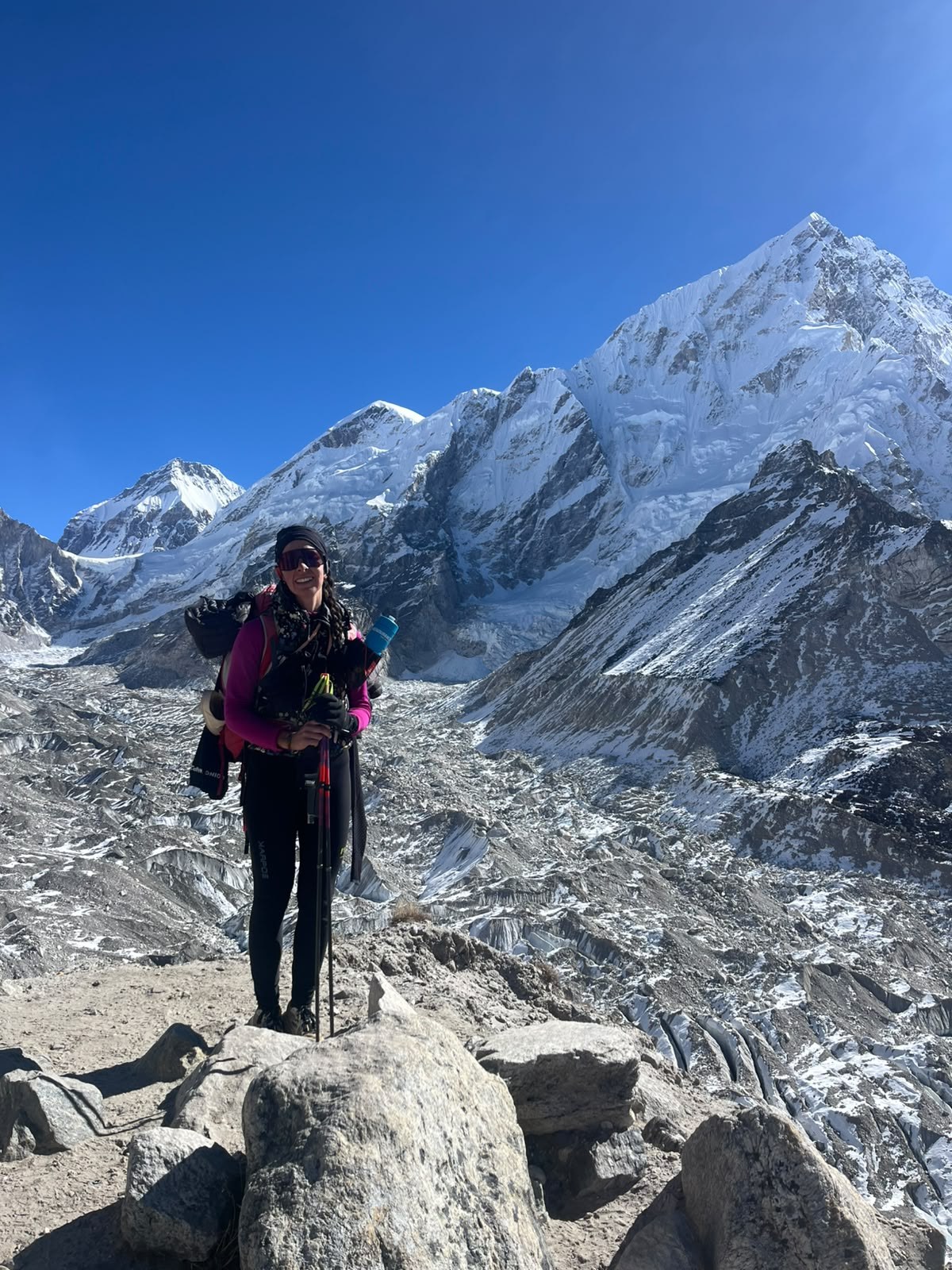
The Everest Base Camp Trek for Indian citizens is a high-altitude Himalayan journey through the Khumbu region of Nepal. Following the classic route from Kathmandu to Lukla, we trek through Phakding, Namche Bazaar, Tengboche, Dingboche, Lobuche, and Gorak Shep before reaching Everest Base Camp at 5,364 metres. The itinerary also includes an ascent to Kala Patthar at approximately 5,545 metres, offering one of the region's best-known viewpoints of Mount Everest and the surrounding peaks.
Our standard 14-day package for Indian citizens is quoted at USD 1,590 per person, approximately INR 150,000 at the estimated exchange rate. The final amount in Indian rupees depends on the exchange rate and payment arrangements. Before booking, confirm the current price, inclusions, and travel dates with our team.
If you prefer a different travel arrangement, we can also discuss approaching the Everest region by road through Salleri, choosing a luxury trekking package, or returning by helicopter. These alternatives differ in duration, transport, comfort, and cost, so each requires its own itinerary and quotation. This guide explains the standard trek, alternative packages, travel documents, permit fees, accommodation, preparation, and safety considerations to help Indian citizens plan their Everest Base Camp adventure.
Quick Facts: Everest Base Camp Trek for Indian Citizens
| Trek detail | Information |
|---|---|
| Standard itinerary | 14 days |
| Standard package price | USD 1,590 per person, subject to confirmation |
| Approximate INR equivalent | INR 150,000, depending on the exchange rate |
| Starting and ending point | Kathmandu |
| Main trekking route | Lukla, Phakding, Namche Bazaar, Tengboche, Dingboche, Lobuche, Gorak Shep, and Everest Base Camp |
| Everest Base Camp elevation | 5,364 m |
| Kala Patthar elevation | Approximately 5,545 m |
| Difficulty | Challenging |
| Best seasons | Spring and autumn |
| Accommodation | Kathmandu hotel and trekking-route teahouses, according to the package |
| Acclimatization | Scheduled stops in Namche Bazaar and Dingboche |
| Suitable for | Fit trekkers prepared for consecutive walking days and high altitude |
Everest Base Camp Trek Cost for Indian Citizens
Our standard 14-day Everest Base Camp Trek for indian citizens is quoted at USD 1,590 per person, equivalent to approximately INR 150,000 at the estimated exchange rate. The actual INR amount may change before payment, and the final quotation should confirm the services included in the price.
Your total trip budget will depend on international transport, insurance, personal expenses, optional services, and the package you choose. The standard package described here includes the services listed in the inclusions section, while items such as international airfare, travel insurance, personal purchases, and meals in Kathmandu beyond those specified remain separate expenses.
Before confirming your booking, request a written quotation that clearly states the package price, included meals, accommodation arrangements, permits, guide and porter services, flight arrangements, and exclusions. This makes it easier to compare packages accurately rather than choosing on headline price alone.
What Is Included in the Standard Package?
The following services are listed in the supplied standard-package description. Confirm them against your final quotation before booking.
- Airport transfers: Private airport pickup and drop-off according to the itinerary.
- Kathmandu accommodation: Hotel accommodation in Kathmandu Valley as specified in the itinerary, including breakfast.
- Domestic flights: Kathmandu–Lukla–Kathmandu flights, including applicable airline taxes and fuel surcharges, subject to the confirmed flight arrangement.
- Meals during the trek: Breakfast, lunch, and dinner during the mountain trek, as specified in the package.
- Trekking accommodation: Twin-sharing rooms in available teahouses or lodges along the route.
- Everest-region permits: Sagarmatha National Park entry permit and Khumbu Pasang Lhamu Rural Municipality trek card, subject to confirmation in the quotation.
- Trekking guide: An experienced, English-speaking trekking guide. The supplied package description includes the guide's salary, meals, accommodation, and insurance.
- Porter service: One porter for every two trekkers, with the associated staff costs stated in the package.
- Assistant guide for larger groups: An assistant guide for groups of more than six people, subject to the confirmed group arrangement.
- Staff Wages & Allowances: Salaries, daily wages, food, and equipment for guides and staff.
- First-aid kit: A trekking first-aid kit carried by the guide.
- Trekking map: We will provide a trekking map of the Everest region.
- Trekking poles: 1 pair per person (provided if required).
- Sleeping Bag: appropriate for -20 degree centigrade(if you don't add porter, you have to carry yourself)
- Duffel bag: Size 70 to 80 L (if you take porter service) with rain covers
- Emergency: Oximeter and Oxygen Can with Guide, Insurance for all Nepalese staff, and Assistance in arranging rescue operations in case of a medical emergency (travel insurance coverage required).
- Government taxes and paperwork: Applicable taxes and necessary paperwork listed in the confirmed package.
- Farewell dinner: A farewell dinner in Kathmandu with the NHT team, as specified in the package.
- Pre-trek briefing: A meeting before departure to review preparations and trekking arrangements.
What Is Not Included?
The following expenses are excluded unless your written quotation specifically states otherwise.
- International airfare: Flights between your home city and Nepal.
- Travel insurance: Insurance covering medical treatment, high-altitude trekking, and emergency evacuation.
- Personal expenses: Drinks, snacks, desserts, hot showers, charging, internet, telephone calls, laundry, and personal purchases.
- Meals in Kathmandu: Lunch and dinner, including additional meals required by early returns or flight delays, unless expressly included.
- Tips: Tips for guides, porters, and other trekking staff.
- Unplanned expenses: Costs caused by unforeseen events, changes in travel arrangements, voluntary early departure, or services outside the agreed package.
- Unlisted services: Any item not expressly included in the confirmed quotation.
Indian citizens do not need a Nepal visa, so a Nepal visa fee should not be added to their budget. Travellers of other nationalities should check the rules applicable to them.
Is the Everest Base Camp Trek Cheaper for Indian Citizens?
The price quoted in this guide applies specifically to the Indian-citizen package supplied for this article and should not be assumed to apply to all travellers or alternative itineraries, as other NHT packages may have different prices, inclusions, and arrangements. When comparing options, check what each package covers, including domestic flights, accommodation, meals, guide and porter services, permits, transfers, group size, and contingency arrangements, as a lower advertised price may reflect a different level of service or exclude expenses you would need to pay separately.
Flexible Everest Base Camp Trek Packages
Your preferred itinerary depends on the time available, budget, desired comfort, and whether you want to fly to Lukla, travel overland, or use a helicopter for the return journey. We can explain the alternatives and provide the relevant quotation before you decide.
Trekking packages
| Package option | Duration | Price per person | Main difference |
|---|---|---|---|
| Standard Everest Base Camp Trek for Indian citizens | 14 days | USD 1,590 | Classic route with Lukla flights |
| Everest Base Camp Trek via Salleri | 15 days proposed | USD 1,300 listed price, subject to approval of the revised itinerary | Overland approach instead of the direct Kathmandu–Lukla flight |
| Luxury Everest Base Camp Trek | 10 days | USD 4,890 listed package price | Higher-comfort arrangements, with a helicopter return as described in the package |
| Everest Base Camp Trek with helicopter return to Lukla | 11 days | USD 2,590 | Helicopter from Gorak Shep to Lukla, followed by a regular flight to Kathmandu |
Direct helicopter-return options
| Return option | Price per person | Route |
|---|---|---|
| Shared direct helicopter | USD 3,090 | Gorak Shep to Kathmandu |
| Private direct helicopter | USD 4,890 | Gorak Shep to Kathmandu |
These options differ in itinerary, transport arrangements, and services. Helicopter flights depend on weather, visibility, aircraft availability, and high-altitude operating conditions.
1. Standard Everest Base Camp Trek
The standard Everest Base Camp 14-day trek follows the classic Khumbu route through Phakding, Namche Bazaar, Tengboche, Dingboche, Lobuche, and Gorak Shep. From Gorak Shep, we trek to Everest Base Camp at 5,364 metres and climb Kala Patthar at approximately 5,545 metres.
The itinerary includes acclimatization stops in Namche Bazaar and Dingboche. This option suits trekkers who want the traditional Everest Base Camp experience, with domestic flights, trekking accommodation, meals, and guide and porter services as specified in the confirmed package.
2. Everest Base Camp Trek via Salleri Without a Lukla Flight
The Salleri route is an alternative for travellers who want to avoid flying directly from Kathmandu to Lukla. We travel overland towards the lower Everest region before joining the trekking trail. Road conditions, journey times, and the precise point where the trek begins depend on the route and transport arrangements.
Our 15-day Everest Base Camp Trek Without Lukla Flight is designed for travellers who prefer an overland approach through the lower Solukhumbu region instead of flying to Lukla. This option offers a different way to reach the Everest trail, but it still involves demanding walks and altitude-related risks. Travellers should review the itinerary, package price, inclusions, and physical requirements before booking. Read our Everest Base Camp Trek Without Lukla Flight guide for more details.
3. Luxury Everest Base Camp Trek
The Luxury Everest Base Camp Trek is designed for travellers who want a more comfortable trekking experience with upgraded accommodation and services where available. Our luxury package follows a 10-day itinerary and is listed at USD 4,890 per person, subject to confirmation against the current package details. Accommodation standards vary along the Everest route. More comfortable rooms and private bathrooms may be available at some locations, while facilities become simpler in remote, high-altitude villages. Although the luxury arrangement offers added comfort, it does not remove the physical demands of trekking or the need for proper acclimatization. Contact us to confirm the accommodation standards, meals, transport arrangements, and services included for your travel dates.
Explore our Luxury Everest Base Camp Trek for the itinerary and package details.
4. Everest Base Camp Trek with Helicopter Return
The 11-day Everest Base Camp Trek with Helicopter Return reduces the walking required on the return journey. The supplied main package price is USD 2,590 per person, with a helicopter from Gorak Shep to Lukla followed by a regular flight to Kathmandu. A direct helicopter from Gorak Shep to Kathmandu is a separate arrangement. The supplied prices are USD 3,090 per person for a shared flight and USD 4,890 per person for a private flight. These options have different flight arrangements and should not be treated as interchangeable.
Helicopter flights depend on weather, visibility, aircraft availability, and high-altitude operating conditions. Before booking, confirm the pickup point, flight route, luggage allowance, what happens if the helicopter cannot operate, and whether additional costs may arise from delays or changes.
14-Day Everest Base Camp Trek Itinerary
Our standard itinerary follows the classic Khumbu trail, with acclimatization days in Namche Bazaar and Dingboche. Walking times are approximate and can vary with weather, trail conditions, individual pace, and the final flight arrangements.
Day 1: Arrive in Kathmandu
We welcome you to Kathmandu, approximately 1,400 metres above sea level, and transfer you to your hotel according to the package. Depending on your arrival time, you can settle in, check your equipment, and meet our team for a briefing about the trek.
Day 2: Fly to Lukla and Trek to Phakding
We take the scheduled flight to Lukla, at approximately 2,860 metres, and begin trekking towards Phakding, at around 2,610 metres. The trail passes through small settlements and forested sections alongside the Dudh Koshi River. During busy trekking periods, flights may operate through Ramechhap/Manthali instead of Kathmandu, depending on airline arrangements.
Day 3: Phakding to Namche Bazaar
We follow the Dudh Koshi Valley, cross suspension bridges, and pass villages before entering Sagarmatha National Park. The route then climbs towards Namche Bazaar at approximately 3,440 metres. Allow around five to six hours for this walking day, depending on pace and trail conditions.
Day 4: Acclimatization in Namche Bazaar
We spend an additional night in Namche Bazaar to allow time for acclimatization. Depending on your condition and the guide's assessment, we can take a gradual hike towards the Everest View Hotel, at approximately 3,880 metres, and nearby villages before returning to Namche. Walk steadily and report any symptoms of altitude sickness to your guide.
Day 5: Namche Bazaar to Tengboche
We leave Namche and follow the hillside trail through the Khumbu region, with opportunities to see Ama Dablam and other peaks in clear weather. The route includes descents and uphill sections before reaching Tengboche at approximately 3,860 metres. Allow around five to six hours for the walk.
Day 6: Tengboche to Dingboche
We continue towards Dingboche at approximately 4,410 metres, passing traditional settlements and entering the broad Imja Valley. As we gain altitude, temperatures become colder and the landscape more open. Our guide helps maintain a comfortable pace with regular breaks.
Day 7: Acclimatization in Dingboche
We spend a second acclimatization day in Dingboche before continuing higher. Depending on your fitness, weather, and the guide's assessment, you may take a gradual hike towards Nangkartshang or another suitable viewpoint before returning to Dingboche to sleep. The aim is to support acclimatization, not to push for a difficult summit.
Day 8: Dingboche to Lobuche
We trek towards Lobuche, at approximately 4,940 metres, through rugged high-altitude terrain. Along the way, we pass the memorial area dedicated to climbers who lost their lives in the Himalayas. The walk generally takes around five to six hours, depending on conditions and pace. Regular breaks, warm clothing, and adequate hydration become increasingly important.
Day 9: Lobuche to Gorak Shep and Everest Base Camp
We trek from Lobuche to Gorak Shep, at approximately 5,164 metres, and continue towards Everest Base Camp at 5,364 metres. This is a demanding day, often involving seven to eight hours of walking in total. After visiting Base Camp, we return to Gorak Shep for the overnight stay.
Day 10: Kala Patthar and Trek to Pheriche
We start early for the ascent to Kala Patthar, at approximately 5,545 metres, a well-known viewpoint for Mount Everest and the surrounding peaks. After returning to Gorak Shep, we continue downhill towards Pheriche, at approximately 4,240 metres. The climb is strenuous at this elevation, so our guide assesses the weather and your condition before setting out.
Day 11: Pheriche to Namche Bazaar
We descend through the Khumbu Valley, retracing sections of the route through familiar settlements and mountain landscapes. This is a long walking day, and the uneven trail still requires a steady pace even as the altitude decreases. We take breaks as needed before spending the night in Namche Bazaar.
Day 12: Namche Bazaar to Lukla
We continue downhill through the Dudh Koshi Valley, passing Phakding and other villages before reaching Lukla at approximately 2,860 metres. The walk generally takes around six to seven hours and includes both downhill and uphill sections. Once in Lukla, we confirm the next day's flight arrangements with our team.
Day 13: Fly to Kathmandu and Farewell Dinner
We take the scheduled flight from Lukla to Kathmandu, subject to weather and airline operations. If the flight operates through Ramechhap/Manthali, a road transfer to Kathmandu may be required. After arriving, we transfer to the hotel according to the package arrangement and enjoy the included farewell dinner with the NHT team.
Day 14: Departure
We arrange your airport transfer according to your departure schedule. Because flights from Lukla can be delayed or rescheduled, we recommend allowing sufficient time between the expected return to Kathmandu and your international departure. Discuss your onward travel plans with us before booking.
Optional extra day: Kathmandu heritage tour (Durbar Square, Swayambhunath, Boudhanath, Pashupatinath). Ask us to add it before or after the trek.
Best Season for the Everest Base Camp Trek
Spring (March to May) and Early June
- Generally favourable trekking conditions with mild daytime temperatures at lower elevations.
- Blooming rhododendrons in the lower forests during spring.
- Good opportunities to enjoy views of Mount Everest and the surrounding Himalayan peaks when skies are clear.
- An active mountaineering season, with climbing teams preparing for Everest expeditions.
Autumn (Mid-September to Mid-December)
- Generally clear skies and excellent mountain views, particularly after the monsoon.
- Crisp mountain air and good visibility on clear days.
- A popular trekking season in the Sagarmatha National Park.
- Comfortable daytime conditions at lower elevations, although temperatures drop considerably at higher altitudes.
Winter (mid-December to February) brings colder temperatures, possible snow, and quieter trails. The monsoon (mid-June to August) brings greener landscapes, cloud cover, rain, and a greater risk of flight delays or cancellations. However, some travellers still trek to Everest Base Camp during these periods. We at Nepal Himalayas Trekking remain available to arrange treks outside the main seasons, subject to weather, trail conditions, and safe travel arrangements. Contact us to discuss suitable dates and prepare for the conditions expected during your trek.
Documents Indian Citizens Need for the Everest Base Camp Trek
Indian citizens do not need a visa to enter Nepal, but they should carry accepted identification and confirm current requirements with the relevant authorities and airline before departure.
Before travelling, prepare:
- Accepted identification: A valid Indian passport or an original voter ID card issued by the Election Commission of India is generally accepted for air travel between India and Nepal. Confirm current requirements before travelling.
- Flight details: Keep your international booking information and domestic flight confirmations accessible.
- Trekking confirmation: Carry your NHT booking confirmation and emergency contact details.
- Insurance information: Keep your policy documents and emergency assistance numbers available if you have purchased travel insurance.
- Children's documents: Confirm the required identification and travel documents for each child with the airline before departure.
Aadhaar should not be relied upon as a travel document for air travel between India and Nepal. Check current official guidance before departure, as document requirements can change.
Permits for the Everest Base Camp Trek
The classic Everest Base Camp route requires the Sagarmatha National Park entry permit and the Khumbu Pasang Lhamu Rural Municipality trek card. The applicable fees differ between SAARC nationals and visitors from other countries.
Permit Costs for Indian Citizens
| Permit | Indian citizens / SAARC rate | Other foreign visitors |
|---|---|---|
| Sagarmatha National Park entry permit | NPR 1,500 | NPR 3,000 |
| Khumbu Pasang Lhamu Rural Municipality trek card | NPR 2,000 | NPR 3,000 |
| Total | NPR 3,500 | NPR 6,000 |
These figures reflect the published rates available for this guide. Confirm the current fees before departure because official rates and procedures may change.
Why Do Indian Citizens Pay Less?
India is a member of the South Asian Association for Regional Cooperation (SAARC), and Nepal applies reduced rates to eligible SAARC nationals for these permits. The difference is based on nationality rather than the trekking services received. Carry accepted identification so your nationality can be verified during permit processing.
Are Permits Included in the Package?
The supplied standard-package description lists both permits among the included services. Ask us to confirm that they are included in your final quotation and that the current fees are covered. Keep the permits accessible during the trek, as officials may check them at designated points along the route.
How Difficult Is the Everest Base Camp Trek?
The Everest Base Camp Trek is a challenging high-altitude trek. It does not require technical climbing skills, ropes, or mountaineering experience, but it demands preparation, endurance, and a sensible approach to altitude.
You should be prepared for:
- Several consecutive days of walking, often five to eight hours per day.
- Steep ascents and descents, rocky paths, uneven ground, and long stone staircases.
- Cold mornings and nights, with temperatures at high elevations potentially dropping well below freezing.
- Thinner air above 3,000 to 4,000 metres, which can make ordinary walking feel more demanding.
- Basic teahouse facilities, particularly at remote, high-altitude villages.
The challenge comes from the combination of altitude, accumulated fatigue, and consecutive walking days rather than technical terrain alone. Even fit trekkers can develop altitude sickness.
Can Beginners Complete the Trek?
Yes, beginners can complete the trek if they prepare appropriately, follow the itinerary, and allow sufficient time for acclimatization. Previous hiking experience is helpful but not essential. Being fit does not eliminate the risk of altitude sickness.
How to Prepare Physically
Begin training around eight to twelve weeks before departure, if possible. Build cardiovascular fitness with brisk walking, cycling, running, or swimming. Add stair climbing, hill walking, and longer hikes while carrying a daypack. Break in your trekking boots before the trip and practise walking on consecutive days. Choose clothing suitable for cold, wind, rain, and changing mountain conditions.
Altitude Sickness and Safety
Altitude sickness can affect anyone who ascends too quickly, regardless of age or fitness. Common symptoms include headache, nausea, dizziness, loss of appetite, and unusual tiredness. Tell your guide promptly if you develop symptoms; do not continue ascending just to keep up with the group.
Our standard itinerary includes acclimatization stops in Namche Bazaar and Dingboche to give your body time to adjust. These stops reduce some of the risks but cannot prevent altitude sickness in every case.
What to Do if You Develop Symptoms
- Mild symptoms: Stop ascending and tell your guide. Rest while your condition is assessed. Do not go higher until symptoms have fully resolved.
- Persistent or worsening symptoms: Seek medical advice and descend if advised. Severe headache, repeated vomiting, or increasing weakness requires urgent attention.
- Emergency warning signs: Confusion, difficulty walking straight, or breathlessness while resting can indicate a life-threatening condition. Arrange immediate descent and emergency medical assistance. Do not leave the affected person alone or allow them to descend unassisted.
Descent is the key treatment for serious altitude sickness. Oxygen and other medical support may be needed while evacuation is arranged. Before departure, confirm that your travel insurance covers trekking at the elevations on your itinerary and emergency evacuation, including helicopter rescue where required.
Accommodation and Meals
We arrange hotel accommodation in Kathmandu and teahouse stays along the Everest trail according to the confirmed package. Teahouses generally provide simple rooms with twin beds. Bathrooms may be shared at higher elevations, and heating is usually concentrated in common dining areas. Hot showers, Wi-Fi, and device charging may cost extra.
During the trek, breakfast, lunch, and dinner are included according to the package arrangements. Menus commonly feature dal bhat, noodles, rice, soups, potatoes, eggs, and other simple meals. Eat regularly to maintain your energy, even if your appetite decreases at altitude. Drink safe water and ask your guide about appropriate water-treatment options.
Before booking, confirm the number of included meals and whether any meals are provided in Kathmandu. Drinks, snacks, and additional lodge services may not be included.
Packing for the Everest Base Camp Trek
Pack for changing temperatures and cold conditions at high altitude. Focus on the essentials rather than carrying unnecessary weight.
- Clothing: Moisture-wicking base layers, trekking trousers, warm fleece or insulated layers, waterproof jacket and trousers, thermal wear, gloves, and a warm hat.
- Footwear and bags: Broken-in trekking boots, suitable trekking socks, a daypack, and a sleeping bag appropriate to the season and accommodation arrangements.
- Sun and cold protection: Sunglasses, sunscreen, lip balm, and extra insulation for cold mornings and nights.
- Personal essentials: Reusable water bottle, personal medication, toiletries, and any medication recommended by a qualified healthcare professional.
- Documents and valuables: Accepted identification, booking details, insurance documents, cash, phone, and electronic items protected from moisture.
Ask us which equipment is supplied and which items you need to bring or hire. This helps avoid unnecessary purchases and ensures you are prepared for the conditions on your chosen itinerary.
Travel Insurance for Indian Citizens
Choose a travel insurance policy that explicitly covers high-altitude trekking up to the maximum elevation of your itinerary, along with emergency medical treatment and evacuation by helicopter where necessary. Standard travel policies may exclude high-altitude activities or helicopter rescue, so check the wording, coverage limits, and exclusions carefully.
Keep your policy number, emergency contact details, and claims instructions accessible during the trek. Confirm how evacuation approval works in remote mountain areas. Insurance can help with unexpected costs, but it does not replace proper preparation, acclimatization, or following your guide's safety advice.
How to Choose the Right Flexible Everest Base Camp Package
The most suitable package depends on your available time, budget, comfort preferences, and transport choices. Before booking, tell us your preferred dates, group size, previous trekking experience, and whether you want the standard Lukla route, a road approach through Salleri, a luxury arrangement, or a helicopter return.
The standard itinerary includes acclimatization days in Namche Bazaar and Dingboche. We do not recommend removing necessary acclimatization simply to shorten the trip. Weather, flight schedules, and road conditions can also affect travel plans, so tell us if you have a fixed international departure date.
When comparing alternatives, ask for the complete itinerary and written quotation. Confirm the price, accommodation, meals, permits, domestic transport, guide and porter arrangements, and what happens if weather disrupts the schedule. This allows you to choose based on the full experience rather than price alone.
Why Trek with Nepal Himalayas Trekking?
Nepal Himalayas Trekking is a locally based trekking company in Kathmandu. The supplied company information states that NHT has operated since 2012 and that founder Prakash Lamsal has worked in Nepal's trekking industry since that year. Our local team helps trekkers prepare for the journey, understand the route, and coordinate trekking arrangements.
- Local trekking support: We help you plan the itinerary, understand the route, and prepare for the conditions of the Everest region.
- Experienced guides: Our supplied package information specifies experienced, licensed trekking guides. Confirm the staff arrangements for your departure.
- Options for different travel preferences: We can discuss standard, road-access, luxury, and helicopter-return arrangements.
- Flight coordination: We help coordinate domestic flight arrangements and explain available alternatives when weather or operating conditions affect travel.
- Staff welfare: Ask us about the guide and porter arrangements, insurance, and load limits included in your package.
- Pre-trip communication: We provide planning support so you can clarify equipment, documents, costs, and logistics before departure.
We encourage you to review the final quotation and itinerary carefully so the services you expect match the package you book.
Frequently Asked Questions
How much does the Everest Base Camp Trek cost for Indian citizens?
The supplied price for our standard 14-day package is USD 1,590 per person, approximately INR 150,000 at the estimated exchange rate. The INR equivalent can change. Confirm the current price and inclusions before booking.
Do Indian citizens need a visa to visit Nepal?
No. Indian citizens do not need a visa to enter Nepal. They should carry accepted identification and check current entry and airline requirements before departure.
Which documents are accepted for air travel between India and Nepal?
A valid Indian passport or an original voter ID card issued by the Election Commission of India is generally accepted. Check current official guidance and airline requirements before travelling. Do not rely on Aadhaar as a travel document for this journey.
Is the Indian-citizen package cheaper than the international package?
The supplied Indian-citizen package price is USD 1,590 per person. Other NHT packages may have different prices and services. Confirm the applicable price for your nationality and selected itinerary.
What extra expenses should I budget for?
Possible additional expenses include international airfare, travel insurance, personal equipment, tips, snacks and drinks outside included meals, hot showers, charging, laundry, and other personal purchases. Ask for a written inclusions and exclusions list to estimate your total budget.
Can I complete Everest Base Camp in fewer than 14 days?
A shorter itinerary may be possible with different arrangements, but it should not be created by removing necessary acclimatization without careful assessment. Our standard itinerary is 14 days. If you have less time, ask us about suitable alternatives and their trade-offs.
Can I reach Everest Base Camp without flying to Lukla?
Yes. You can enquire about the road approach through Salleri. The journey changes the transport arrangements and duration. NHT's existing road package is listed as 16 days; any revised 15-day option should be confirmed before booking.
Can I choose a luxury package or helicopter return?
Yes. Luxury trekking and helicopter-return packages are separate arrangements with their own prices, services, and operating conditions. Ask us to confirm the route, accommodation, transport, inclusions, and contingency plan before booking.
What is the best season for the Everest Base Camp Trek?
Spring, from March to May, and autumn, from September to November, are generally the most popular seasons. Conditions vary from year to year, so prepare for cold weather and possible flight delays even during the main trekking periods.
Is the trek suitable for beginners?
Yes, it can be suitable for prepared beginners who are comfortable walking for several hours on consecutive days and understand the risks of high altitude. Train before departure and follow the planned acclimatization schedule.
Are permits included in the standard package?
The supplied package description lists the Sagarmatha National Park permit and Khumbu Pasang Lhamu Rural Municipality trek card as included. Confirm the current permit fees and inclusion status in your final quotation.
What should I do if I feel unwell at high altitude?
Tell your guide immediately and do not continue ascending if you develop symptoms of altitude sickness. Severe breathlessness at rest, confusion, or difficulty walking requires urgent medical help and descent. Confirm that your insurance covers high-altitude trekking and emergency evacuation.
Can Lukla flight delays affect the itinerary?
Yes. Weather and operating conditions can delay or cancel flights to and from Lukla. Leave a suitable buffer before an important international departure and ask our team how delays, extra accommodation, and alternative transport are handled under your package.
Can I book a private Everest Base Camp Trek?
Ask us about private departures and provide your preferred dates and group size. We can confirm availability, pricing, and whether the itinerary or services differ from the standard package.
Book Your Everest Base Camp Trek with Nepal Himalayas Trekking
Our standard 14-day Everest Base Camp Trek follows the classic Khumbu route to Everest Base Camp and Kala Patthar. If you prefer a road approach, higher-comfort accommodation, or a helicopter return, we can explain how each option changes the route, duration, services, and cost. Explore our Everest Base Camp Trek package, learn more about the Everest region, or visit Nepal Himalayas Trekking. For a tailored quotation, contact our team with your preferred dates, group size, and travel preferences.
Before confirming your booking, ask us to verify the current Indian-citizen price, package inclusions, permit arrangements, flight details, and final itinerary. We can then help you choose an arrangement that fits your plans while allowing the preparation and acclimatization needed for a safer high-altitude trek.



Add Your Comment