

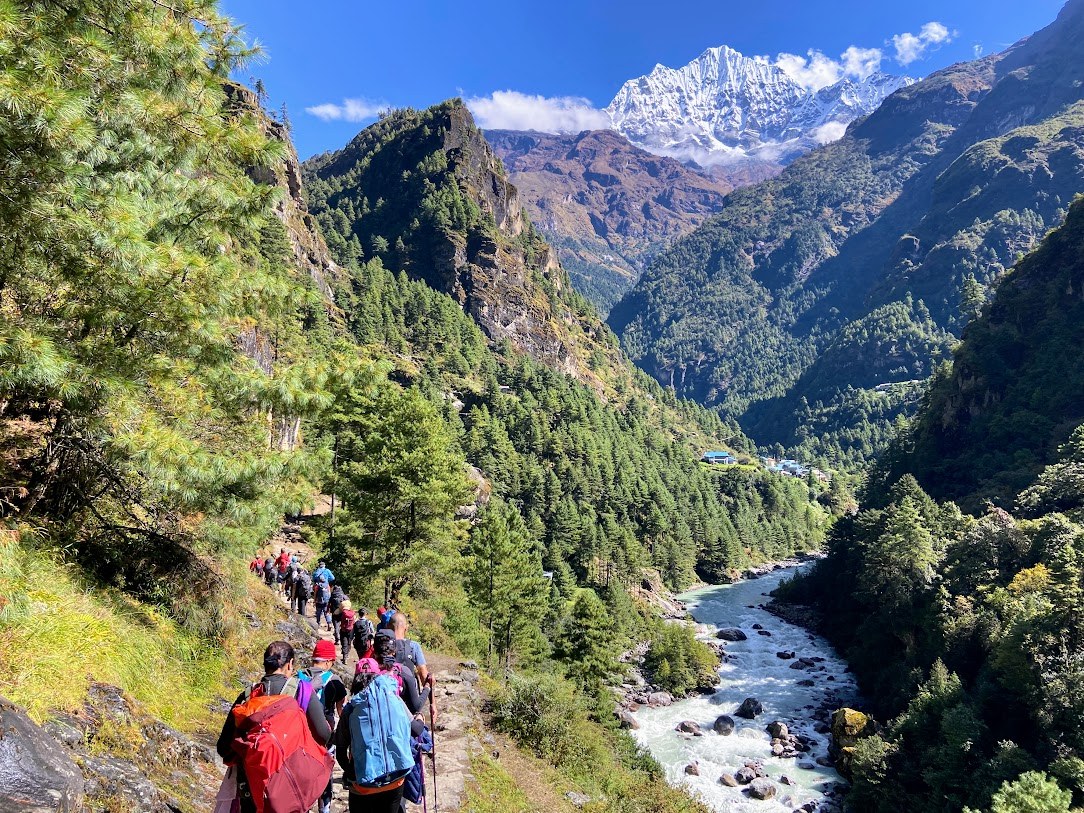
Can you trek to Everest Base Camp without flying to Lukla? Yes. The Everest Base Camp Trek Without Lukla Flight is a road-based route that takes you from Kathmandu to Salleri and Surke before joining the classic Everest trekking trail around Phakding. From there, the route continues through Namche Bazaar, Tengboche, Dingboche, Lobuche and Gorak Shep to Everest Base Camp at 5,364 meters and Kala Patthar at 5,545 meters.
This route suits trekkers who do not want to take a domestic flight to Lukla. The trade-off is a longer and rougher road journey, especially between Salleri and Surke. Once you begin trekking from Surke, you follow the familiar Khumbu route toward Everest Base Camp. The 15-day itinerary includes acclimatization days in both Namche Bazaar and Dingboche, giving you more time to adjust to the increasing altitude before reaching the highest parts of the trek.
Quick Facts
| Trek Fact | Details |
|---|---|
| Trek Name | Everest Base Camp Trek Without Lukla Flight |
| Duration | 15 Days |
| Starting Point | Kathmandu |
| Roadhead | Salleri and Surke |
| Trekking Start | Surke |
| Main Trail | Surke – Phakding – Namche – Tengboche – Dingboche – Lobuche – Gorak Shep |
| Everest Base Camp | 5,364 m |
| Kala Patthar | 5,545 m |
| Difficulty | Challenging |
| Accommodation | Teahouses and lodges |
| Transportation | Bus/Jeep |
| Best Seasons | March–May and October–November |
| Maximum Trekking Altitude | 5,545 m |
| Group Size | 1–25 people |
Highlights
- Road journey from Kathmandu to Salleri and Surke, avoiding the Lukla flight
- Trek through the classic Khumbu route from Surke and Phakding to Everest Base Camp
- Reach Everest Base Camp at 5,364 meters
- Hike to Kala Patthar at 5,545 meters for views of Everest and the surrounding peaks
- Dedicated acclimatization days in Namche Bazaar and Dingboche
- Visit Tengboche Monastery and traditional Sherpa settlements
- Cross suspension bridges and walk through forests, alpine valleys and high Himalayan terrain
- 15-day itinerary with road transportation, trekking and return to Kathmandu
- Teahouse accommodation with breakfast, lunch and dinner during the trekking section
What Is the Everest Base Camp Trek Without Lukla Flight Like?
The 15-day Everest Base Camp Trek Without Lukla Flight begins with two days of overland travel from Kathmandu to Salleri and then Surke instead of taking a domestic flight to Lukla. The Kathmandu–Salleri journey is long, while the Salleri–Surke section is rougher and more off-road. Once you start trekking from Surke, the route joins the main Everest Base Camp trail around Phakding and continues through Namche Bazaar, Tengboche, Dingboche and Lobuche. The landscape changes gradually from green hills, forests and Sherpa villages to colder and drier alpine terrain as you approach Gorak Shep, Everest Base Camp and Kala Patthar.
The trekking section includes acclimatization days in Namche Bazaar and Dingboche. These stops give your body time to adjust as the route gains elevation. After Dingboche, the trek continues toward Lobuche and Gorak Shep before reaching Everest Base Camp and Kala Patthar. The return follows Pheriche, Namche and Surke before the road journey through Salleri brings you back to Kathmandu.
Why Trek to Everest Base Camp Without Lukla Flight?
The main reason to choose this route is to reach Everest Base Camp without taking the Lukla flight. Instead, you travel overland to Salleri and Surke and begin walking from Surke. This suits trekkers who prefer road travel or do not want the beginning of their journey to depend on domestic flight operations.
The road also gives you a chance to see more of the lower Solukhumbu region before entering the main Khumbu trail. Once you reach the Phakding area, you continue through the same major destinations found on the classic EBC route, including Namche Bazaar, Tengboche, Dingboche, Lobuche, Gorak Shep, Everest Base Camp and Kala Patthar. If you want to compare this route with our standard Everest journey, you can also explore our [Everest Base Camp Trek].
15-Day Everest Base Camp Trek Without Lukla Flight Itinerary
Day 1: Drive from Kathmandu to Salleri
The journey begins with a long drive from Kathmandu to Salleri, the administrative centre and major road gateway of Solukhumbu. The route passes through the hill districts east of Kathmandu, with changing landscapes of rivers, terraced farmland, forests and mountain settlements. The drive usually takes around 8–10 hours, depending on traffic and road conditions. Overnight in Salleri.
Day 2: Drive from Salleri to Surke
After breakfast, continue toward Surke by jeep. The road becomes considerably rougher beyond Salleri, with sections of unpaved and uneven mountain road. The journey generally takes around 4–7 hours, depending on the road surface, vehicle, traffic and weather. Although the distance is much shorter than the Kathmandu–Salleri drive, the slower mountain road and rough sections can make the journey take several hours. Surke is situated at around 2,290 meters and provides access to the Khumbu trekking route without requiring a flight to Lukla. Overnight in Surke.
Day 3: Trek from Surke to Phakding
The trek begins from Surke and gradually joins the main Everest Base Camp route near Chheplung before continuing toward Phakding. The trail passes through villages, forested sections and the Dudh Koshi valley before reaching Phakding at around 2,610 meters. The walk takes approximately 4–5 hours and provides a relatively gentle introduction to the trekking section. Overnight in Phakding.
Day 4: Trek from Phakding to Namche Bazaar
The trail follows the Dudh Koshi River toward Monjo and the entrance area of Sagarmatha National Park before continuing across several suspension bridges. The final approach to Namche includes a sustained uphill climb through the forest. The walk takes around 5–6 hours, depending on pace and trail conditions. Namche Bazaar, at around 3,440 meters, is the main trading and accommodation centre of the Khumbu region. Overnight in Namche.
Day 5: Acclimatization Day in Namche Bazaar
Today is dedicated to acclimatization in Namche Bazaar. You can take a controlled hike toward the Everest View Hotel or nearby viewpoints and return to Namche to sleep. The hike usually takes around 3–4 hours, depending on the route and pace. If you experience significant altitude symptoms, reduce the activity and inform your guide.
Day 6: Trek from Namche Bazaar to Tengboche
Leaving Namche, the trail climbs gradually along the valley with views toward Thamserku, Kangtega, Ama Dablam, Lhotse and Everest. The route descends toward Phunki Tenga before climbing again through rhododendron and pine forest to Tengboche at around 3,860 meters. The walk takes approximately 5–6 hours. Tengboche Monastery is one of the major cultural landmarks of the route. Overnight in Tengboche.
Day 7: Trek from Tengboche to Dingboche
The trail continues through Pangboche and the upper Imja Valley toward Dingboche. Vegetation becomes thinner as the altitude increases, while Ama Dablam remains one of the dominant mountains along the route. The walk takes around 5–6 hours. Dingboche sits at around 4,410 meters and is an important point before the higher section of the trek. Overnight in Dingboche.
Day 8: Acclimatization Day in Dingboche
The second acclimatization day takes place in Dingboche. A common option is to hike toward Nagarjun Hill or the surrounding higher viewpoints before returning to Dingboche to sleep. The hike generally takes around 3–4 hours, depending on the route and pace. If you develop significant altitude symptoms, reduce the activity and discuss it with your guide.
Day 9: Trek from Dingboche to Lobuche
The trail leaves Dingboche and gradually climbs toward the Khumbu glacier valley. After passing through the area around Thukla and the memorials dedicated to climbers who died in the Everest region, the trail continues toward Lobuche. The walk takes approximately 5–6 hours. At around 4,940 meters, Lobuche is already in a cold and exposed high-altitude environment. Overnight in Lobuche.
Day 10: Trek to Gorak Shep and Everest Base Camp
This is one of the hardest days of the itinerary. The trail climbs from Lobuche toward Gorak Shep, around 5,164 meters, where you leave unnecessary belongings at the lodge before continuing toward Everest Base Camp with your daypack. The route follows the Khumbu Glacier area and can be rocky and uneven. The complete walking day takes around 7–9 hours, including the walk to Everest Base Camp and back to Gorak Shep. After reaching Everest Base Camp at 5,364 meters, you return to Gorak Shep for the night.
Day 11: Kala Patthar Sunrise and Trek to Pheriche
An early start takes you toward Kala Patthar at 5,545 meters. The climb is steep in places, and the cold and thin air can make the ascent feel considerably harder. From the viewpoint, you can see Everest and the surrounding high peaks before descending toward Gorak Shep and continuing to Pheriche. The day's walking takes around 8–9 hours, depending on the time spent at Kala Patthar and the pace of the group. The substantial descent is important after spending time at the highest elevations. Overnight in Pheriche at around 4,240 meters.
Day 12: Trek from Pheriche to Namche Bazaar
The trail descends through Pangboche and Tengboche before continuing toward the lower Khumbu. The air becomes noticeably warmer and the vegetation gradually returns as you lose elevation. After the final section toward Namche, you return to the familiar Sherpa trading town for the night. The walk takes around 6–7 hours. Overnight in Namche.
Day 13: Trek from Namche Bazaar to Surke
The return journey follows the trail back through the Dudh Koshi valley, passing Phakding and continuing toward Surke. This is a long 7–9 hour walking day with substantial downhill sections, so trekkers should not assume that the return is automatically easy. After reaching Surke, rest before the following day's road journey. Overnight in Surke.
Day 14: Drive from Surke to Salleri
After breakfast, take a jeep from Surke back toward Salleri. The same rough road that you experienced at the beginning of the journey can take around 7–9 hours, depending on road conditions, traffic and weather. Overnight in Salleri.
Day 15: Drive from Salleri to Kathmandu
The final day is a long road journey from Salleri to Kathmandu, generally taking around 8–10 hours depending on traffic and road conditions. Once you reach the capital, the trek officially ends. Because road travel can be affected by traffic and mountain road conditions, it is better not to arrange an important international connection too tightly around the expected arrival time.
Everest Base Camp Without Lukla Flight Route
Kathmandu → Salleri → Surke → Phakding → Namche Bazaar → Tengboche → Dingboche → Lobuche → Gorak Shep → Everest Base Camp → Gorak Shep → Kala Patthar → Pheriche → Namche Bazaar → Surke → Salleri → Kathmandu
The route can be understood in three main stages. The first is the overland approach from Kathmandu to Salleri and Surke, replacing the flight to Lukla and taking you through the lower Solukhumbu region. The second is the classic Khumbu trekking route, beginning around Surke and Phakding before continuing to Namche Bazaar, Tengboche, Dingboche, Lobuche and Gorak Shep. The third stage is the return journey, beginning with Kala Patthar and the descent through Pheriche and Namche before continuing to Surke and Salleri by road.
How Is It Different From the Lukla Flight EBC Trek?
| Feature | Without Lukla Flight | Classic Lukla Route |
|---|---|---|
| Access | Kathmandu–Salleri–Surke by road | Flight to Lukla |
| Flight dependence | No Lukla flight | Yes |
| Road travel | Long and rough in places | Limited |
| Trek starts | Surke | Lukla |
| Main Khumbu trail | From Phakding onward | From Lukla onward |
| Acclimatization | Namche and Dingboche | Depends on itinerary |
| Travel comfort | Lower during road section | Higher during access |
| Weather concern | Road conditions | Flight conditions |
| Best for | Trekkers avoiding flights | Trekkers wanting faster access |
The main difference is at the beginning and end of the journey. Once you reach the main Khumbu trail, both routes face the same demanding section around Dingboche, Lobuche, Gorak Shep, Everest Base Camp and Kala Patthar.
Is the Salleri to Surke Road Difficult?
This is one of the parts trekkers should understand before booking the route. The road beyond Salleri is rougher than the main highways around Kathmandu and can include unpaved, uneven and bumpy sections. Travel time can change depending on weather, traffic and road conditions.
We arrange this section with experienced local drivers and suitable jeeps for the mountain road. We also keep some flexibility in the schedule because travel time can change with road conditions, weather, traffic and road work. The exact vehicle endpoint and road condition between Salleri and Surke can also vary by season. Your guide coordinates the transfer and adjusts the plan when necessary. For the same reason, we recommend leaving a buffer between the end of the trek and any important international flight from Kathmandu.
Everest Base Camp Trek Without Lukla Flight Difficulty
The trek is challenging, mainly because of the altitude rather than technical climbing. The route reaches 5,364 meters at Everest Base Camp and 5,545 meters at Kala Patthar, where the air contains considerably less oxygen than at sea level.
Long walking days, uphill and downhill sections, and several days at high altitude make the trek physically demanding. Trekkers should be comfortable with long walking days and prepared for changing conditions. If a trekker develops symptoms of altitude sickness, the itinerary should be changed rather than continuing simply to maintain the planned schedule.
Acclimatization and Altitude on the Trek
Altitude becomes increasingly important after Namche. This itinerary includes a dedicated acclimatization day in Namche Bazaar at around 3,440 meters and another in Dingboche at around 4,410 meters. These days allow you to gain some daytime elevation through controlled hikes while returning to the same lodge for sleep. In Namche, you can hike toward the Everest View Hotel or nearby viewpoints before returning to the town. In Dingboche, the hike toward Nagarjun Hill provides another opportunity to spend time at a higher elevation before returning to sleep at Dingboche.
Common altitude-related symptoms can include headache, nausea, dizziness, unusual tiredness, loss of appetite and difficulty sleeping. Any concerning symptoms should be reported to the guide early. If symptoms worsen, descending is more important than completing the itinerary as originally planned.
What You See Along the Way
The route combines several distinct Himalayan environments. The lower section around Salleri and Surke has green hills, forests, farmland and traditional settlements. Around Phakding and Namche, the trail follows the Dudh Koshi valley and crosses suspension bridges before entering the heart of the Khumbu.
Above Namche, the landscape becomes increasingly alpine. Tengboche provides views of Ama Dablam and Everest, while Dingboche introduces a drier high-altitude environment. Beyond Lobuche, the landscape becomes rocky and glacial, culminating in Gorak Shep, Everest Base Camp and Kala Patthar. Tengboche Monastery is one of the cultural highlights of the route, while Namche Bazaar is an important place for trade and accommodation in the Khumbu.
Accommodation and Food During the Trek
Accommodation during the Everest Base Camp Trek is generally provided in teahouses and lodges, with rooms usually arranged on a basic twin-sharing basis. Facilities become more limited as you move higher, particularly around Lobuche and Gorak Shep. Hot showers, Wi-Fi, charging and other conveniences are usually available at an additional cost, so it is useful to carry some Nepali cash because electronic payment facilities may not be available or reliable throughout the upper Khumbu.
Teahouses provide a range of familiar trekking meals, including dal bhat, noodles, rice, pasta, soup, potatoes, eggs and bread. Food choices generally become more limited and expensive at higher elevations because supplies have to be transported into the mountains. Breakfast, lunch and dinner are included throughout the trekking section of this package. Personal snacks, alcoholic and other drinks, bottled water, hot showers, Wi-Fi, charging, laundry and other personal expenses are not included unless specifically mentioned.
Best Time for the Trek
The best seasons for the Everest Base Camp Trek Without Lukla Flight are generally spring and autumn, when both the trekking trail and road approach are more favorable. March to May offers good trekking conditions, spring vegetation and rhododendron blooms in the lower sections. October and November are especially popular in autumn, with generally clear skies, good mountain visibility and favorable trekking conditions.
Late September can also be suitable after the main monsoon period, although some rainfall and wetter road conditions can still occur. Road conditions can change even during the preferred seasons because of weather, construction and landslides.
The main challenge comes during the monsoon from June to August, when the overland route can become muddy, rough and more vulnerable to landslides and delays after heavy rainfall. Winter from December to February brings colder temperatures, possible snowfall and shorter daylight hours, making the high-altitude trekking section more demanding.
Permits for Everest Base Camp Without Lukla Flight
Taking the road from Kathmandu through Salleri and Surke does not require a separate permit simply because you are avoiding the Lukla flight. The route eventually enters the Khumbu region and Sagarmatha National Park, so the main permits for the trek include the Sagarmatha National Park entry permit, TIMS Card and Khumbu Pasang Lhamu Rural Municipality Trek-Card.
For foreign trekkers, the current Sagarmatha National Park entry fee is NPR 3,000, the TIMS fee is NPR 2,000 for non-SAARC trekkers, and the Khumbu Pasang Lhamu Rural Municipality Trek-Card is NPR 3,000 for most foreign nationals and NPR 2,000 for SAARC nationals and Chinese citizens. The standard EBC route is undertaken with a licensed trekking guide through a registered trekking agency, in line with the current TIMS requirements. We arrange the required permits and confirm the applicable fees for your nationality and exact itinerary before departure.
Everest Base Camp Without Lukla Flight Cost
The cost of the 15-day Everest Base Camp Trek Without Lukla Flight depends on group size and the services included in the package. Our package covers the overland transportation between Kathmandu, Salleri and Surke, teahouse accommodation during the trek, meals, a licensed trekking guide, porter service, required trekking permits and necessary staff costs.
| Group Size | Cost Per Person |
|---|---|
| 1 person | US$1,450 |
| 2–5 people | US$1,350 |
| 6–10 people | US$1,290 |
| 11–15 people | US$1,240 |
| 16–25 people | US$1,190 |
The cost covers the services specified in the package, while international flights, Nepal visa, travel insurance, personal trekking equipment, snacks, alcoholic and other personal drinks, hot showers, Wi-Fi, charging and other personal expenses are excluded. The final cost can vary if you choose a private vehicle, additional accommodation, further acclimatization days or other customized services.
What Is Included?
A full-service road-based EBC package includes:
- Kathmandu–Salleri–Kathmandu transportation
- Salleri–Surke–Salleri jeep transportation
- Teahouse accommodation during the trek
- Breakfast, lunch and dinner during the trekking section
- Licensed English-speaking trekking guide
- Porter service
- Guide and porter wages, accommodation, meals and insurance
- Sagarmatha National Park entry permit
- TIMS Card
- Khumbu local Trek-Card/entrance fee
- Required government taxes and service charges
- Kathmandu airport transfers where applicable
What Is Not Included?
Typical exclusions include:
- International airfare
- Nepal visa
- Personal travel insurance
- Personal trekking equipment
- Personal medication
- Drinks and bottled water
- Hot showers
- Wi-Fi and charging fees
- Laundry
- Personal snacks and additional food
- Tips for guide and porter
- Personal expenses
- Emergency evacuation unless specifically covered by insurance or package terms
Travel Insurance
Travel insurance is important for the Everest Base Camp Trek Without Lukla Flight because the route reaches Kala Patthar at 5,545 meters and passes through remote mountain areas where access to medical facilities can be limited. Choose a policy that specifically covers trekking at the maximum altitude of your itinerary and check that it includes emergency medical treatment, emergency evacuation, trip cancellation and trip interruption where required.
Do not assume that a standard travel insurance policy automatically covers high-altitude trekking. Before travelling, check the policy's maximum covered altitude, trekking conditions, medical exclusions and evacuation provisions, and make sure the coverage applies to the activities and itinerary you have planned. It is also advisable to carry a copy of your insurance policy and emergency contact details during the trek.
What Should You Pack?
Your packing for the EBC trek should focus on changing temperatures, variable weather and long days on the trail rather than carrying unnecessary equipment. Bring broken-in trekking boots, warm and lightweight layers, a waterproof outer layer, gloves, a warm hat, sunglasses, sunscreen, personal medication, a reusable water bottle, a headlamp and a suitable sleeping bag. Trekking poles are also useful for steep ascents and descents, particularly on the higher sections of the route.
Keep your passport, insurance documents, money, medication, electronics and other valuables in your daypack during both the road journey and the trek. At Gorak Shep and on the Everest Base Camp section, carry only the items you need for the day's walk and leave unnecessary weight at the teahouse or with your porter where appropriate. A lighter daypack makes the high-altitude walking more manageable, especially on the demanding section between Lobuche, Gorak Shep and Everest Base Camp.
Insider Tips for the Trek
1. Keep Your Valuables Inside the Jeep
The Salleri–Surke road is rough enough for luggage to move around during the journey. Keep your passport, medication, phone, camera and other important belongings in a small daypack inside the vehicle instead of leaving everything in the main luggage.
2. Do Not Walk the Early Khumbu Section Too Fast
Surke to Phakding can feel relatively easy, and Phakding to Namche is still manageable for many trekkers. That can create false confidence. The difficult part comes later around Dingboche, Lobuche and Gorak Shep, so save your energy instead of trying to push the pace early in the trek.
3. Use the Acclimatization Days Properly
The Namche and Dingboche acclimatization days are useful opportunities to spend some time at a higher elevation and then return to the same lodge to sleep. Keep the hikes controlled and comfortable rather than turning them into demanding trekking days. If you feel unwell, tell your guide and reduce the activity.
4. Do Not Underestimate the Lobuche–Gorak Shep–EBC Day
At lower elevations, a distance that takes several hours may feel routine. At nearly 5,000 meters and above, the same effort feels completely different. Keep the pace slow and consistent, eat properly and avoid carrying unnecessary weight.
5. Leave Unnecessary Weight at Gorak Shep
You do not need your full trekking load for the Everest Base Camp excursion. Leave what you do not need at the lodge and continue with your daypack, water, warm layers and essential personal items.
6. Treat Kala Patthar as a Serious High-Altitude Climb
The summit is 5,545 meters, and the early morning cold makes the climb feel harder. Start with adequate warm clothing and do not rush simply because it is a relatively short hike on paper.
7. Tell Your Guide About Symptoms Early
Trekkers sometimes hide a headache or nausea because they do not want to slow the group down. That is the wrong approach at altitude. A guide can make better decisions when symptoms are reported early.
8. Leave a Buffer After the Trek
The final return involves Surke–Salleri and Salleri–Kathmandu road travel. Even when the itinerary is running normally, road conditions can affect arrival time. Avoid connecting the end of the trek directly to an important international flight.
Customize Your Everest Base Camp Trek Without Lukla Flight
The 15-day itinerary can be adjusted according to your available time, fitness level and preferred pace. We can add further acclimatization days, extend the itinerary, adjust the walking distances or arrange additional time in the Khumbu region if you prefer a slower schedule.
If you are planning this trek for a private group or have specific requirements, make an enquiry with your preferred travel dates and group size. We can discuss the itinerary, transportation arrangements, acclimatization needs and other trip details before confirming your journey.
Who Is This Trek Suitable For?
The 15-day Everest Base Camp Trek Without Lukla Flight suits:
- Physically fit trekkers who are prepared for long walking days and sustained uphill and downhill sections.
- Trekkers comfortable with high-altitude conditions, as the route reaches Everest Base Camp at 5,364 meters and Kala Patthar at 5,545 meters.
- First-time high-altitude trekkers with good fitness, although previous trekking experience can be helpful.
- Travellers who prefer to avoid the Lukla flight and are comfortable with the longer road journey through Salleri and Surke.
- Trekkers who prefer a slower ascent, with the option to add further acclimatization or rest days for a more relaxed pace.
Is Everest Base Camp Without Lukla Flight Better?
Whether Everest Base Camp without the Lukla flight is better depends on your priorities. Flying to Lukla is still the shortest and most direct way to reach the classic Everest Base Camp trail and suits trekkers with limited time. The Salleri–Surke route takes longer, but avoids the domestic flight and gives you an overland approach through lower Solukhumbu.
The road route does not reduce the difficulty of the high-altitude trekking. Both itineraries continue through the same demanding upper Khumbu terrain after joining the main trail. The main difference is how you enter and leave the Everest region.
Frequently Asked Questions
Can I trek to Everest Base Camp without flying to Lukla?
Yes. You can travel overland from Kathmandu toward Salleri and Surke and then join the Everest trekking route around Phakding.
How many days is the Everest Base Camp trek without Lukla flight?
This itinerary is 15 days, including road travel from Kathmandu to Salleri and Surke, the trek to Everest Base Camp and Kala Patthar, and the return journey by road. Longer versions can also be arranged if you want additional acclimatization or rest days.
Is there an acclimatization day in Namche?
Yes. The 15-day itinerary includes a dedicated acclimatization day in Namche Bazaar. You can take a controlled hike toward the Everest View Hotel or nearby viewpoints before returning to Namche to sleep.
Is there an acclimatization day in Dingboche?
Yes. The itinerary also includes a dedicated acclimatization day in Dingboche, with a possible hike toward Nagarjun Hill before returning to Dingboche for the night.
Is the Salleri–Surke road safe?
We arrange this section with experienced local drivers and suitable jeeps for the mountain road. However, the road is rough in places and conditions can change because of weather, traffic, road work and landslides. We keep flexibility in the schedule when necessary rather than treating the expected driving time as fixed.
Is EBC without Lukla flight easier?
Not necessarily. The road journey replaces the flight, but the high-altitude trekking remains demanding. The route still reaches 5,364 meters at EBC and 5,545 meters at Kala Patthar.
What is the highest point of the trek?
Kala Patthar is the highest point of this itinerary at 5,545 meters.
Can I customize the itinerary?
Yes. The itinerary can be adjusted by adding further acclimatization days, changing transportation arrangements or allowing additional time for the road journey.
Plan Your Everest Base Camp Trek Without Lukla Flight
The Everest Base Camp Trek Without Lukla Flight is an option for trekkers who want to experience the Khumbu without taking a domestic flight to Lukla. The journey starts with a road approach through Salleri and Surke, followed by the classic trekking route through Phakding, Namche Bazaar, Tengboche, Dingboche, Lobuche and Gorak Shep before reaching Everest Base Camp and Kala Patthar.
If you prefer a slower schedule, we can extend the itinerary, add additional acclimatization days or adjust the road travel according to your needs.
If you are considering this route, make an enquiry with your preferred travel dates and group size. We can help you confirm the current road conditions, transportation arrangements, itinerary length and available options before you book. You can also explore our Nepal trekking packages if you are comparing this route with other Himalayan journeys.








Add Your Comment