

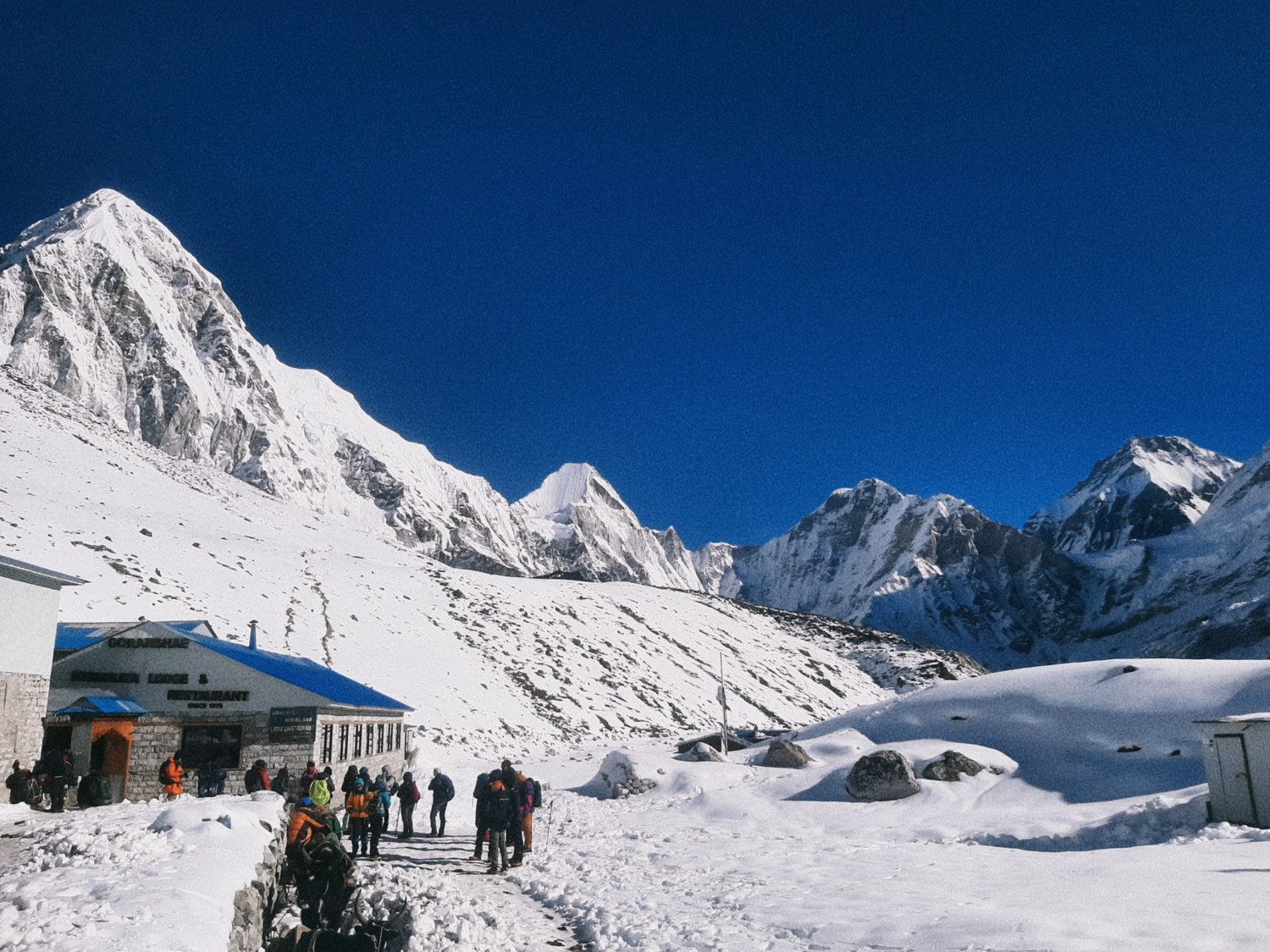
The Everest Base Camp Trek with Helicopter Return is an 11-day Himalayan adventure that combines the classic trekking route to Everest Base Camp with a helicopter journey on the return. Starting in Kathmandu, we travel to Lukla and trek through Phakding, Namche Bazaar, Tengboche, Dingboche, and Lobuche before reaching Everest Base Camp at 5,364 metres. The itinerary also includes an early-morning hike to Kala Patthar at approximately 5,545 metres, a renowned viewpoint for panoramic views of Mount Everest and the surrounding Himalayan peaks.
Unlike the standard Everest Base Camp Trek, which requires several additional days of walking back toward Lukla, this package includes a helicopter flight from Gorak Shep to Lukla, followed by a regular domestic flight to Kathmandu. Two acclimatization days in Namche Bazaar and Dingboche help you prepare for the increasing altitude, while the return arrangement reduces the amount of trekking required after reaching the Everest region's major landmarks. Our package is designed for trekkers who want to experience Everest Base Camp and Kala Patthar within a shorter schedule, while understanding that high-altitude trekking and mountain flight operations require flexibility. Explore more journeys on our Nepal Himalayas Trekking homepage.
Everest Base Camp Trek with Helicopter Return: Quick Facts
| Trip Details | Information |
|---|---|
| Duration | 11 days |
| Destination | Everest region, Nepal |
| Starting and ending point | Kathmandu |
| Trekking route | Lukla, Phakding, Namche Bazaar, Tengboche, Dingboche, Lobuche, Gorak Shep |
| Everest Base Camp elevation | 5,364 m |
| Kala Patthar elevation | Approximately 5,545 m |
| Highest planned point | Kala Patthar, approximately 5,545 m |
| Estimated trekking distance | Approximately 65–75 km, depending on the exact route and side hikes |
| Difficulty | Moderate to challenging |
| Accommodation | Kathmandu hotel and mountain teahouses |
| Acclimatization | Namche Bazaar and Dingboche |
| Standard return | Helicopter from Gorak Shep to Lukla, followed by a domestic flight to Kathmandu |
| Main trekking seasons | Spring, March–May, and autumn, September–November |
| Best suited for | Trekkers seeking the classic Everest Base Camp experience with a shorter return journey |
What to Expect During the Everest Base Camp Trek with Helicopter Return
The journey begins with a flight to Lukla and a gradual trek through the lower Khumbu region, where suspension bridges, riverside trails, pine forests, prayer flags, and traditional Sherpa settlements introduce you to the mountain landscape. As we climb toward Namche Bazaar, the route becomes steeper, and the views expand to include the surrounding Himalayan peaks. The trail continues through Tengboche and Dingboche, combining mountain scenery with opportunities to experience local Buddhist culture, including the well-known Tengboche Monastery.
Beyond Dingboche, the terrain becomes more exposed and rocky as we approach Lobuche and Gorak Shep. The trek to Everest Base Camp follows glacial terrain, while the early-morning climb toward Kala Patthar provides a wider panorama of Everest and neighbouring peaks. After these high-altitude walks, the standard package uses a helicopter to return from Gorak Shep to Lukla, followed by a domestic flight to Kathmandu. Although this reduces the need to walk back along the same route, the trek remains physically demanding because of the altitude, daily walking, and changing mountain conditions.
How the Helicopter Return Works
- Standard return: Take a helicopter from Gorak Shep to Lukla, followed by a domestic flight to Kathmandu. This option is included in our standard package at USD 2,590 per person.
- Shared direct helicopter: Fly directly from Gorak Shep to Kathmandu for USD 3,090 per person, subject to availability.
- Private direct helicopter: Arrange a private helicopter from Gorak Shep to Kathmandu for USD 4,999 per helicopter.
- Weather delays: Flights depend on weather and operating conditions. Delays or cancellations may require waiting or arranging alternative transport, and additional costs may apply.
- Luggage restrictions: Helicopters have baggage and weight limits, so confirm your allowance before departure.
- Travel planning: Keep some flexibility in your schedule in case delays affect your arrival in Kathmandu or onward flights.
Highlights of the Everest Base Camp Trek with Helicopter Return
- Reach Everest Base Camp: Trek to the iconic base camp at 5,364 metres and experience the dramatic landscape around the Khumbu Glacier.
- Enjoy the views from Kala Patthar: Hike to approximately 5,545 metres for a panoramic perspective of Mount Everest, Lhotse, Nuptse, and surrounding peaks.
- Explore Sherpa settlements: Walk through Phakding, Namche Bazaar, Tengboche, Dingboche, and other communities that form part of life in the Khumbu region.
- Visit Tengboche Monastery: Experience an important centre of Buddhist culture surrounded by Himalayan scenery.
- Acclimatize in Namche Bazaar and Dingboche: Include dedicated days to help your body adjust to the increasing elevation.
- Experience the Khumbu landscape from the air: The standard helicopter return from Gorak Shep to Lukla offers a different perspective on the region's valleys, glaciers, and mountain settlements.
- Reduce the return trekking time: Return toward Kathmandu without walking the entire route back to Lukla.
Everest Base Camp Trek with Helicopter Return: 11-Day Itinerary
Day 1: Arrival in Kathmandu
Upon your arrival at Tribhuvan International Airport in Kathmandu, our team will welcome you and transfer you to your hotel. After checking in, you can rest after your journey or explore the nearby streets, shops, and restaurants at your own pace. This is an opportunity to prepare your trekking equipment and get ready for the journey into the Everest region.
Day 2: Fly to Lukla and Trek to Phakding
After breakfast, we take a scenic flight from Kathmandu to Lukla, the gateway to the Everest region. After landing, we meet our trekking team and prepare to begin the walk toward Phakding. The trail passes through Sherpa settlements, forested sections, prayer wheels, and suspension bridges over the Dudh Koshi River. We spend the night at a teahouse in Phakding, at approximately 2,610 metres.
Day 3: Trek from Phakding to Namche Bazaar
We follow the Dudh Koshi River through settlements such as Monjo and Jorsale, crossing suspension bridges and walking through forested sections along the valley. After entering Sagarmatha National Park, the trail continues toward the confluence of the Dudh Koshi and Bhote Koshi rivers before the sustained ascent toward Namche Bazaar. The final climb is one of the more demanding sections of the lower trek, with a series of uphill paths and steps that require a steady pace. At approximately 3,440 metres, Namche is the main trading centre of the Khumbu region, with teahouses, bakeries, shops, and views toward the surrounding peaks when the weather is clear. We spend the night here, preparing for the higher elevations ahead.
Day 4: Acclimatization Day in Namche Bazaar
We spend an additional night in Namche to give our bodies time to adapt to the altitude before continuing higher into the mountains. After breakfast, we take an acclimatization walk, with the option to hike toward Hotel Everest View at approximately 3,880 metres or explore nearby Khumjung village, depending on conditions and the group's pace. These walks offer views of Everest, Lhotse, Ama Dablam, and the surrounding mountains before we return to Namche to sleep at a lower elevation.
Day 5: Trek from Namche Bazaar to Tengboche
We leave Namche Bazaar along a trail that contours the hillside, offering views across the Khumbu valleys when the weather is clear. The route descends toward the Dudh Koshi River near Phunki Tenga before climbing again through forested slopes toward Tengboche. The change in elevation makes this day a combination of downhill walking and a sustained uphill section, so trekking poles can be useful on the descent and climb. At approximately 3,870 metres, Tengboche is known for its monastery and its setting among the Himalayan peaks. If arrival time and conditions permit, we can visit the monastery area before staying overnight at a local teahouse.
Day 6: Trek from Tengboche to Dingboche
We leave Tengboche and descend through forested terrain toward Debuche before continuing through the Pangboche area. The trail passes traditional Sherpa settlements, mani walls, and chortens, with views of Ama Dablam becoming a prominent feature of the walk when visibility is good. Beyond Pangboche, the route gradually opens into a drier, more exposed landscape, and the dense forests of the lower Khumbu give way to shorter alpine vegetation. We continue toward Dingboche at approximately 4,410 metres, where stone walls divide sections of the surrounding fields and help protect crops from the mountain wind and grazing animals. We stay overnight in Dingboche and keep a comfortable pace as the effects of altitude become more noticeable.
Day 7: Acclimatization Day in Dingboche
Today is another important acclimatization day before we continue toward Lobuche and Everest Base Camp. After breakfast, we take a gradual hike toward Nangkartshang Hill, also known as Nagarjun Hill, which reaches approximately 5,083 metres and offers wide views of the surrounding mountains. The hike is taken at a controlled pace, with the height reached depending on individual condition and trail circumstances. We then descend to Dingboche to spend the night at a lower elevation, allowing time to rest before moving farther into the high-altitude landscape.
Day 8: Trek from Dingboche to Lobuche
We leave Dingboche and follow the trail toward Thukla, continuing through increasingly open terrain with fewer trees and more exposed slopes. After reaching the Thukla area, the trail climbs toward the memorials dedicated to climbers who lost their lives on Himalayan expeditions. This uphill section can feel strenuous because we are already above 4,500 metres, where even a gradual climb may require frequent pauses. Beyond the memorial area, we continue toward Lobuche at approximately 4,940 metres, following a high-altitude trail surrounded by rocky slopes and glacial terrain. We stay overnight in a local teahouse and report any headache, nausea, dizziness, or unusual fatigue to our guide rather than assuming these symptoms are simply part of the trek.
Day 9: Trek from Lobuche to Gorak Shep and Visit Everest Base Camp
We leave Lobuche and follow the high-altitude trail toward Gorak Shep at approximately 5,164 metres. The route crosses exposed ground and uneven paths, with views of the surrounding glacial landscape. After reaching Gorak Shep and taking a break, we continue toward Everest Base Camp at 5,364 metres. This section follows rocky terrain beside the Khumbu Glacier, and the uneven surface can make walking slower than the distance alone might suggest. Everest Base Camp is a seasonal expedition area rather than a summit viewpoint, so the exact scene depends on the climbing season and current conditions. After spending time there and taking photographs, we retrace our route to Gorak Shep for the overnight stay. This is a long, demanding day at high altitude, so we follow our guide's pace, take appropriate breaks, and allow time for the return walk.
Day 10: Hike to Kala Patthar and Helicopter Return to Kathmandu
We begin early with a hike toward Kala Patthar at approximately 5,545 metres, one of the best viewpoints for panoramic views of Mount Everest, Lhotse, Nuptse, and the surrounding Himalayan peaks. After enjoying the mountain scenery, we descend to Gorak Shep for our planned helicopter return. In our standard package, the helicopter takes us from Gorak Shep to Lukla, where we connect with a regular domestic flight to Kathmandu. After arriving in Kathmandu, we transfer to our hotel for the planned overnight stay, subject to flight operations and arrival time.
What Happens If the Helicopter Flight Is Cancelled?
Helicopter flights in the Everest region depend on weather, visibility, operating clearance, and aircraft availability. If conditions prevent the helicopter from flying from Gorak Shep to Lukla as scheduled, we may need to wait until conditions improve or arrange an alternative return plan, depending on operational feasibility. Delays can affect the connection to Kathmandu, the planned hotel night, and onward travel arrangements. Additional accommodation, meals, transport, or flight costs may apply depending on the circumstances and booking terms. We recommend keeping some flexibility in your travel schedule and confirming the applicable delay and cancellation policy with us before departure.
Day 11: Departure from Kathmandu
After breakfast, depending on your flight schedule, our team will arrange your transfer to Tribhuvan International Airport for your departure. If weather or flight disruptions delay your return from the Everest region, your departure arrangements may need to be adjusted. As you leave Nepal, you take home memories of the Himalayan trails, Sherpa villages, Buddhist heritage, Everest Base Camp, Kala Patthar, and the helicopter journey above the Khumbu landscape.
The Acclimatization Strategy Behind This Itinerary
Acclimatization is an essential part of the Everest Base Camp Trek with Helicopter Return because the route climbs from the lower Khumbu region to elevations above 5,000 metres. At these heights, the air pressure is lower and less oxygen is available with each breath. Walking too quickly, ignoring symptoms, or continuing to ascend when unwell can increase the risk of altitude illness. Our itinerary includes additional nights in Namche Bazaar and Dingboche so trekkers can undertake gradual acclimatization walks before continuing higher.
Acclimatization in Namche Bazaar
Namche Bazaar, at approximately 3,440 metres, is the first major stop where we spend an additional night to adjust to the altitude. The acclimatization walk toward Hotel Everest View or nearby Khumjung allows trekkers to reach a higher point during the day before returning to Namche to sleep lower. The walk should be taken at a comfortable pace rather than treated as a race. Rest, hydration, adequate food, and reporting symptoms to the guide are important during this stage.
Acclimatization in Dingboche
Dingboche, at approximately 4,410 metres, provides a second dedicated acclimatization day before the route continues toward Lobuche and Gorak Shep. The hike toward Nangkartshang Hill gives trekkers the opportunity to gain additional elevation gradually before descending to the village for the night. This is particularly important because the following days involve sleeping and walking at higher elevations, where exertion can feel more difficult and recovery may take longer.
Recognizing Altitude Sickness
Symptoms of altitude sickness can include headache, nausea, dizziness, unusual fatigue, loss of appetite, or difficulty sleeping. Tell your guide promptly if you develop symptoms, even if they initially seem mild. Severe or worsening symptoms, confusion, difficulty walking straight, or breathlessness at rest require urgent assessment and descent. Do not continue ascending in the hope that symptoms will disappear. Acclimatization days reduce risk but cannot guarantee that altitude illness will not occur.
For more details, read our guide to how difficult the Everest Base Camp Trek can be.
Everest Base Camp Trek with Helicopter Return Cost for 2026/2027.
The cost depends on the return flight arrangement you choose. Our standard package includes the helicopter from Gorak Shep to Lukla and a domestic flight from Lukla to Kathmandu. Travelers who prefer to avoid the connection in Lukla can enquire about the optional direct helicopter upgrades.
| Return Option | Price | Return Arrangement |
|---|---|---|
| Standard helicopter return | USD 2,590 per person | Helicopter from Gorak Shep to Lukla, then domestic flight to Kathmandu |
| Shared direct helicopter upgrade | USD 3,090 per person | Shared helicopter from Gorak Shep directly to Kathmandu, subject to availability |
| Private direct helicopter upgrade | USD 4,999 | Private helicopter arrangement from Gorak Shep directly to Kathmandu; confirm the price basis and passenger capacity with us |
The USD 2,590 standard package includes a helicopter from Gorak Shep to Lukla and a domestic flight from Lukla to Kathmandu. The shared and private direct helicopter options are upgrades that allow you to request a direct flight from Gorak Shep to Kathmandu. All helicopter arrangements are subject to operational conditions and availability. The private option costs USD 4,999 per private helicopter; confirm passenger capacity and the final arrangements with us before booking.
Are Permits Included in the Package?
Yes. The package includes the required permits for the standard trekking route:
- Sagarmatha National Park Entry Permit: The published standard fee for foreign visitors is generally NPR 3,000 per person.
- Khumbu Pasang Lhamu Rural Municipality Permit: The commonly quoted fee for foreign visitors is NPR 3,000 per person.
Permit fees and categories can change, and different rates may apply to certain nationalities or visitor categories. We confirm the applicable requirements for your trip when arranging the permits. You do not need to add the standard permit costs again when calculating the listed package price, as these permits are included.
For further details, see our Everest Base Camp Trek permit guide.
What's Included in the Everest Base Camp Trek with Helicopter Return?
The package includes the services and arrangements specified for the standard itinerary:
- Airport pickup and drop-off in Kathmandu.
- Two nights of Kathmandu hotel accommodation with breakfast, based on twin sharing, as planned in the itinerary.
- Teahouse accommodation during the trek, based on twin sharing where available.
- Required trekking permits, including the Sagarmatha National Park Entry Permit and Khumbu Pasang Lhamu Rural Municipality Permit.
- Domestic flight from Kathmandu to Lukla, or the applicable seasonal flight arrangement with shared road transport to Ramechhap/Manthali when required.
- Helicopter flight from Gorak Shep to Lukla.
- Domestic flight from Lukla to Kathmandu.
- Meals during the trek and the included meals specified in the itinerary: 10 breakfasts, 9 lunches, and 10 dinners in total, including the farewell dinner.
- Licensed English-speaking trekking guide and the porter arrangements specified for the package.
- Guide and porter costs covered according to the package arrangements.
- Sleeping bag, NHT T-shirt, and cap.
- First-aid kit and applicable company service charges and taxes.
What's Not Included?
- International flights to and from Nepal.
- Nepal entry visa fees.
- Lunches and dinners in Kathmandu that are not listed as included.
- Personal drinks, bottled beverages, snacks, and other personal purchases.
- Personal trekking equipment beyond the items specifically provided in the package.
- Extra costs for hot showers, device charging, Wi-Fi, laundry, or other teahouse services.
- Travel insurance, including appropriate high-altitude trekking and helicopter evacuation coverage.
- Emergency evacuation expenses unless expressly covered by your insurance or booking arrangement.
- Tips for the guide, porters, and other trekking staff.
- Additional accommodation, meals, transport, or flight expenses arising from weather delays, cancellations, or other disruptions unless expressly included in the booking terms.
- The optional shared or private direct helicopter upgrade from Gorak Shep to Kathmandu.
Read the final inclusions and exclusions carefully before confirming your booking so you understand which costs are covered and which may be payable separately.
Best Time for the Everest Base Camp Trek with Helicopter Return
Spring: March to May
Spring is one of the main trekking seasons in the Everest region. Conditions are generally favourable for walking, and rhododendrons and other vegetation begin to colour parts of the lower trail. As the season progresses, the weather can provide clear mountain views, although clouds, wind, and flight disruptions remain possible. Spring is also a busy period, so it is wise to arrange flights, accommodation, and guides in advance.
Autumn: September to November
Autumn is another popular season because the monsoon gradually retreats and the weather often becomes clearer. October is particularly popular for trekking, while November brings colder conditions, especially at night and at higher elevations. Trekkers should prepare for freezing temperatures around Gorak Shep and Kala Patthar and remember that favourable trekking weather does not guarantee helicopter or domestic flight operations.
How Difficult Is the Everest Base Camp Trek with Helicopter Return?
The trek is moderate to challenging because it involves several consecutive days of walking, steep ascents and descents, rocky trails, and sleeping at high elevations. The approach to Everest Base Camp and the early-morning hike to Kala Patthar are especially demanding because of the altitude and the exposed terrain. The helicopter return shortens the return journey on foot, but it does not make the ascent easier or remove the risks associated with high altitude.
You should be comfortable walking for several hours on consecutive days and be prepared for cold, changing weather and basic mountain accommodation. Regular walking, uphill training, and cardiovascular exercise can help with preparation. No fitness level completely removes the risk of altitude sickness, so a gradual pace, communication with your guide, and willingness to stop or descend when necessary remain essential.
What the High-Altitude Days Are Really Like
The higher sections of the Everest Base Camp Trek become more challenging as we climb above 4,000 metres. The air contains less available oxygen, so walking uphill can feel harder, and you may need to take more frequent breaks. The trails around Lobuche and Gorak Shep are rocky and exposed, while the early-morning hike to Kala Patthar can be especially cold and windy. Walk at a steady pace, stay hydrated, and tell your guide immediately if you experience a headache, nausea, dizziness, or unusual fatigue. If symptoms worsen, do not continue ascending.
What We Provide and Gear Rental in Kathmandu
We provide the trekking equipment and services specified in our package, including a sleeping bag, NHT T-shirt, and cap. You should bring suitable trekking boots, warm layered clothing, gloves, sunglasses, and other personal essentials. If you need additional equipment, you can rent or purchase trekking gear in Kathmandu before the trek. Check the condition, warmth, and suitability of rented items before leaving the city, especially sleeping bags, down jackets, and other cold-weather gear. Contact us before your trip to confirm which equipment is included and what you may need to arrange separately.
What to Pack for the Trek
Pack for changing temperatures, long walking days, and cold conditions at high altitude. Useful items include:
- Broken-in trekking boots and comfortable trekking socks.
- Layered clothing, including thermal base layers, fleece or insulating layers, and a warm down jacket.
- Waterproof and windproof outer layers.
- Warm gloves, a hat, a buff, and sunglasses with suitable UV protection.
- A sleeping bag suitable for cold mountain nights, even if a sleeping bag is supplied as part of the package.
- A daypack, water bottles or hydration system, and water-treatment supplies.
- Sunscreen, lip balm, personal toiletries, and any prescribed medication.
- Trekking poles for steep and uneven sections.
- A headlamp with spare batteries for the early-morning Kala Patthar hike.
- Travel documents, permit-related details, emergency contacts, and suitable travel insurance information.
Ask us about the sleeping bag supplied with the package and the recommended temperature rating for your travel dates. Keep essential items, documents, medication, and valuables with you rather than assuming all baggage will be carried on the helicopter.
For a more detailed checklist, see our Everest Base Camp Trek packing guide.
Frequently Asked Questions
Is the helicopter return included in the standard package?
Yes. The standard USD 2,590 package includes the helicopter from Gorak Shep to Lukla and a domestic flight from Lukla to Kathmandu.
Does the helicopter fly directly from Gorak Shep to Kathmandu?
Not in the standard package. A shared direct flight costs USD 3,090 per person, while a private direct helicopter costs USD 4,999 per helicopter. Both upgrades are subject to availability and operating conditions.
Do I still need to trek to Everest Base Camp and Kala Patthar?
Yes. The helicopter return does not replace the trekking portion of the itinerary. You walk to Everest Base Camp at 5,364 metres and undertake the planned hike toward Kala Patthar before returning to Gorak Shep for the helicopter.
Are acclimatization days included?
Yes. The itinerary includes an acclimatization day in Namche Bazaar and another in Dingboche. These days help you adjust to the altitude, but they cannot guarantee that altitude sickness will not occur.
What happens if the helicopter cannot fly on Day 10?
If weather or other operating conditions prevent the helicopter from flying, you may need to wait or use an alternative return arrangement, depending on availability and feasibility. Delays may affect your hotel stay and onward travel, and additional costs may apply under the booking terms. Please allow flexibility in your schedule.
Are trekking permits included in the price?
Yes. The standard package includes the Sagarmatha National Park Entry Permit and the Khumbu Pasang Lhamu Rural Municipality Permit. We confirm the applicable permit requirements and rates when arranging your trip.
Is travel insurance required?
You should arrange travel insurance that specifically covers high-altitude trekking at the elevations on this itinerary and emergency helicopter evacuation where available. Check the policy limits, exclusions, and claim requirements carefully. Do not assume that the package price includes your personal insurance or every emergency evacuation cost.
Is this trek suitable for beginners?
People who are new to trekking may be able to complete the route if they prepare adequately and understand the demands of high-altitude walking. However, this is not an easy trek simply because it includes a helicopter return. Training, a gradual pace, acclimatization, and careful attention to symptoms are important. Discuss your fitness and previous trekking experience with us before booking.
Book Your Everest Base Camp Trek with Helicopter Return for 2026/2027
Reaching Everest Base Camp and Kala Patthar is a demanding high-altitude journey, and the helicopter return offers a practical alternative to walking the entire route back toward Lukla. Our 11-day itinerary combines the classic Khumbu trekking route, dedicated acclimatization days, and the standard return by helicopter from Gorak Shep to Lukla followed by a domestic flight to Kathmandu.
Contact us to check availability for your preferred dates, discuss your trekking experience, confirm the standard package inclusions, and ask about the optional direct helicopter upgrades. We can also explain seasonal flight arrangements, permit requirements, and the procedures that apply if weather disrupts your return.
Visit our Contact Us page or enquire about the Everest Base Camp Trek with Helicopter Return for 2026/2027. You can also explore our Everest region trekking options to compare journeys in the Khumbu.








Add Your Comment