

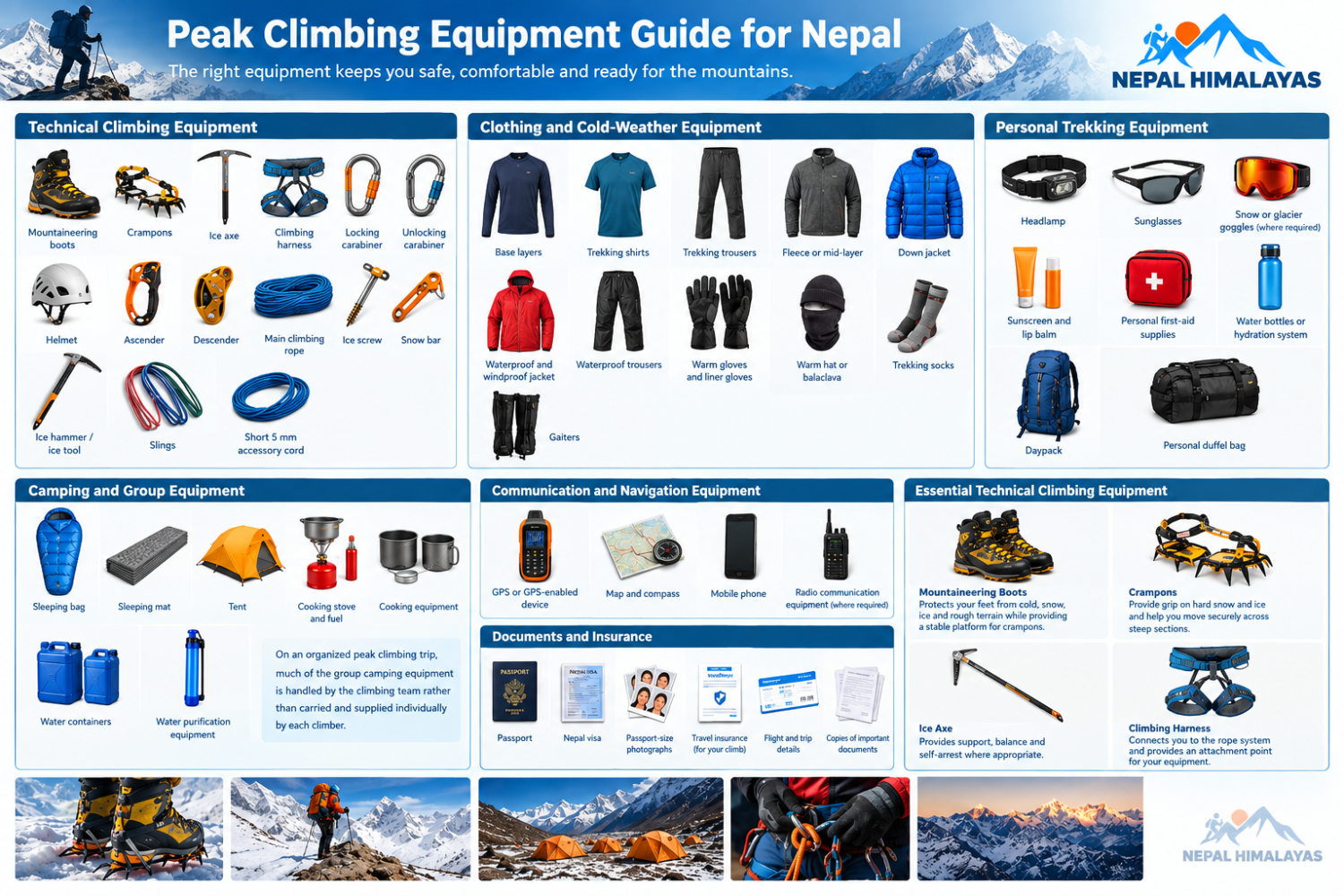
Peak climbing in Nepal combines trekking with technical climbing on snow, ice and, depending on the mountain and route, rock. The equipment you need depends on the peak, climbing route, altitude, season and current mountain conditions. A three-day Island Peak climb from Chhukung does not require exactly the same setup as a longer Mera Peak or Lobuche East expedition.
If you are preparing for a peak climb, four questions usually matter first: What equipment do I need? What does the climbing company provide? What should I bring myself? And what can I rent in Kathmandu?
This guide explains the main peak climbing equipment used in Nepal, what each item is used for, why it matters, which equipment we provide on our climbing packages, and what you should prepare yourself.
Peak Climbing Equipment Checklist
Your exact equipment list should always be checked against your climbing package, route and season. The following categories cover the equipment commonly relevant to Nepal peak climbing.
Technical Climbing Equipment
- Mountaineering boots
- Crampons
- Ice axe
- Climbing harness
- Locking carabiners
- Unlocking carabiners
- Helmet
- Ascender
- Descender
- Main climbing rope
- Ice screws
- Snow bars
- Ice hammer or ice tool
- Slings
- Short 5 mm accessory cords
Not every climber needs to purchase every item on this list. Some technical equipment is supplied as group equipment, while some climbing packages provide essential equipment for each guest.
Clothing and Cold-Weather Equipment
- Base layers
- Trekking shirts
- Trekking trousers
- Fleece or insulating mid-layer
- Down jacket
- Waterproof and windproof jacket
- Waterproof trousers
- Warm gloves and liner gloves
- Warm hat or balaclava
- Trekking socks
- Gaiters
Personal Trekking Equipment
- Headlamp
- Sunglasses
- Snow or glacier goggles where required
- Sunscreen and lip balm
- Personal first-aid supplies
- Water bottles or hydration system
- Daypack
- Personal duffel bag
Camping and Group Equipment
Depending on the route and package, camping equipment can include:
- Sleeping bag
- Sleeping mat
- Tent
- Cooking stove and fuel
- Cooking equipment
- Water containers
- Water purification equipment
You should check your package inclusions before purchasing camping equipment. On an organized peak climbing trip, much of the group camping equipment is handled by the climbing team rather than carried and supplied individually by each climber.
Communication and Navigation Equipment
- GPS or GPS-enabled device
- Map and compass
- Mobile phone
- Radio communication equipment where required by the climbing team
Documents and Insurance
You should also carry:
- Passport
- Nepal visa
- Passport-size photographs where required
- Travel insurance covering the activities and altitude of your climb
- Flight and trip details
- Copies of important documents
Essential Technical Climbing Equipment
Technical equipment needs to be selected according to the climbing route and the system used by your climbing team. The following equipment is commonly used on Nepal's trekking peaks and should be understood before the climb.
Mountaineering Boots
Mountaineering boots protect your feet from cold, snow, ice and rough mountain terrain while providing a stable platform for crampons. The boots you use must be suitable for the altitude, temperature and climbing route. Boot and crampon compatibility is particularly important. A crampon that does not fit securely on your boots can become a serious problem during a climb. Always test the complete boot and crampon combination before summit day.
Crampons
Crampons are metal traction devices attached to mountaineering boots. Their points provide grip on hard snow and ice and help you move securely across steep sections. The correct crampon depends on the boot design and climbing conditions. Do not assume that every crampon fits every mountaineering boot.
Ice Axe
An ice axe provides support while travelling over snow and ice and can be used for balance, controlled movement and self-arrest where appropriate. Its size and design should suit the route and the type of climbing involved. Before the climb, you should know how to carry and use the axe rather than simply attaching it to your pack.
Climbing Harness
A climbing harness connects you to the rope system. On routes involving fixed ropes or technical climbing sections, the harness provides the attachment point for equipment such as an ascender or other climbing devices. The harness should fit securely over the clothing you will actually wear during the climb.
Locking Carabiners
Locking carabiners are used to create secure connections between climbing equipment. They are commonly used with a harness, slings and other components of the rope system. The locking mechanism should be checked before use so that it closes and locks correctly.
Unlocking Carabiners
Non-locking or unlocking carabiners are useful for attaching and organizing climbing equipment where a locking connection is not required. Their use depends on the climbing system and instructions of the climbing team.
Helmet
A climbing helmet protects your head from falling objects and impacts and provides protection during movement around rocky, icy or steep terrain. It should fit securely and remain comfortable while worn with your other climbing and cold-weather clothing.
Ascender
An ascender is a mechanical device that grips a fixed rope and helps a climber move upward. It becomes particularly useful on routes where fixed ropes are installed on steep climbing sections. You should practise using the ascender with the same type of rope system used on your climb before summit day.
Descender
A descender controls movement down a rope and can be used when descending fixed or climbing ropes according to the system being used. The exact device and technique depend on the climbing team's rope setup, so climbers should be familiar with the equipment provided for their climb.
Main Climbing Rope
The main rope provides the primary rope system used by the climbing team. Depending on the route, it may be used with fixed sections or for other climbing and safety systems. Rope selection, anchoring and use should be handled according to the climbing team's technical system rather than by individual climbers choosing a rope independently.
Ice Screws
Ice screws are used to create protection or anchors in suitable ice. Their use depends on the route, climbing conditions and technical requirements of the mountain. They are technical group equipment and are generally handled by the climbing team rather than being something every guest needs to purchase.
Snow Bars
Snow bars can be used to create anchors in suitable snow conditions. They are useful where the climbing system requires additional protection or anchoring on snow. Their use depends on the route and current conditions.
Slings
Slings are lengths of strong webbing used for creating or extending anchors and connecting climbing equipment. They are simple pieces of equipment but have several applications within a climbing system.
Short 5 mm Accessory Cords
Short accessory cords can be used for specific climbing and anchor-related applications. Their use depends on the rope system and technical requirements of the climb.
Ice Hammer and Ice Tools
An ice hammer or ice tool provides additional support on technical snow and ice terrain. The exact tool required depends on the route and level of technical climbing. You should not assume that an ice tool is necessary for every trekking peak. The climbing team should confirm what is required for your specific route.
Clothing and Cold-Weather Equipment
Technical climbing equipment keeps you connected to the mountain, but appropriate clothing protects you from cold, wind, snow and changing weather.
Base Layers
Base layers sit directly against your skin and help manage moisture while providing a basic layer of warmth. Merino wool or suitable synthetic materials are commonly used because they can continue to provide useful insulation when conditions are cold. Avoid relying on cotton as your main base layer for high-altitude climbing because it retains moisture and dries slowly.
Trekking Shirts and Trousers
Lightweight trekking shirts and trousers are useful during the approach trek when temperatures are generally more manageable. You can add insulating layers as you gain altitude.
Fleece or Insulating Mid-Layer
A fleece or similar mid-layer adds warmth without replacing your outer shell. It is useful during colder mornings, evenings and higher sections of the route.
Down Jacket
A down jacket provides substantial insulation for cold mornings, evenings, high camps and summit preparation. The required warmth depends on the season, altitude and mountain. Keep the jacket dry and protected from unnecessary moisture.
Waterproof and Windproof Jacket
A waterproof and windproof outer layer protects the insulating layers underneath from rain, snow and strong wind. Weather can change quickly in the mountains, so this layer should remain accessible rather than being buried at the bottom of your duffel.
Waterproof Trousers
Waterproof trousers help protect your trekking trousers and base layers from rain, wet snow and wind. They become particularly useful during bad weather and on exposed higher sections.
Gloves and Liner Gloves
A liner glove provides a lighter layer for general trekking and can be worn underneath a warmer outer glove. For summit days, you should have enough insulation to keep your hands warm while still being able to operate your climbing equipment.
Warm Hat or Balaclava
A warm hat or balaclava helps protect your head, ears and face from cold temperatures and wind. A balaclava can be particularly useful on exposed summit sections.
Socks
Use warm, comfortable socks suitable for your boots and carry spare pairs so you can change if they become wet.
Gaiters
Gaiters help prevent snow, stones and moisture from entering your boots. They can be useful when walking through snow or wet terrain and should fit properly over the boots you will use for climbing.
Personal Trekking Equipment
Headlamp
A headlamp is essential for early-morning starts. Many peak summit attempts begin during the night or in the very early morning, so carry spare batteries or ensure your rechargeable unit is fully charged.
Sunglasses
Good-quality sunglasses protect your eyes from strong sunlight and glare, which can become intense at high altitude.
Snow or Glacier Goggles
Snow goggles provide additional protection in windy, snowy and highly reflective conditions. Their usefulness depends on the route, season and expected mountain conditions.
Sunscreen and Lip Balm
High-altitude sunlight can be strong even when temperatures are low. Sunscreen and lip balm help protect exposed skin from sun and wind.
Personal First-Aid Supplies
Carry the personal medicines and basic first-aid items you normally need. Your climbing team should have appropriate group first-aid supplies, but you should not rely on the group kit for personal medication.
Water Bottles or Hydration System
Carry enough water capacity for the day's walking and climbing. In colder conditions, protect your water from freezing and make sure your hydration system works with your clothing and pack.
Daypack
Your daypack carries the equipment you need during the day's trek or climbing activity. Keep frequently used items accessible, including your water, layers, snacks, sunscreen and essential personal items.
Personal Duffel Bag
A duffel bag is used for the main trekking and climbing gear carried between overnight stops. Keep items that you may need during the day in your daypack rather than relying on access to your duffel while trekking.
Camping and Group Equipment
On organized peak climbing trips, camping and climbing equipment is often divided between personal equipment, guest climbing equipment and group equipment. You should not automatically buy a tent, stove, cooking equipment or climbing rope simply because these items appear on a general peak climbing checklist. Check what your package includes first.
Sleeping Bag and Sleeping Mat
A sleeping bag provides insulation at night, while a sleeping mat adds insulation from the cold ground and improves sleeping comfort. The required sleeping-bag rating depends on the season, altitude and camping conditions.
Tent
Tents provide shelter at camping locations. On organized climbs, tents are normally part of the group camping setup rather than an item each guest needs to carry.
Stove and Fuel
Stoves and fuel are used by the climbing team to prepare food and hot drinks where camping is required. Fuel selection and transport should be handled according to the group's arrangements.
Cooking Equipment
Cooking equipment can include pots, pans, utensils and other items needed by the camp kitchen. These are generally group equipment on organized climbing trips.
Water Containers and Purification
Water bottles, hydration systems and purification methods help maintain a safe water supply throughout the trek and climb. The exact arrangement depends on the route and camping setup.
Communication and Navigation Equipment
GPS
A GPS device or GPS-enabled phone can help identify your location and track the route. It should support, rather than replace, knowledge of the route and guidance from the climbing team.
Map and Compass
A map and compass provide basic navigation tools and do not depend on phone battery or network coverage.
Mobile Phone and Radios
A mobile phone can be useful for communication where network coverage is available. Radios may be used by the climbing team for communication between guides, climbers and support staff when required.
Important Documents and Insurance
Carry your passport and required Nepal travel documents throughout the trip. Keep copies or secure digital versions of important documents separately from the originals. Travel insurance is particularly important for peak climbing because ordinary trekking coverage may not automatically include climbing activities or the altitude of your trip. Check the policy carefully before travelling and confirm that it covers the activities and maximum altitude included in your itinerary.
Peak Climbing Equipment We Provide
The exact equipment included depends on the peak, itinerary and climbing package. We clearly specify package inclusions so you can identify which equipment we provide and which items you need to prepare yourself.
Guest Climbing Equipment We Provide
Depending on the climbing package, our guest climbing equipment can include:
- Mountaineering boots
- Harness set
- Crampons
- Ice axe
- Ascender
- Descender
- Locking carabiners
- Unlocking carabiners
The exact equipment and sizing should be confirmed for your specific peak climbing package before departure.
Group Climbing Equipment We Provide
Our climbing team can provide the group equipment required for the climbing system, depending on the route and package. This can include:
- Main climbing rope
- Snow bars
- Ice hammer and ice tools
- Ice screws
- Short 5 mm accessory cords
- Slings
Group climbing equipment is handled as part of the climbing setup, so individual guests do not normally need to purchase these items separately when they are included in the package.
Peak Climbing Equipment Rental in Kathmandu
If you do not want to purchase every piece of technical equipment, equipment rental in Kathmandu can reduce the amount you need to bring from home. We also have an equipment rental facility in Kathmandu.
Before renting, check the condition, size and compatibility of each item. This is particularly important for mountaineering boots and crampons because the crampons must fit the boots securely. Harnesses should fit correctly, and technical devices such as ascenders and descenders should match the climbing system you will use.
Do not wait until the morning of your departure to discover that rented boots are uncomfortable or that your crampons do not fit. Try the equipment properly before leaving Kathmandu.
Note: Rental availability, equipment models and sizes can vary. Check the required items and available sizes with us before your climb.
What Should You Bring Yourself?
You do not necessarily need to buy every item on a peak climbing equipment list. Your personal clothing and trekking equipment are different from group climbing equipment such as ropes, snow bars and ice screws. Before buying technical equipment, check your climbing package and confirm what we provide.
Clothing to Bring
You should normally prepare your personal clothing, including:
- Base layers
- Trekking shirts
- Trekking trousers
- Fleece or insulating layer
- Down jacket
- Waterproof jacket
- Waterproof trousers
- Gloves
- Warm hat or balaclava
- Socks
- Gaiters where required
The amount and warmth of clothing should match your climbing season and the altitude reached on your itinerary.
Personal Equipment to Bring
Prepare your own:
- Headlamp
- Sunglasses
- Sunscreen
- Lip balm
- Personal medicines
- Water bottles or hydration system
- Daypack
- Personal toiletries
- Personal documents
- Travel insurance documents
What You May Not Need to Buy
Do not purchase technical group equipment simply because you see it on a general checklist. Items such as the main rope, snow bars, ice screws, slings and accessory cords are generally handled as group climbing equipment when they are included in an organized climbing package.
Likewise, tents, cooking equipment and other group camping equipment may already be arranged by the climbing team. Check your package inclusions first, then purchase or rent only what you actually need.
Peak Climbing Equipment by Mountain
The equipment requirements are not identical for every peak in Nepal. The following examples explain the main differences.
Mera Peak
Mera Peak involves a long high-altitude approach and a summit climb on snow and glaciated terrain. Crampons, a suitable mountaineering boot system, ice axe and appropriate cold-weather clothing are important for the higher sections.
The technical equipment required depends on the route and current conditions. Your climbing team should confirm whether additional rope equipment or other technical devices are required for the specific itinerary.
Because the summit reaches 6,476 meters, clothing and insulation also deserve particular attention. Even when the approach trek feels comfortable, conditions during the summit attempt can be significantly colder and windier.
Island Peak
Island Peak reaches 6,189 meters and includes technical climbing sections. Equipment can include mountaineering boots, crampons, harness, ice axe, ascender, descender and appropriate carabiners according to the climbing system.
The fixed-rope sections make equipment familiarity particularly important. You should understand how your harness, ascender, descender and carabiners work together before the summit attempt.
For climbers already completing the Everest Base Camp, Gokyo or Three High Passes routes, Island Peak can also be approached as an additional climbing objective from Chhukung. In that situation, the equipment plan should be arranged specifically for the Island Peak section rather than treating it as a completely separate trekking expedition.
Lobuche East
Lobuche East requires suitable mountaineering equipment for its higher climbing sections. Crampons, climbing boots, harness, ice axe and rope-system equipment may be required depending on the route and current conditions. As with other trekking peaks, the equipment list should be based on the actual climbing route and season. Your climbing team should confirm the technical equipment required before the trip.
Other Peak Climbs in Nepal
Nepal has several trekking peaks and higher climbing objectives with different terrain and technical requirements. A peak that involves mainly snow and ice can require a different equipment setup from a route with steeper rock or mixed climbing. For this reason, use a mountain-specific equipment list rather than copying one checklist for every peak.
Equipment Compatibility Matters
Having all the necessary equipment does not automatically mean that the equipment will work properly together. The most important combinations to check include:
Boots and crampons: Your crampons must fit your mountaineering boots securely. Test them together before the climb.
Harness and rope system: Your harness should fit comfortably over your climbing layers and work with the attachment system being used by your climbing team.
Ascender and fixed rope: The ascender must be suitable for the rope diameter and system being used.
Descender and rope: The descender must be compatible with the rope and used according to the manufacturer's instructions and climbing team's system.
Helmet and clothing: Your helmet should remain secure and comfortable when worn with your hat, balaclava and other layers.
Gloves and climbing equipment: Your gloves should keep your hands warm while still allowing you to operate carabiners, ascenders and other equipment.
Testing these combinations before the climb is particularly important if you are renting equipment or using equipment supplied by different sources.
How to Check Your Peak Climbing Equipment
Do not wait until summit day to discover a problem with your equipment. Check your boots for fit and comfort and test your crampons on the actual boots you will use. Inspect the straps, buckles and attachment points before the climb.
Check your harness for visible damage and make sure it fits correctly over your clothing. Inspect carabiners and confirm that locking mechanisms operate properly.
Test your headlamp and carry spare batteries or an appropriate charging option. Check your gloves, jacket and other clothing before the summit attempt rather than discovering missing or damaged items at high altitude. If technical equipment is supplied by the climbing team, your guide should explain how it is used and how it fits into the climbing system.
Common Peak Climbing Equipment Mistakes
One of the most common mistakes is buying equipment without checking whether it is actually required for the specific mountain. Another is choosing boots for general trekking and assuming they will automatically work for the climbing section. Your climbing boots need to be appropriate for the route and compatible with your crampons.
Some climbers also wait until they reach the mountain before testing technical equipment. This leaves little opportunity to correct an equipment problem. Overpacking can also create unnecessary weight. Check your package inclusions before buying tents, ropes or other group equipment that may already be supplied.
Finally, do not choose equipment based only on price. Fit, compatibility, condition and suitability for the mountain are more important when preparing for a technical climb.
Peak Climbing Equipment and Seasons
Spring
Spring is one of the main peak climbing seasons in Nepal. Conditions can be suitable for climbing, but temperatures remain cold at higher elevations. Prepare proper insulation, gloves and summit-day clothing.
Autumn
Autumn generally provides stable trekking and climbing conditions after the monsoon. Clearer mountain views are common, but high-altitude temperatures can still be very cold, especially before sunrise.
Winter
Winter brings significantly colder conditions at high altitude. Clothing, insulation and sleeping equipment require greater attention, and some routes can have additional snow and ice.
Monsoon
Monsoon affects different areas of Nepal differently. Routes in the Everest and Annapurna regions can have wet lower sections and changing weather, while some areas such as Upper Mustang lie in a rain-shadow region. The appropriate equipment therefore depends not only on the month but also on the specific mountain and route.
Final Peak Climbing Equipment Check
Before leaving Kathmandu, confirm:
- Your mountaineering boots fit properly.
- Your crampons fit your boots.
- Your harness fits over your climbing layers.
- Your technical equipment is compatible with the climbing system.
- Your headlamp works.
- Your batteries or charging arrangements are ready.
- Your gloves provide enough warmth and allow you to handle equipment.
- Your waterproof layers are accessible.
- Your personal medicines are packed.
- Your passport and travel documents are secure.
- Your travel insurance covers the planned climbing activities and altitude.
- You know which equipment is supplied by the climbing company.
- You know which equipment you need to bring or rent yourself.
A final equipment check in Kathmandu gives you time to replace, rent or adjust anything that is unsuitable before heading into the mountains.
Frequently Asked Questions About Peak Climbing Equipment in Nepal
What equipment do I need for peak climbing in Nepal?
The equipment depends on the peak, route, season and technical difficulty. Common requirements include suitable mountaineering boots, crampons, ice axe, harness, climbing helmet and appropriate rope-system equipment. Clothing and personal trekking equipment are also essential.
Do I need to buy all the peak climbing equipment?
No. You do not necessarily need to purchase everything on a general equipment list. Organized climbing packages may provide guest climbing equipment and group equipment, while some items can also be rented in Kathmandu.
Check your specific package before buying technical equipment.
Can I rent peak climbing equipment in Kathmandu?
Yes. Peak climbing equipment can be rented in Kathmandu, including through our equipment rental facility. Availability and sizing can vary, so confirm the required equipment and sizes before your trip.
What climbing equipment does NHT provide?
Depending on the climbing package, we can provide guest climbing equipment such as mountaineering boots, harness set, crampons, ice axe, ascender, descender, locking carabiners and unlocking carabiners.
Group equipment can include the main climbing rope, snow bars, ice hammer or ice tools, ice screws, short 5 mm accessory cords and slings. The exact equipment provided depends on the specific peak climbing package.
Do I need to bring my own climbing boots?
This depends on your package and personal preference. If climbing boots are included or available for rental, you may not need to purchase them. However, proper fit is essential, so you should test the boots well before the climb and make sure your crampons fit them correctly.
Are crampons included in peak climbing packages?
Some climbing packages include crampons as guest climbing equipment. Check the inclusions of your specific package before purchasing or renting a pair.
Do I need to bring my own rope and ice screws?
Generally, you should not purchase group technical equipment such as the main climbing rope and ice screws without first checking your package. When these are included, they are handled as group climbing equipment by the climbing team.
What is the most important equipment for a peak climb?
There is no single piece of equipment that replaces the rest of the climbing system. Suitable boots and crampons, appropriate clothing, an ice axe where required, a properly fitting harness and compatible rope-system equipment all have important roles.
What should I check before renting climbing equipment?
Check the item's condition, size and compatibility. Pay particular attention to mountaineering boots and crampons, because they must work together properly. Also check harness fit and make sure technical devices are suitable for the climbing system being used.
Does equipment change according to the climbing season?
Yes. Spring, autumn, winter and monsoon can bring different temperatures, precipitation and snow conditions. Your clothing and some technical equipment requirements should be checked according to the season and current route conditions.
Prepare Your Peak Climbing Equipment With NHT
Preparing for a peak climb is easier when you know exactly what you need to bring, what is already included in your package, and what can be rented in Kathmandu.
We arrange climbing equipment according to the mountain and climbing package, including guest climbing equipment and the group equipment required for the route. We can also help you identify the personal clothing and equipment you should prepare before departure.
If you are planning Mera Peak, Island Peak, Lobuche East, or another peak climb in Nepal, you can contact us with your planned route and travel dates. You can also make an enquiry to discuss your equipment requirements with our team before heading into the mountains. For more information about our trekking and climbing services, visit the NHT homepage.








Add Your Comment