
Nepal's trekking seasons coincide with some of the country's most important cultural celebrations. Depending on when you travel, you may find yourself in Nepal during Dashain, Tihar, Holi, Mani Rimdu, Indra Jatra, Buddha Jayanti, Teej, Rato Machhindranath, Seto Machhindranath, or Tiji Festival. For travellers interested in both mountains and local culture, these festivals can add an entirely different experience to a Himalayan journey.
The best festivals in Nepal during trekking seasons are spread across very different regions. Some take place in Kathmandu Valley, where historic squares, temples and narrow old-city streets become the centre of large processions. Others are closely connected with Himalayan communities, monasteries and remote mountain settlements. Mani Rimdu, for example, is associated with Tengboche Monastery in the Khumbu, while Tiji is celebrated in Lo Manthang in Upper Mustang.
If you are still deciding when and where to trek, our Trekking in Nepal 2026 and 2027 guide provides a broader look at trekking seasons, popular routes and preparation.
Festival dates often follow the lunar or traditional calendars rather than the Gregorian calendar. The exact date therefore changes from year to year. Check the confirmed festival date before fixing your flights, accommodation and trekking itinerary.
Nepal Festivals and Trekking Seasons at a Glance
| Festival | Typical Period | Main Area | Trek or Travel Connection |
|---|---|---|---|
| Dashain | September–October | Throughout Nepal | Annapurna, Langtang, Everest and cultural tours |
| Tihar | October–November | Throughout Nepal | Annapurna, Everest, Langtang and Kathmandu |
| Mani Rimdu | October–November | Tengboche, Khumbu | Everest Base Camp Trek |
| Holi | February–March | Kathmandu, the Terai and major cities | Spring trekking and Kathmandu visits |
| Indra Jatra | August–September | Kathmandu | Kathmandu cultural visits before or after a trek |
| Buddha Jayanti | April–May | Kathmandu, Lumbini and Buddhist areas | Spring trekking and cultural travel |
| Teej | August–September | Kathmandu Valley and across Nepal | Kathmandu cultural visits |
| Rato Machhindranath | April–May | Lalitpur | Kathmandu Valley cultural travel |
| Seto Machhindranath | March–April | Kathmandu Valley | Kathmandu Valley cultural travel |
| Tiji Festival | May–June | Lo Manthang, Upper Mustang | Upper Mustang Trek |
Why Experience Festivals During Trekking in Nepal?
A trek during festival season allows you to see local traditions in the places where communities actually practise them. Instead of visiting a cultural attraction for a short scheduled performance, you may encounter a village preparing for a celebration, families returning home for a major festival, monks preparing for religious ceremonies, or a historic neighbourhood filling with people for a procession.
Experiencing festivals while trekking in Nepal can give you opportunities to:
- Observe religious ceremonies in their traditional setting
- Learn about Sherpa, Newar, Gurung, Magar and other regional cultures
- See traditional music, dances and processions
- Try foods associated with festival periods
- Visit monasteries and temples during important religious occasions
- Spend time in historic villages and neighbourhoods
- Meet local communities outside the usual trekking routine
- Combine cultural experiences with a Himalayan trek
- Plan your route around a particular festival rather than relying on chance
The experience changes considerably from one region to another. Kathmandu Valley festivals often involve processions through historic courtyards and city streets. In the Everest region, Buddhist celebrations are closely connected with monasteries and Sherpa communities. In Upper Mustang, festivals reflect the region's Tibetan Buddhist heritage and the long history of settlements around Lo Manthang. There is also a practical side to festival travel. Accommodation can become busy, domestic travel increases during major holidays, and some shops or services may operate differently. A festival-focused itinerary therefore needs a little more planning than a normal trekking trip.
Festivals in Nepal During Trekking Seasons
Dashain
Dashain is Nepal's longest and most widely celebrated Hindu festival, generally falling in September or October. It is associated with worship of Durga, family gatherings, blessings, tika and traditional celebrations across the country. Nepal Tourism Board describes it as a major period for family reunions, religious rituals and travel back to family homes.
For trekkers, Dashain can provide an opportunity to see Nepal during one of its most important annual celebrations. You may notice families travelling from the cities to their home villages, temples becoming busier and communities gathering for traditional meals and rituals.
The timing can also work well with autumn trekking. Routes in the Annapurna, Langtang and Everest regions generally become attractive as the monsoon withdraws and conditions improve.
If you want to combine Dashain with a Himalayan trek, the Annapurna Base Camp Trek is one option. The route passes through villages where Gurung and Magar communities form an important part of the local culture.
One practical point matters during Dashain: domestic travel becomes particularly busy because many Nepalis return to their home districts to celebrate with their families. Road transport can therefore require more flexibility than during an ordinary trekking week, especially around the main festival days.
Tihar
Tihar is Nepal's five-day festival of lights and is generally celebrated in October or November. Different days are associated with crows, dogs, cows, Laxmi, Mha Puja in the Newar community and Bhai Tika. Homes are decorated with lamps, lights and garlands, creating a particularly colourful atmosphere in towns and cities.
Tihar can work especially well for travellers who spend a few days in Kathmandu before or after trekking. The festival atmosphere is visible throughout the city, while the autumn trekking season is also beginning to settle into its most reliable period.
If you want to explore Kathmandu around Tihar, you can add a Kathmandu Sightseeing tour to your itinerary. The tour covers major heritage sites including Kathmandu Durbar Square, Swayambhunath, Pashupatinath and Boudhanath. For travellers combining Tihar with a mountain trek, the festival can also overlap with good conditions in the Annapurna, Everest and Langtang regions.
Mani Rimdu
Mani Rimdu is one of the best-known Buddhist festivals in the Everest region and is strongly associated with Tengboche Monastery in the Khumbu. The monastery sits directly on the main Everest trekking route, making Mani Rimdu one of the clearest examples of a festival that can be incorporated into a Himalayan trek.
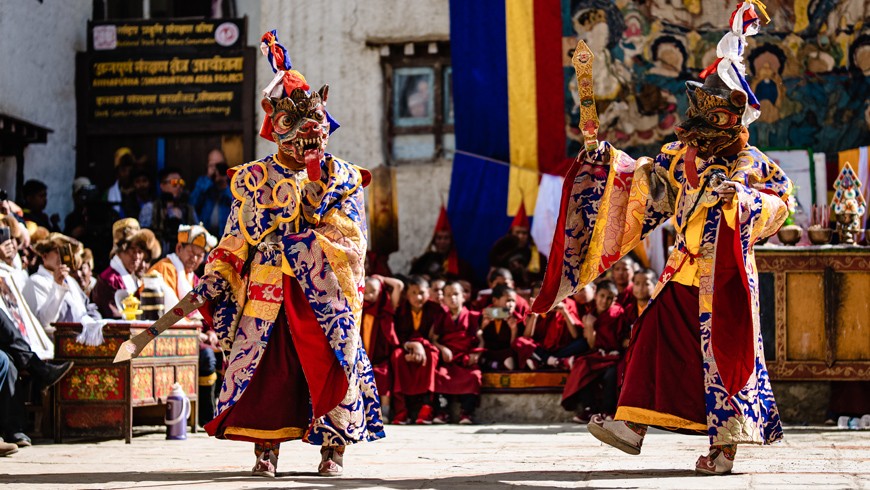
The celebration includes prayers, religious teachings, ritual ceremonies and masked dances performed by monks. Nepal Tourism Board identifies Tengboche as a major Buddhist centre on the Everest route and notes its association with the three-day Mani Rimdu festival. The exact timing follows the Tibetan Buddhist calendar, so trekkers should confirm the festival dates before planning their route.
During Mani Rimdu, Tengboche becomes busier as local Sherpa families, monks, trekkers and other visitors gather for the ceremonies. Accommodation in Tengboche is limited, so travellers coming specifically for the festival should arrange their overnight stay early rather than relying on last-minute availability.
Mani Rimdu and the Everest Base Camp Trek
Mani Rimdu can be combined naturally with the Everest Base Camp Trek because the standard route passes through Tengboche. After Namche Bazaar, trekkers descend and cross the Dudh Koshi before climbing toward Tengboche. The monastery sits at roughly 3,867 metres and is surrounded by views of peaks including Ama Dablam. From there, the route continues through the upper Khumbu toward Dingboche, Lobuche and Gorak Shep before reaching Everest Base Camp. Our Everest Base Camp Trek follows this classic Khumbu route.
If Mani Rimdu is the main reason for your trip, do not simply choose an autumn departure and assume the dates will overlap. Build the itinerary around the confirmed monastery schedule. Since accommodation in Tengboche is limited and the festival can attract additional visitors, reaching the area with some time to spare also gives you a better margin if weather or flight delays affect your journey. For additional route and preparation information, our Everest Base Camp Trek Guide covers the route, altitude, preparation and major cultural features of the Khumbu.
Holi
Holi, widely known as the festival of colours, generally falls in February or March. People gather to play with coloured powders and water, while music, dancing and public celebrations take place in many parts of Nepal. Kathmandu is one of the easiest places for international visitors to experience the festival before beginning a trek. Protect your phone, camera and other electronics if you plan to join the celebrations because coloured powder and water can quickly find their way into bags and pockets.
Holi falls during the spring trekking season, when routes such as Annapurna, Everest and Langtang become increasingly attractive as temperatures rise and rhododendrons begin flowering at lower elevations. If you want to experience Holi without giving up a spring trek, spending a day or two in Kathmandu first can be a practical option. A One Day Kathmandu Tour can then fit around the festival and your departure for the mountains.
Indra Jatra
Indra Jatra is one of the major traditional festivals of Kathmandu Valley and is particularly associated with the historic centre of Kathmandu. It is an important Newar festival featuring chariot processions, masked dances, religious ceremonies, music and illuminated historic buildings.
The festival lasts eight days and includes the procession of Kumari, the Living Goddess, through the old streets of Kathmandu. Nepal Tourism Board identifies the Kumari chariot procession, masked Lakhay dancers and the historic Basantapur area among the central features of Indra Jatra. Indra Jatra generally falls around August or September, close to the transition from monsoon toward the autumn trekking season.
If you are travelling toward Everest, Annapurna or another autumn trekking region, consider leaving enough time in Kathmandu to experience the festival rather than treating the capital only as a transit point. The old streets around Basantapur can become very crowded during the main processions, so walking is often easier than travelling by vehicle through the festival area, and arriving early can give you a better place to observe the celebrations. Our Kathmandu Sightseeing tour can be added around your festival stay when you want to explore additional heritage sites before continuing toward the mountains.
Buddha Jayanti
Buddha Jayanti commemorates the birth of Siddhartha Gautama, the historical Buddha. It generally falls in April or May and is observed at Buddhist sites throughout Nepal. Lumbini, the birthplace of Buddha, is the country's most important pilgrimage destination associated with Buddha's life. Kathmandu also has important Buddhist sites, including Boudhanath and Swayambhunath.
For trekkers, Buddha Jayanti fits naturally within the spring season. The Everest region offers strong Buddhist cultural connections through monasteries and Sherpa communities, while Upper Mustang has an even stronger Tibetan Buddhist character. If Buddha Jayanti is a major reason for your visit, you can combine your Kathmandu stay with a Kathmandu-Lumbini Tour to visit Lumbini before continuing to a spring trekking destination.
Teej
Teej is a major Hindu festival celebrated primarily by women and generally falls in August or September. Women traditionally gather in red clothing to sing, dance, fast and take part in religious rituals. Pashupatinath Temple becomes an important gathering point during Teej, with large numbers of devotees visiting the temple.
Because Teej takes place during the monsoon period, it is usually better suited to a Kathmandu Valley cultural itinerary than to a high-altitude trekking itinerary. You can experience the festival in Kathmandu and then continue to a trekking destination when weather conditions become more favourable later in the autumn.
Rato Machhindranath
Rato Machhindranath Jatra is one of the major chariot festivals of the Kathmandu Valley and is particularly associated with Lalitpur, or Patan. The festival centres on a large chariot procession and has deep roots in the religious and cultural traditions of the valley. The exact timing varies according to the traditional calendar, so visitors should check the confirmed festival schedule for their travel year. Because the celebrations take place in Lalitpur, Rato Machhindranath fits naturally into a Kathmandu Valley cultural itinerary. Travellers can explore Patan's historic courtyards, temples and surrounding neighbourhoods while planning their visit around the procession.
Seto Machhindranath
Seto Machhindranath Jatra is another major chariot festival associated with Kathmandu Valley. The procession travels through the historic centre of Kathmandu, bringing a large chariot and crowds into the old city streets. The festival reflects the valley's layered religious traditions and provides visitors with an opportunity to see Kathmandu's living heritage outside the usual sightseeing schedule. Seto Machhindranath generally falls around March or April, making it possible to combine the festival with the beginning of Nepal's spring trekking season. If you have limited time in Kathmandu, the One Day Kathmandu Tour can be arranged around your cultural plans.
Tiji Festival
Tiji Festival, also known as Tenchi, is a major Buddhist celebration in Lo Manthang, Upper Mustang. It is deeply connected with the Tibetan Buddhist traditions of Mustang and is one of the strongest examples of a festival that can be built directly into a trekking itinerary.
The festival includes sacred masked dances performed by monks and religious rituals associated with Vajrakila. Nepal Tourism Board notes that the celebration takes place according to the Tibetan calendar and is traditionally held over several days. Tiji is particularly interesting for travellers who want to experience the cultural side of Upper Mustang rather than simply pass through the region.
Tiji Festival and Upper Mustang Trek
The most direct way to experience Tiji is to plan your Upper Mustang Trek around the confirmed festival dates. Our Upper Mustang Trek travels toward Lo Manthang through the dry valleys and traditional settlements of northern Mustang.
Because Tiji takes place over a specific festival period, arriving in Lo Manthang at the last possible moment leaves little room for road or weather delays. Accommodation in Lo Manthang is also limited compared with larger tourist centres, so early planning is useful when the festival is the main reason for your visit. Building a buffer into the itinerary gives you more flexibility if an unexpected delay affects your journey and helps reduce the chance of missing the main ceremonies.
Upper Mustang also has a strong rain-shadow climate, which makes the region particularly interesting for travellers who want a Himalayan journey during the summer monsoon. Our Monsoon Trekking in Nepal 2026/2027 guide explains why Mustang and other northern regions can have very different conditions from the wetter southern slopes.
When to Visit Nepal for Trekking and Festivals
There is no single best season for every festival. The right time depends on whether your priority is a Himalayan trek, a particular cultural celebration, or a combination of both.
Spring: March to May
Spring is one of Nepal's main trekking seasons. Temperatures become warmer, visibility is generally good and rhododendrons begin flowering across many lower and middle-altitude forests. Festivals such as Holi, Seto Machhindranath, Buddha Jayanti and Tiji can fall during this period.
Spring is particularly suitable for classic routes in the Annapurna, Everest and Langtang regions. If you want a moderate trek combined with spring landscapes and village culture, the Annapurna Base Camp Trek is one option. You can also read our Best Time to Trek Annapurna Base Camp guide for a closer look at seasonal conditions in the Annapurna region.
Autumn: September to November
Autumn is the busiest trekking season in Nepal. The monsoon has generally withdrawn, mountain visibility improves and temperatures are comfortable for walking across many popular routes. Dashain, Tihar, Mani Rimdu and Indra Jatra may fall during or around this period, although their exact dates vary from year to year.
This makes autumn particularly attractive for travellers searching for the best time to trek Nepal and experience festivals. You can spend time in Kathmandu around a major festival and then continue toward Everest, Annapurna or another trekking region. For broader seasonal information, our Nepal Climate for Trekkers guide explains how weather changes between Kathmandu, the hills and high Himalayan regions.
Monsoon: June to August
The monsoon brings frequent rainfall to much of Nepal. Lower trails can become muddy and slippery, mountain visibility can be reduced and road travel may be affected by heavy rain and landslides.
The northern rain-shadow regions are different. Upper Mustang, parts of Manang and areas of Dolpo can remain considerably drier than the southern slopes. This is why travellers looking for a Himalayan experience during the monsoon often consider these regions.
If you are considering a summer trek, our Monsoon Trekking in Nepal 2026/2027 guide provides a more detailed explanation of rainfall, transportation and rain-shadow trekking. Kathmandu Valley festivals such as Teej and Indra Jatra can also fall during or around the monsoon period.
Winter: December to February
Winter brings colder conditions at higher elevations. Snow and freezing temperatures can make some high-altitude routes more demanding, while lower-altitude trails can remain comfortable on clear days.
Kathmandu Valley remains accessible throughout winter and can be a good choice for travellers whose main interest is cultural sightseeing rather than high-altitude trekking. If your preferred festival falls outside the main trekking seasons, a Kathmandu-based cultural itinerary can allow you to experience the celebration without forcing a mountain trek into unsuitable weather.
Which Treks Can You Combine With Nepal's Festivals?
Mani Rimdu and Everest Base Camp Trek
This is one of the strongest festival-and-trek combinations in Nepal because Tengboche lies directly on the Everest Base Camp route. The key is timing. If Mani Rimdu is one of the main reasons for your trip, plan the trek around the confirmed festival dates and allow enough time to reach Tengboche before the ceremonies begin.
Tiji Festival and Upper Mustang Trek
Tiji is particularly well suited to a dedicated Upper Mustang itinerary because the main celebrations take place in Lo Manthang. The route should be designed so you reach Lo Manthang with enough time to settle in before the festival rather than trying to arrive immediately before the first ceremony.
Dashain and Annapurna or Langtang Trek
Dashain can be combined with trekking routes that pass through villages during the festival period. The cultural experience can be especially interesting when your itinerary allows you to spend time in local communities rather than simply walking through them. The Annapurna Circuit Trek is one option for travellers who want mountain scenery combined with villages and local cultural experiences.
Tihar and Annapurna, Everest or Langtang Trek
Tihar usually falls during the autumn trekking season. You may see decorated homes, marigold garlands, lamps and local celebrations while travelling through towns and villages. You can also experience the main celebrations in Kathmandu before leaving for the mountains.
Indra Jatra and an Autumn Trek
If Indra Jatra falls shortly before your trek, spend some time in Kathmandu to experience the processions before travelling toward the mountains. For travellers heading toward Everest, the Everest View trek can follow your Kathmandu stay.
Buddha Jayanti and Buddhist Himalayan Regions
Buddha Jayanti can be combined with trekking routes that pass through Buddhist communities and monasteries. The Everest region has strong Tibetan Buddhist traditions, while Upper Mustang has an even deeper connection with Tibetan Buddhist culture.
Rato Machhindranath, Seto Machhindranath or Teej and Kathmandu
These festivals are better suited to a Kathmandu Valley cultural itinerary than a high-altitude trekking itinerary. A short cultural stay gives you time to explore the historic city, attend the festival and then continue to a trekking destination when your schedule and weather conditions allow.
Popular Trekking Destinations During Festival Seasons
Different parts of Nepal offer different cultural and trekking combinations.
Everest Region
The Everest region is particularly suitable for travellers interested in Mani Rimdu, Sherpa culture and Buddhist monasteries. Tengboche lies directly on the classic route to Everest Base Camp, so the cultural and trekking aspects can be combined within one itinerary.
Annapurna Region
The Annapurna region works well for travellers who want to combine Dashain, Tihar or spring cultural experiences with village trekking. The region passes through communities with diverse ethnic traditions and offers routes ranging from shorter village treks to longer high-altitude journeys. The Annapurna Region page provides an overview of the main trekking options.
Langtang Region
Langtang is a practical choice for travellers who want a Himalayan trek relatively close to Kathmandu and want to spend additional time in the valley around a festival. The region's Tamang communities and Buddhist traditions add a strong cultural element to the trekking experience.
Upper Mustang
Upper Mustang is the strongest choice for travellers specifically interested in Tiji Festival, Tibetan Buddhist culture, Lo Manthang and the dry landscapes of the Himalayan rain shadow. The region also deserves consideration for travellers whose holidays fall during the monsoon, when many southern trekking routes receive substantially more rain.
Kathmandu Valley
Kathmandu Valley is the natural choice for Indra Jatra, Teej, Rato Machhindranath, Seto Machhindranath and many Hindu and Buddhist celebrations. Unlike a remote mountain trek, a valley-based itinerary allows you to move between historic squares, temples and neighbourhoods where festivals take place.
Tips for Experiencing Festivals During Trekking
Check the festival date for your travel year
Do not plan your trip using a festival's usual month alone. Many Nepalese festivals follow lunar or traditional calendars, so the Gregorian date changes each year. Confirm the festival date for your travel year before fixing flights, accommodation and trekking arrangements, especially when the festival itself is the main reason for your visit.
Book early for major festivals
Accommodation and transportation can become busy during major celebrations. This is particularly relevant if you want to stay close to Tengboche during Mani Rimdu or in Lo Manthang during Tiji. Accommodation in these locations is limited, so booking early gives you more choice and reduces the risk of staying farther from the festival area.
Allow extra travel time
Festival periods can increase domestic travel. Road transport can become crowded, while weather can affect mountain flights. Keep some flexibility in your itinerary rather than scheduling a tight connection immediately before an important festival. This is especially useful when you need to reach a specific mountain village or monastery for a ceremony.
Respect local religious practices
Ask before photographing religious ceremonies, monks, worshippers or private family celebrations. Some rituals are intended primarily for participants and local communities. When visiting a monastery or temple during a ceremony, follow the instructions of monks and local staff about where visitors can stand or sit, keep conversations quiet and avoid blocking religious processions.
Dress appropriately
Temples, monasteries and religious sites generally require respectful clothing. Carrying clothing that covers shoulders and knees is useful when visiting religious places.
Protect your belongings during Holi
If you plan to participate in Holi, protect your phone, camera, passport and other valuables from coloured powder and water.
Do not force a festival into an unsuitable trek
A festival should fit naturally into the route. If reaching a festival requires an unrealistic walking day or a risky travel connection, it is better to add a buffer day or adjust the itinerary.
Confirm local schedules
Festival programs can include several ceremonies over several days. The main public celebration may not be the only event worth attending, so check the local schedule before deciding where you need to be on each day. This is particularly useful when planning around a monastery ceremony or a multi-day chariot festival.
Festival-Based Trekking With Nepal Himalayas Trekking
Planning a trek around a festival requires more attention to dates and logistics than a standard trekking itinerary. The festival may determine when you need to reach a particular monastery, village or city, while altitude, weather and transportation determine how much walking can realistically be included before and after the event.
We can arrange festival-based itineraries around destinations such as Everest, Annapurna and Upper Mustang, as well as shorter cultural programs in Kathmandu Valley.
For example, an Everest itinerary can be planned around Mani Rimdu, while an Upper Mustang itinerary can be timed around Tiji Festival in Lo Manthang. Kathmandu-based programs can also be arranged around major Jatras and Hindu festivals. The practical approach is to confirm the festival dates first and then build the trekking route around them.
Why Choose Nepal Himalayas Trekking for Festival-Based Treks?
Festival travel requires coordination between cultural events and normal trekking logistics. Accommodation, road travel and domestic flights can become less predictable around major celebrations, while festival locations such as Tengboche and Lo Manthang have limited accommodation compared with Kathmandu.
Our local team can help coordinate the trekking itinerary, accommodation, transportation, permits and cultural visits according to the route and festival you want to experience. The itinerary can also be adjusted if you want additional time in Kathmandu before or after your trek for sightseeing, shopping or a festival.
Frequently Asked Questions
What are the best festivals in Nepal during trekking season?
It depends on the region and the time of year. Mani Rimdu is one of the strongest choices for Everest Base Camp trekkers, Tiji Festival is closely connected with Upper Mustang, while Dashain and Tihar can be experienced across Nepal during the autumn period. In spring, Holi and Buddha Jayanti can be combined with trekking or cultural travel.
Which Nepal festivals can I experience during the Everest Base Camp Trek?
Mani Rimdu is the festival most directly connected with the Everest Base Camp route because it is celebrated at Tengboche Monastery. Dashain and Tihar can also overlap with the broader autumn trekking season, although their celebrations are spread across Nepal.
Can I combine Tiji Festival with the Upper Mustang Trek?
Yes. Tiji takes place in Lo Manthang, making the Upper Mustang Trek the most direct trekking option for experiencing the festival.
Is Holi a good time to trek in Nepal?
Holi usually falls during spring, which is one of Nepal's main trekking seasons. You can experience Holi in Kathmandu and then continue to a spring trekking destination such as Annapurna, Everest or Langtang.
Can I see Indra Jatra while trekking in Nepal?
Indra Jatra takes place in Kathmandu, so it is best experienced before or after your trek rather than during a remote mountain itinerary. You can add a Kathmandu cultural stay around the festival.
Which festivals are best for Kathmandu sightseeing?
Indra Jatra, Teej, Rato Machhindranath, Seto Machhindranath and Buddha Jayanti can all be combined with time in Kathmandu Valley. A One Day Kathmandu Tour is useful when you have limited time.
Do festival dates stay the same every year?
No. Many major festivals follow lunar or traditional calendars, so their Gregorian dates change from year to year. Always confirm the dates for your intended travel year.
Should I book early if I want to trek during a festival?
Early planning is advisable for major festivals. Accommodation can be limited around Tengboche and Lo Manthang, while domestic transportation can become busier during major national celebrations.
Can I customize a Nepal trek around a festival?
Yes. A trek can be adjusted around your preferred festival, travel dates, trekking duration and chosen region. The route should be planned around the confirmed festival schedule rather than relying only on its usual month.
Plan Your Trek Around a Nepalese Festival
The right festival trekking itinerary starts by deciding which cultural experience matters most to you.
If you want Buddhist ceremonies in the high Himalayas, Mani Rimdu and Tiji offer two of the clearest connections between a trekking route and a traditional Himalayan celebration. If you prefer large public celebrations, Indra Jatra, Teej and the major Jatras of Kathmandu Valley provide a very different experience. Dashain, Tihar and Holi offer opportunities to experience celebrations across a much wider part of Nepal.
Once you have selected the festival, the trekking route, travel dates and number of days can be arranged around it. You can also add a Kathmandu cultural day before or after your trek when the festival takes place in the valley.
If you are unsure which festival, trekking region or travel period fits your plans, you can Make an Enquiry with Nepal Himalayas Trekking and discuss the route with our team before booking.







Add Your Comment